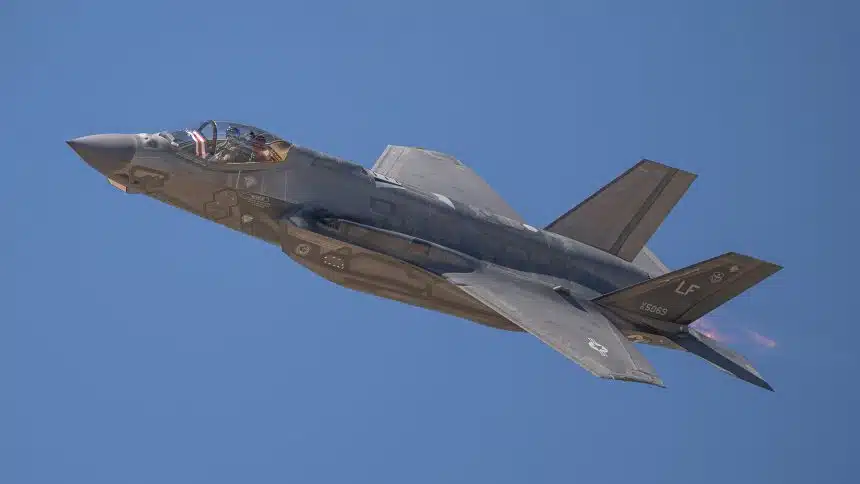
Brig. Gen. David Berkland discusses training philosophy, interoperability, simulation, and the continuing evolution of the F-35 mission.
The 2026 Luke Days airshow packed the ramp with an impressive lineup of aircraft and drew massive crowds, however, the real highlight was getting an inside look at the 56th Fighter Wing. Spending time on the base offered a rare glimpse into how the wing handles its day-to-day operations.
For decades, Luke Air Force Base was synonymous with high-volume F-16 pilot training. Over the past several years, that mission has fundamentally changed, securing the base as the primary schoolhouse for the F-35A Lightning II.
Luke AFB began transitioning from the F-16 to the F-35A in the mid-2010s. This transition required a complete overhaul that went far deeper than swapping out airframes; it forced a total rewrite of the base’s infrastructure, training syllabus, and student preparation.
The move to the F-35 did not replace traditional fighter skills; however, it placed greater emphasis on information management, sensor fusion, and understanding the broader operational picture. Because the jet’s software and modern threats changed constantly, Luke’s entire training curriculum had to remain fluid to keep pace.
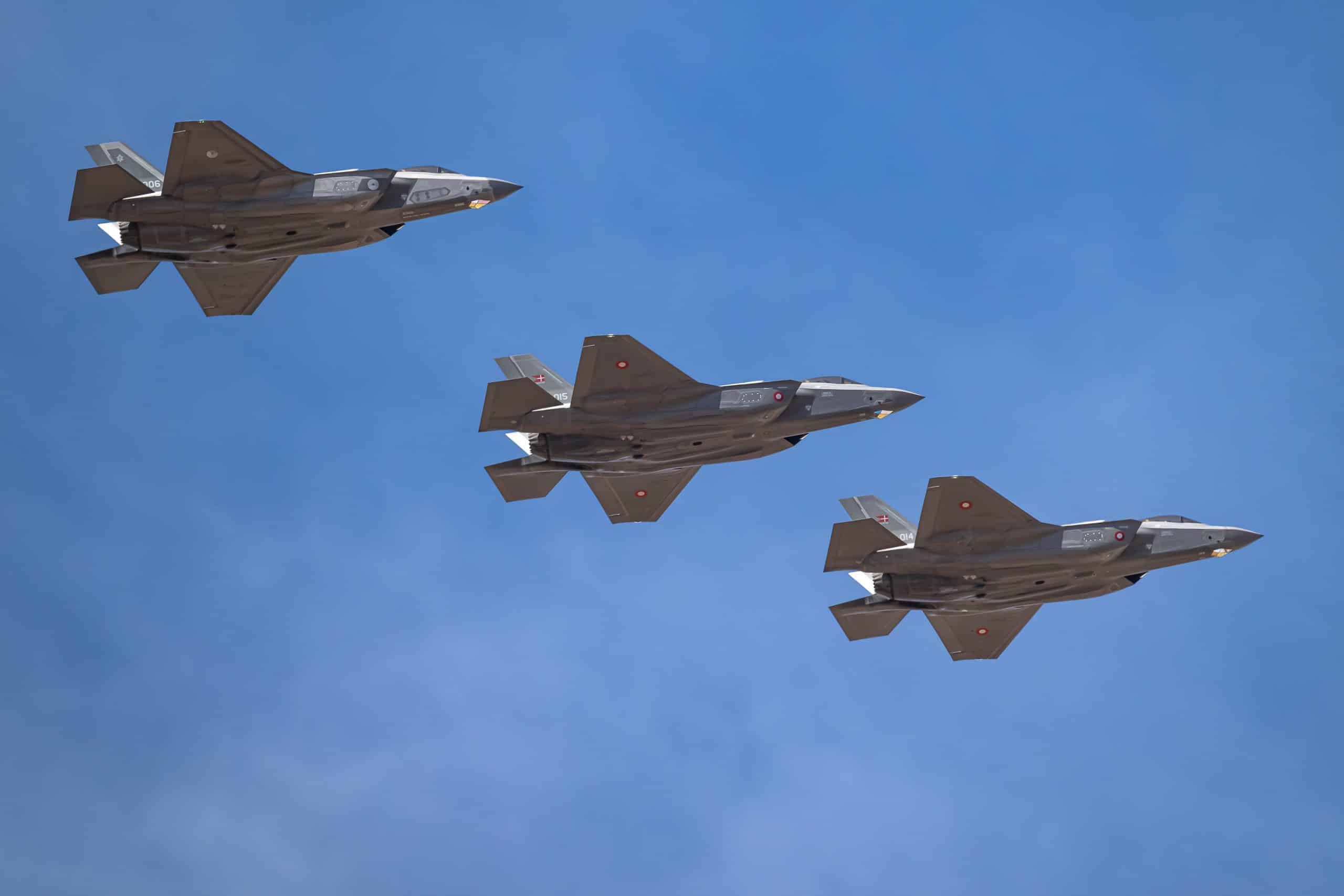
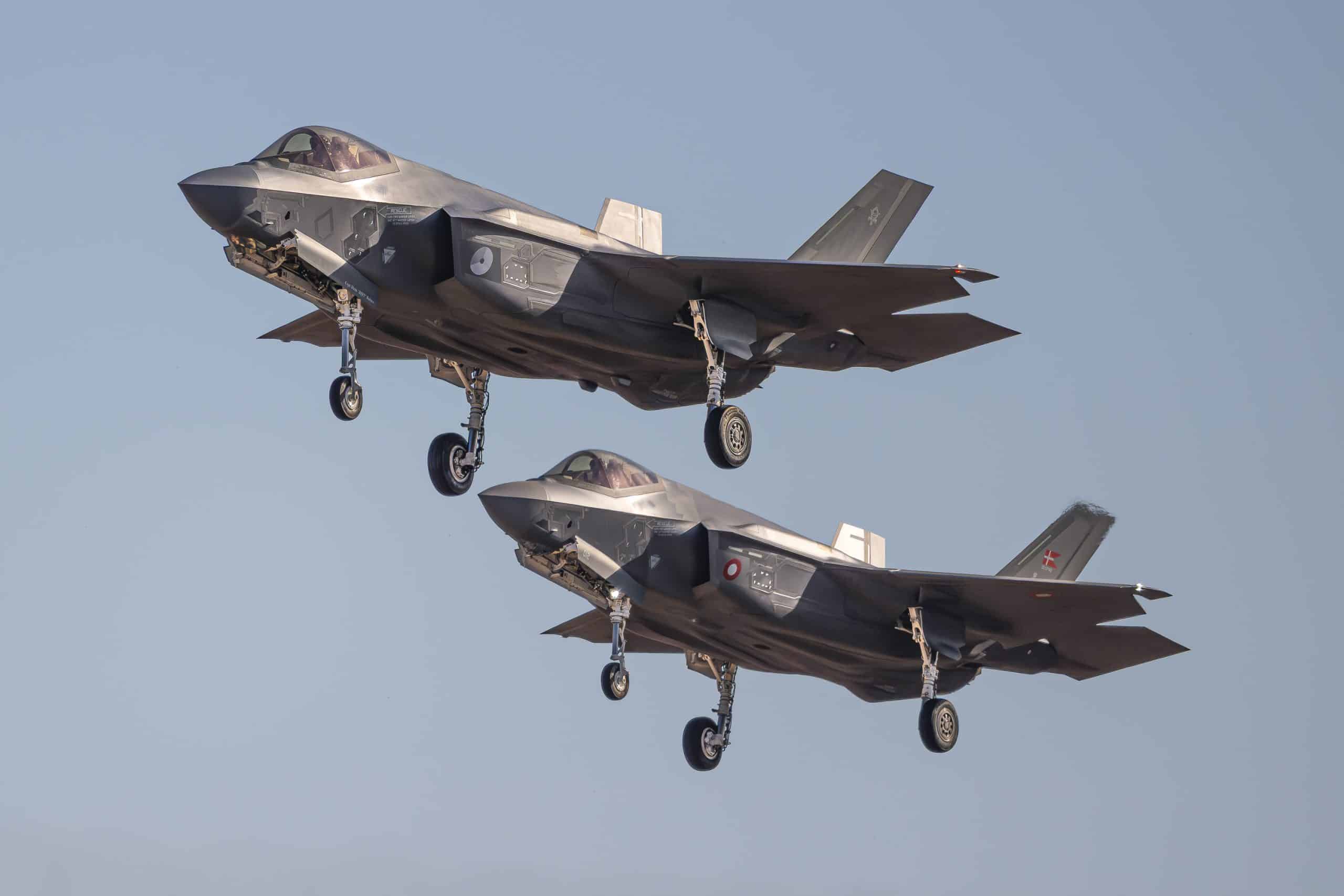
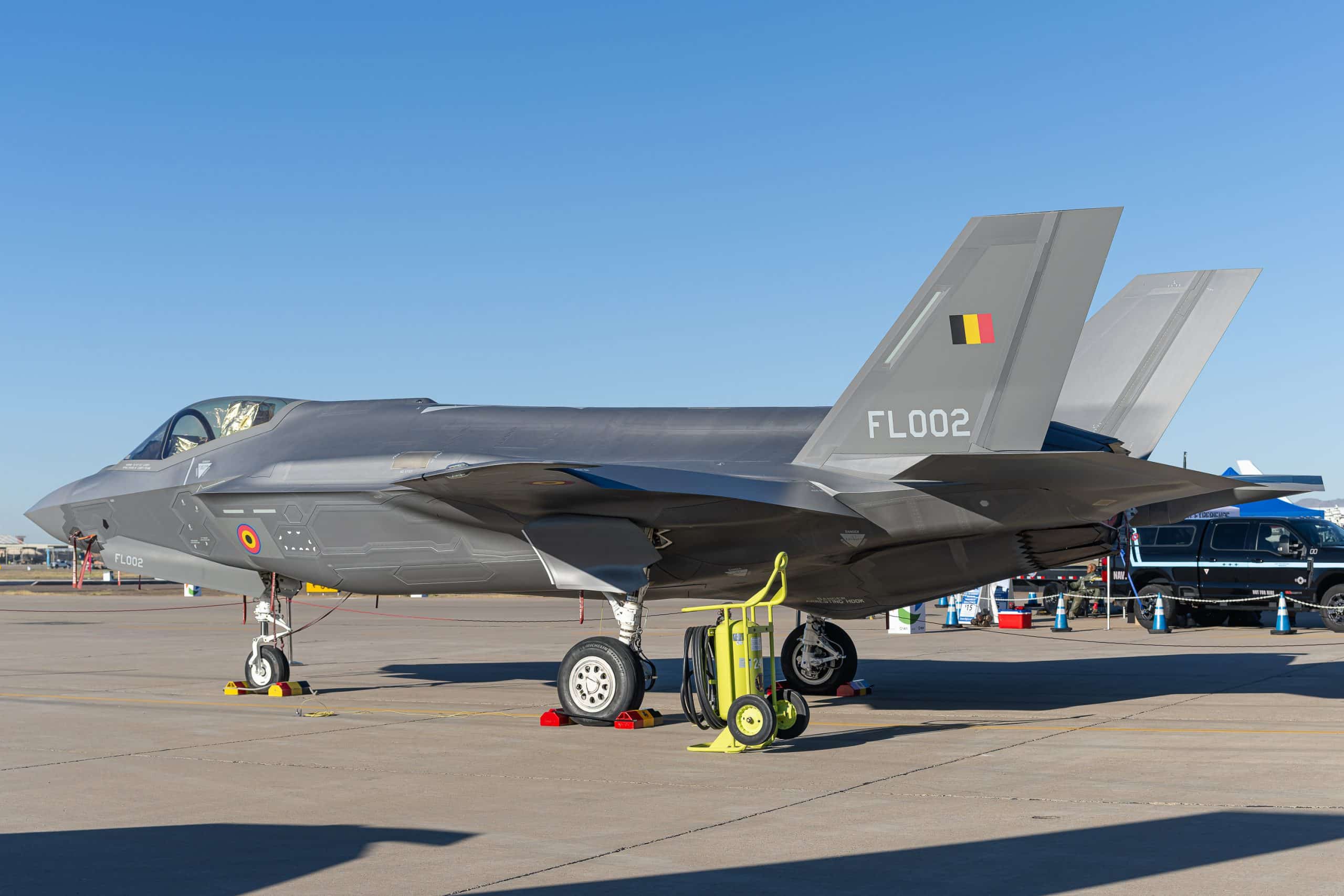
Luke Air Force Base has built an incredible legacy since 1941, graduating more than 61,000 military pilots. That footprint has only expanded as the base transformed into the premier training hub for the F-35A Lightning II, producing roughly 75 percent of the world’s F-35 pilots. The schoolhouse is a truly global enterprise, bringing international partners like Belgium, Denmark, Italy, the Netherlands, and Norway into Phoenix, Arizona, to train alongside U.S. crews.
The scale of that mission becomes clearer when examining how the 56th Fighter Wing is organized today and how Luke evolved to support one of the most extensive F-35 training organizations in the world.
The 56th Fighter Wing reports directly to the Nineteenth Air Force, which is a subordinate command of the Air Education and Training Command (AETC), although the Department of the Air Force is now reassigning the Formal Training Units to Air Combat Command. The 56th FW at Luke AFB hosts seven active F-35A Lightning II training squadrons and one F-16C/D squadron, which is dedicated to training Republic of Singapore Air Force pilots.
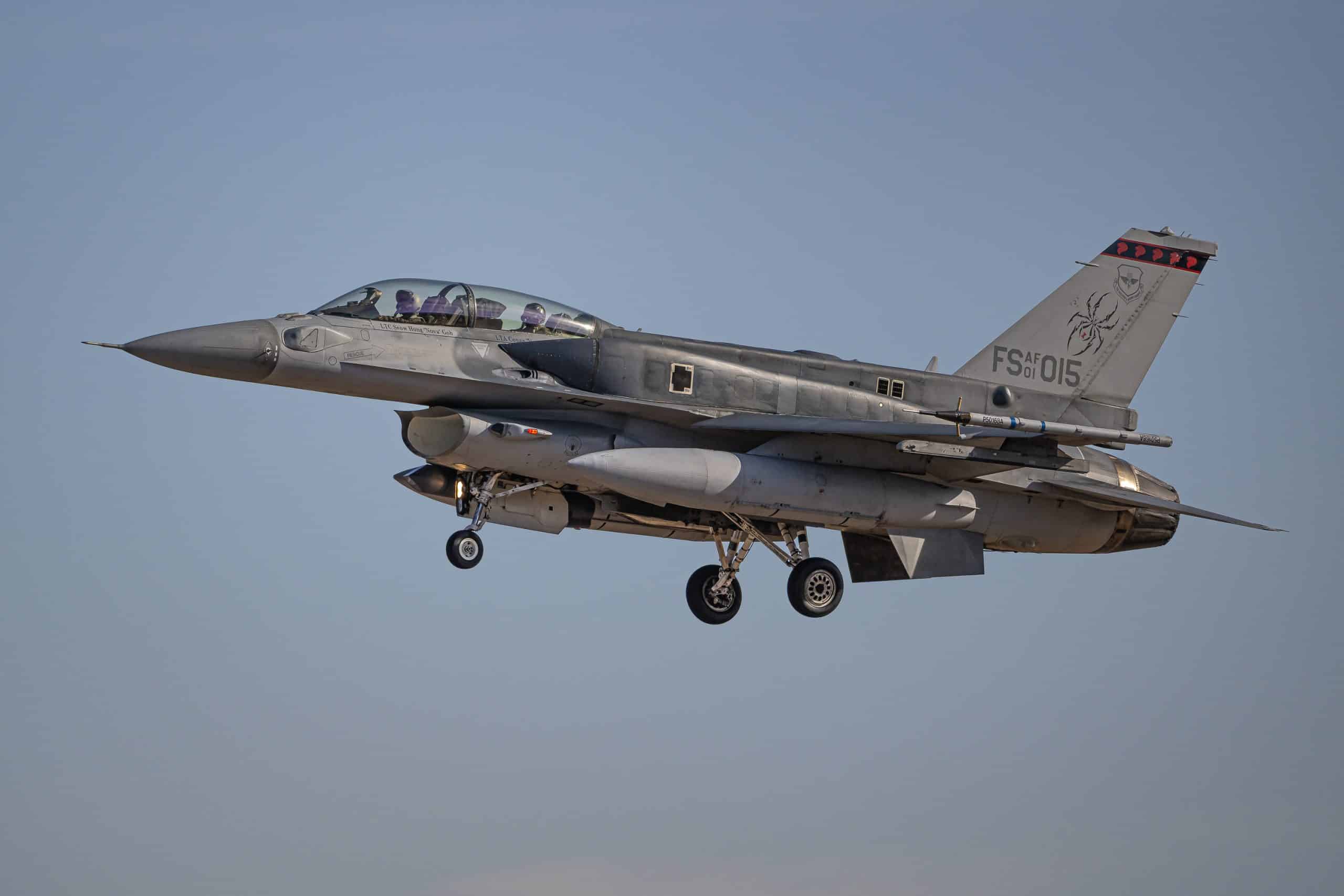
Training Squadrons Assigned to the 56th Fighter Wing at Luke AFB:
- 61st FS “Top Dogs” – USAF, Australia (RAAF) – First F-35 squadron at Luke; RAAF training concluded 2020
- 62nd FS “Spikes” – USAF, Norway, Italy – F-35A Integrated training mission with Norway and Italy
- 63rd FS “Panthers” – USAF – Originally associated with Turkish participation
- 308th FS “Emerald Knights” – USAF, Netherlands, Denmark – Integrated training with Dutch and Danish pilots
- 309th FS “Wild Ducks” – USAF – F-35A training mission
- 310th FS “Top Hats” – USAF – F-35A training mission
- 312th FS “Scorpions” – Belgium – F-35A dedicated Belgium conversion unit
- 425th FS “Black Widows” – Republic of Singapore – Training of RSAF F-16C/D Block 52 pilots
The expansion of Luke’s F-35 training mission extended beyond aircraft and squadron growth. According to the 56th Fighter Wing’s 2024 “Flying Forward” transition plan, the base planned what was expected to become the largest F-35 simulator operation in the world, with a total of 32 simulators supporting training operations.
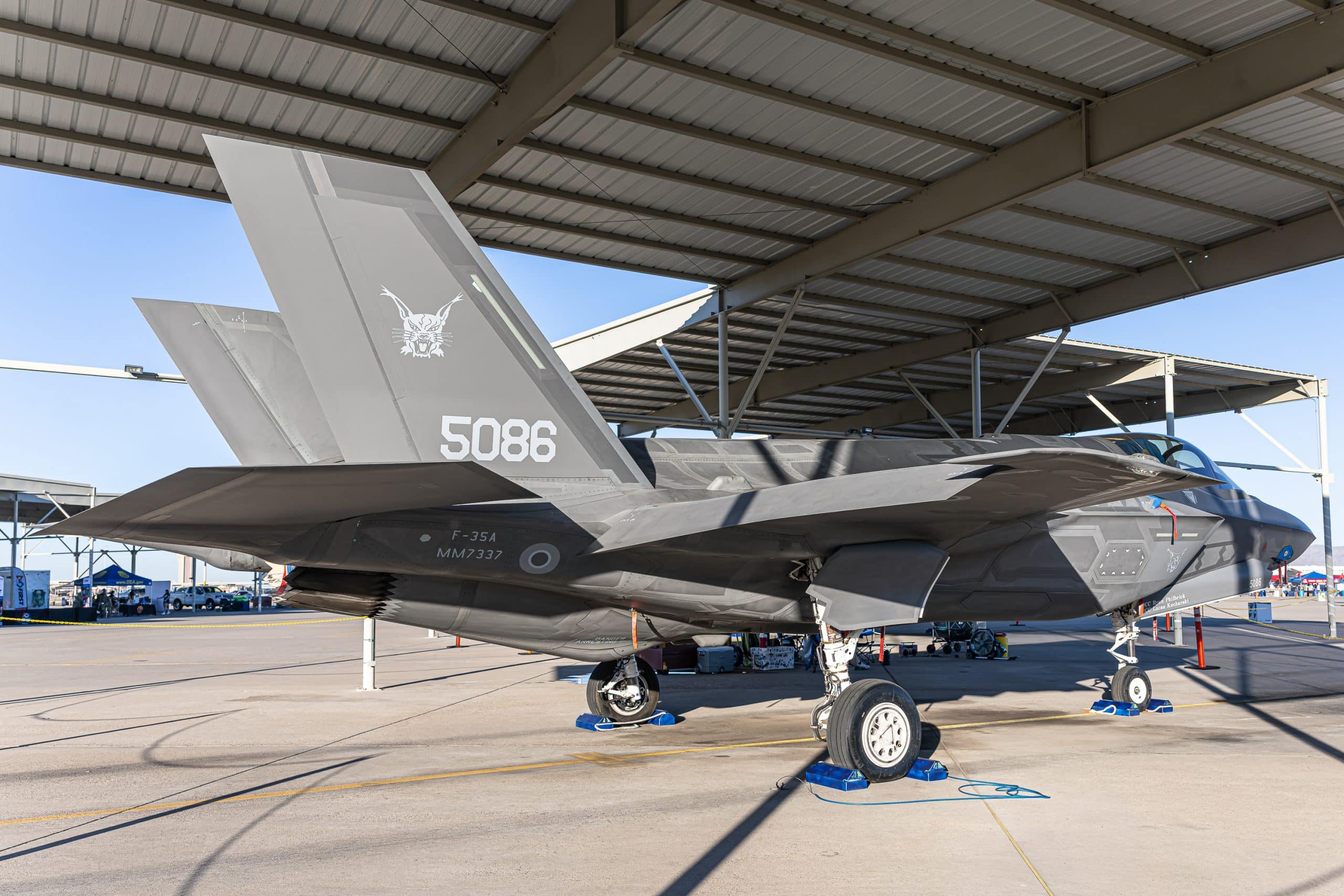
The simulator expansion reflects the increasing importance of synthetic training within the fifth-generation environment. In discussing the new capability, Maj. Shaun Lovett, Chief of Training Systems for the 56th Training Squadron, noted that the additional Modified Mission Rehearsal Trainers would provide sufficient capacity to replicate scenarios involving four to twelve F-35s operating alongside simulated partner-nation and sister-service participants. The expanded capability allows students to experience complex mission sets and integrated training environments that would be difficult to replicate exclusively through live-flight operations.
Bringing those elements together is the central challenge facing the 56th Fighter Wing. Aircraft, simulators, instructors, maintainers, partner nations, and supporting infrastructure must function as a cohesive training system capable of producing combat-ready F-35 pilots for both the United States and allied nations.
To gain additional insight into how the 56th Fighter Wing approaches its training mission, The Aviationist interviewed Brig. Gen. David Berkland, Commander of the 56th Fighter Wing. Prior to assuming command of the 56th Fighter Wing, Brig. General Berkland served as an F-16 instructor pilot and weapons officer and flew combat missions in Operations SOUTHERN WATCH, NORTHERN WATCH, IRAQI FREEDOM, and FREEDOM’S SENTINEL.
He has commanded at the squadron, group, and wing levels, and instructed at the USAF Weapons School. He has more than 3,800 flying hours and 930 combat hours. The commander opened up about current training philosophies, the realities of allied interoperability, and how the F-35 training mission must evolve alongside digital warfare.
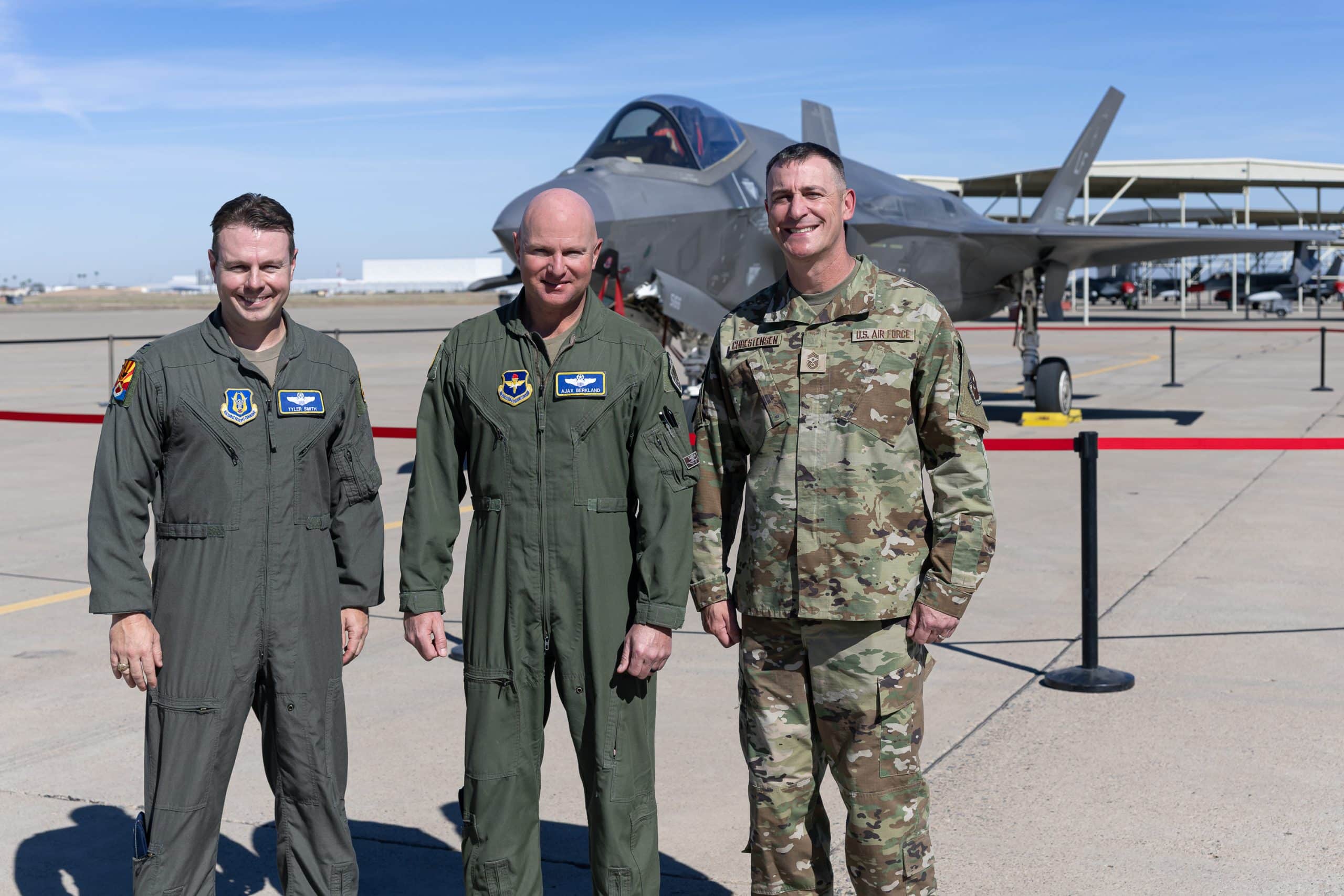
Interview with Brigadier General David Berkland
Question: Having led through the evolution from the F-16 to the F-35, do you feel the Wing has fully internalized the operational and cultural implications of fifth-generation airpower, or is that still an ongoing process?
Culturally, our mindsets are evolving right alongside these platforms. We’ve adapted well to 5th-generation capabilities while bringing forward an aggressive, problem-solving “Wild Weasel” mindset and applying it directly to the F-35. It’s the dedication of our Airmen that fuel this mindset and create a warrior ethos across the base.
Operationally, it’s an ongoing process because the threat never stops advancing, requiring us to constantly refine our syllabus and simulation environments. However, as I prepare to transition out of this role and look back at what we’ve accomplished, I have confidence that Luke is fully ready to support combat operations. We are forging the innovative, adaptable wingmen who will absolutely dominate tomorrow’s fight.
How has the training philosophy evolved from emphasizing platform proficiency in the F-16 to teaching sensor fusion, information management, and systems integration in the F-35?
It’s a significant shift. In the F-16, pilots spent a lot of energy managing sensors to find threats. The F-35 does the heavy lifting, displaying the battle space and freeing the pilot for high-level tactical decision-making.
An F-35 student’s first SEAD (Suppression of Enemy Air Defenses) sortie pits them against a dense, integrated air defense system to test how they manage a massive digital information flow. This means our wingmen are taught a culture of integrated autonomy, so that mutual support isn’t gone; it’s just evolved. We are fighting as a highly coordinated, spread-out championship team. It’s with this championship mentality that Luke Airmen achieve excellence, maximizing our lethality to outmaneuver any adversary.
To what extent do the F-35s used for training at Luke reflect the current operational fleet in terms of software and hardware configurations?
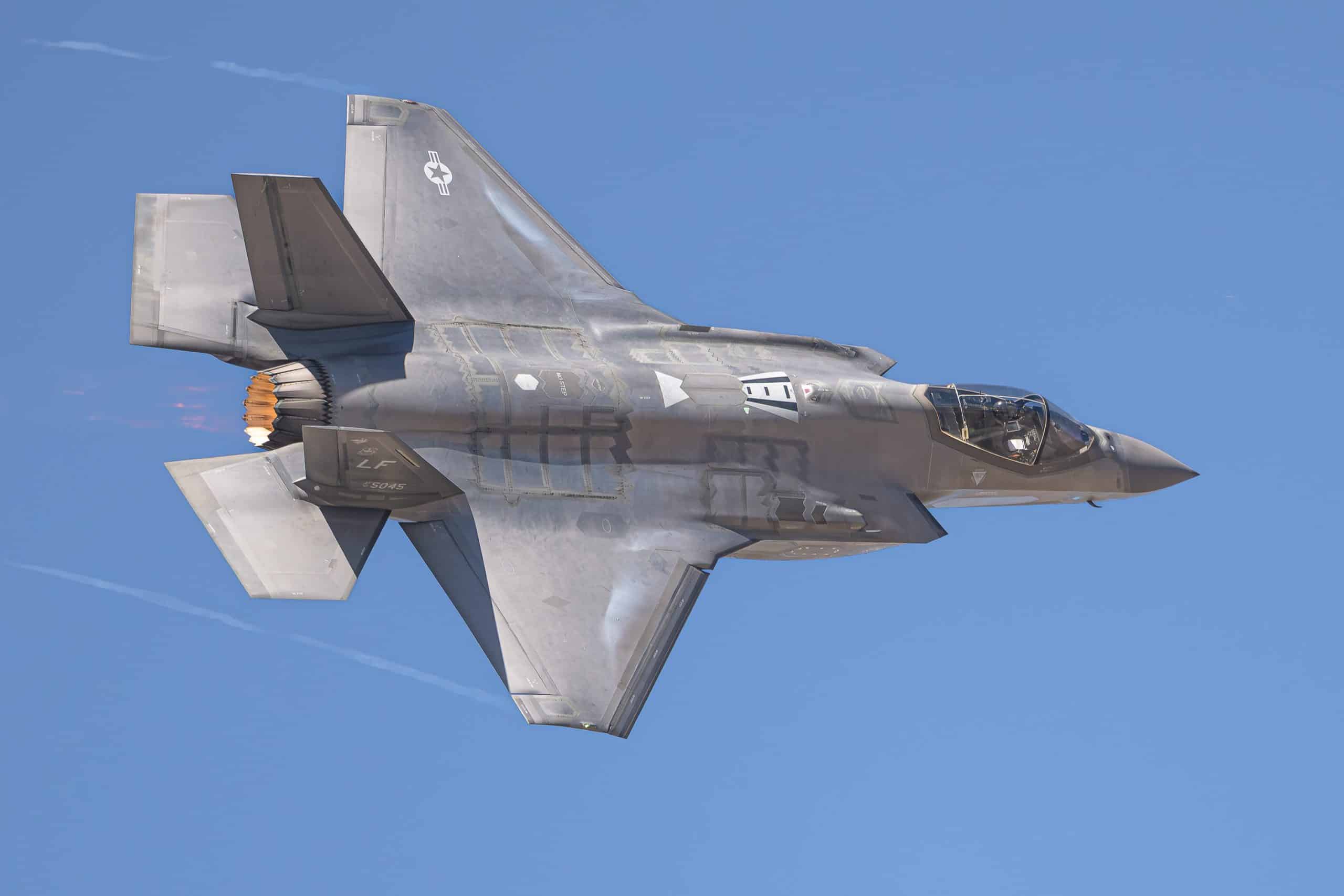
They are identical. The F-35s we fly here at Luke reflect the exact software and hardware configurations of the active operational fleet, and we expect that to continue for the foreseeable future.
This is crucial for building our championship team. The 56th Fighter Wing thrives because of our exceptional partnership with allies, partners, and the local community, whose support allows for collaboration and continued mission success. Whether it’s our U.S. pilots or our international partners training and instructing alongside us, everyone needs to be operating the exact same advanced systems they’ll take into a high-end combat environment. Training on the current fleet configuration is how we ensure seamless interoperability and give our nation, and our allies, a decisive advantage.
Looking at the entire training process today, what aspects of F-35 training at Luke would you consider fully mature, and where do you still see active development or refinement?
The reality is that the F-35 is a dynamic platform, and the global threat environment is constantly shifting. Because of that, our training remains in a continuous state of active refinement.
We are constantly updating our tactics, techniques, and procedures based on the real-world operational environment. As the jet gets new software and capabilities, the 56th Fighter Wing rapidly modernizes the training to match. It’s that relentless pursuit of operational excellence that equips our Airmen to stay ahead of the curve, shape the future of airpower, and win tomorrow’s fight.
Do individual squadrons at Luke specialize in different phases or aspects of the F-35 training syllabus, or is training standardized across the Wing?
Training across the 56th Fighter Wing is completely standardized. We don’t have squadrons specializing in piecemeal phases of the syllabus.
Every pilot completes their entire training program, from their first academic class to their final check ride, within their assigned squadron and every single squadron executes the same continuously updated syllabus. We do this because standardization is what builds a cohesive, interoperable force. Whether you are flying with a U.S. wingman or one of our international allies, everyone is held to the exact same standard of combat readiness. We are building a unified, lethal team that is ready to win against any peer adversary.
Luke trains U.S. and partner nation pilots together within a common training environment. From your perspective, how does the presence of allied instructors and students influence the training experience, and what advantages does it provide when preparing pilots for future coalition operations?
The fully-integrated presence of allied instructors and student pilots means we trust each other with our lives. That trust makes us more lethal as a team, on night-one of major combat operations. When crisis strikes, we already have seamless interoperability, which is a major advantage in combat.
When these pilots meet again downrange in a combat environment, it won’t be the first time they’ve flown together. They think, communicate, fly and fight the same way. By training as one unified force today, we ensure that our coalition is a lethal, cohesive team ready to give our nations a decisive advantage and win tomorrow’s fight.
What is the most commonly misunderstood aspect of training F-35 pilots that you wish both the public and the broader Air Force better understood?
There are two sides to this. On the pilot side, people often think training is just a 90-minute sortie where they fly fast and pull G’s. They don’t see the mountain of work behind the scenes. Every mission requires hours of mission planning before getting to the jet, followed by hours of debriefs to dissect every move the formation made.
The second misunderstood aspect is the sheer scale of teamwork on the ground. It takes the entire Wing to get those jets airborne. It’s a total team effort requiring a championship mentality from our maintainers, support staff, and every Airman across the base to achieve mission success. This unmatched dedication, combined with the unwavering support from our surrounding community, fosters a spirit of service you won’t find elsewhere.
The Aviationist would like to send out thanks to 2d Lt. Reese Sartin, Public Affairs Officer 56FW/PA, Luke AFB, AZ; Capt. Alyssa Letts, Public Affairs Officer 56FW/PA, Luke AFB, AZ; and SMSgt. Chad Usher, Superintendent 56FW/PA, Luke AFB, AZ.
In addition, a very special thanks to Brig. Gen. David Berkland, 56th Fighter Wing Commander, Luke AFB, AZ.