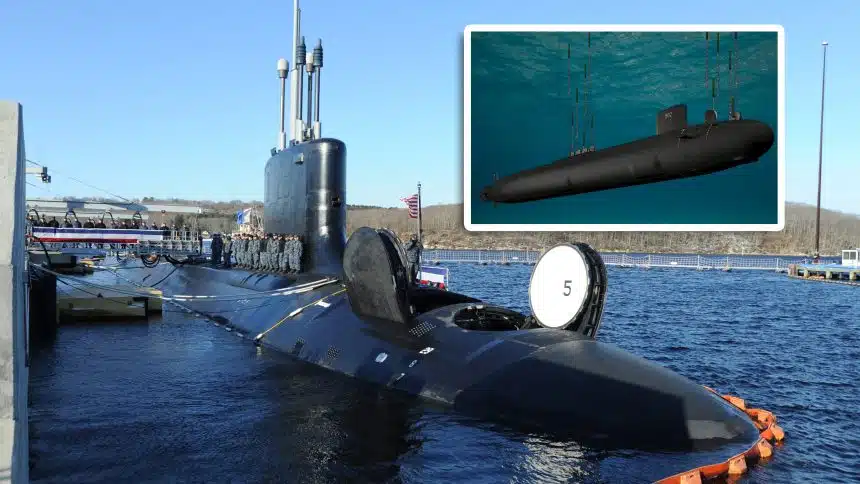
Beginning with the USS Arizona, 19 new boats in the U.S. Navy’s Virginia class of nuclear powered attack submarines will officially be referred to as SSGNs to reflect the boost in cruise missile capacity offered by the new Virginia Payload Module (VPM).
Now to be designated as guided missile submarines, otherwise known as SSGNs, the newer boats of the Virginia class will be the U.S. Navy’s direct replacement for its current four Ohio class SSGNs which were converted from ballistic missile submarines (SSBN).
While the Virginias cannot match the sheer size of the Ohio’s cruise missile armament (154 missiles), the huge boost in numbers compared to the preceding class could allow more flexible, distributed positioning of these valuable, powerful strike assets.
If you felt that sudden disturbance in the submerged VLS force, it was the first one of the four missile boats of the Tomahawkalypse riding off into retirement.
Recovery will take a decade. Loss of the Ohio-class SSGN submarines will leave a big hole, & not just in VLS capacity. https://t.co/ldLHqGYbU3 pic.twitter.com/1wsEt17U3d
— 🇺🇸𝗢𝗹𝗱 𝗦𝘂𝗯𝗺𝗮𝗿𝗶𝗻𝗲𝗿⚓️ (@USN_Submariner) July 29, 2026
The Virginia Payload Module (VPM), developed from the Virginia Payload Tubes (VPT) fitted to Block III boats (from USS North Dakota (SSN 784) onwards), comprises four additional tubes fitted in an extension of the amidship hull allowing the carriage of an extra 28 Tomahawk Land Attack Missiles (TLAM) or a to-be-determined number of future missiles.
Fitted to Block V boats starting with the USS Arizona (SSGN 803), the VPM, combined with the two VPTs in the nose of the submarine, will permit each boat to carry as many as 40 TLAMs. The earliest Virginias feature individual missile tubes similar to those used on the improved Los Angeles class.
4/ The Virginia-class has 12 VLS (vertical launch) tubes for cruise missiles. This ↙️older Los Angeles class vessel shows what they’re like open. There are five Blocks (construction groups) thus far. Block III will use two multipurpose Virginia Payload Tubes (VPT)↘️ instead. pic.twitter.com/VOBlt1pTbC
— USAS 🇺🇸 (@USAS_WW1) November 3, 2022
“This reclassification is a clear acknowledgment of the increased lethality VPM brings to the undersea fight,” said Vice Adm. Rob Gaucher, Director, Submarine Programs. “These VPM-equipped SSGNs will ensure the Navy continues to dominate the undersea domain for decades to come. By integrating this additional payload capacity, we will have the ability to surge strike power to assure our allies, deter aggression, outmatch any adversary, and give our Fleet commanders an incredibly versatile, hard-hitting instrument of national power.”
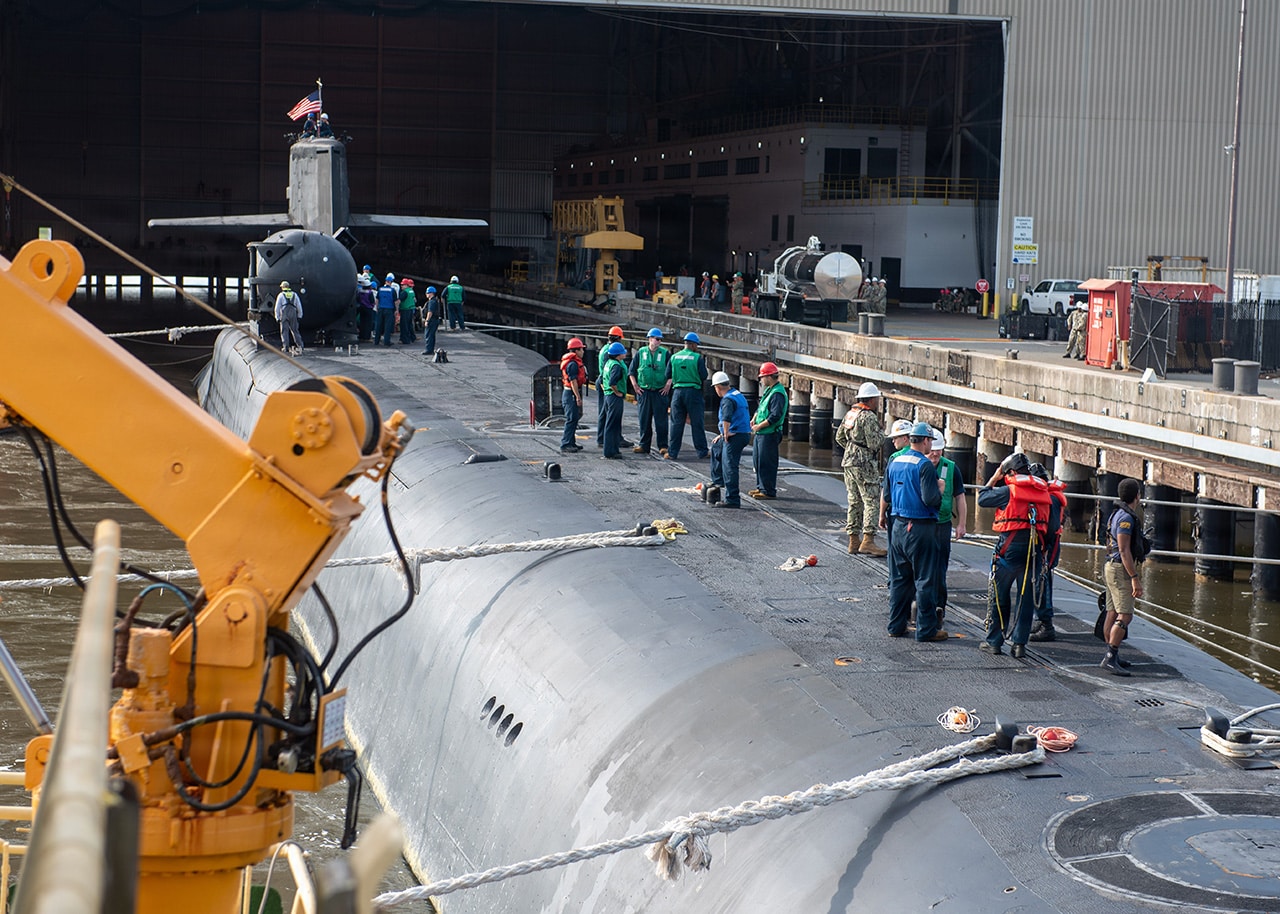
Arizona will be the first submarine commissioned from new into the U.S. Navy since the USS Halibut (SSGN 587) in 1960. All four of the Ohio SSGNs were converted while the boats were already in service as SSBNs. Halibut spent only five years as an SSGN, carrying the Regulus nuclear-armed cruise missile, until it was converted for special operations and redesignated as an SSN. It would go on to take part in the famous Operation Ivy Bells and secretly tap into Soviet communication cables.
USS Jimmy Carter (SSN 23), a modified Seawolf class submarine, currently fulfils the U.S. Navy’s special mission submarine role, and is expected to be replaced by a modified Block VI Virginia class boat.
Happy Birthday SSGN‼️🚀The first nuclear powered guided missile submarine, USS Halibut (SSGN-587) was commissioned #OTD in 1960 at Mare Island.
Halibut conducted nuclear deterrent patrols with Regulus missiles, qualifying her crew for the SSBN Deterrent Patrol Insignia. #USNavy🇺🇸 pic.twitter.com/Hy3jL8Ek6O
— 🇺🇸𝗢𝗹𝗱 𝗦𝘂𝗯𝗺𝗮𝗿𝗶𝗻𝗲𝗿⚓️ (@USN_Submariner) January 4, 2023
“Reclassifying Virginia Payload Module-equipped submarines as SSGNs accurately reflects the extraordinary strike capacity, operational flexibility, and global reach these platforms bring to the Fleet,” said the Chief of Naval Operations, Adm. Daryl Caudle. “This transition comes at an important moment as USS Georgia, one of the Navy’s four Ohio-class guided-missile submarines, begins the inactivation process after more than four decades of exceptional service. Georgia and her sister ships proved the enduring value of combining undersea stealth with unmatched clandestine strike capability.”
“The next generation of Virginia-class SSGNs builds on that legacy with greater survivability, adaptability, and sustained combat power. These submarines will provide our Nation with a powerful and persistent deterrent, expand options for our combatant commanders, and ensure the Navy remains ready to fight and win whenever and wherever called upon,” the CNO added.
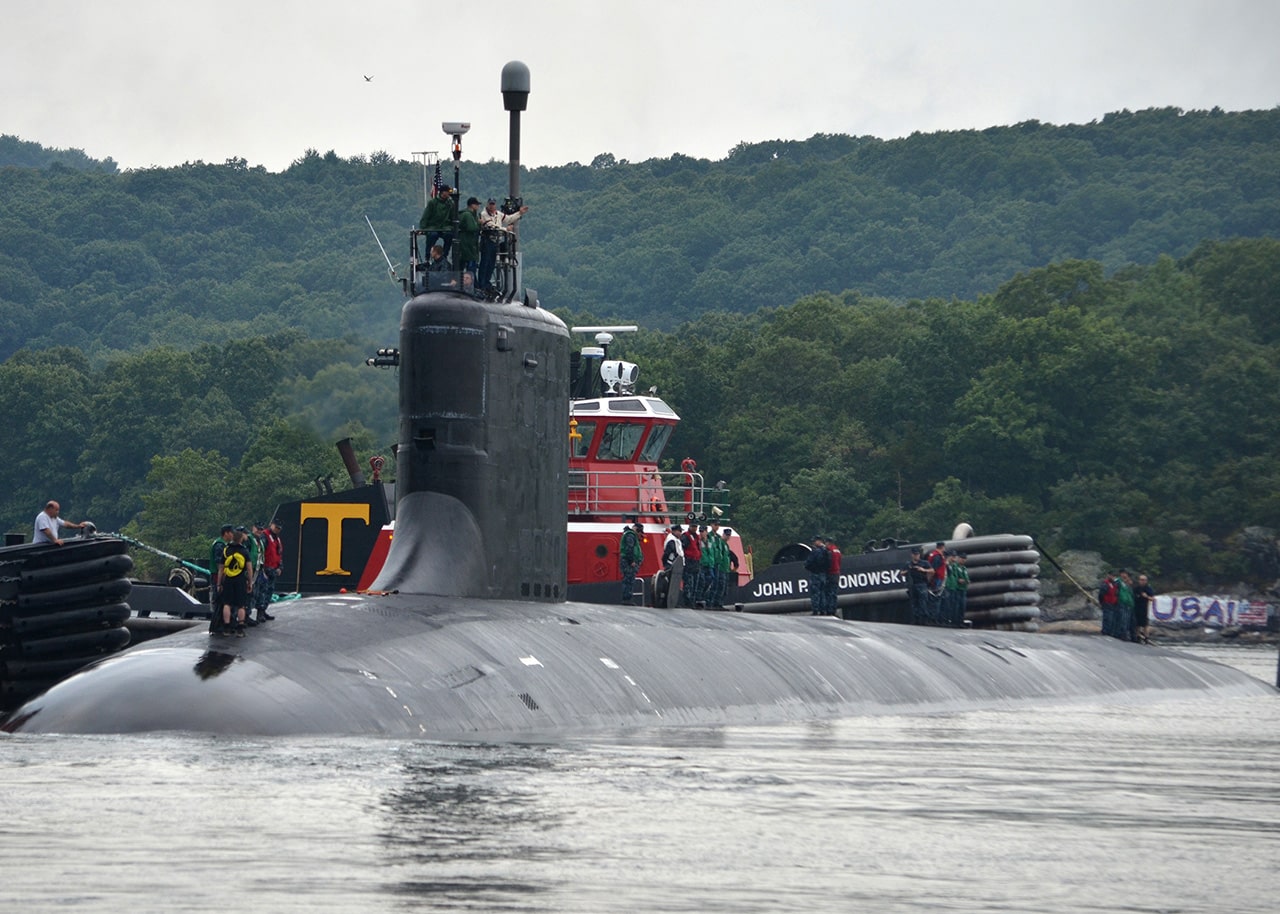
The first VPM-equipped submarine delivery is expected in FY 2029, with further deliveries taking place through to at least 2038.
“The Submarine Force is defined by our ability to operate undetected and strike without warning,” said Vice Adm. Rick Seif, Commander, Submarine Forces. “By integrating high-volume precision strike capabilities into these stealth platforms, these SSGNs serve as the ultimate enabler for Distributed Maritime Operations, giving our warfighters the overwhelming, flexible firepower required to win decisively in any theater.”
688 to Virginia
Replacing the Los Angeles (688 and 688i) class as the U.S. Navy’s primary fleet submarine, the Virginia class takes inspiration from its predecessor as well as the three strong Seawolf class to balance absolute performance with operational efficiency and affordability. A pumpjet unit replaces the Los Angeles class’ traditional propeller, while newer reactor developments have been designed to enhance natural convection effects so noise-emitting coolant pumps can be disabled at lower power levels for maximum stealth.
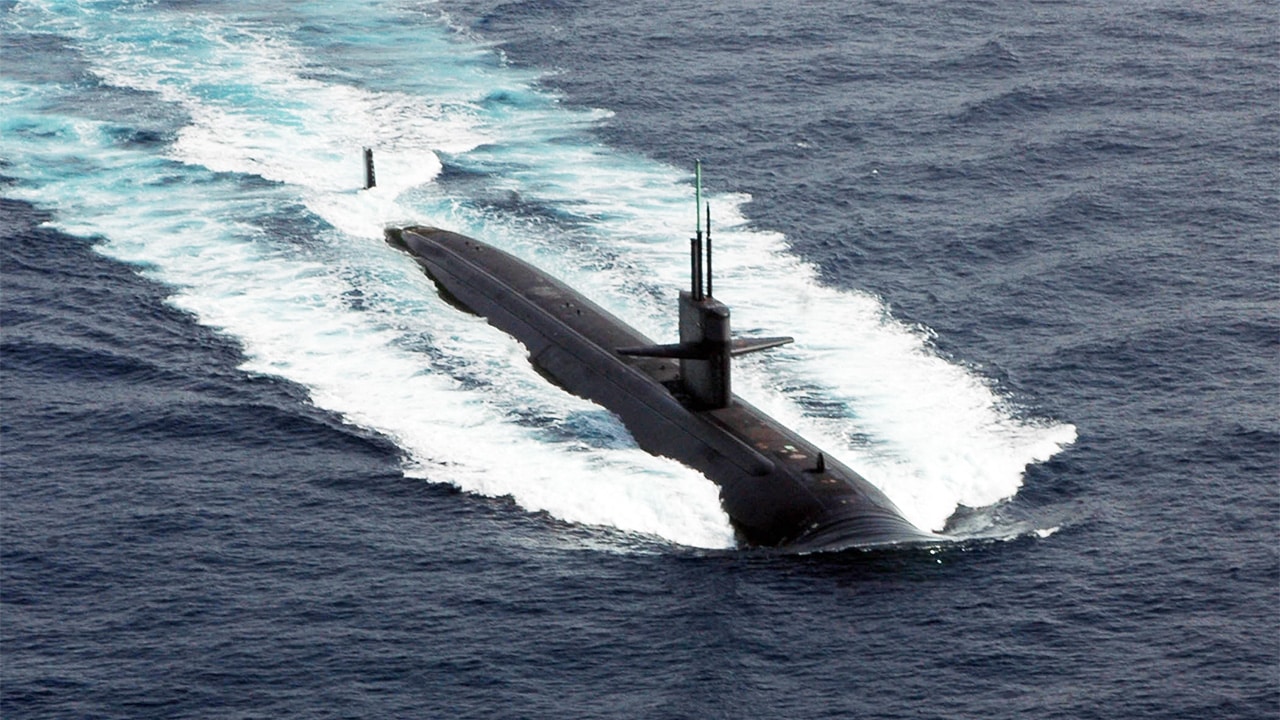
Sonar systems have been continually advanced and upgraded through the different Blocks of the Virginia class. The Virginias also feature larger lock-out chambers for an increased emphasis on special forces deployment. While slightly larger than the LA class, the Virginia was designed for improved performance in littoral areas in the post-Cold War expectation of the submarine’s role shifting from open sea engagements with Soviet fleets to clandestine operations in shallower areas.