Shield AI has been selected to integrate Hivemind on the LUCAS drones, enabling them to coordinate and operate intelligently in a swarm.
Shield AI’s Hivemind autonomous flight software will be integrated onto the U.S.-made Low-cost Unmanned Combat Attack System (LUCAS) One-Way Attack (OWA) drone, the company announced on May 19, 2026. Shield AI was selected by the Office of the Under Secretary of War for Research and Engineering (OUSW R&E) ahead of an operational demonstration this fall.
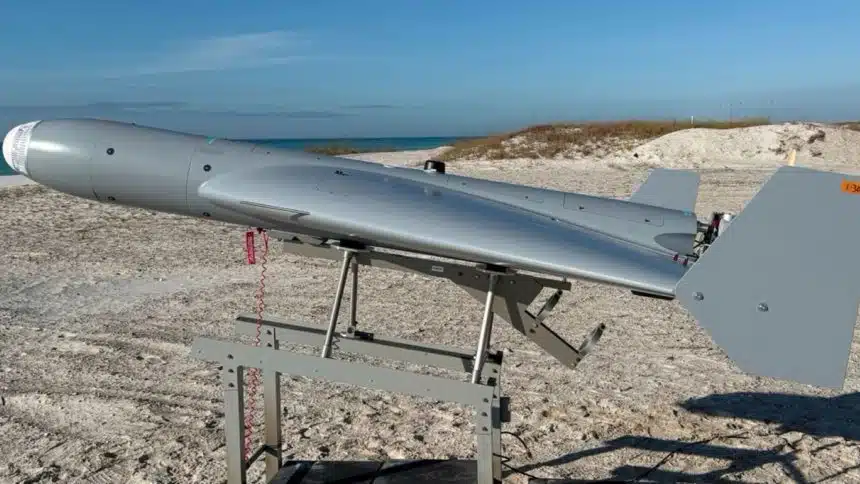
With Hivemind, LUCAS, a reverse engineered version of the Iranian Shahed-136 OWA, would be able to operate intelligently in coordinated swarms in degraded and contested environments, Shield AI said. The demonstration will feature a coordinated swarm operation of Hivemind-enabled LUCAS drones with minimal man-in-the-loop control.
With Hivemind, LUCAS drones can make more advanced maneuvers, fly in unpredictable patterns, trajectories, evade obstacles and ground-based air defenses. The announcement also comes amid U.S. President Donald Trump threatening to resume strikes on Iran under Operation Epic Fury, the same operation that saw the combat debut of the LUCAS drone.
Affordable mass just got smarter.@DoWCTO (OUSW R&E) selected Shield AI to integrate Hivemind onto LUCAS, the @DeptofWar‘s new class of low-cost, one-way attack drones built to operate in large numbers.
“LUCAS is about delivering affordable mass, but mass without coordination… pic.twitter.com/5NAGTj6k9k
— Shield AI (@shieldaitech) May 19, 2026
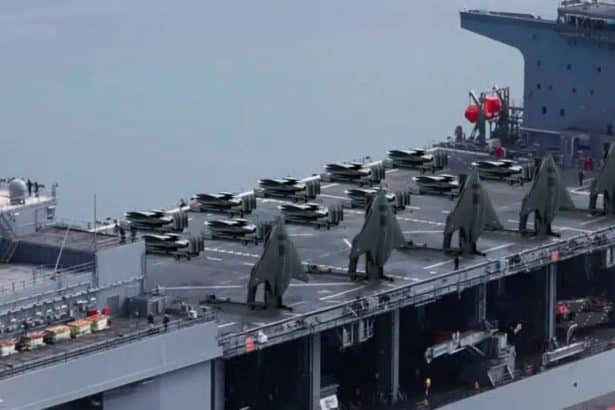
The U.S. Central Command (CENTCOM) revealed on Mar. 2 and Mar. 3 that LUCAS was among the dozens of air, ground and unmanned combat, reconnaissance and transport platforms used in the first 48 hours of the conflict. The drone was launched for the first time in December 2025, when it was employed from the flight deck of the USS Santa Barbara, an Independence-class Littoral Combat Ship (LCS)
CENTCOM commander Admiral Brad Cooper said that the LUCAS strikes were conducted by the dedicated Task Force Scorpion Strike. Videos emerged by mid-March showed LUCAS drones striking Iranian-backed militia targets in Iraq, and a near intact LUCAS drone, with no apparent damage to the airframe, was also captured by Iraqi locals.
The first confirmed footage of the use of the American kamikaze drone LUCAS during Operation “Epic Fury” against a target of the pro-Iranian “Popular Mobilization Forces” in the Mahmour area of the Nineveh province in Iraq. pic.twitter.com/Wjg5Q1rND4
— Jack Straw (@JackStr42679640) March 12, 2026
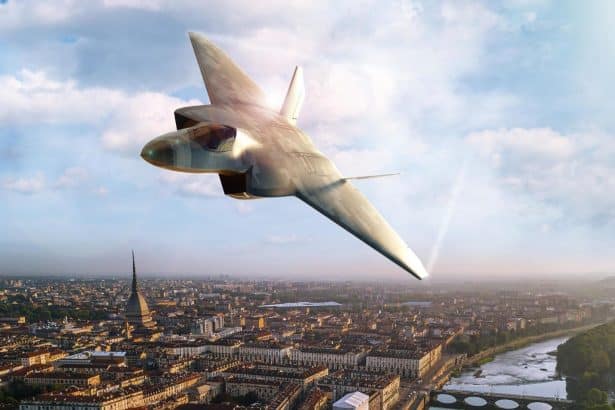
Hivemind has so far been tested on other platforms like the MQ-20 Avenger, the Airbus MQ-72C helicopter drone, BQM-177A and Airbus’s DT25 target drones, Anduril’s YFQ-44A Fury Collaborative Combat Aircraft (CCA), and Northrop Grumman’s Talon IQ autonomy testbed. A major platform it is meant to operate is Shield AI’s own X-BAT advanced Vertical Take-Off Landing (VTOL) fighter-class CCA, expected to be pitched in the CCA program’s Increment 2 phase.
Hivemind to power LUCAS OWAs
Shield AI described the LUCAS saying it is “designed to operate in large numbers” as “affordable mass […] that can be deployed together to overwhelm adversary defenses and give warfighters more capability at scale.” This is in line with descriptions which were already provided by the U.S. military.
In a reversal, footage of an American LUCAS attack drone hitting an Iranian-backed militia position in Iraq. pic.twitter.com/1o9Z48m8L7
— OSINTtechnical (@Osinttechnical) March 12, 2026
With only an input from the operator, the Hivemind AI pilot can enable groups of LUCAS drones to “coordinate, maneuver, and adapt together to changing conditions in real time.” Shield AI will conduct an operational demonstration this fall, where “a single operator will command a swarm of autonomous systems operating together.”
“The effort marks a major step toward operationalizing collaborative autonomy: teams of autonomous systems working together in dynamic and communications-constrained environments under the supervision of a single operator,” Shield AI said.
Shield AI’s co-founder and president Brandon Tseng upheld the importance of coordination to enhance affordable mass. “Hivemind is the AI pilot that makes that mass intelligent,” said Tseng. “It’s the autonomy layer that enables teams of drones to sense, decide, and act at scale. We’re proud to partner with OUSW R&E to put this capability in the hands of the warfighter at the speed of relevance.”
For the First Time, US Forces Use Deadly New Iranian-Style Kamikaze Drones in ‘Epic Fury’ Operation Against the Mullahs’ Regime | Paul Serran, The Gateway Pundit
The Lucas’ new kamikaze drones have their baptism of fire in the first salvo of the war on Iran.
We have been… pic.twitter.com/Kt3OoDhoBS
— Owen Gregorian (@OwenGregorian) March 2, 2026
Hivemind eases the employment of “networked unmanned systems” with only a single operator commanding multiple platforms simultaneously for “complex coordinated operations.” The release expanded on the nature and scope of human control: “Humans remain in control of strike decisions while autonomy manages navigation, coordination, and execution. The result shortens the time from detection to action across the kill chain.”
“The Hivemind AI pilot enables platforms to sense, decide, and act independently, without human intervention. Unlike traditional autopilots that cannot deviate from preplanned routes, Hivemind dynamically reroutes mission plans, responds to unexpected conditions, avoids obstacles, and executes complex tasks safely and effectively,” the release further said.
🚨Breaking: Locals in Iraq appear to have recovered a crashed but largely intact U.S. LUCAS one-way attack drone — a Shahed-136–style system — used in recent strikes during Operation Epic Fury.pic.twitter.com/6GikRVE1jt
— Red Line News (@RedLineNewsUSA) March 2, 2026
U.S. pursuing attritable drones
Developed by Arizona-based Spektreworks, the LUCAS drone is internally designated the FLM 136 – a clear reference to the Iranian Shahed-136 design that inspired its development. However the LUCAS’s kinematic characteristics are considerably lower to the Shahed, with a range of 350 nautical miles, six-hour endurance, 40 pound payload and 180 pound Maximum Take-Off Weight.
The Shahed-136, on the other hand, can reach 1,350 nautical miles, has a 110 pound warhead and a 440 pound maximum take-off weight. Nevertheless, the advancement in the LUCAS program comes amid Pentagon aspiring to both increase production and field a host of attack drones as a part of Secretary of War Pete Hegseth’s Drone Dominance initiative.
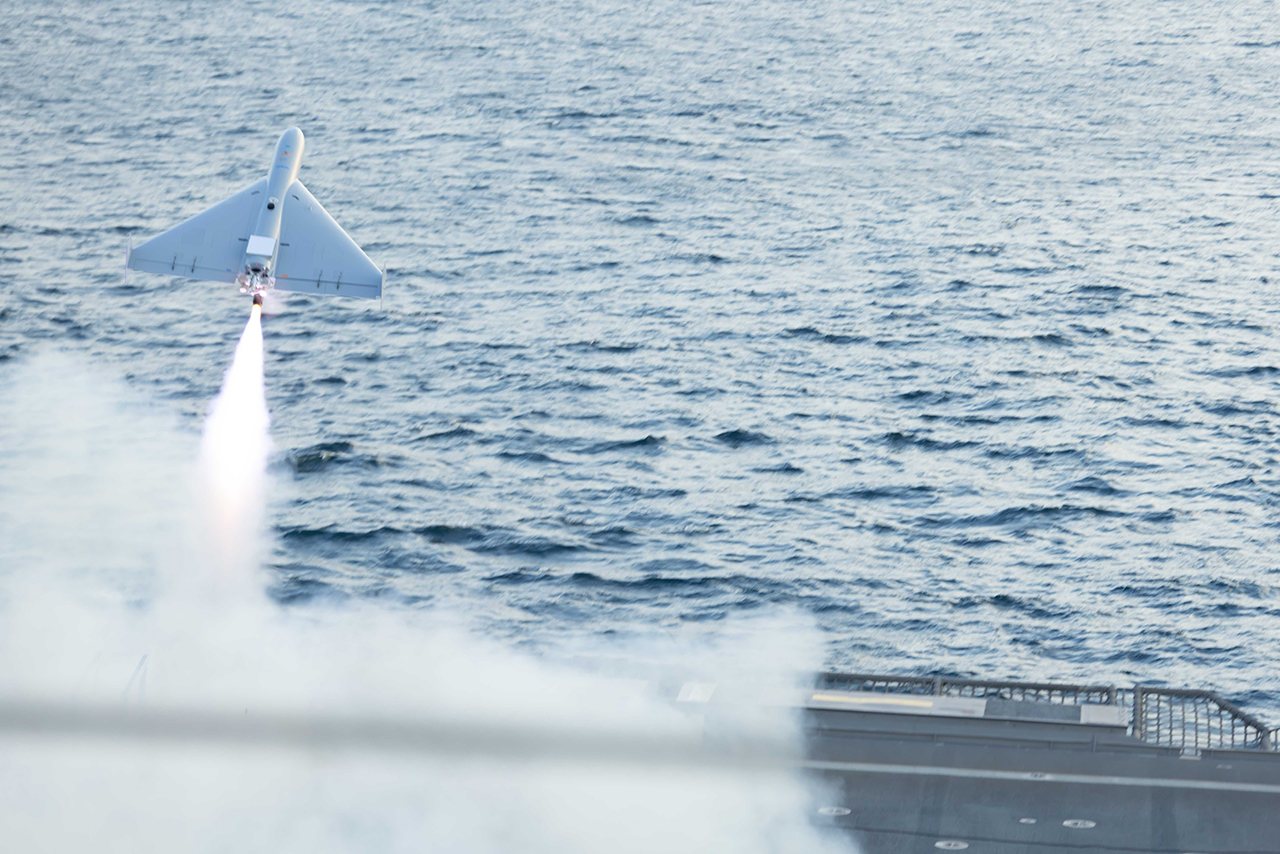
The costs involved play a big part in this, as a single LUCAS drone costs about $35,000. This also reflects the Pentagon’s current focus on high numbers of low-cost weapons to be quickly procured.
Prioritizing autonomous capabilities, the DoW in fiscal 2027 alone plans to spend nearly $55 billion, overseen by the Defense Autonomous Warfare Group (DAWG) outfit. The DAWG is essentially a Trump administration iteration of the Biden-era Replicator initiative to acquire thousands of low-cost “attritable” drones, particularly for use in the Pacific.