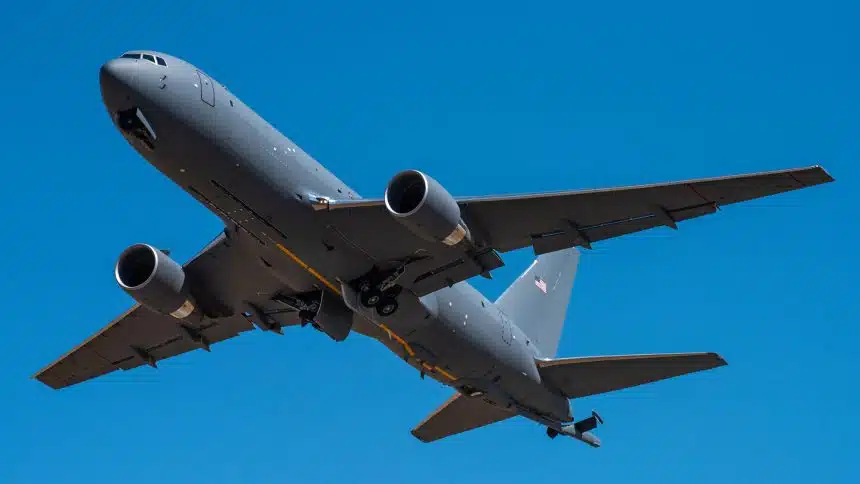
Although the key fixes for the KC-46 will still take years to fully reach the fleet, a new plan promises a 20% availability increase by 2030, faster RVS 2.0 retrofits and a limited Boeing-led sustainment effort.
The U.S. Air Force and Boeing have announced a new plan to improve the readiness of the KC-46 Pegasus tanker fleet and accelerate the delivery of long-awaited upgrades. The initiative, which appears to be an attempt to turn the program from a troubled acquisition effort into a more stable operational capability, is built around three main streams: repurposing early-build aircraft for immediate fleet support, accelerating the retrofit schedule for the Remote Vision System 2.0, and implementing a temporary performance-based logistics arrangement focused on the aerial-refueling subsystem and other key readiness drivers.
According to an Air Force article published on May 12, 2026, the combined measures, together with investments included in the Fiscal Year 2027 Presidential Budget Request, are expected to increase KC-46 aircraft availability by more than 20% by 2030.
“The KC-46 is a cornerstone of U.S. power projection, and we are proactively partnering with Boeing to ensure it is always ready to deliver,” said Secretary of the Air Force Troy Meink in the service’s release. “By establishing this multi-pronged approach, we are directly improving aircraft availability, accelerating the delivery of vital new capabilities and significantly enhancing the overall supportability of the fleet.”
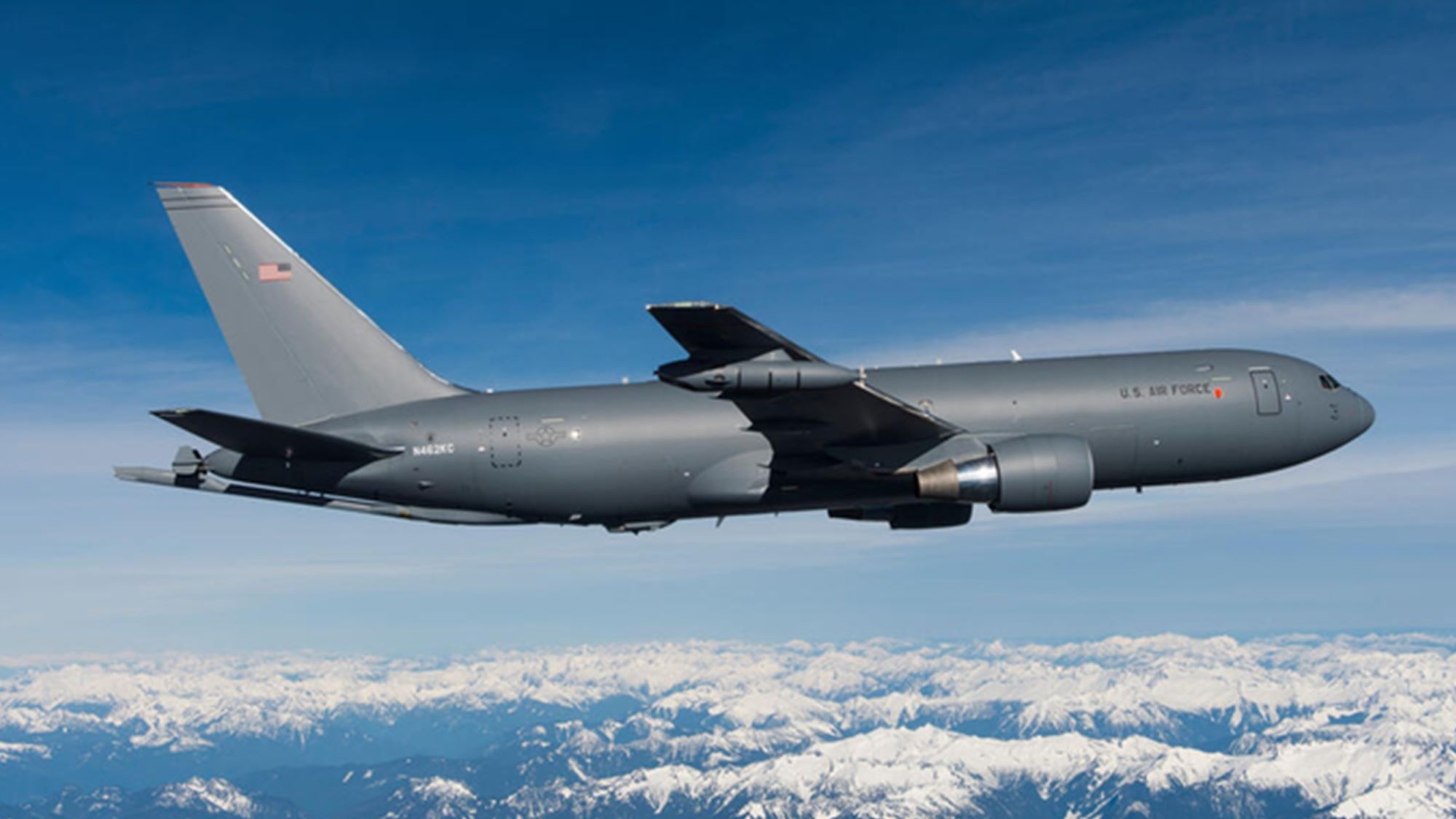
The first part of the plan involves five early-build KC-46 aircraft. Rather than wait for them to enter the operational fleet (not before early 2031), the Air Force will use them to generate a more immediate readiness effect. Three non-operational aircraft will be repurposed to free high-value materiel, including engines and landing gear that will be used as spare parts for the fleet, while the remaining aircraft will support developmental and test activities, allowing operational tankers to remain focused on fleet missions.
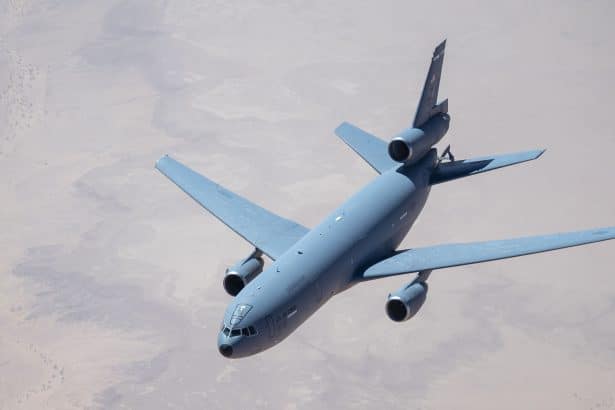
The second and perhaps most closely watched element of the plan concerns the Remote Vision System 2.0, or RVS 2.0. As we have explained many times here at The Aviationist, the system provides high-definition stereoscopic imagery to the vision goggles attached to a sort-of flight helmet worn by the boomer during the air-to-air refueling, replacing the direct view technology used by the USAF in KC-135 and KC-10 tankers legacy tankers, where the boom operator looks directly through a window at the receiver aircraft. RVS 2.0 replaces the original remote camera and display architecture (RVS 1.0) used by KC-46 boom operators, introducing fixes to the image washout and 3D distortions affecting the original KC-46 RVS 1.0 design, especially under certain lighting conditions. These issues, some of the most persistent problems affecting the Pegasus since its entry into service, have been classified among the KC-46’s Category 1 deficiencies.
Boeing initially agreed to the Air Force’s demand in April 2020 to redesign the entire RVS and introduce the RVS 2.0 at no additional cost to the government. However, a series of technical, critical design reviews and certification for commercial off-the-shelf camera hardware kept pushing the RVS 2.0 delivery beyond 2026. As of late 2025, the service-wide retrofit was said to be expected in 2027, when RVS 2.0 would finally be certified and approved for delivery.
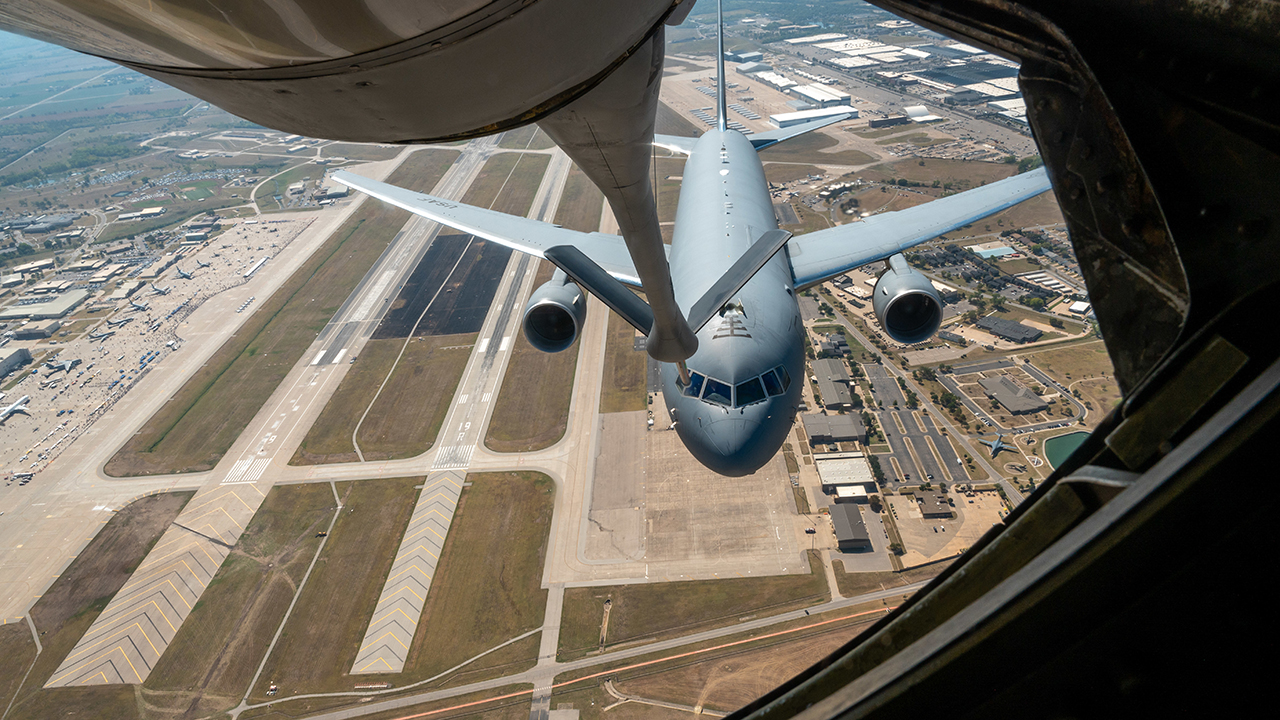
The new Air Force release offers a mixed picture: the retrofit campaign may be much faster once it starts, but the initial fielding of the full fix still appears to have moved further to the right. “Scheduled to begin fielding in early 2028, the plan creates a partnership with Boeing to bundle the modification with the Air Force’s depot-level maintenance and accelerate kit deliveries. This strategy reduces the retrofit timeline from 13 years to seven years, while simultaneously reducing the retrofit’s impact on aircraft availability by 90%.”
The third element of the new agreement is a temporary performance-based logistics effort targeting the aerial-refueling subsystem and other key components. The Air Force says reliability and parts availability of the aerial-refueling subsystem “collectively represent the largest detractors of KC-46 availability. This effort makes Boeing responsible for improving the availability of these critical systems and is designed to ensure a successful transition back to organic Air Force sustainment after a limited five-year period.”
This is one of the most significant parts of the announcement. While much of the public debate around the KC-46 has focused on RVS, the new plan effectively acknowledges that the Pegasus’ readiness problem is broader than a single system. It includes supportability, parts availability, depot timing and the reliability of the refueling equipment itself.
Indeed, in addition to RVS deficiencies, the tanker has suffered from boom-related issues, including the stiffness of the telescoping actuator, which affected its ability to refuel some types of receiver aircraft, as well as fuel system leaks, delivery pauses and quality issues.
Issues with the flying boom have also been concerning: there have been several cases of so-called nozzle binding, in which the boom nozzle becomes stuck or mechanically loaded during contact with the receiver aircraft. According to a story by The War Zone in August 2025 that three nozzle-binding incidents had cost the Air Force tens of millions of dollars in damage, while Defense One reported that investigations tied accidents to both boom handling and limitations in the information available to the boom operator.
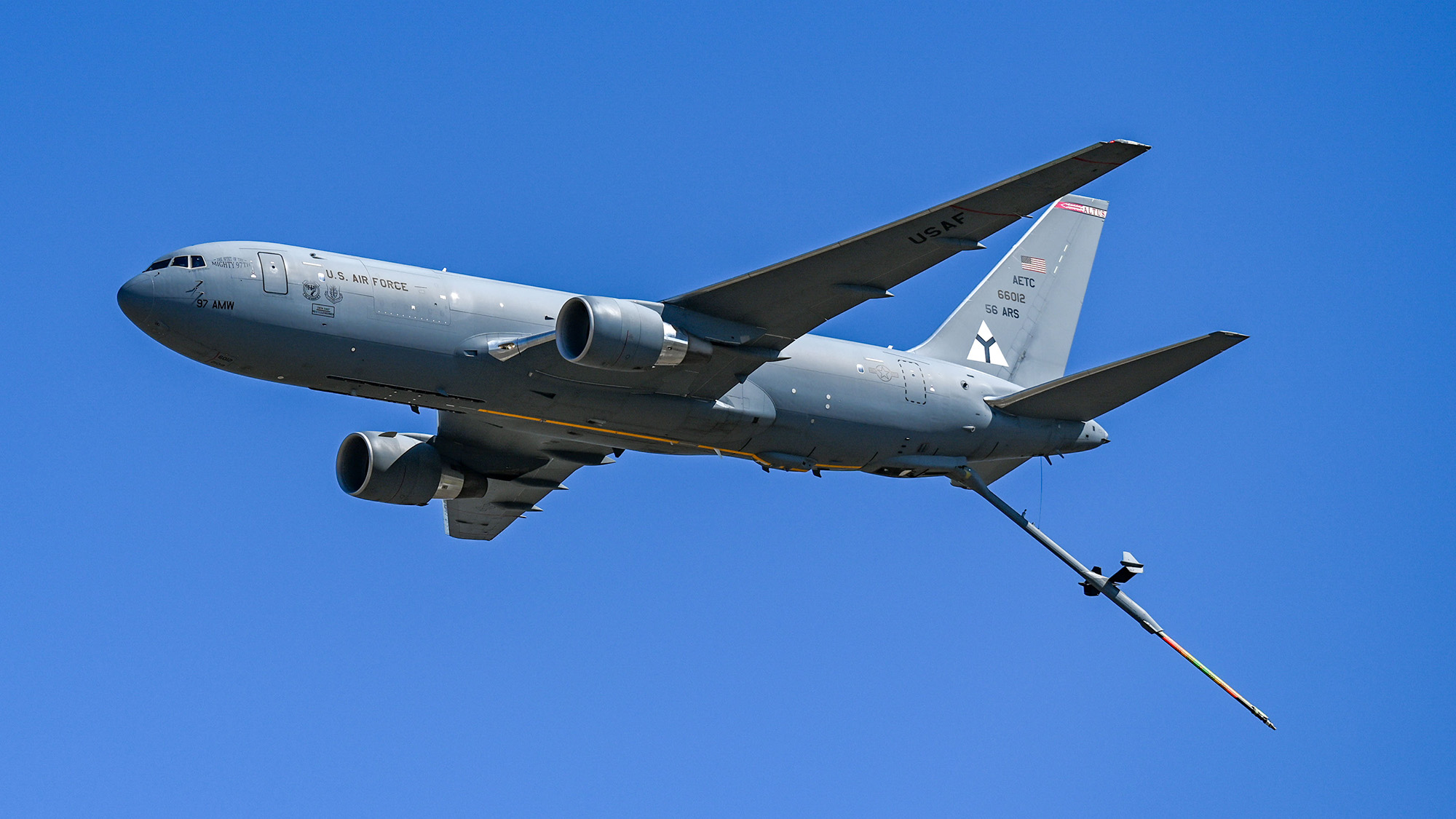
In February 2025, Boeing temporarily halted KC-46 deliveries after cracks were found on two aircraft awaiting delivery, prompting inspections of the then 89-aircraft Air Force fleet. The Air Force said at the time that the cracks were not found on flight surfaces or hinges, but on primary or secondary structures.
Boeing announced on Nov. 26, 2025, the award of a new contract, worth $2.47 billion, to build 15 additional KC-46A Pegasus refueling tankers for the U.S. Air Force, covering Production Lot 12. With the then 98 KC-46As already delivered to the service the total number of aircraft in the fleet will increase to 113 airframes.
Including six aircraft of the JASDF (Japan Air Self-Defense Force) and six ordered by the Israel Air Force, there are a total of 183 KC-46A multi-mission aerial refuelers “on contract or in service globally, providing advanced capability advantages for the joint force and allies,” the company said. The KC-46A is poised to replace the older KC-135 Stratotanker, of which the USAF operates 375 airframes, as per the 2025 World Air Forces report.
The service announced in July 2025 it would purchase another 75 KC-46 Pegasus refuelers on top of the current program of record for 188 while the Air Force explores plans for a Next-Generation Air Refueling System. The additional KC-46s are intended to serve as a short-term measure to keep production on a modern tanker going while the Air Force considers a long-term plan to replace its aging fleet of about 375 KC-135 Stratotankers.
However, as Air & Space Forces Magazine reported earlier this year, the Air Force would not finalize the planned contract for another 75 KC-46s until Boeing resolved outstanding deficiencies.
Breaking Defense reported that lawmakers are questioning a projected increase in future KC-46 prices, with budget documents showing a gross unit price rising from around $235 million in FY2027 to roughly $334 million for aircraft bought in FY2028. That adds another layer to the issue: even as the Air Force needs more modern tankers, Congress is watching both the aircraft’s technical maturity and its price trajectory.
William Bailey, performing the duties of the Assistant Secretary of the Air Force for Acquisition, Technology and Logistics, said the agreement secures Boeing’s continued investment in KC-46 readiness and the production line, lowering risk for the transition to KC-46 Production Extension.
In its fourth quarter 2025 earnings release, Boeing disclosed a $565 million loss tied to the KC-46. The company has already accumulated more than $7 billion in losses because of the new tanker since contract award; the KC-46 Pegasus is one of the costliest fixed-price programs in the company’s defense portfolio.
While the future of the KC-46 is somewhat still in question, what does not change is the fact that the Air Force needs to retire and replace older tankers. The effect is a sort of paradox: the aircraft is both a troubled program and an increasingly indispensable capability. It has entered service, deployed globally and continues to expand across the Air Force, Air National Guard and foreign customers (the latest one being Israel), but it has not fully escaped the long shadow of its technical deficiencies and damaged reputation, which have also cost it some additional international orders.
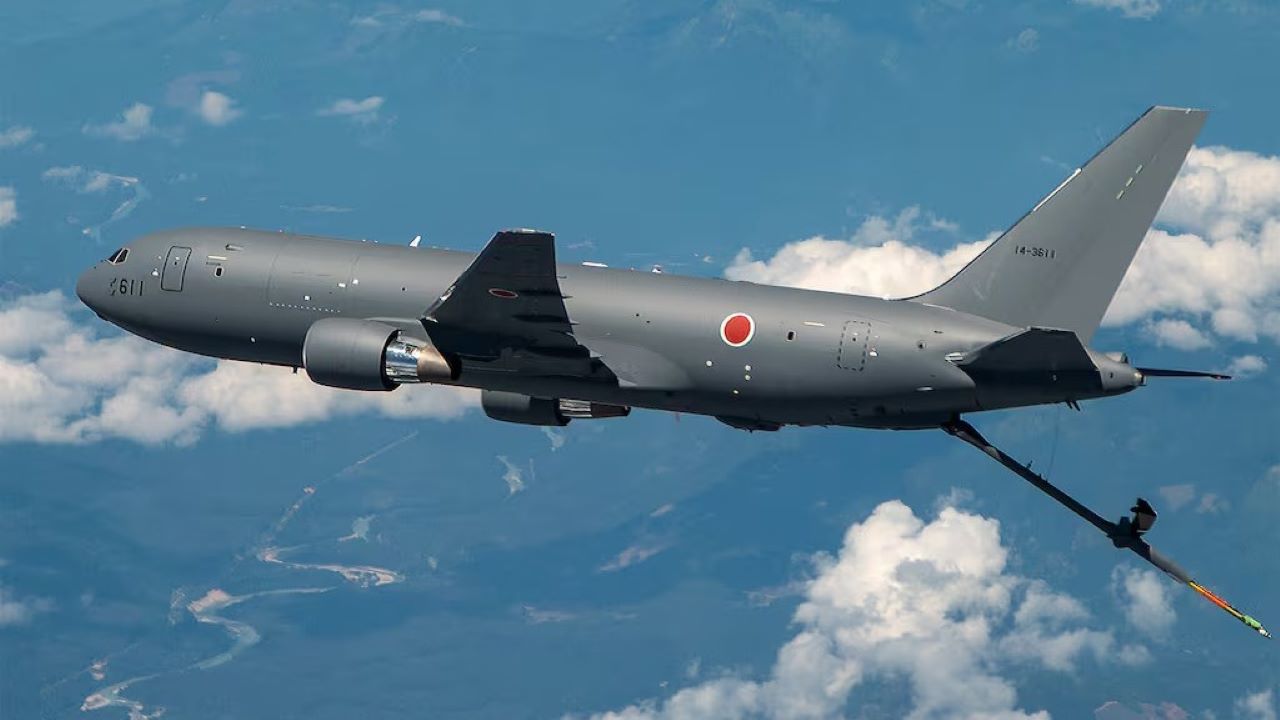
The latest announcement does not erase the Pegasus’ troubled history. RVS 2.0 is still not in operational service, the boom and aerial-refueling subsystem remain central readiness concerns, and future aircraft buys are tied to confidence that Boeing and the Air Force can close the remaining gaps. But the plan seems to show that the U.S. Air Force is now trying to save time while increasing availability and confidence by harvesting parts from early-build aircraft, synchronizing depot work with RVS 2.0 retrofits and placing more sustainment responsibility on Boeing through a temporary performance-based logistics arrangement.
Whether it will succeed remains to be seen. What is certain is that something had to be done. The KC-46 is no longer just a tanker type waiting for fixes to its teething issues; we are well past the point of no return. The Pegasus is now a fleet that must be actively managed, sustained and improved, one way or another, while already performing a critical operational role.