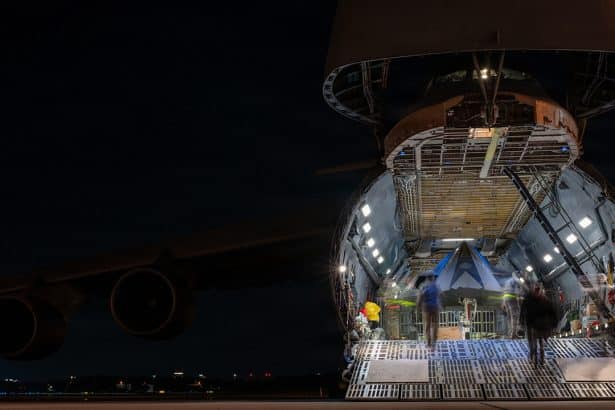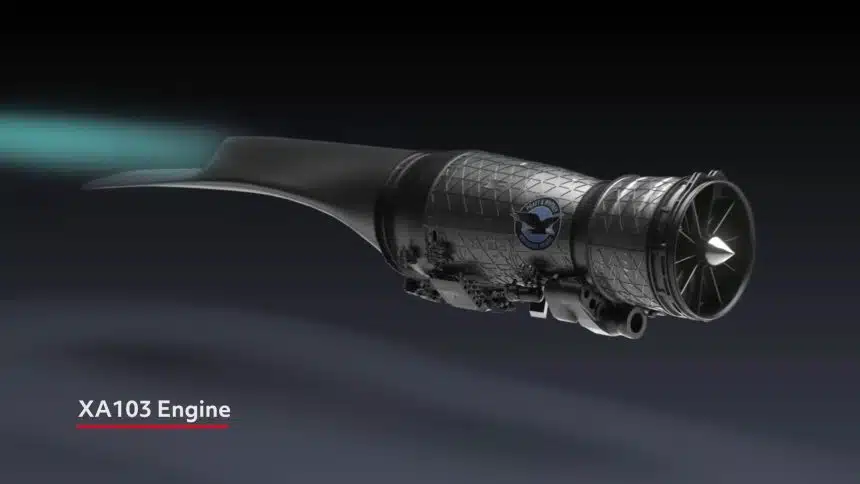
Pratt & Whitney and General Electric completed the Assembly Readiness Reviews of XA103 and XA102 engines, activating their supply chains to prepare for the assembly of the physical NGAP engines.
Engine makers Pratt & Whitney (P&W) and GE Aerospace have completed the Assembly Readiness Reviews (ARR) of their XA103 and XA102 adaptive cycle engines, both companies announced over the last few days. The engines, which P&W defined as platform agnostic, are being developed as part of the Next Generation Adaptive Propulsion (NGAP) to power future U.S. Air Force aircraft, including the F-47 Next-Generation Air Dominance (NGAD) fighter.
The firms said they are now moving from digital engine models and simulated tests to assembling the physical engines for trials by procuring the components from other vendors. A timeline is not yet available, but P&W said testing is expected in the late 2020s.
The XA102 and XA103 passed the Critical Design Reviews (CDR) in 2023 and 2024, respectively. This was followed by both companies completing Detailed Design Reviews (DDR) of their engines in early 2025, and a subsequent $3.5 billion U.S. Department of War (DoW) contract award to P&W and GE Aerospace to develop prototypes.
The coming years are expected to see ground testing, followed by flight testing. However, the engine might not be ready in time for the F-47’s proposed first flight by 2029, with the first batch of aircraft using another powerplant instead of NGAP engines, according to reports by Flight Global.
The U.S. Air Force’s FY2027 budget seeks $514 million for the NGAP, a $187 million increase than the previous year, specifically to fund competitive prototyping. The service has also sought $5 billion in Research Development Test and Evaluation (RDT&E) funding for the F-47 NGAD in FY2027, peaking to $5.25 billion in 2028 before dipping to $4.12 billion in 2029, $3.29 billion in 2030 and $2.95 billion in 2031.
ICYMI: Pratt & Whitney cuts metal and releases imagery of its digitally designed NGAP offering for the @usairforce – the XA103 engine.
Read more details on @AviationWeek: https://t.co/glZI2zNvXc pic.twitter.com/8t1f98pdq1
— RTX (@RTX_News) July 11, 2025
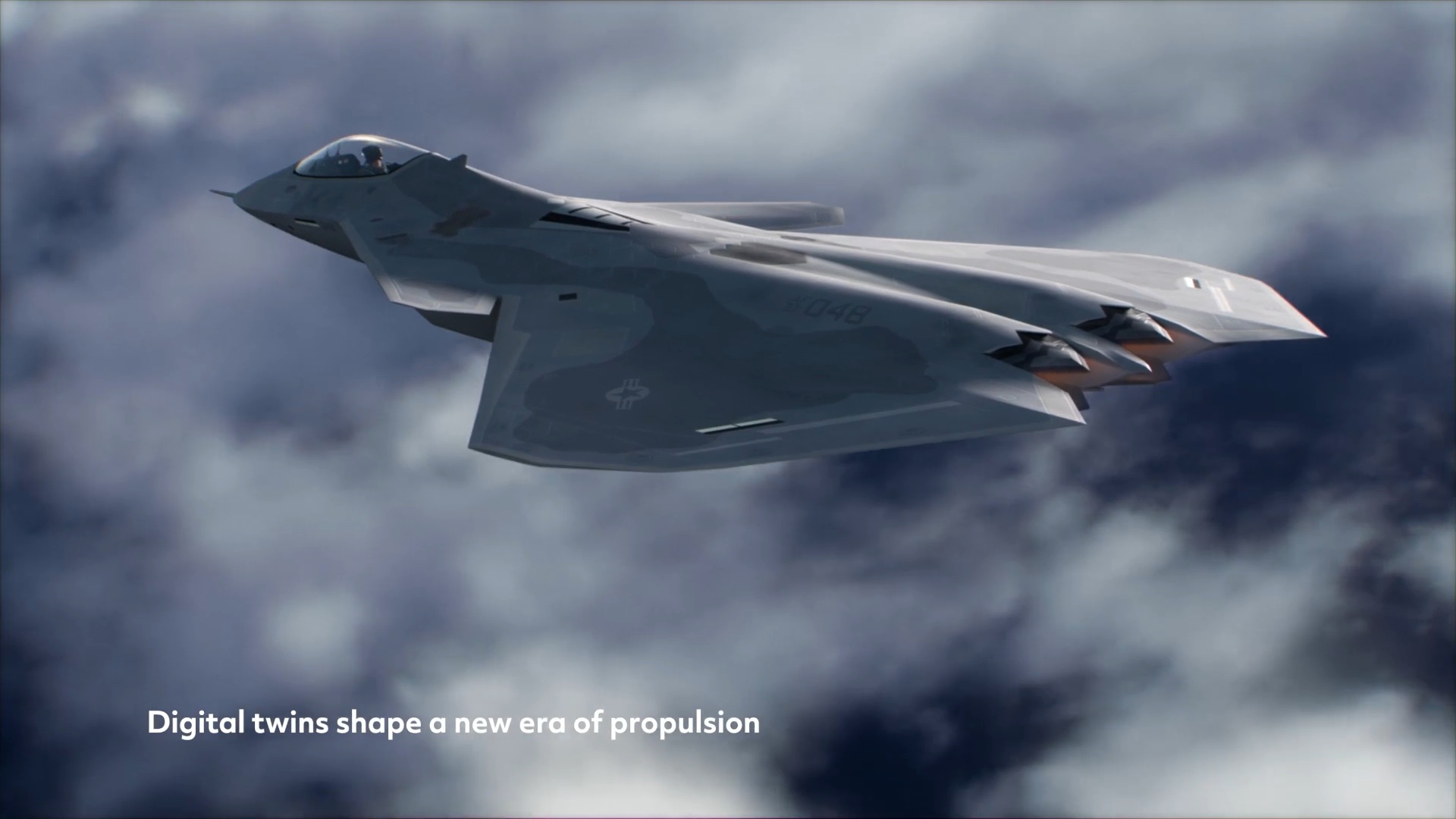
Renderings of the NGAD have also appeared in promotional videos by P&W in June 2025 and February 2026. These however are notional concepts, far from the actual aircraft whose appearance is still a closely guarded secret.
P&W XA103
Pratt & Whitney, an RTX company, said in a May 8 release that it completed a fully digital technical assessment of its XA103 engine for the U.S. Air Force’s Next Generation Adaptive Propulsion (NGAP) program. “The assembly readiness review marks Pratt & Whitney’s progress in transitioning from designing in a digital environment to procuring and producing physical hardware,” the company explained.
President of P&W’s engines division Jill Albertelli said the milestone “demonstrates [the company’s] investment in digital infrastructure, showcasing seamlessly integrated digital capabilities and reinforcing our strong collaboration with the U.S. Air Force.” The next step will see Pratt & Whitney’s NGAP team “working with its supply base to procure the components needed to assemble the XA103 for testing,” expected in the late 2020s.
“As we move forward with assembling our engine for testing, our NGAP team is simultaneously developing novel digital validation tools,” added Albertelli. “The performance we expect this engine to deliver exceeds anything available today, reinforcing the critical importance of continuous improvement and stable investment in maintaining propulsion as a strategic competitive advantage.”
The XA103 engine’s adaptive cycle design would “provide advanced survivability, fuel efficiency, and robust power and thermal management for next-generation platforms.” Adaptive cycle engines allow for the bypass ratio – the ratio between the cold air that flows around the engine core and the air that enters the core for the combustion- to be adjusted mid-flight.
The engine can therefore switch between a high and low bypass mode. This allows switching between long-range fuel efficient flight and high-performance flight with improved speed, thrust, and power generation modes, depending on mission needs.
GE XA102
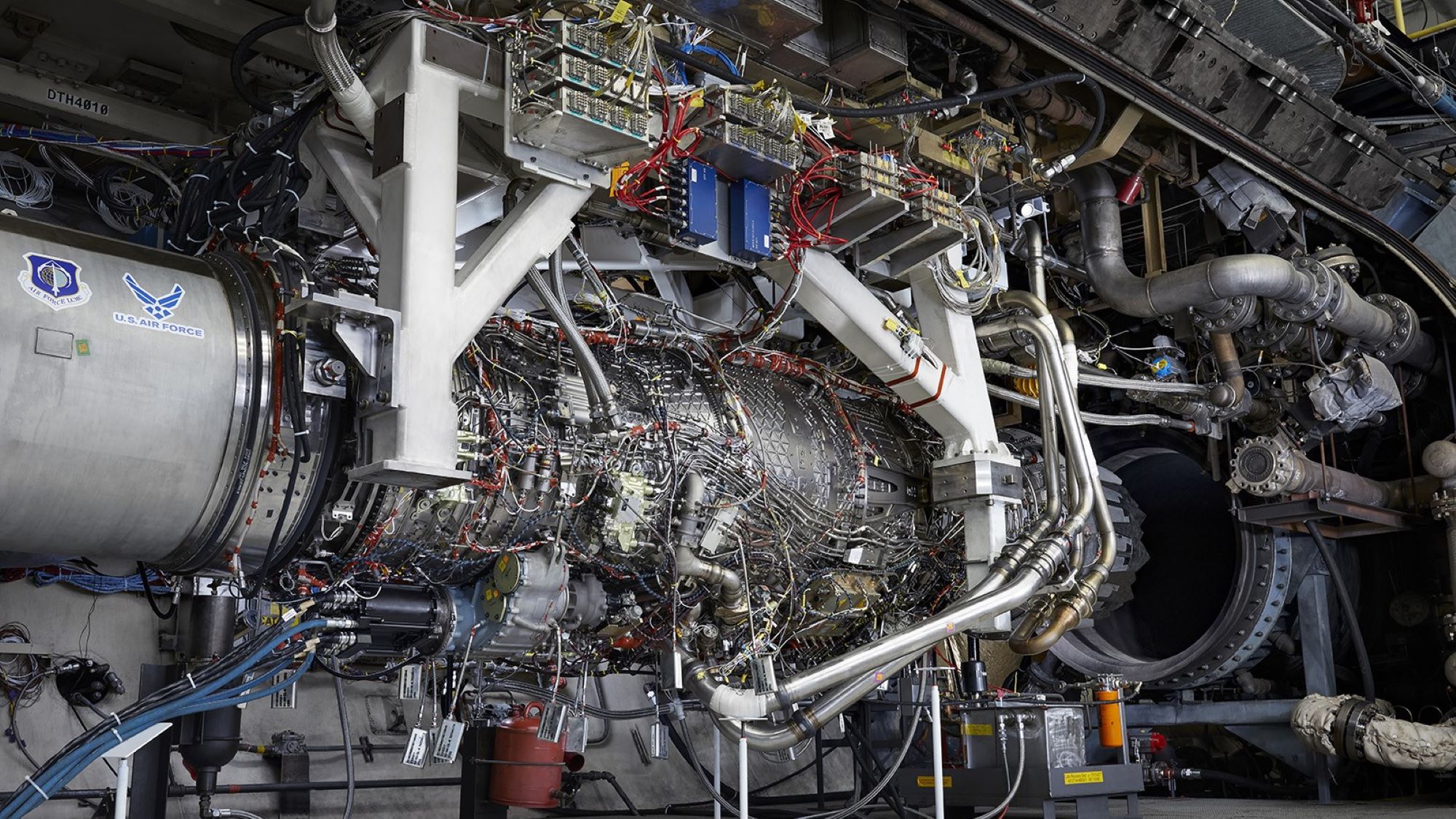
GE Aerospace said the Assembly Readiness Review (ARR) for its XA102 adaptive cycle engine follows rigorous digital model based systems engineering design, paving the way for the decisions on the industrial and commercial side, ahead of contract awards for the NGAP’s next phase. “The ARR validates that the XA102 engine design, manufacturing processes, and supply chain are progressing and on schedule to be awarded the next phase later this year,” says the company.
GE said its “comprehensive digital engine model […] leverages a model-based definition approach in place of traditional two-dimensional drawings.” The conclusion of all demonstrations for the model-based engine marks the end of the first phase of the program, further added the company.
Digital twin-based Model-Based Systems Engineering (MBSE) development approaches to build aerial platforms like the B-21 Raider and the NGAD allows the testing of an exact replica with near-accurate simulations on how an aircraft will perform. This allows changes and modifications to be incorporated quickly, without delaying production and delivery timelines.
GE also mentioned its earlier XA100 engine, developed for the potential F-35 re-engining and upon which the XA102 was designed, which completed “multiple successful rounds of testing, maturing adaptive engine technologies.” This informed the digital model, which “enables improved accuracy and accelerated production timelines.”
“With the completion of the Assembly Readiness Review, we are demonstrating the maturity of our XA102 engine design and the strength of our digital-first approach to developing next-generation propulsion systems,” said Dr. Steve “Doogie” Russell, vice president and general manager of Edison Works at GE Aerospace. “Our use of a fully integrated digital engine model, which spans design, manufacturing, and inspection, positions us to deliver advanced capability faster and with greater precision for the warfighter.”
Similarly to P&W, the company did not explicitly mention the F-47, vaguely hinting at the expected capabilities of the future fighter. “These technologies will enable next generation fighter aircraft with improved range, survivability and thermal management capabilities for advanced weapons and sensors,” said the company.