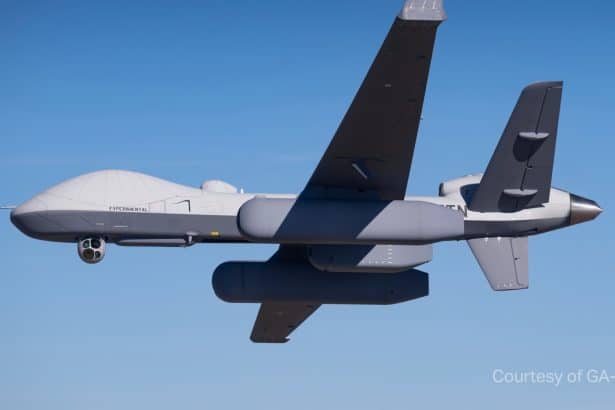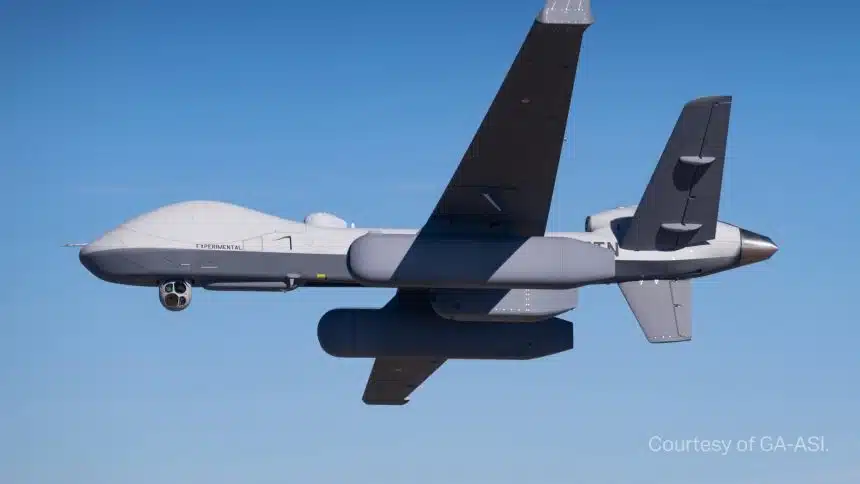
GA-ASI and Saab are testing the LoyalEye radar installed in the MQ-9B’s new Airborne Early Warning pods, which first flew in May 2026.
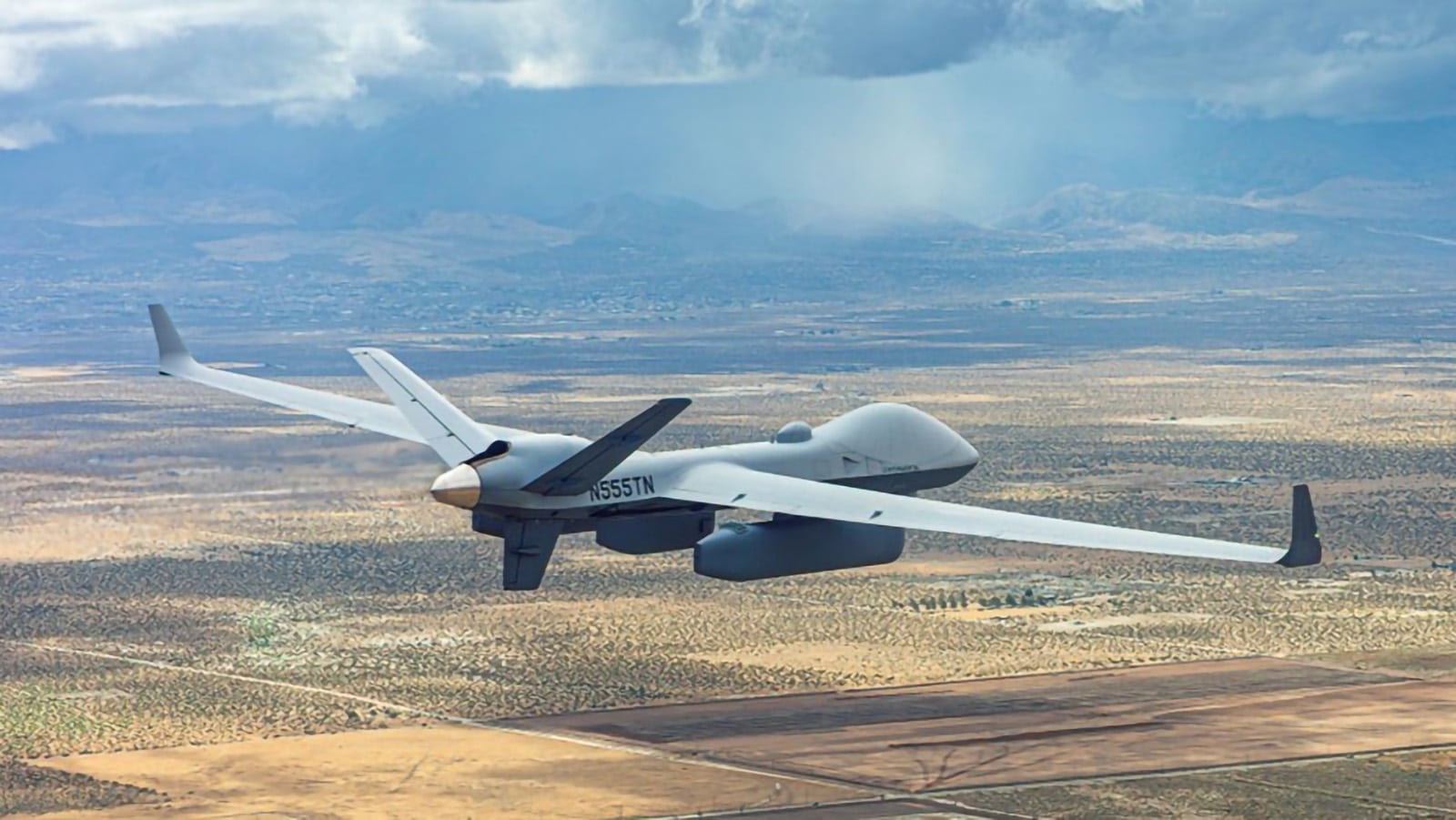
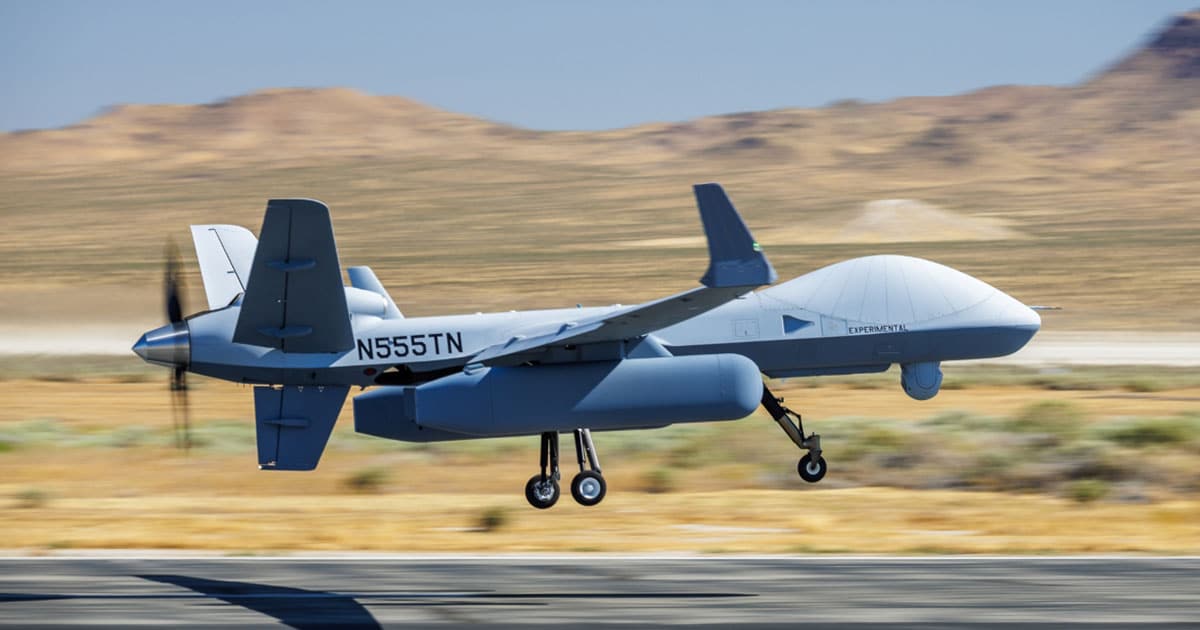
General Atomics Aeronautical Systems (GA-ASI) and Saab announced that they started the testing of the new Airborne Early Warning (AEW) payload for the MQ-9B Uncrewed Aircraft System (UAS). According to the press release, the testing was conducted over the past few months using a company-owned MQ-9B carrying a Saab LoyalEye radar and flying from GA-ASI’s Desert Horizon facility in Southern California.
The radar was carried inside the AEW pods which flew for the first time on the MQ-9 in May 2026. The test is part of the joint effort between the two companies to develop an unmanned, persistent and cost-effective air surveillance capability, first announced in June 2025.
In the recent flight tests, MQ-9B demonstrated simultaneous tracking of multiple airborne and maritime targets at long ranges using the LoyalEye AEW radar aboard the advanced #UAS.
Read the news: https://t.co/MRFR60QljU
#MQ9B #AEWC https://t.co/fuNMFPLKL4
— General Atomics Aeronautical Systems, Inc (GA-ASI) (@GenAtomics_ASI) October 28, 2026
GA-ASI previously stated that testing of the MQ-9B with the AEW payload was planned for the summer of 2026. The two companies also previously mentioned 2026 as the year the system would be operational.
Advanced flight testing of AEW payload
According to GA-ASI, the flight test demonstrated “simultaneous tracking of several airborne and maritime targets at long ranges,” in what Saab described as “a representative operational scenario.” GA-ASI further specified that the airborne targets tracked included “multiple instrumented red fighter jets and several commercial aircraft.”
The mention of “red fighter jets” could possibly be a reference to the F-5 Advanced Tigers employed by Tactical Air Support, which have often taken part in GA-ASI’s test events. The company, however, did not provide additional details on this.
“This has been one of the most highly anticipated flight tests we have performed,” said GA-ASI President David R. Alexander. “The level of customer interest in AEW capability on MQ-9B throughout the world is extremely high. It just makes sense.”
The company did not explicitly identify the customers, however it was revealed last year that a possible customer is the United Kingdom. In fact, the UK’s Secretary of State for Defense said in May 2025 that the MQ-9 is being considered as a candidate for the Royal Navy’s requirement for Carrier Strike Airborne Early Warning.
“This flight test underscores Saab’s commitment to evolving airborne early warning capabilities to meet future operational needs,” said Carl-Johan Bergholm, Head of Saab’s business area Surveillance. “LoyalEye complements existing capabilities by adding flexibility, extending reach, and enabling a more efficient use of resources in demanding environments.”
Unmanned AEW capability
In the press release, GA-ASI notes that, historically, the AEW capability has depended solely on large, crewed aircraft. The company says that the AEW payload on the MQ-9B introduces a new approach, combining long endurance, persistent airborne sensing on a UAS.
“MQ-9B’s ability to surveil large areas for extended periods expands coverage, and establishes persistent surveillance in operating environments where endurance, geographic reach, and reduced aircrew exposure are critical,” said GA-ASI.
Additionally, the company says that an unmanned AEW capability would allow to also introduce a distributed Battle Management Command & Control (BMC2) capability, increasing the platform’s flexibility. BMC2 is one of the capabilities that is usually found on manned AEW&C aircraft, and GA-ASI says the MQ-9B could offer this capability when coupled with appropriate infrastructure “on the ground, on a ship or on an existing manned AEW aircraft.”
One of the advantages mentioned in the press release is the ability to deploy AEW in areas where it previously was unavailable, without risking the loss of crew. When coupled with a manned AEW aircraft, as suggested in the BMC2 concept, the unmanned MQ-9 would be able to get its sensors closer to contested airspace while the manned aircraft stays at a safe distance.
The partnership
General Atomics Aeronautical Systems and Saab first announced the collaboration for the development of a podded Airborne Early Warning and Control (AEW) on June 15, 2025. At the time, the companies stated that the new capability would be operational by 2026 and available for the SkyGuardian, SeaGuardian, the United Kingdom’s Protector RG1, and the new MQ-9B STOL (Short Takeoff and Landing).
GA-ASI said that the goal was to develop an affordable AEW solution which can be used “against both sophisticated cruise missiles and simple but dangerous drone swarms.” Additionally, the new platform would be able to operate where larger platforms are not feasible.
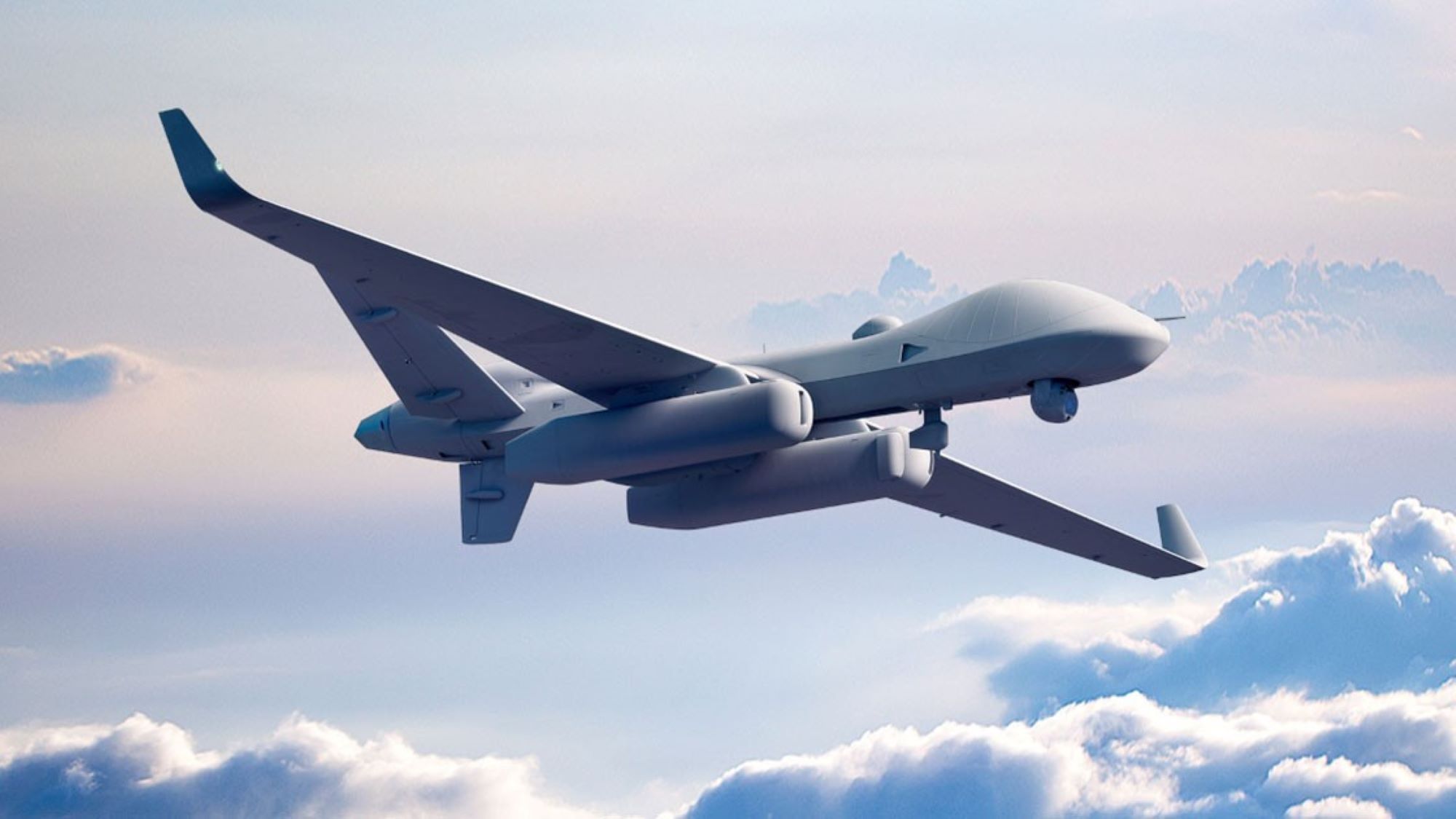
The renderings released by the two companies show the MQ-9B equipped with three specialized pods for the AEW mission. Two pods, one under each wing, are understood to host the radar arrays, while a third pod installed on the centerline would be used for the processing units.
Notably, Saab is also the developer of the Erieye aerial AESA radar system, the main component of the GlobalEye AEW&C aircraft. It is however unclear if there is a relation between LoyalEye and Erieye.
The companies did not specify if they already received interest by possible customers. However, the UK’s Ministry of Defense said in May 2025 that the MQ-9 is being considered as a candidate for the Royal Navy’s requirement for Carrier Strike Airborne Early Warning.
The MQ-9-based AEW capability would replace the Crowsnest Airborne Early Warning system, based on the AW101 helicopter, when it reaches the end of its service life. The drones would be carrier-based, as the Royal Navy assessed that the MQ-9 can be modified to operate from the Queen Elizabeth class aircraft carriers.