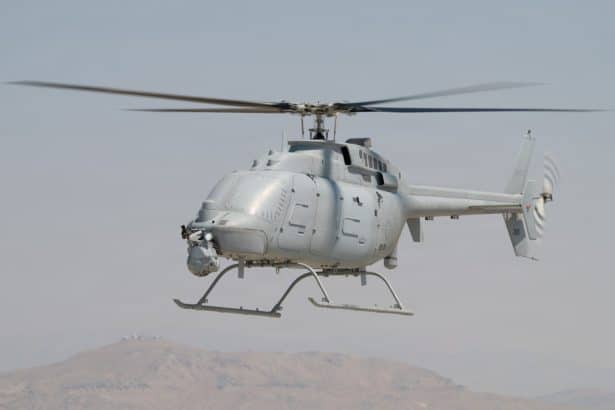
The U.S. Navy has transferred to the Army four MQ-8C Fire Scout unmanned helicopters it was retiring, in a move expected to save more than $70 million in procurement costs.
Four U.S. Navy MQ-8C Fire Scout unmanned helicopters that were headed for retirement have found a second life with the U.S. Army in support of sensor testing. The aircraft have been transferred to the Army’s Redstone Test Center (RTC), which has already completed ground testing and begun flight tests at Dugway Proving Ground, Utah, and Redstone Arsenal, Alabama.
According to an Oct. 22, 2026, announcement by the Navy’s Multi-Mission Tactical Unmanned Aircraft Systems Program Office (PMA-266), the transfer is expected to save the Army just over $70 million in procurement costs. Additional savings are expected in research, development, test and evaluation (RDT&E), flight hours, data collection, contracts, equipment sourcing and manpower.
The transfer gives the aircraft a new purpose as the Navy moves ahead with its plan to retire the MQ-8C fleet by the end of fiscal year 2026. The Navy worked with the Army to satisfy the latter’s requirement for a new captive carry testbed destined to sensor testing.
From Navy Retirement to Army Flight Testing
According to the press release, the initiative began in November 2024, when PMA-266 received a request to evaluate whether the MQ-8C could be repurposed as a captive-carry testbed for Army sensor packages. The prospective user was the Redstone Test Center, part of the U.S. Army Test and Evaluation Command (ATEC) at Redstone Arsenal, Alabama.
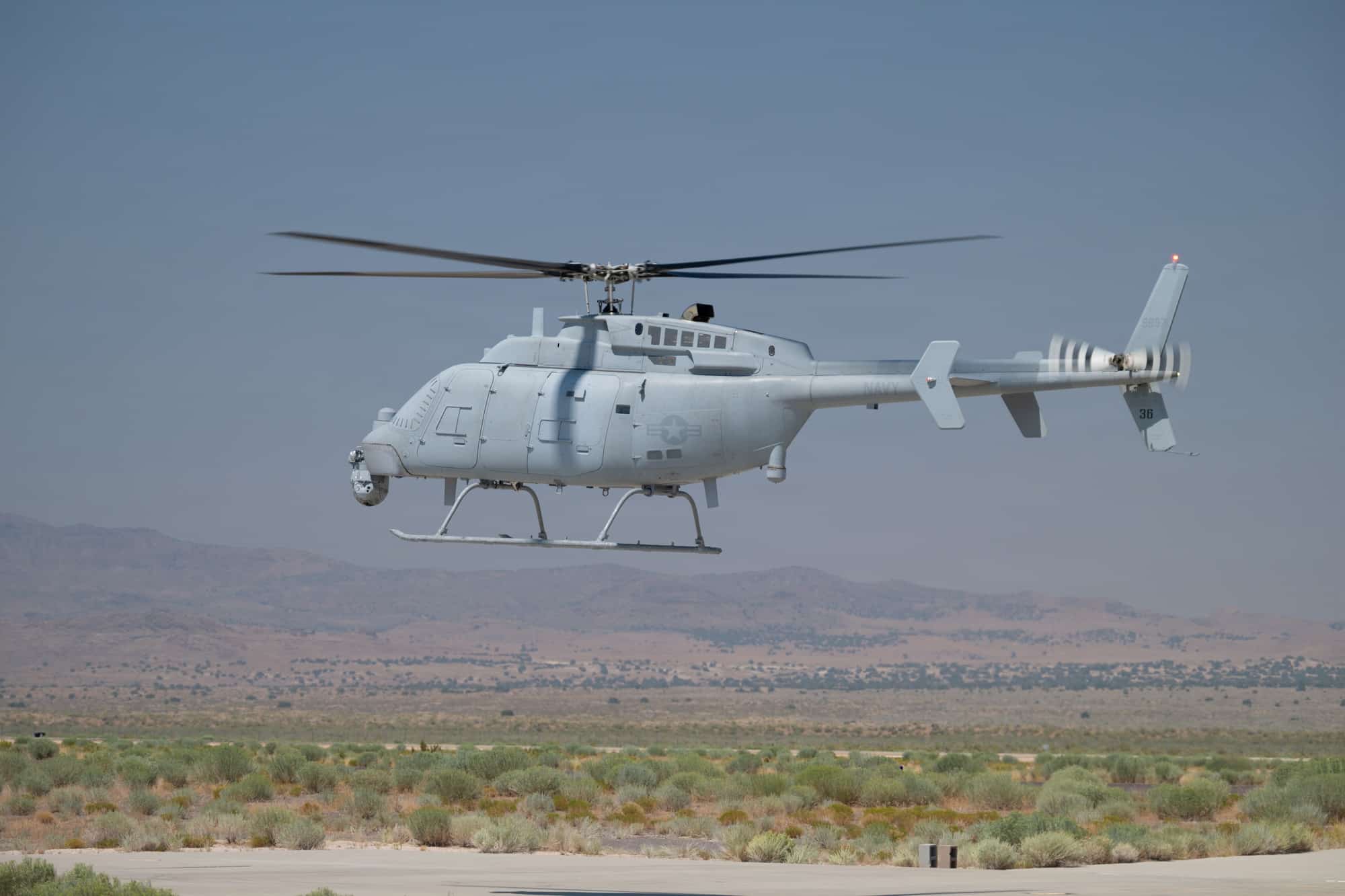
MQ-8C hovering during initial flights out of Michael Army Airfield at Dugway Proving Grounds, UT.At the time, the Navy was already well into the process of divesting the MQ-8C. In fact, at the direction of the Office of the Chief of Naval Operations’ Air Warfare Division (OPNAV N98), the service had begun the process in February 2024, with plans to complete the platform’s retirement by the end of fiscal year 2026.
By the time the Army expressed interest, PMA-266 was approximately 60% through the process of transferring aircraft, mobile control systems and support equipment to the 309th Aerospace Maintenance and Regeneration Group (AMARG) in Tucson, Arizona. A month later, cooperating teams visited Point Mugu, California, to conduct an initial evaluation of the MQ-8C and its mission control systems.
The Army then formally requested four MQ-8C aircraft, two Mobile Mission Control Systems (MMCS), spare engines and associated support equipment in January 2025. OPNAV N98, whose Air Warfare Division received the request, approved the transfer in May, and the aircraft, control systems and supporting equipment were delivered to Redstone Arsenal by July 2025.
The Army, however, could not begin to immediately operate its new assets, as it was missing essential communications security (COMSEC) equipment, including radios, transponders and modems. These had already been returned to common stock through Naval Supply Systems Command’s Weapon Systems Support organization (NAVSUP WSS) during the divestment process.
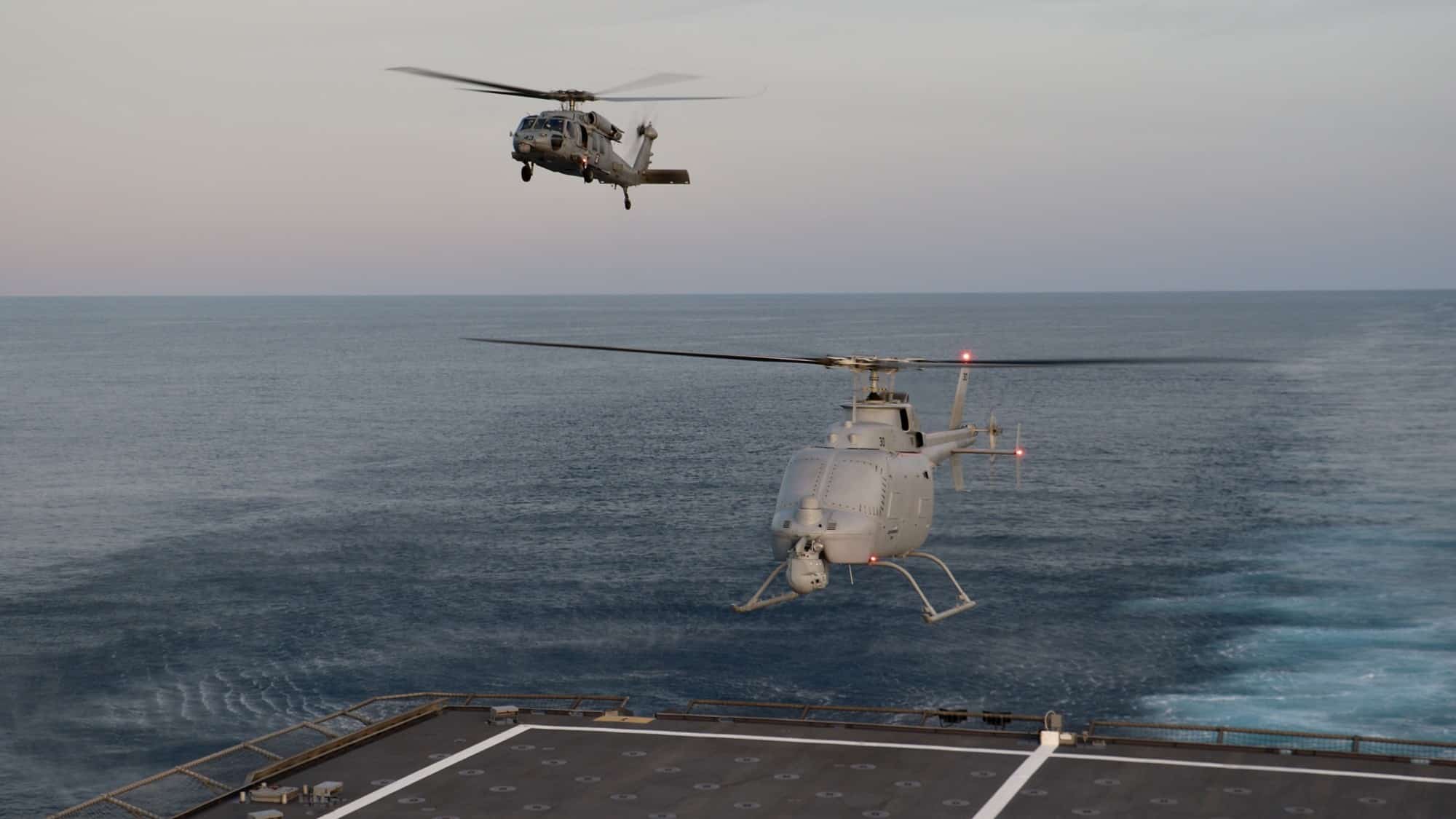
Following further coordination with NAVSUP, the final equipment arrived at Redstone Arsenal in July 2026. Just a month later, the Redstone Test Center completed ground testing and began flight tests at Dugway Proving Ground and Redstone Arsenal.
“Considering where we started – having zero experience with these systems- it’s quite remarkable what has been accomplished,” said Chief Warrant Officer 4 Taylor Kiel, test director and experimental test pilot with RTC’s Aviation Flight Test Directorate. “We are certainly thankful for the many people across various organizations that helped us along the way.”
The Navy described the effort as an example of inter-service cooperation that allowed existing equipment to be repurposed instead of purchasing new aircraft for the Army’s test requirements. The transition of the platform from the Navy to the Army and the beginning of flight tests were completed within 14 months, says the press release.
“Our priority is delivering lethal and ready capabilities to the warfighters,” said Col. Leigh Irwin, PMA-266 program manager. “Repurposing these MQ-8C assets from storage to active testing is a major acquisition win for both services, demonstrating how we can supercharge existing capabilities and increase acquisition velocity to support joint operations.”
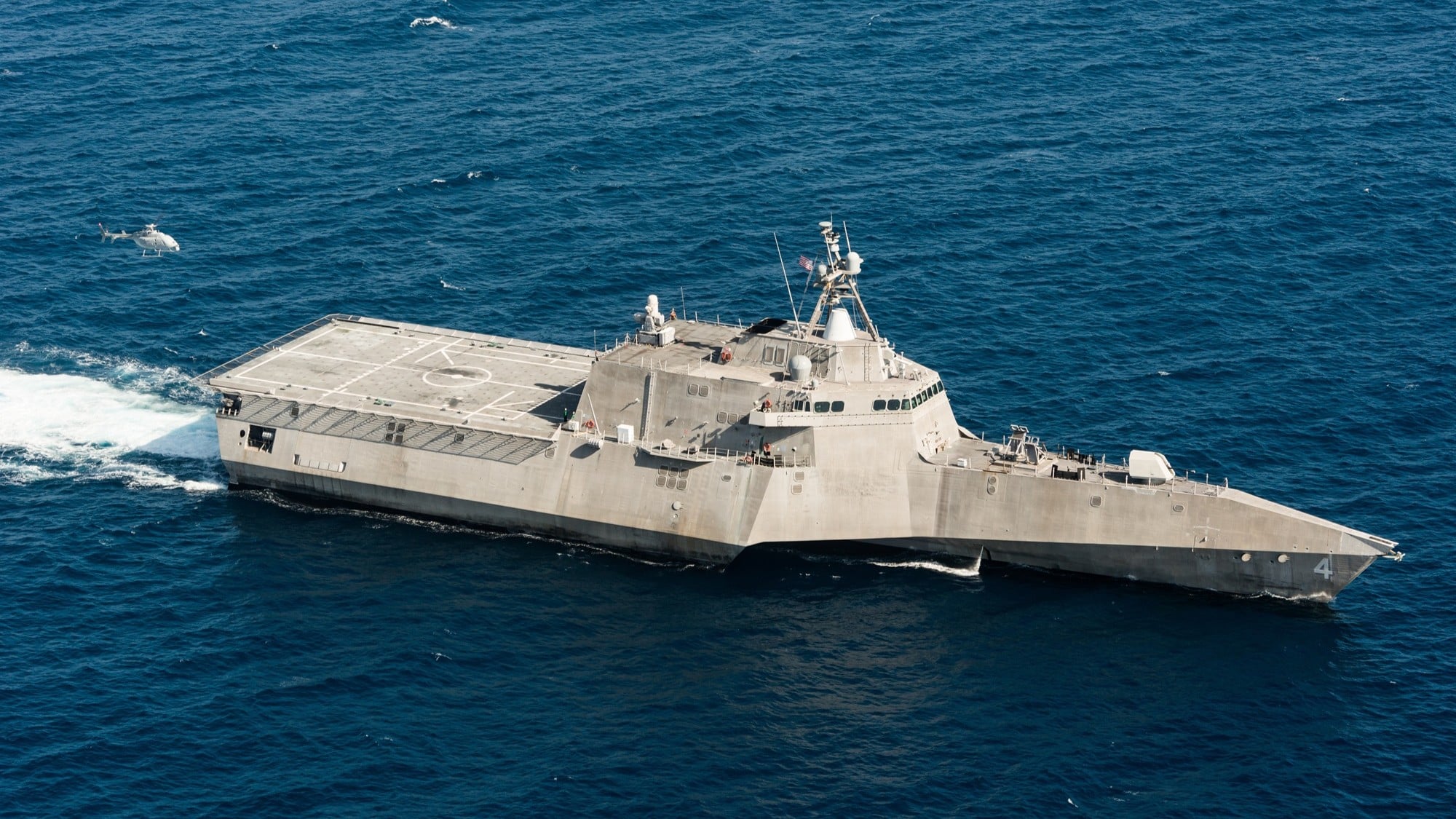
The MQ-8C Fire Scout
Developed by Northrop Grumman, the MQ-8C Fire Scout is the larger of the two Fire Scout variants which were introduced by the U.S. Navy. Compared to the initial RQ-8A and MQ-8B helicopters which were based on the Schweizer 330 civilian helicopter, the MQ-8C uses the airframe of the commercial Bell 407 helicopter.
The Fire Scout was designed to provide the Navy with an unmanned rotary-wing platform capable of extending the surveillance and reconnaissance reach of ships operating without embarked conventional helicopters. The MQ-8B, which was first deployed on U.S. Navy ship in 2009, saw operational deployments to Afghanistan and Libya, while the MQ-8C achieved its Initial Operational Capability (IOC) in 2019 and since then has primarily been involved in operational evaluation missions.
Compared with the earlier MQ-8B, the MQ-8C offers greater payload capacity and endurance. According to Naval Air Systems Command (NAVAIR), the aircraft can remain on station for up to 12 hours, depending on its payload, complementing crewed helicopters such as the MH-60 Seahawk.
The Fire Scout’s capabilities include the integration of electro-optical and infrared sensors, laser designation equipment and radar. While the MQ-8B employed the AN/ZPY-4(V)1 radar, built by Telephonics Corporation, the MQ-8C introduced the Leonardo Osprey AN/ZPY-8 radar, expanding its ability to detect and track targets and conduct maritime surveillance.

The Navy originally planned to procure 38 MQ-8C helicopters to be primarily employed aboard Littoral Combat Ships (LCS). However, the service subsequently decided to divest the platform, bringing its operational naval role to an end.