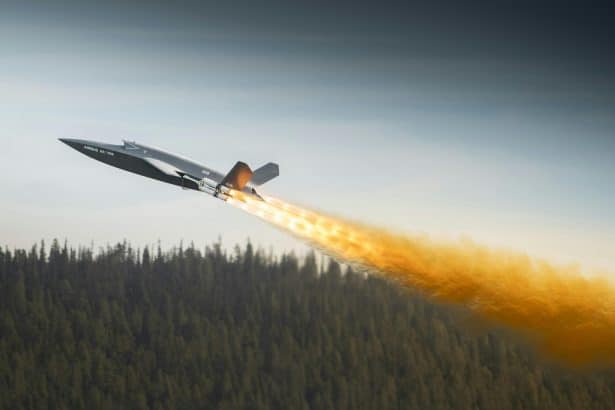
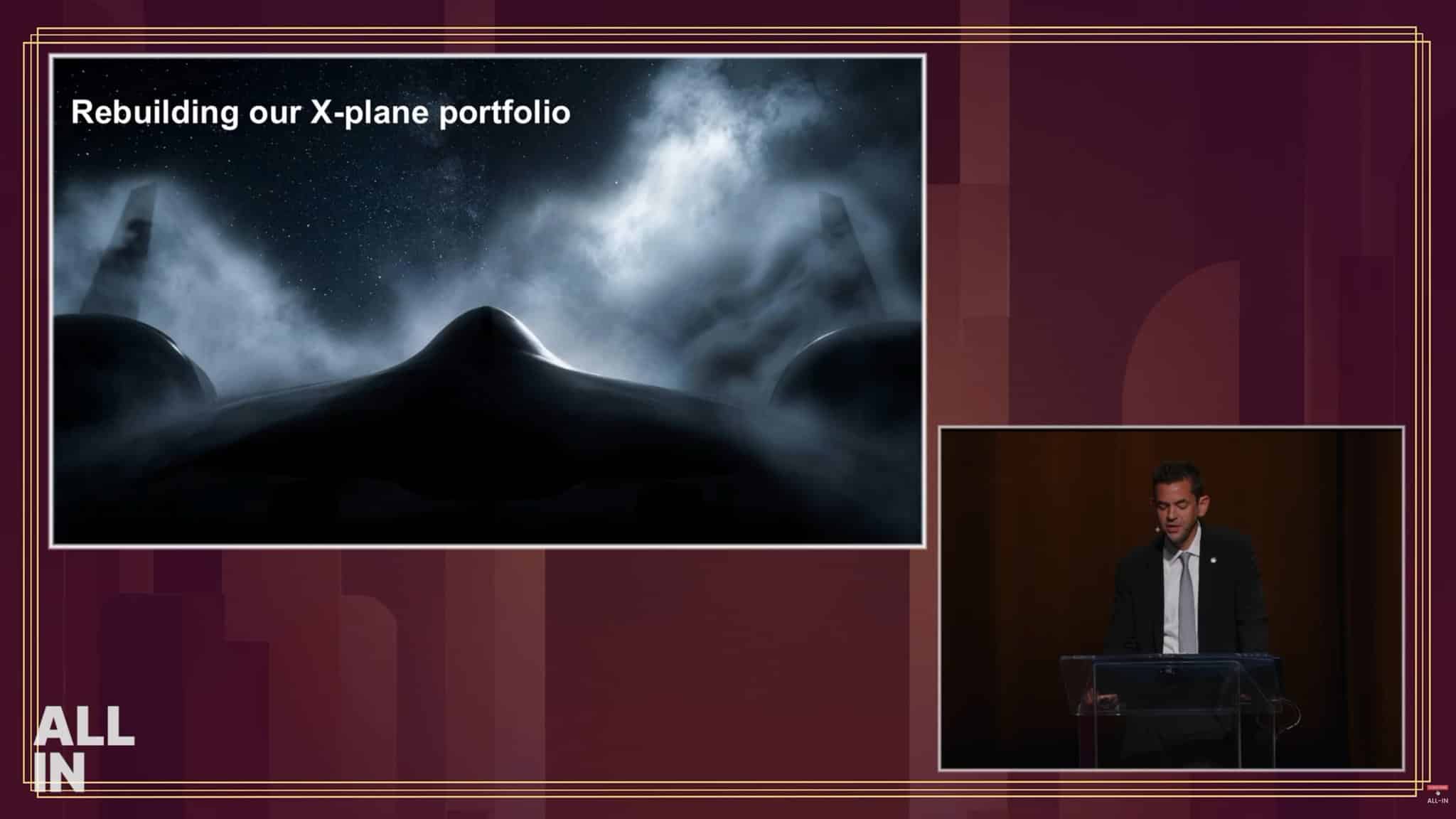
An unidentified aircraft resembling the SR-71 Blackbird appeared in Jared Isaacman’s All-In Summit presentation. Asked whether it was an SR-71, the NASA administrator cryptically replied: “You sure that’s a Blackbird?”.
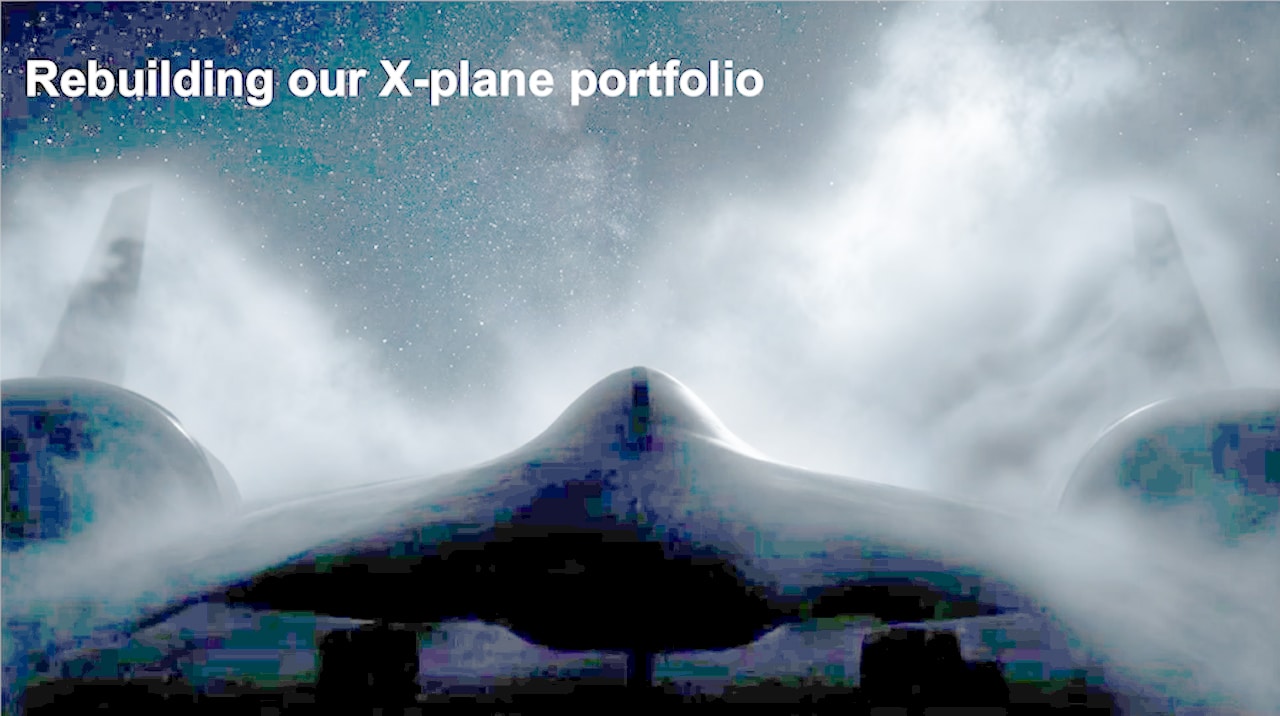
NASA Administrator Jared Isaacman has offered an intriguing glimpse of what could be ahead for the agency’s aeronautics research. During his keynote titled “A New Era for NASA and American Space Exploration” at the All-In Summit few days ago, he presented a slide titled “Rebuilding our X-plane portfolio” that showed a dark aircraft emerging from clouds. Although the rendering obscured much of its design, seen head-on, the shape of the mysterious aircraft clearly reminded the iconic SR-71 Blackbird.
The image became even more interesting later. After his speech, Isaacman joined the hosts of the All-In Podcast for a wide-ranging fireside chat covering Artemis, the new space race with China and Russia and most of the topics the NASA Administrator touched in his remarks.
Here’s the interesting segment:
Interviewer: You showed a picture of the Blackbird up there.
Jared Isaacman: You sure that’s a Blackbird?
Interviewer: Well, okay. What was that picture that you showed up there?
Isaacman: Like I said, NASA’s getting back in the business of flying high and fast again.
Interviewer: I mean, that doesn’t seem like a space vehicle. It seems like an Earth-air vehicle.
Isaacman: Yeah. The first “A” in NASA is our aeronautics portfolio. What we’ve contributed to over the decades, you may not realize this. Look, when you go see an F-22 fly at an air show and wow you, the fly-by-wire technology was us. The thrust-vectoring technology was us. NASA’s been contributing to breakthroughs in aeronautics, both civil, commercial and national-security applications, for a long time. And again, kind of similar to the same theme, over the years we’ve been forced to spend our aeronautics budget on, like, subsidizing high-TRL efforts from big prime contractors. An engine that’s 40 years old, they want to squeak 3% more fuel efficiency out of it, get NASA to pay for it. I’m like, are you kidding? There is no way we are doing that. You can underwrite that investment yourself for competitive reasons. You know what I want to do? I want to get back to the radical airframe and engine designs like we were always supposed to do, and you’re getting a little bit of a taste for that on the…
While most of times a rendering is just a rendering, not meant to show the real thing, NASA’s stated intention to expand experimental flight research beyond the X-59, paired with an image of a mysterious new X-plane immediately sparked interest.
Beyond the X-59
In his remarks, Isaacman described the X-59 as the beginning of a renewed push into experimental flight.
The X-59 is researching quiet supersonic flight, but it’s just the beginning as NASA recommits to flight test and works alongside industry to push the boundaries of airframe and propulsion design. It will not be long before NASA is flying once again as high and as fast as we have from decades past, and then even more. But if this frontier is going to expand as rapidly as we believe it will be, we will have to cultivate the talent to lead it. The space domain deserves an institution focused on that future, and call it what many already have and should, a Starfleet Academy.
In other words, NASA intends to work with industry on more ambitious airframes and propulsion systems, with the aim of flying higher and faster than it has in recent decades. The aircraft image appeared during that portion of the presentation.
The X-59 QueSST is the clearest example of NASA’s current X-plane work. Developed with Lockheed Martin Skunk Works for the Quesst mission, it is designed to demonstrate quieter supersonic flight and gather data that could inform future rules for overland supersonic travel. As The Aviationist reported, the aircraft first flew in October 2025. It made its first supersonic flight earlier this year, on June 5, 2026, reaching approximately Mach 1.1 and 43,400 feet. Its research goal is the sound produced by supersonic flight, rather than Blackbird-like speed.
NASA’s ambitions extend beyond that program. In a May 2026 directive, Isaacman called for a review of aeronautics investments, including additional X-planes and more radical airframe and engine designs for civil, commercial or national security needs. He also directed the agency to avoid investing in work that industry has a clear incentive to fund itself. At the summit, he criticized spending NASA’s aeronautics budget on incremental efficiency gains for mature engines and argued for more ambitious research.
Blackbird ties
Although the one depicted in the slide may have not been an SR-71, NASA ties with the type, flying high and fast, as Isaacman said the new X-plane will do, are pretty strong. The agency once flew Blackbirds as research platforms at Dryden Flight Research Center, now Armstrong, at Edwards Air Force Base. As previously detailed by The Aviationist, the SR-71 supported investigations into high-speed aerodynamics, propulsion, materials, instrumentation and sonic booms.
One aircraft carried the Linear Aerospike SR-71 Experiment, or LASRE, a test fixture associated with research into future reusable launch vehicles. The aerospike rocket engine was not fired in flight, although the SR-71 flew with the fixture installed. NASA’s final SR-71 flight took place in October 1999.