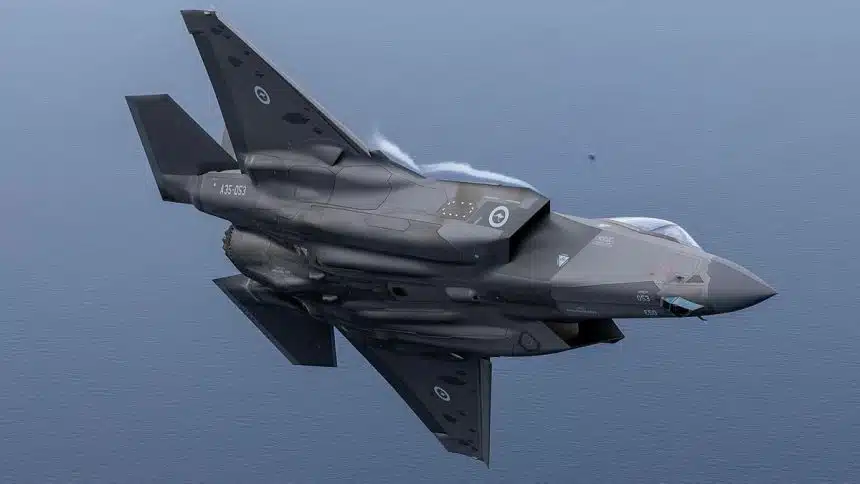
F-35 fighter jet spare parts were reportedly diverted to Hong Kong from Australia, sparking inquiries on Capitol Hill and in the Australian Department of Defence over China’s possible access to classified material.
First reported by Audrey Decker and Mark Satter at Politico on Sept. 18, 2026, a number of anonymous sources close to the matter revealed that an intermediary company, which transports F-35 spare parts for the manufacturer Lockheed Martin, had sent an assortment of components from Australia to Hong Kong instead of their intended destination in the U.S. The Pentagon has since revealed that a number of these spares are missing and that it is not clear why they were sent to China, nor who has them currently.
The revelations in the Pentagon and the State Department prompted a series of briefings in June for congressional staff on key national security committees, amid concerns about China’s access to these materials, which could pose a significant national security risk to the U.S. and its allies. Politico quoted the Pentagon’s F-35 Joint Program Office, which said in a statement that it was “aware of a shipment issue of unserviceable F-35 Lightning II components,” adding that the office is working with U.S. authorities and industry partners “to retrieve these components, investigate the incident, and place safeguards to avoid a future occurrence.”
SCOOP: A shipment of F-35 parts, including a canopy, wound up in Hong Kong — sparking an investigation on Capitol Hill and raising the possibility that China could have access to key components of the highly-classified program.
with @marksatter https://t.co/Y0ufsqEcY0
— Audrey Decker (@audrey_decker9) September 18, 2026
While Lockheed Martin said in a statement it couldn’t discuss the status of shipments for security reasons, the company highlighted that their “teams handle every shipment with the utmost diligence and safeguards to ensure the integrity of the F-35 program and the security of (their) allied partners.”
On Sept. 22, the Australian Department of Defence also responded to the news stating that an Australian investigation is underway to ensure that nothing went wrong “at the Australian end.” This was confirmed by Deputy Prime Minister and Defence Minister Richard Marles, who stated that they “are obviously working with the United States and obviously its prime contractor here, Lockheed Martin, in respect of this.”
The Deputy PM seemed to downplay the possible security risks of the diversion as, according to his understanding, “there is a sense of comfort, that (they’re) not talking about sensitive equipment here, or sensitive parts.” Though, “Ultimately, this is an issue which is going to be managed by the United States and Lockheed,” as they are the primarily responsible for the supply of spare F-35 components across the global supply chain.
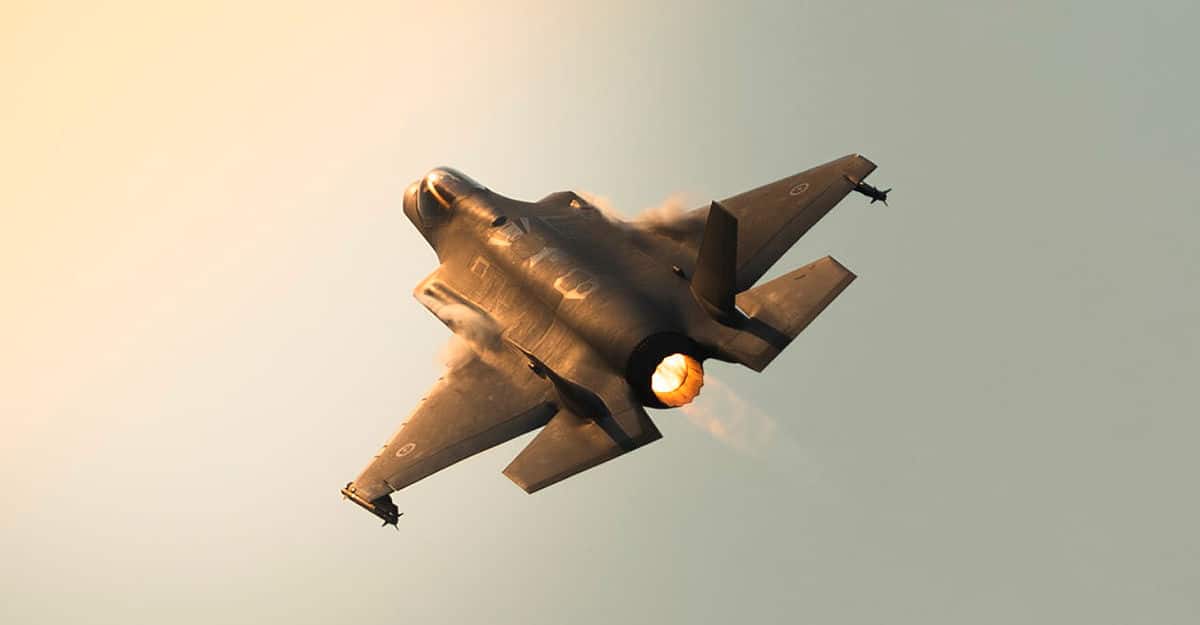
Australia is a major operator of the F-35A, with 72 aircraft currently in service forming the bulk of Australia’s air force. As a result, any compromise here is of high importance to the Australian government prompting significant concern.
What Happened?
The spare parts may have been sent from the F-35 Aircraft Sustainment Hub which the Australian government maintains at Williamtown in New South Wales. Originally set up by BAE Systems, this hub controls the transfer of spare parts for the F-35 across the Asia-Pacific region, with components being stored for access by aircraft operating out of Australia, Singapore, Japan and South Korea as well as for aircraft carried aboard U.S. Navy and Royal Navy aircraft carriers.
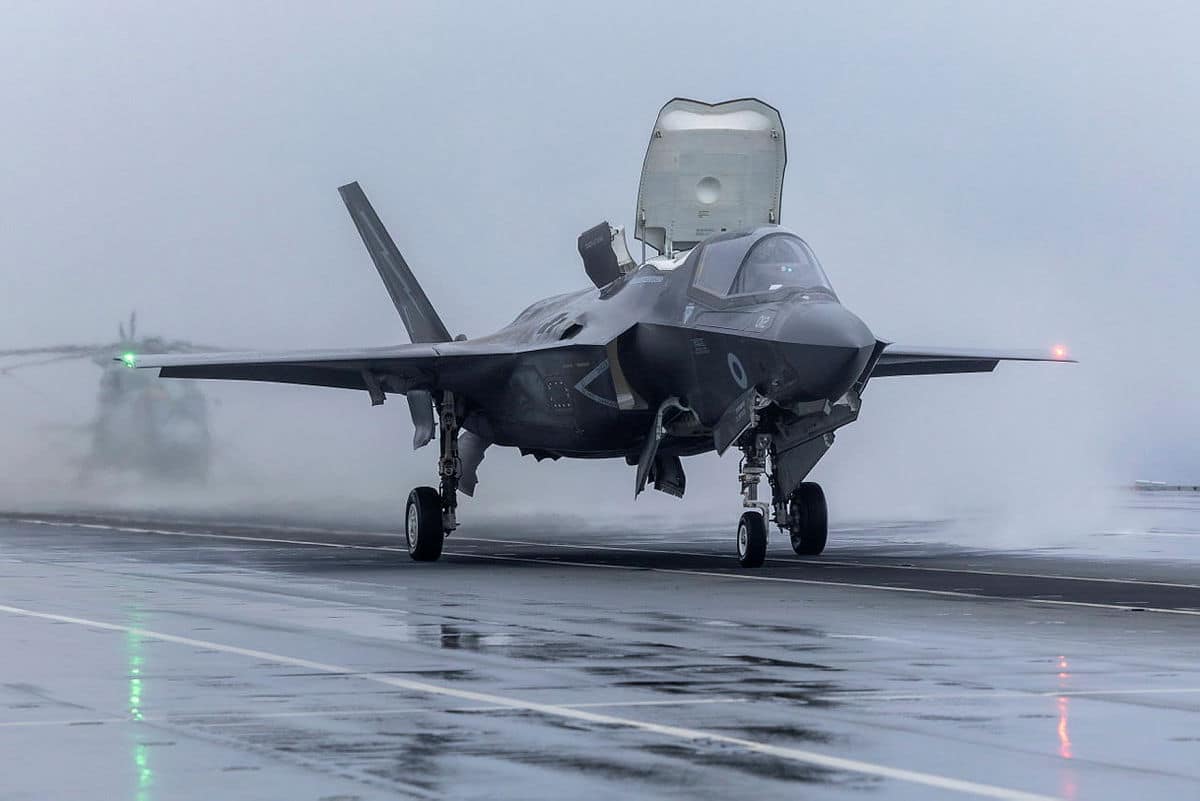
These components were confirmed to be “unserviceable” by the Joint Program Office, and so were likely headed back to the U.S. for either repair or disposal but, partway through their journey, the cargo diverted towards Hong Kong. Once there it seems that the parts might have been unloaded, with them still considered missing months later. The identity of the contractor responsible for transporting the components has not been publicly disclosed.
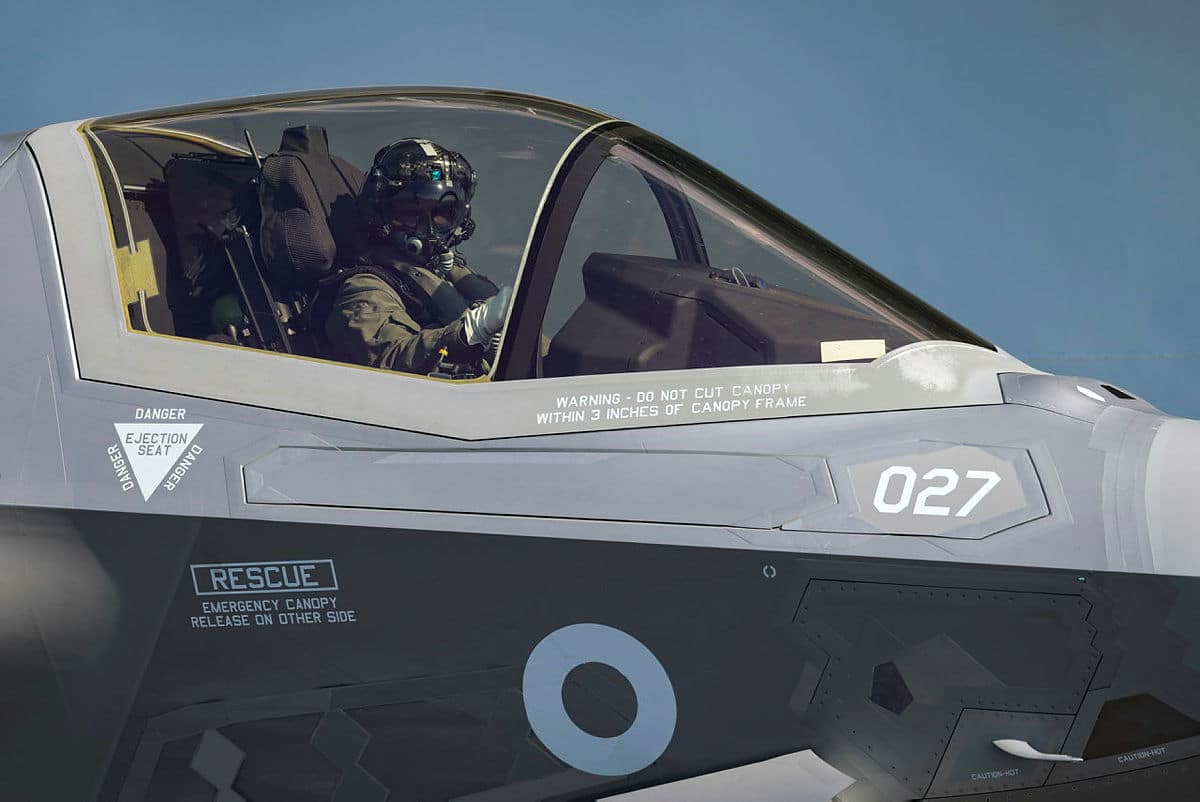
It was confirmed that one of the missing components is an F-35’s canopy, which covers the cockpit and allows the pilot to see out of the aircraft. What is notable about the canopy of the F-35 is that, unlike most aircraft, it incorporates Radar Absorbent Material (RAM), which helps to mitigate the aircraft’s overall radar signature. This gives the aircraft’s canopy a distinctive yellowish tint which can be very noticeable under certain lighting conditions.
Aircraft cavities such as cockpits are considered radar traps as electromagnetic waves enter it and undergo multiple internal reflections on the various objects within, producing stronger radar returns to the air defence system that is tracking the aircraft.
During Operation Allied Force, the 1999 air campaign over Kosovo and Serbia, the loss of the sole F-117 during the war was attributed to the opening of the aircraft’s bomb bay doors, which created a radar trap allowing the air defence operator to track the aircraft and shoot it down. The RAM coating on the F-35 cockpit helps to prevent this from happening, but Chinese access to this technology could potentially be used to reverse engineer the coating for China’s own needs.
Chinese access to spare parts like the cockpit canopy could be used by China to improve their capabilities, either allowing them to put similar improvements on their own aircraft, or to find countermeasures against the RAM and thus make the F-35s more detectable. Doing so could compromise the F-35’s stealth characteristics for all the aircraft’s partner nations, making this more than just an issue for the U.S.
Incredible that a shipment of F-35 parts has gone missing between Australia and the United States after they were diverted to Hong Kong and vanished.
For China to have potentially gained access to this stealth technology so easily should mean some pressing questions for Lockheed… pic.twitter.com/Z3cXCchKeY
— Ben Obese-Jecty MP (@BenObeseJecty) September 19, 2026
It is important to note that not all the parts used by the F-35 are consequential to the aircraft’s low observability, nor are they all sensitive materials. According to John Conway, defence analyst and managing director of consultants Felix Defence, some parts of the F-35 are completely “routine” aircraft components that can be found in any military aircraft.
As a result, the potential effects of these missing parts could range from being completely inconsequential, to posing a significant security concern for the global F-35 fleet, making it paramount that they are found as soon as possible. No matter what, significant questions are going to be asked of Lockheed Martin’s ability to secure its products and the capabilities of the many nations who depend upon them.
Additionally, a 2023 U.S. Government Accountability Office report found that more than one million F-35 components have gone missing in the preceding five years. The report raised questions over Lockheed’s mismanagement of spares and its failure to report its issues to the U.S. government, prompting the need for reforms in communication between the two.
China and the F-35 Program
China has repeatedly been accused of stealing classified data on the F-35 program, which could then be used to help produce and improve their own domestic stealth aircraft. A 2023 CSIS report lists 224 reported instances of Chinese espionage against the U.S. since the year 2000, with the F-35 reportedly being the target of espionage on three separate occasions since 2007.
In 2007 Chinese hackers breached the Pentagon’s computer networks to steal classified data on the aircraft’s design as well as its onboard electronic systems, and they gained several terabytes of data. The Wall Street Journal was told that the attacks appeared to stem from China but their origin could have been disguised by IP masking.
It is believed they gained access through the computers of several Pentagon contractors in charge of designing and building the aircraft. Luckily, any data related to the aircraft’s stealth and other highly sensitive electronic equipment was stored on an offline computer, preventing access by the hackers.
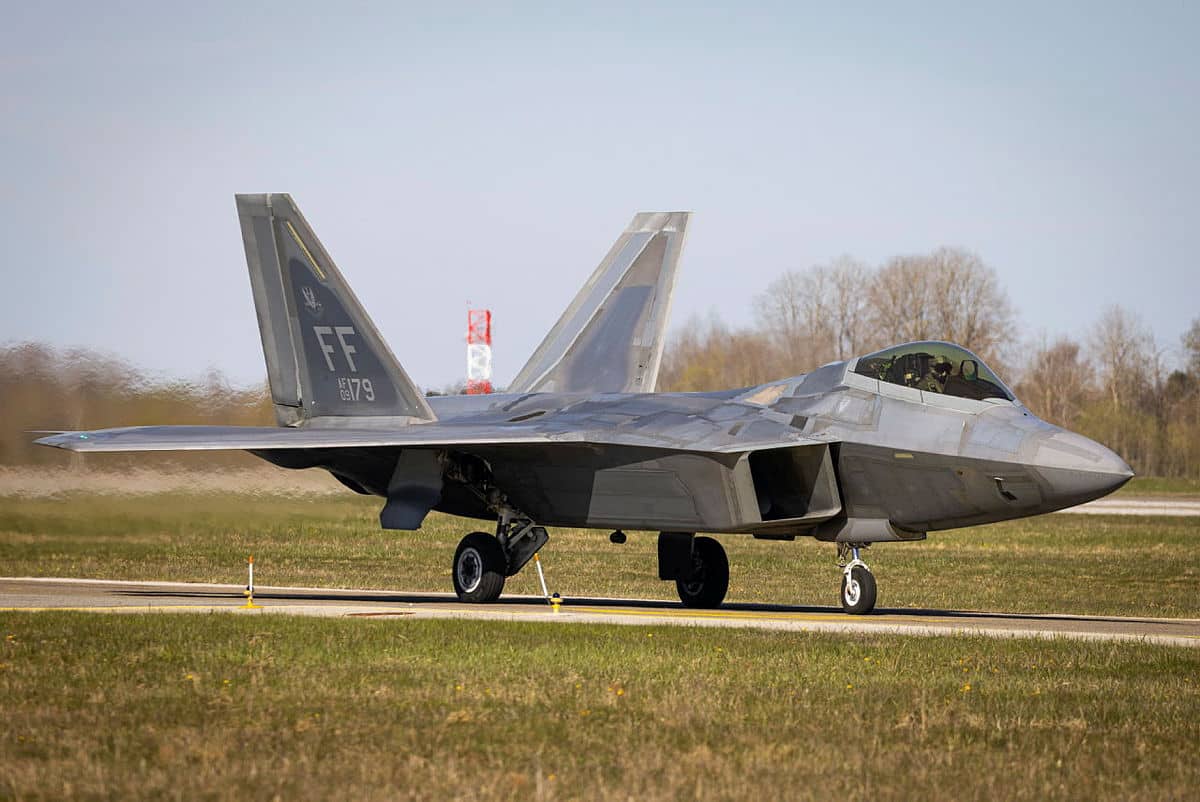
In 2014 a Chinese national named Su Bin was charged and later convicted of hacking into various defence contractors to access information on the F-22, F-35 and the C-17. According to prosecutors, he worked with two unnamed Chinese hackers to get the data between 2009 and 2013, to then sell some of the information to state-owned Chinese companies.
Finally, in 2015, leaks by Edward Snowden revealed that Chinese intelligence had stolen a significant amount of sensitive military information relating to the F-35 Joint Strike Fighter aircraft. This included details of the fighter’s radar systems, engine schematics as well as methods for cooling exhaust gas which is useful for lowering the aircraft’s infrared signature.
Chinese hacking has been so prolific that it has led to accusations that the stealth fighters employed by the PLAAF, the J-20 Mighty Dragon and the J-35A Cloud Dragon, used stolen American data to aid in their design and construction. The J-35A in particular is very reminiscent of the F-35. Coincidentally, development of this aircraft began in 2007, the same year of the first reported hack on the Pentagon.
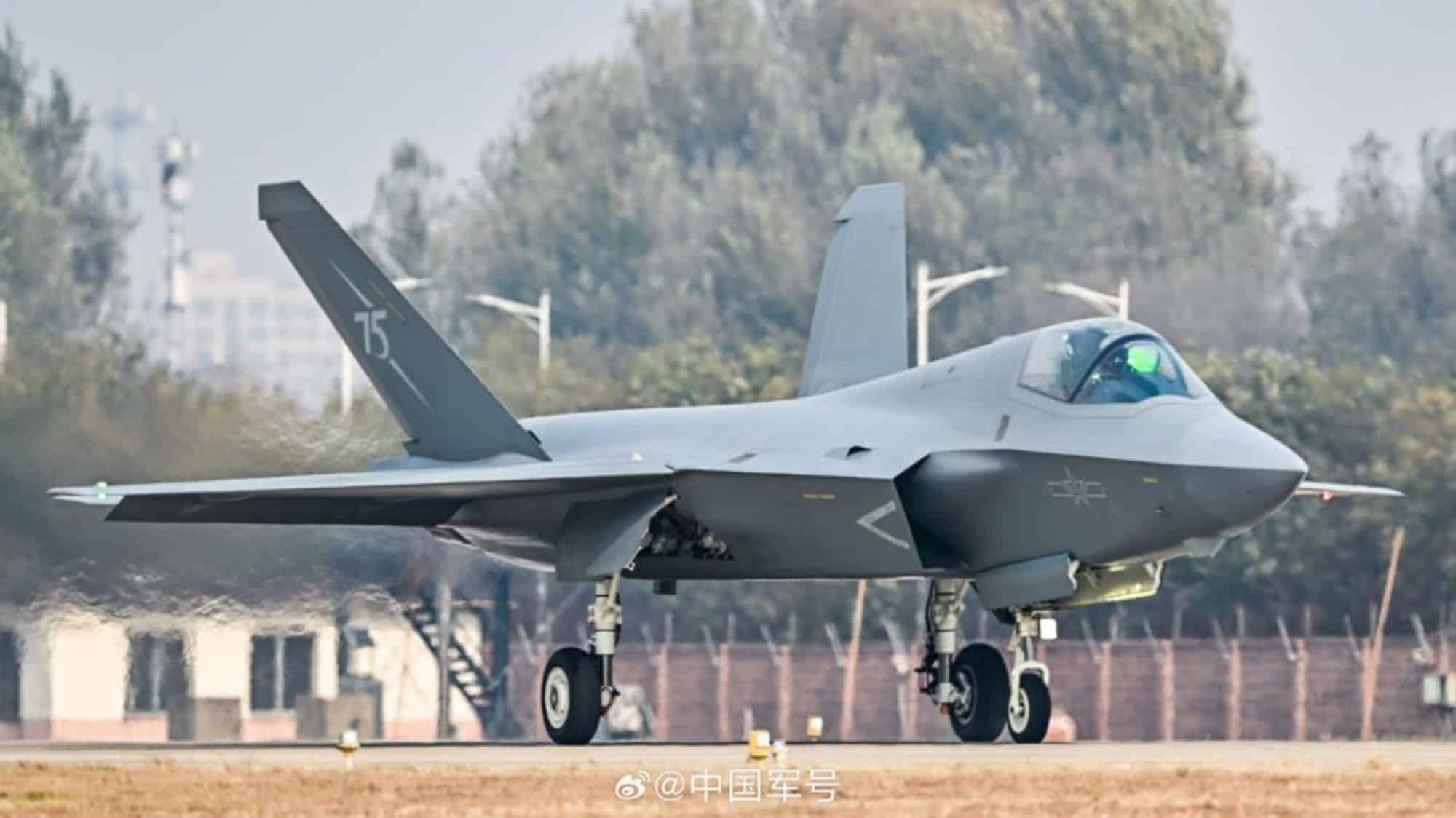
China has always denied claims of espionage, with the Aviation Industry Corporation of China (AVIC) insisting that the J-35A is a “new type of stealth fighter jet independently developed by China.” Unlike the F-35, however, the J-35A uses a different propulsion arrangement, with the aircraft powered by two non-stealthy WS-21 engines, as opposed to the F-35 which uses instead a single Pratt & Whitney F135 engine.
Concerns about Chinese espionage still abound with fears around the possible sale of 48 F-35As to Saudi Arabia, based on the closeness of the two countries in the development of the latter’s ballistic missile program. This week, U.S. intelligence analysts raised their concerns around the sale due to Chinese access to Saudi military bases and their use of Chinese technology in their telecommunications infrastructure. Some lawmakers and governmental aides have been pressing the Trump administration on the concerns raised by these intelligence agencies, with them later speaking anonymously to the New York Times to spread awareness of the concern over the issue.
NEW from @nytimes: US intelligence reports warn that China could steal or acquire US warplane technology if Trump continues with his F-35 jet sales to Saudi Arabia. The Pentagon’s Defense Intelligence Agency has raised concerns about China’s military partnership with the Saudis. pic.twitter.com/A5HCkMCJzm
— Edward Wong (@ewong) September 16, 2026
In particular, intelligence analysts are concerned about protecting the radar and intelligence, surveillance, target acquisition and reconnaissance (ISTAR) technology used in the F-35, as Chinese access could dramatically improve China’s own military capabilities in this area. The report does come up with some mitigations that can be considered to reduce this threat, including ensuring that only Saudi and American officers and contractors have access to sites where F-35 technology would reside. This however is still dependent on significant trust between the U.S. and Saudi Arabia.
Chinese spying on classified capabilities is nothing new, but it is a worrying challenge for the U.S. and its allies who are so dependent on the F-35 for their defence needs.
J.J. Gertler, Congressional Research Service military aviation analyst said on the lost F-35 canopy and Chinese spying in general: “It’s no secret that China has been aggressively trying to get F-35 data through electronic espionage, among other means, but even if they already had specifications or other data about the part, possessing a real one can give them even more to go on and can verify or refine whatever they already had learned.”
The risks are there and they must be mitigated whatever happens.