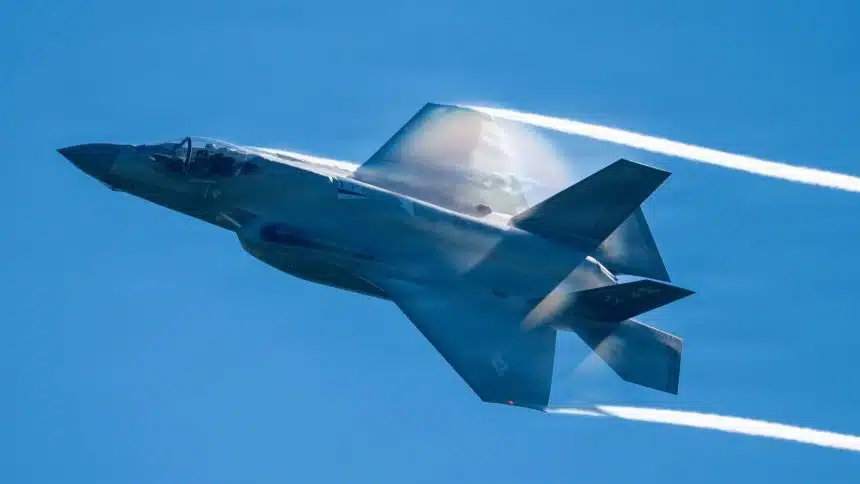
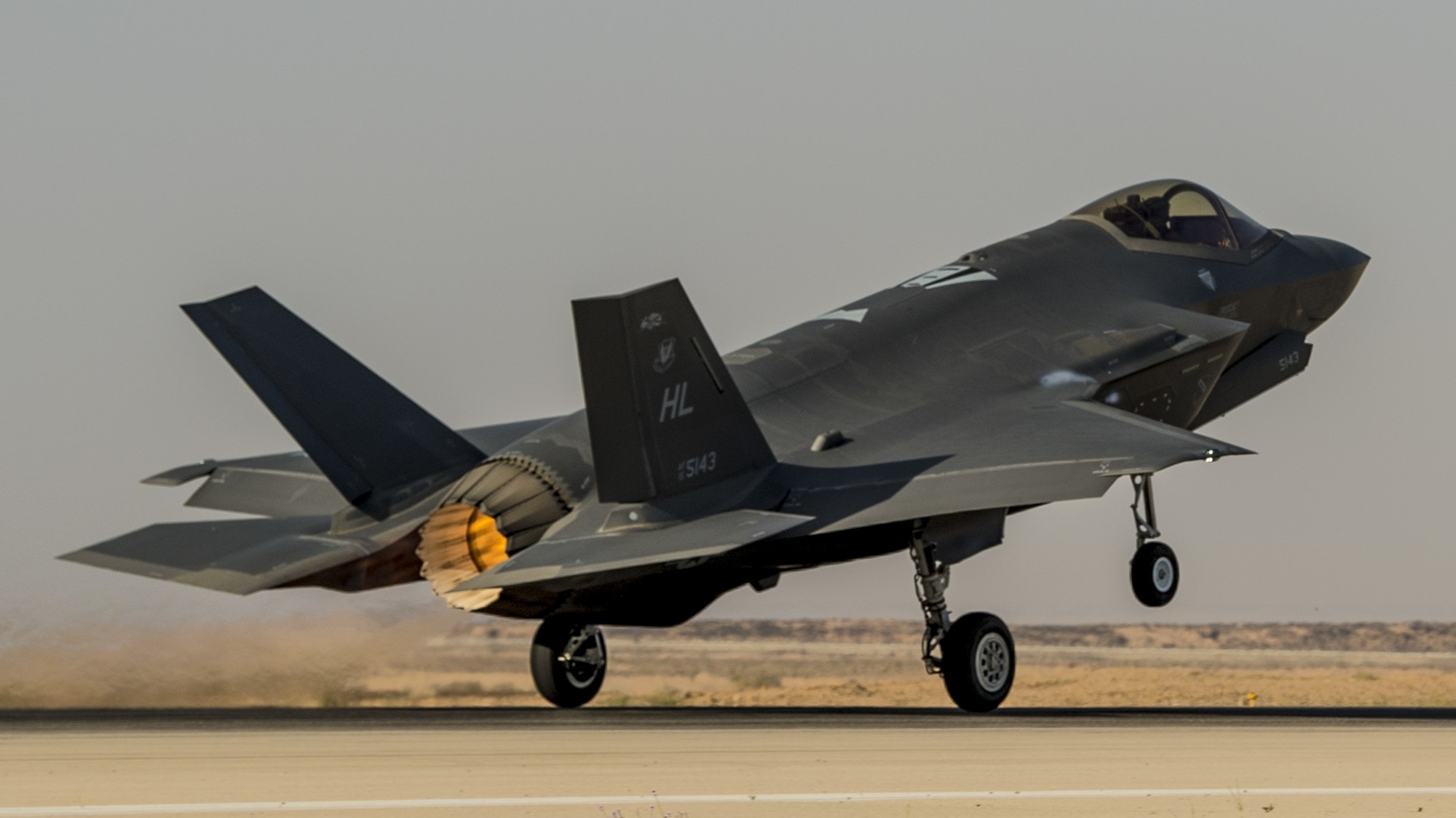
The U.S. Department of State has approved a possible Foreign Military Sale to Saudi Arabia of 48 F-35A Lightning II fighters, with an estimated cost of $24.3 billion.
The U.S. State Department has approved the Foreign Military Sale (FMS) requested by Saudi Arabia for the acquisition of the F-35 Lightning II. Saudi Arabia could get up to 48 F-35A aircraft, a spare engine and related equipment for a total estimated cost of 24.3 billion.
The approval ends years of discussions between the two countries about the acquisition of 5th generation fighter aircraft capabilities and also marks what could be a major policy change. Both the UAE and Saudi Arabia have been negotiating to procure the F-35, however the U.S. appeared unwilling to authorize them.
The Foreign Military Sale
The FMS notification includes a list of non-MDE (Major Defense Equipment) items which will be included, such as secure communications, spare part, test devices and various support equipment. Interestingly, no weapons were mentioned in the notification, although they might have not been mentioned or they might be pending a separate approval.
Notably, compared to other F-35 FMS cases of similar size, the FMS to Saudi Arabia has a much higher cost, although there could be multiple possible reasons, including the F-35-related equipment, infrastructure and services. For instance, Greece’s FMS for 42 aircraft is valued at $8.6 billion, while Germany’s FMS for 35 aircraft is valued at $8.4 billion.
Initially, a FMS of 48 aircraft was valued between $5.3 and $5.7 billion, excluding munitions and logistics support, according to reports. It’s thus possible that additional MDE items driving up the costs were not mentioned in the public notice.
The FMS notification did not provide details about the start of the deliveries. Also, it is currently unknown if the aircraft will be produced in Fort Worth, Texas, in Cameri, Italy, or a mix of both.
Change of policy
The news follows statements earlier this year by U.S. President Donald Trump, who said the U.S. agreed to sell Saudi Arabia 48 F-35s. While the kingdom has pursued the stealth aircraft for years, until now the acquisition never became reality because of various reasons, including the diplomatic relations between the two countries and the Middle East’s balance of airpower.
Contributing to the FMS approval, the U.S. and Saudi Arabia signed a Strategic Defense Agreement (SDA) in November 2025. The agreement included U.S. authorization for both the F-35 sale and the purchase of nearly 300 M1 Abrams tanks.
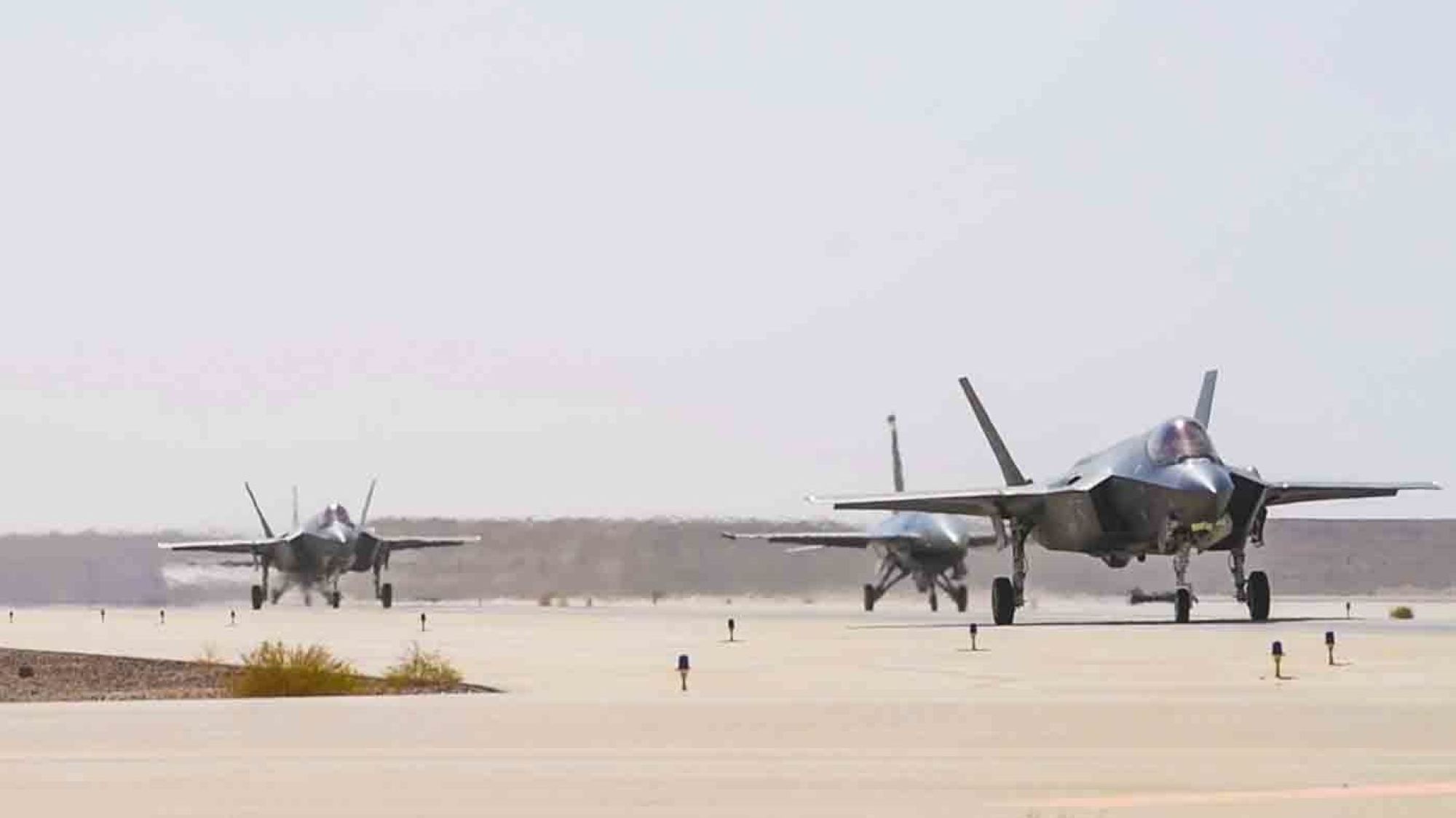
The proposed F-35 sale faced the hurdle of U.S. legal obligations to preserve Israel’s qualitative military edge (QME) in the region. In fact, Congress amended the Arms Export Control Act in 2008 to require that any Middle Eastern arms sale not erode Israel’s ability to maintain a technological and operational advantage.
However, the FMS approval stated:
“This proposed sale will support the foreign policy and national security objectives of the United States by improving the security of a major non-NATO ally that is a force for political stability and economic progress in the Gulf region.
The proposed sale will improve Saudi Arabia’s capability to deter current and future threats by strengthening its homeland defense, and improving interoperability with U.S. forces, and other regional and NATO forces. The proposed sale will also augment Saudi Arabia’s operational aircraft and enhance its air-to-air, and air-to-ground self-defense capability. The Kingdom of Saudi Arabia will have no difficulty absorbing this equipment and services into its armed forces.
The proposed sale of this equipment and support will not alter the military balance in the region.”