The UAV-300 had also been carried by the Akinci during a recent UAV-122 firing test, foreshadowing its first live launch.
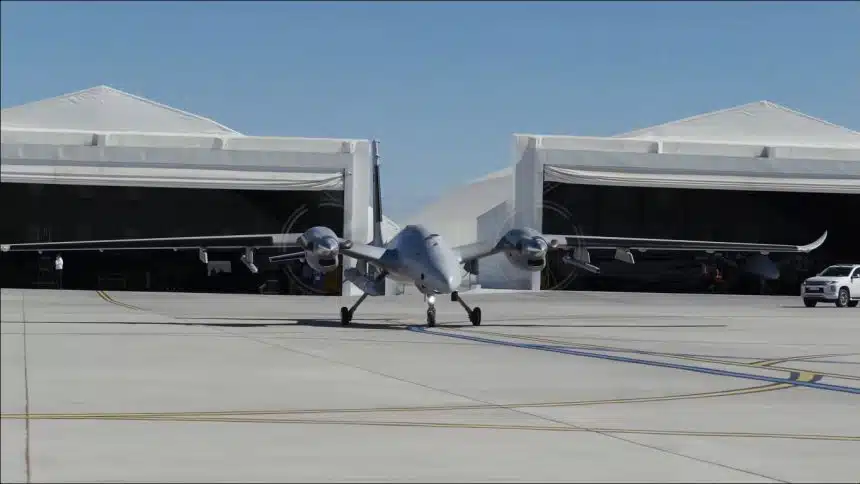
Turkey’s Baykar Akinci Unmanned Combat Aerial Vehicle (UCAV) achieved a major milestone by firing the İHA-300 (or UAV-300) Air-Launched Ballistic Missile (ALBM) at a maritime target more than 250 km away during a test over the Black Sea. The company and its chief technology officer Selçuk Bayraktar released a video of the trial on Sep. 11, 2026.
The UAV-300, also referred to as the 300ER by Turkish defense reporters, was also carried by the Akinci during a previous test of the smaller İHA-122 (UAV-122), which the company reported on Sep. 9. This suggested that a test of the UAV-300 was imminent.
An ALBM-capable UCAV could potentially provide a lower-cost complement to manned heavy strike and multirole fighters.
#AKINCI ✈️🐳🚀
🚀 İHA-300 ve İHA-122 Mühimmatı Atış Testi
🚀 UAV-300 & UAV-122 Munitions Firing Test
◾️ İHA-300 süpersonik balistik füzesi ile 250+ kilometre menzildeki hedef başarıyla vuruldu.
◾️ The target at a range of 250+ kilometers was successfully hit with the UAV-300… pic.twitter.com/ZLhcaQc2Mn
— Selçuk Bayraktar (@Selcuk) September 11, 2026
Murat İkinci, general manager of Roketsan, which developed the İHA missiles, called it the first live test of the UAV-300. İkinci further added that the weapon “successfully struck the target at a range of over 250 kilometers.”
Baykar CEO Haluk Bayraktar said this is the longest range domestically developed missile to be fired from another indigenous platform like the Akinci. He also described the UAV-300 as a supersonic missile, rather than an ALBM.
🇹🇷 @roketsan 300 ER aeroballistic missile with a range of 500+ km was spotted under @BaykarTech AKINCI UCAV’s wing during a firing test with UAV-122.
📰https://t.co/w1lWybrfgV pic.twitter.com/erRENnWR6K
— TurDef (@turdefcom) September 9, 2026
The test
It must be noted that the promotional video does not show the moment the UAV-300 strikes the target, although Baykar states that the missile scored a direct hit. However, two UAV-122s were also carried during the test, and one is shown in infrared footage striking a target.
The Akinci used in the test, PT-5, is seen taxiing and taking off with two UAV-122s on the middle hardpoints, and the İHA-300 on the innermost pylon of the starboard (right-side) wing. The Akinci then transited to the Black Sea off the coast of Sinop.
Footage from the ground control station showed the crew commanding the UAV-300’s release, with the missile dropping a few meters before its motor ignited. The missile, also described as an “aeroballistic missile” by TurDef, is then captured climbing in a parabolic trajectory.
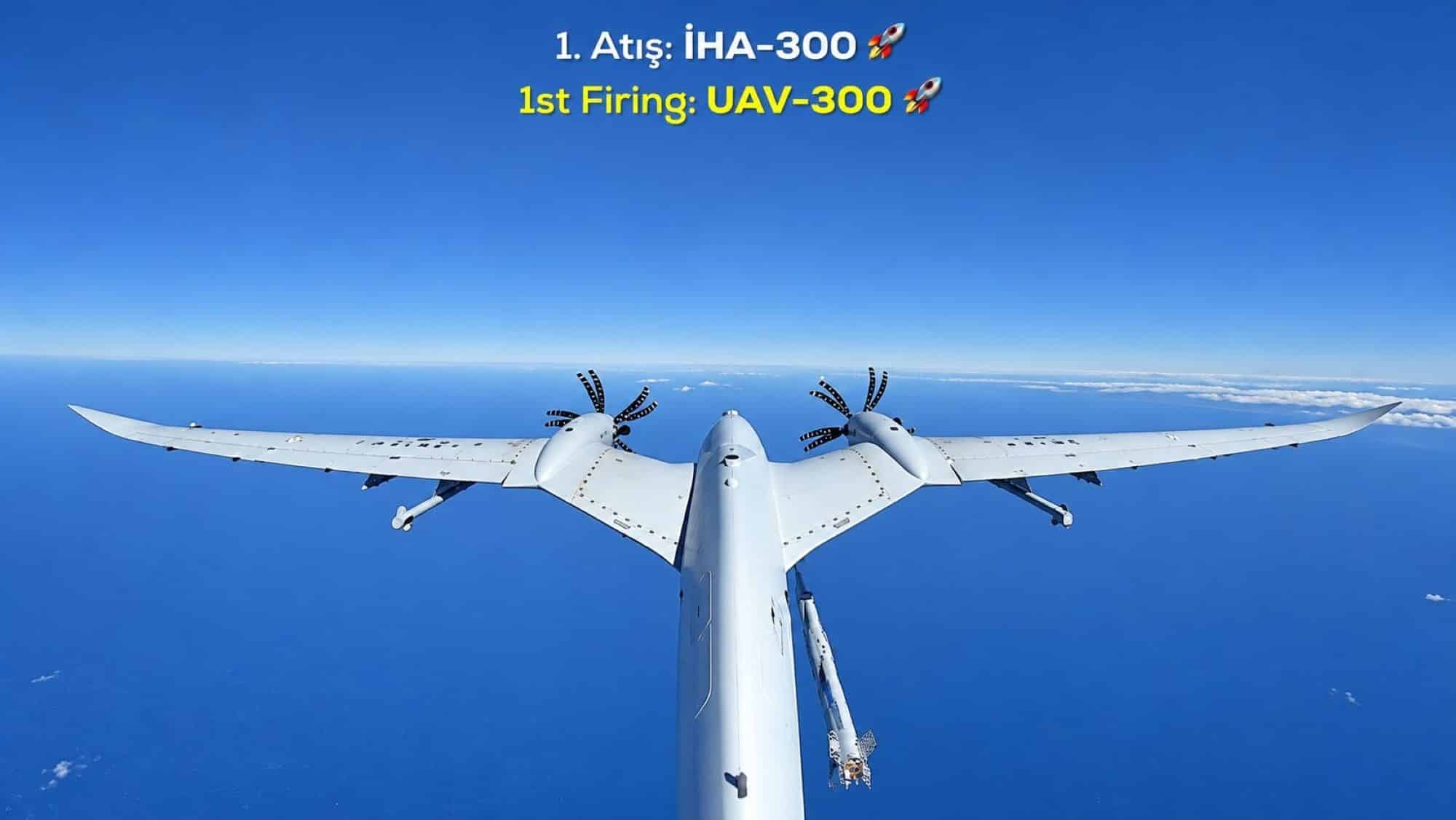
The drone then fired the UAV-122 from the port (left-side) wing, which similarly followed a characteristic parabolic path. Footage from the control station shows the missile diving down and hitting a target on the ground.
In the test publicized on Sep. 9, the PT-10 Akinci was used. It is again carrying two UAV-122s and one UAV-300. On that occasion, the UAV-122 carried under the right wing was fired, hitting a floating target in the sea.
#AKINCI ✈️🐳🚀
🚀 İHA-122 Mühimmatı Atış Testi
🚀 UAV-122 Munition Firing Test
🎯 Tam İsabet | Bull’s Eye@BaykarTech 🤝 @Roketsan#MilliTeknolojiHamlesi 🌍🇹🇷 pic.twitter.com/l8JHTNml2D
— Selçuk Bayraktar (@Selcuk) September 9, 2026
UAV-300
Roketsan has not yet featured the UAV-300 on its website. Turkish reports quoting Roketsan officials from various defense exhibitions say the missile has a range between 300 and 500 km, with the upper limit achievable when launched from fighter aircraft that can fly higher and faster.
Its warhead is estimated to be around 105 kg. Specifications on a small scale display at an exhibition said the missile is about 5 meters long and weighs 900 kg. That display model also had nose fins, but they were not visible on the one that was fired, with the missile only having four control surfaces on the tail.
The Akıncı B/C can carry two 300ERs. Being able to launch them from an unmanned system is a major capability. In the future, we’ll also see ballistic missiles larger than the 300ER being carried by the KAAN fighter jet. pic.twitter.com/zbnTTgam16
— Minevra (@Minevrax) September 11, 2026
As for guidance, the UAV-300 has an Inertial Navigation System (INS), along with Satellite Navigation (SATNAV) compatibility with the Russian GLONASS and the U.S. GPS. According to Turkish defense media, the missile will also be integrated with other existing platforms like the Turkish Air Force’s F-16s and the Kizilelma.
It must be noted that the Akinci has been tested with another similar weapon, called the UAV-230. Several trials of various versions of the missile have taken place since 2023, with a feature being rotating tail fins on the missile – also called ‘rollerons’.
WATCH | Supersonic SEAD missile developed for unmanned aircraft has entered service with the Turkish Army.
The test footage of the ROKETSAN İHA-230 (UAV-230) ballistic missile launched from Bayraktar Akıncı UAV. pic.twitter.com/pWEPaeuk8L
— Avionot (@avionot) June 4, 2026
Roketsan calls the UAV-230 an Air-to-Surface Ballistic Supersonic Missile, with a range of over 150 km, depending on the altitude and speed of the launch platform. The company specifies that the UAV-230 needs to be pre-loaded with targeting information on the ground.