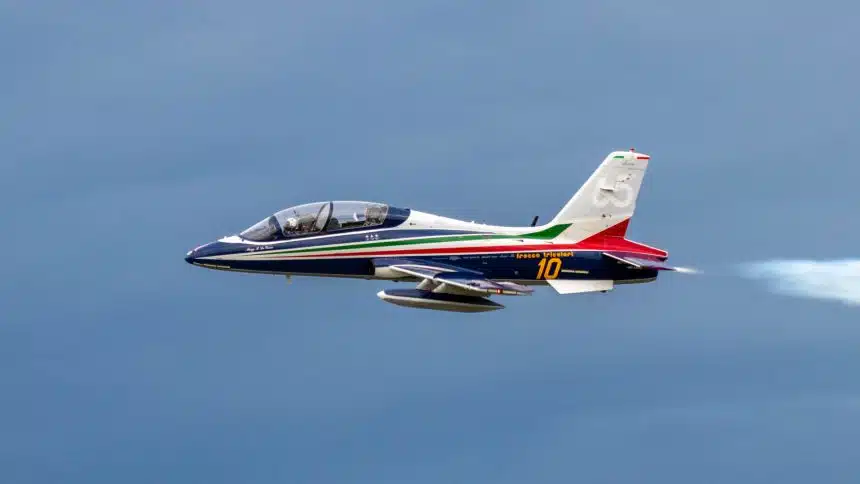
The MB-339, one of the most recognizable symbols of Italian aviation, celebrated the 50th anniversary of the first flight.
The Italian-made MB-339 jet trainer turned 50 on Aug. 12, 2026. The aircraft took to the skies for the first time from the Aermacchi facilities in Venegono, near Varese in northern Italy. The two-seat jet trainer that would go on to become one of the most recognizable Italian military aircraft of this era.
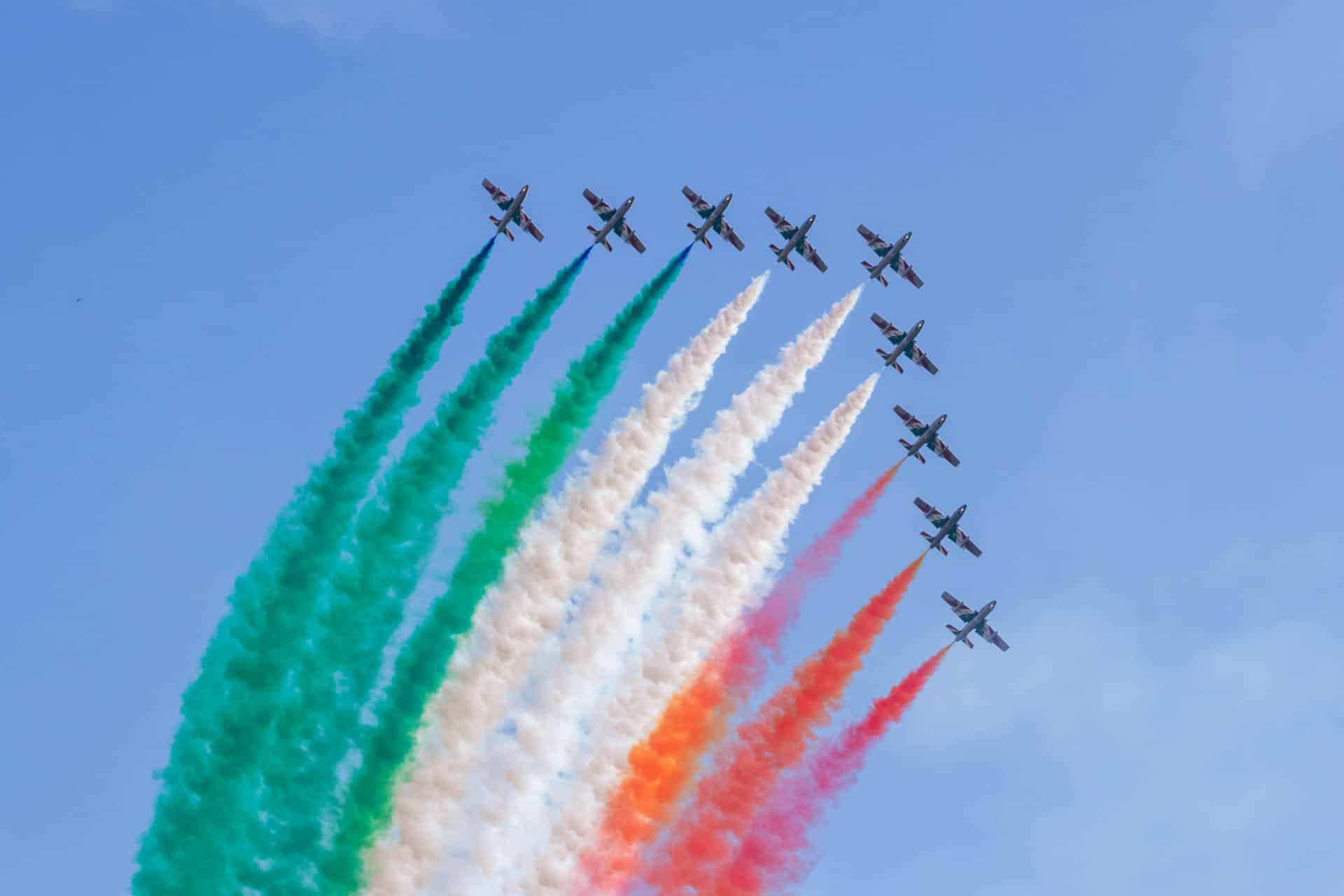
Fifty years later, the aircraft remains closely associated with the Italian Air Force and, above all, with the unmistakable green, white and red smoke trails of the Frecce Tricolori, the Italian Air Force’s national aerobatic team. While its most famous role is undoubtedly as an aerobatic aircraft, the MB-339’s was designed primarily to train military pilots, with a secondary role as a light attack platform.
Visualizza questo post su Instagram
Over the following decades, the aircraft had a good export success and found customers across Europe, Africa, Asia, Oceania and South America. The MB-339 even saw combat in the Falklands War and in Africa.
The birth of the MB-339
The origins of the MB-339 date back to the early 1970s, when the Italian Air Force began looking for a successor to the Aermacchi MB-326 “Macchino,” which entered service in 1962. Rather than developing a completely new aircraft, Aermacchi decided to build on the experience accumulated with the MB-326.
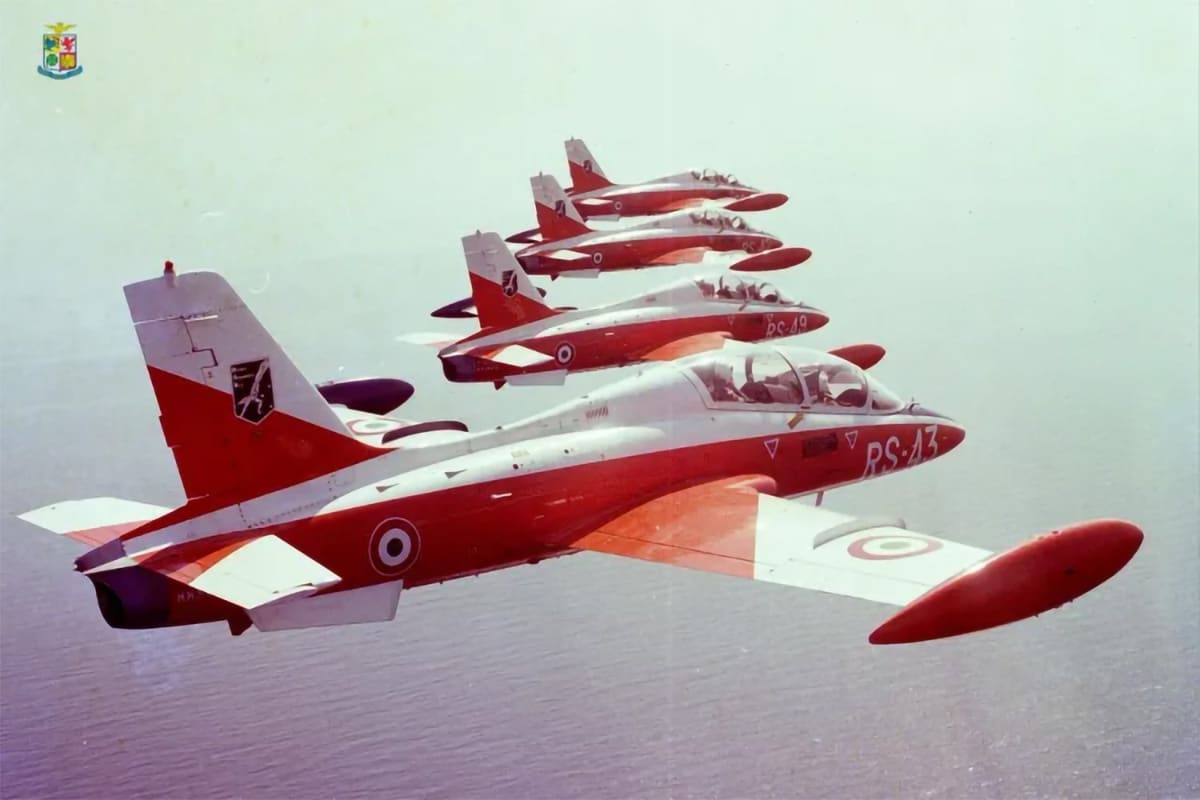
The new design retained the basic configuration of its predecessor but introduced a substantially redesigned fuselage, new cockpit arrangement and improved avionics. Similarly to the MB-326, the design was developed under the direction of Ermanno Bazzocchi, Aermacchi’s chief designer, whose name is reflected in the “B” of the aircraft’s designation.
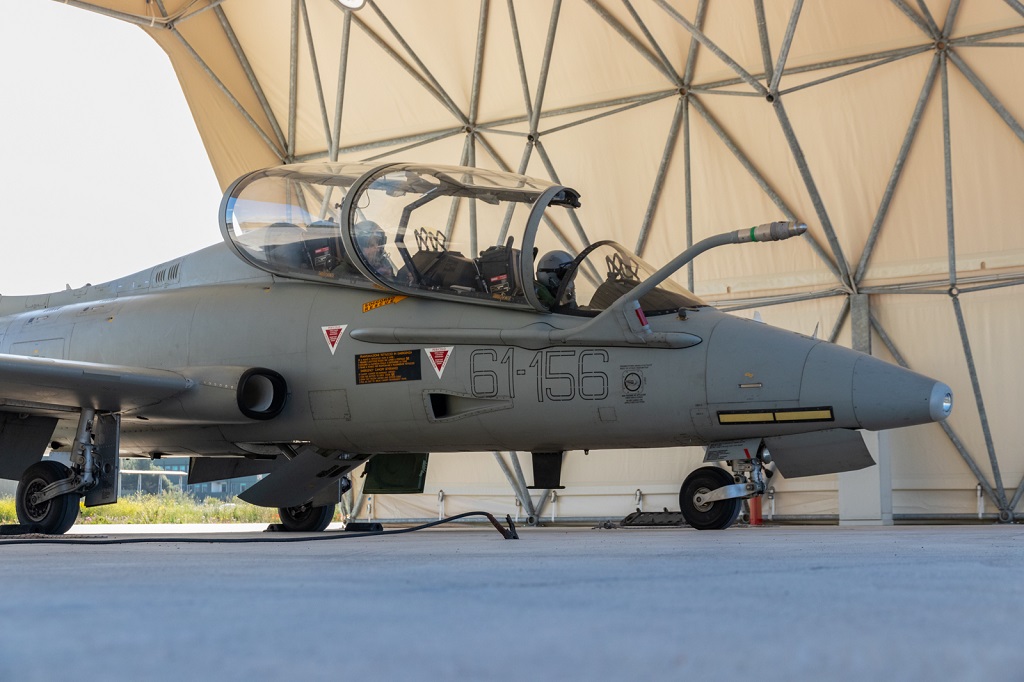
One of the most recognizable characteristics of the MB-339 is its stepped cockpit, with the instructor sitting higher than the student in the front cockpit. This arrangement provides the instructor with improved forward visibility and became one of the defining features of the aircraft.
The Italian Air Force selected the MB-339 proposal in 1975, and construction of the first prototypes followed. The first prototype, designated MB-339X and with registration I-NOVE, took to the air on Aug. 12, 1976, with Aermacchi test pilot Franco Bonazzi at the controls, while the second prototype, with registration I-NINE, followed in 1977.
In 1978, the first production aircraft conducted its maiden flight. The MB-339 subsequently entered service with the Italian Air Force in 1979, beginning a career that continues today.

The aircraft is powered by a Rolls-Royce Viper 632-43 turbojet, a variant of the engine already used on the MB-326. The Viper is relatively simple and reliable, while providing enough performance for advanced jet training and secondary combat missions.
The MB-339 can reach around 900 km/h and is equipped with six underwing hardpoints for external stores. Depending on the configuration, these can include bombs, rockets, gun pods, fuel tanks and air-to-air missiles, making the MB-339 more versatile than a conventional trainer and allowing it to be used for both training and light attack missions.
From trainer to combat aircraft
The MB-339 was never intended to replace a front-line fighter, but its ability to carry weapons meant that it could be employed in low-intensity conflicts and secondary combat roles. Its combat debut came in one of the most famous conflicts of the early 1980s, the Falklands War.
During the conflict, the Argentine Navy deployed MB-339s, delivered only a year earlier, to Port Stanley. From there, the aircraft were used against British forces operating around the islands.
The Argentine MB-339s carried out several attack missions, taking advantage of the aircraft’s ability to operate from relatively austere bases. On May 21, 1982, an Argentine MB-339, armed with 30 mm gun pods and rockets, attacked British forces during the landing at San Carlos Water, in one of the most notable combat actions involving the type.
The MB-339 would see combat again more than a decade later. Eritrean MB-339s were employed during the 1998–2000 Eritrean-Ethiopian War, attacking targets in Ethiopia with rockets and bombs.
The MB-339’s evolution
Aermacchi continued to develop the aircraft throughout its production life. Multiple variants were created, although some stopped at the prototype phase.
One of the most unusual developments was the MB-339K Veltro II, a single-seat light attack version that first flew in 1980. The aircraft was designed specifically for the attack mission as a successor to the MB-326K, but the concept did not attract production orders and only a single prototype was completed.
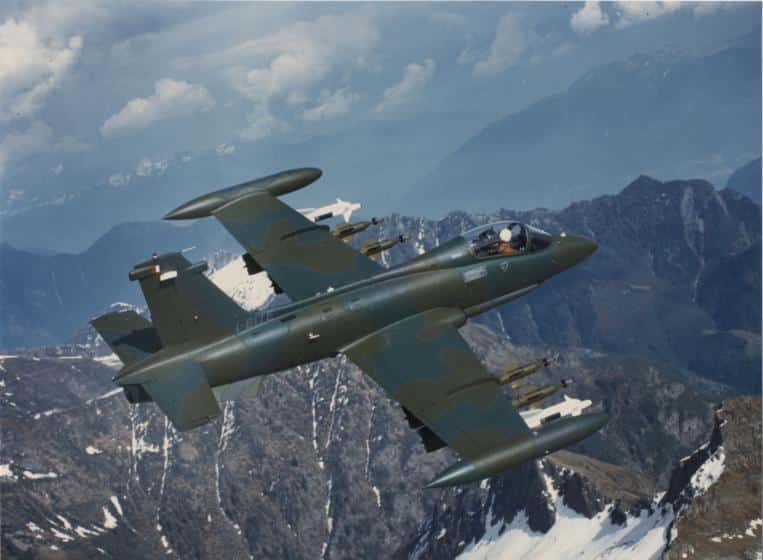
The remaining variants were improved two-seat versions, both for Italy and for export customers. The aircraft’s evolution eventually culminated in the MB-339CD, developed for the Italian Air Force with a completely digital cockpit.
The MB-339CD introduced modern avionics, MultiFunction Displays (MFD) and Head-Up Displays (HUD) in both cockpits. This configuration allowed the aircraft to remain relevant, replicating the cockpits found in modern combat aircraft which moved from traditional analog instruments toward digital cockpits.
The change was particularly important because the MB-339 was not only used for basic training, but also for pre-operational or Lead-In Fighter Training (LIFT). This phase of training represented the final step before the students moved to Operational Conversion Units (OCU) to train on their assigned aircraft.
The Frecce Tricolori
The Frecce Tricolori selected the MB-339 to replace the Fiat G.91PAN in 1981. The first MB-339PAN aircraft entered service with the team in 1982, beginning a partnership that would last for more than four decades.
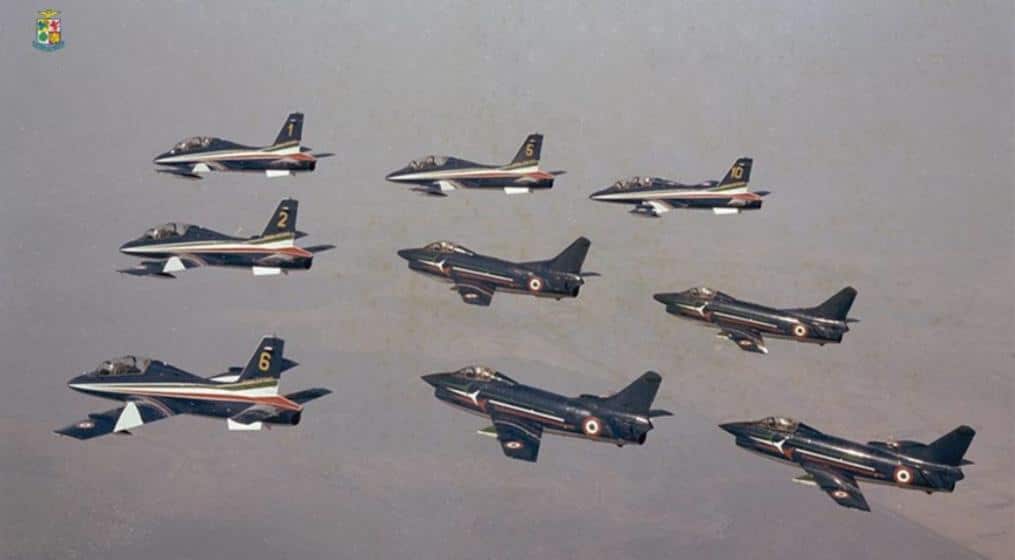
The aircraft was modified for the demanding aerobatic mission, most visibly through the installation of the smoke-generation system used to create the colored trails that form the Italian tricolor in the sky. Another variation was the removal of the MB-339’s peculiar wingtip fuel tanks, replaced by standard ones installed under the wings.
The MB-339 proved particularly well suited to the role. Its compact dimensions, handling characteristics and two-seat configuration allowed the team to perform the complex formations and maneuvers that became its trademark, including some that were previously unthinkable for a jet aircraft, such as the Lomcovák.
The sight of nine MB-339s flying in close formation, leaving green, white and red smoke trails behind them, and the solo who takes the MB-339 to its limit, became one of the most recognizable images of Italian aviation. Throughout the years, the MB-339 accompanied the Frecce Tricolori on countless international deployments and airshows, becoming an unofficial ambassador of the Italian Air Force and the Italian aerospace industry.
An international success
The MB-339 also became an important export product for Aermacchi. In fact, in addition to Italy, the aircraft was selected by several countries, including Argentina, Eritrea, Ghana, Malaysia, New Zealand, Nigeria and Peru.
The company adapted the aircraft to the customers’ specific requirements, with some aircraft optimized primarily for training and others retaining a stronger light-attack capability. New Zealand, for instance, operated the MB-339CB, while Malaysia received the MB-339AM and Peru the MB-339AP.
Aermacchi, now part of Leonardo, thus established itself as one of the world’s leading manufacturers of military training aircraft. Approximately 230 MB-339s were eventually produced between the late 1970s and 2006, when the production ended.