A bipartisan group of U.S. lawmakers has introduced legislation aimed at halting the retirement of the A-10 Thunderbolt II until a fully certified replacement is operational.
Rep. Abe Hamadeh (R-Ariz.) introduced in the U.S. Congress the ‘BRRRRT Act’, or ‘Bolstering Recognition, Resurgence, Retention, and Remembrance of the Thunderbolt’, (H.R. 9780) on July 20, 2026. The bill, co-led by Rep. Don Davis (D-N.C.), would require the U.S. Air Force to maintain a viable A-10 fleet through Fiscal Year 2033, as well as halting the dismantling of the infrastructure needed to sustain the aircraft.
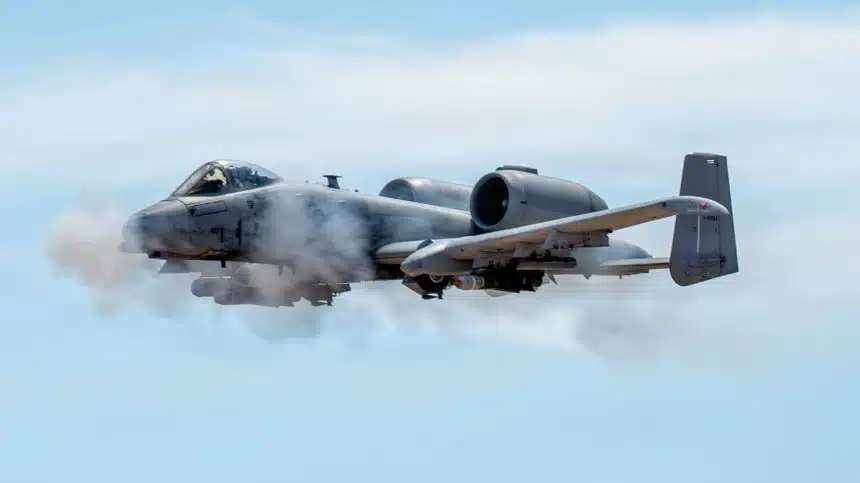
Named after the distinctive “BRRRRT” sound produced by the A-10’s GAU-8/A Avenger 30 mm cannon, the legislation reflects continuing congressional concern over the Air Force’s efforts to retire the Warthog before an aircraft capable of fully replacing its close air support (CAS) mission has entered operational service. Similar provisions were also included in the recent Fiscal Year 2027 National Defense Authorization Act (NDAA) draft.
Preserving a Proven Close Air Support Capability
The bill was introduced in the U.S. Congress’ House of Representatives on July 20, and referred to the Committee on Armed Services. At the time of writing, however, the text of the bill was not yet public.
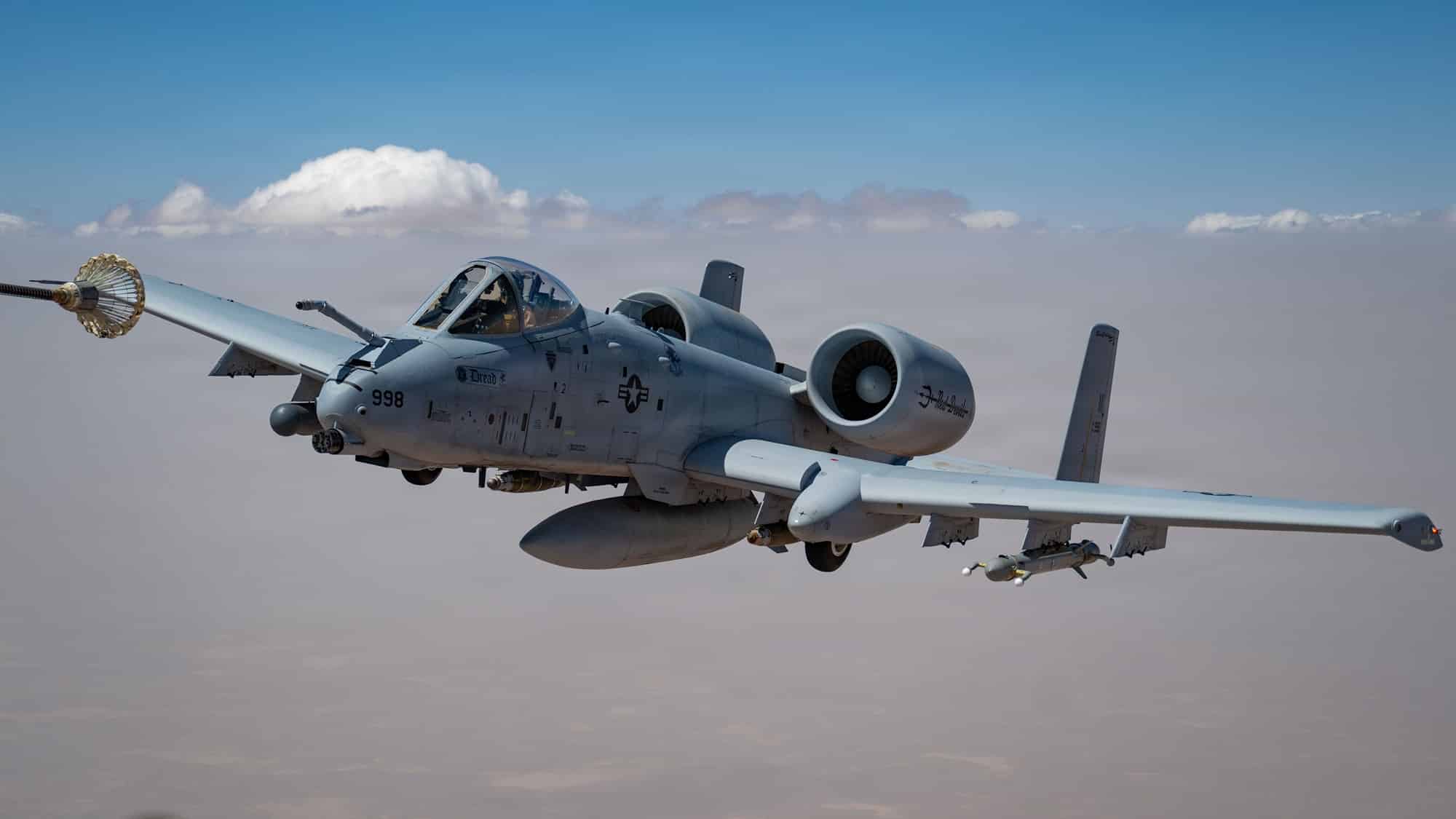
“The BRRRRT Act ensures we do not retire a proven weapons system before a certified replacement exists,” said Hamadeh in a statement on July 21. “This is about common sense, national security, and keeping faith with the men and women who depend on the A-10 in combat.”
Notably, the legislation enjoys bipartisan backing, with Hamadeh accompanied by Davis serving as co-lead, and original cosponsors including Reps. Richard McCormick (R-Ga.), Derrick Van Orden (R-Wis.), Sam Graves (R-Mo.), and Cory Mills (R-Fla.).
As we recently reported, the U.S. Air Force announced that it would retain two squadrons through 2030, following direction from President Donald Trump and Secretary of War Pete Hegseth. These will be one active-duty squadron at Moody Air Force Base, Georgia, and one Air Force Reserve squadron at Whiteman Air Force Base, Missouri.
However, as noted by Hamadeh’s statement, the reverse in the retirement plans does not stop the dismantlement of the training, maintenance and logistics required to keep the aircraft in service. The service already closed the A-10’s depot maintenance at Hill AFB, Utah, and graduated the last A-10 pilots.
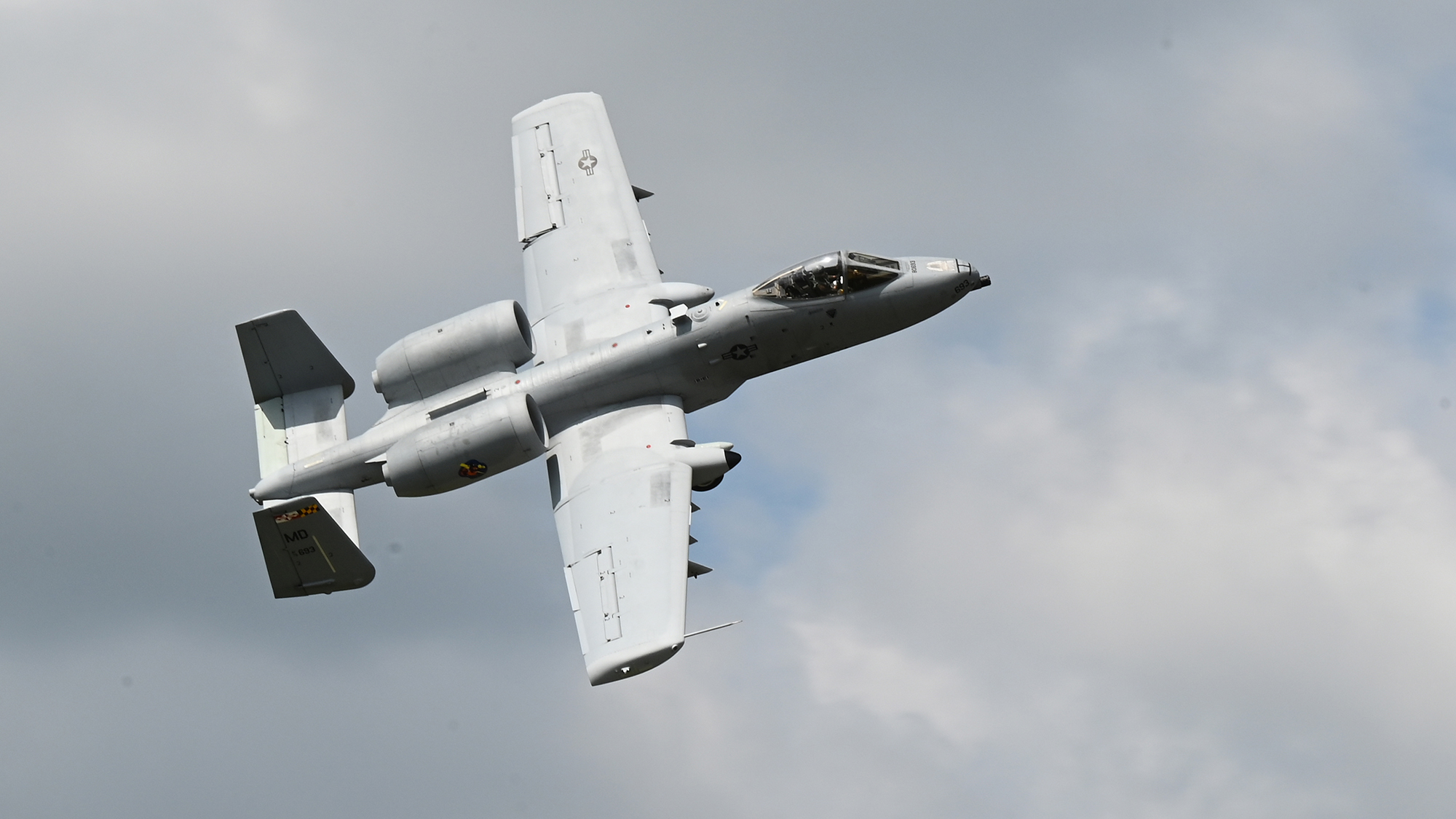
According to details of the legislation obtained by Military Times, the bill would require the Air Force to maintain at least 126 A-10 aircraft. This number is an increase compared to the congressionally mandated minimum of 103 aircraft.
The bill also details that, within 90 days of enactment, the Secretary of the Air Force would have to submit a plan detailing how the service intends to restore depot maintenance, pilot training, sustainment activities and flight testing. Additionally, the bill would significantly tighten the conditions under which additional A-10 retirements could occur.
In fact, the Secretary of War would have to certify that a replacement aircraft has fully assumed the A-10’s mission before any further divestment could proceed. That certification would also need to be approved in writing by the Secretary of the Army, the Commandant of the Marine Corps, and the Commander of U.S. Special Operations Command.
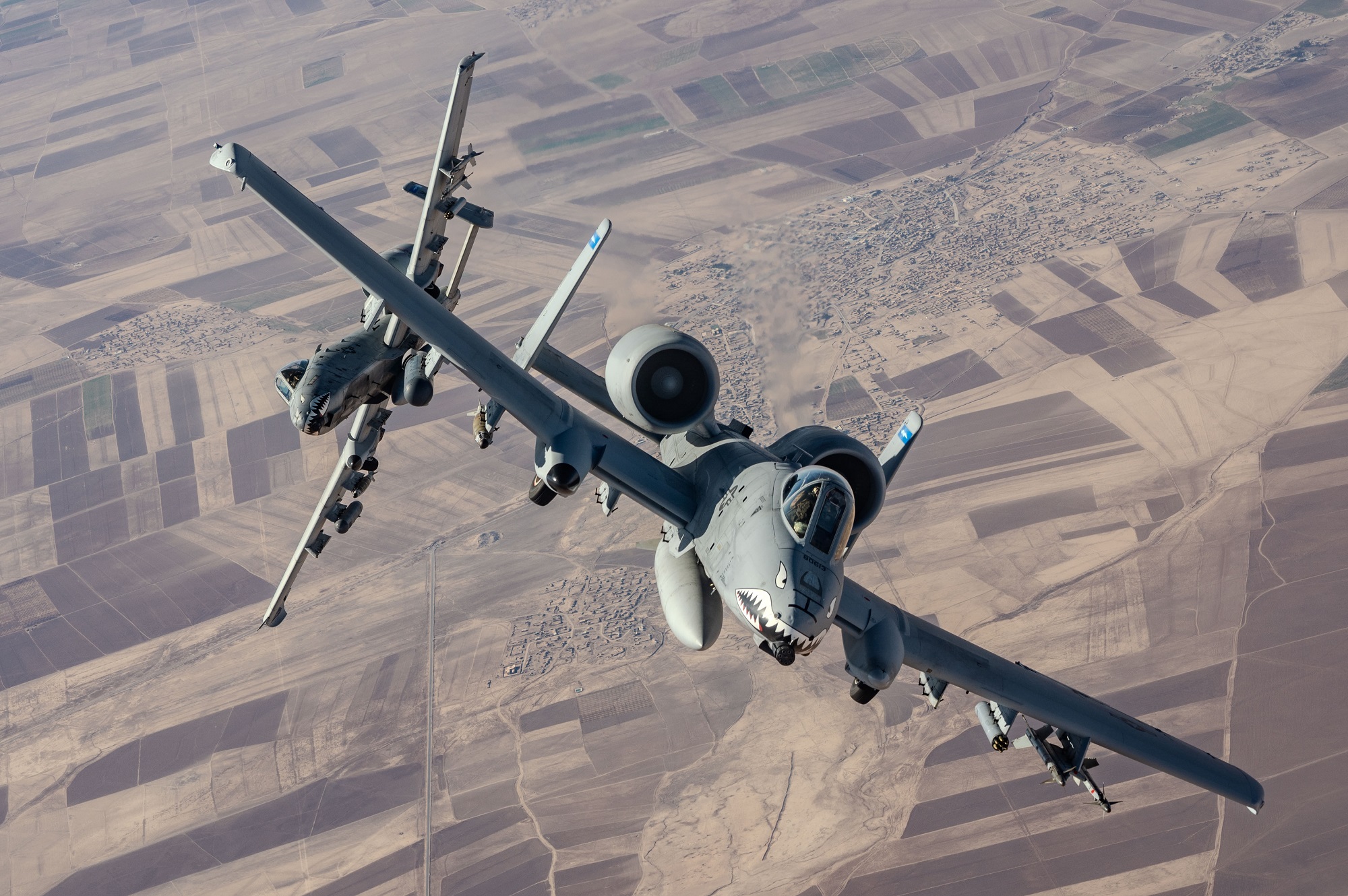
The legislation also includes a requirement for an aircraft to be considered a fitting replacement for the A-10, noting that it would qualify only if CAS is the primary mission. This provision goes against earlier plans to distribute the A-10’s mission among multirole aircraft such as the F-35A Lightning II, F-15E Strike Eagle and F-16 Fighting Falcon.
Continuing a Longstanding Debate
The bill represents the latest chapter in the decades-long disagreement between Congress and the Air Force over the future of the A-10. The service is steadily retiring the aircraft, with the entire fleet now based in the U.S. after the A-10 was withdrawn from Osan Air Base, South Korea.
The Air Force entered Fiscal Year 2026 with 162 A-10s and initially sought authority to retire the entire fleet by the end of the year. Congress rejected that proposal, instead establishing a minimum inventory of 103 aircraft in the Fiscal Year 2026 National Defense Authorization Act.
The debate was once again fueled by recent combat operations, with the A-10 playing an important role during operations against Iran. Among these is the “Sandy” mission in support of the Combat Search and Rescue (CSAR) of the two crew members of the F-15E Strike Eagle downed in Iran.
As mentioned in the opening, provisions against the A-10’s retirement were also introduced by Hamadeh in the Fiscal Year 2027 National Defense Authorization Act (NDAA). Should the BRRRRT Act not advance to become law, the NDAA might still some see the same provisions approved, albeit in a different form.