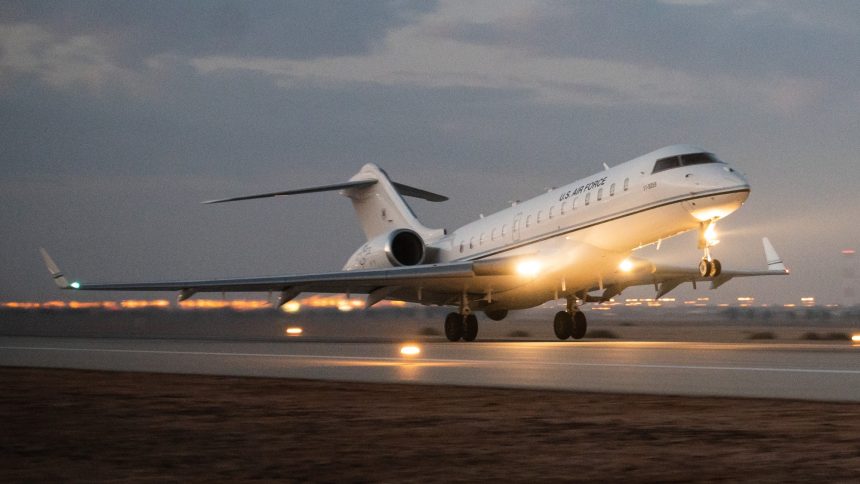
BACN provides a long-range secure communication capability, acting as a “gateway” system that bridges the gap between disparate platforms that cannot communicate directly.
Throughout Operation Epic Fury, kinetic capabilities were in the spotlight, with fighter jets and bombers continuously striking Iranian targets with heavy ordnance. However, behind the scenes, there was another specialized asset which helped make this possible: the E-11A and its Battlefield Airborne Communications Node (BACN).
In modern air warfare, connectivity is as critical as kinetic capability. The E-11A BACN is designed to bridge communication gaps between otherwise incompatible systems, especially as a military forces today field a wide array of communication and datalink systems.
Though operating largely out of public view, the E-11A has played a pivotal role, enabling real-time data exchange between platforms operating on different datalinks and frequency bands.
BACN’s Origins
BACN (or “Bacon”, as the system is commonly pronounced) was developed as a result of lessons learned during operations in the mountainous terrain of Afghanistan. In fact, since the early days, line of sight communications between different units would frequently become hampered by the terrain.
As a workaround, a specifically equipped aircraft at high altitude would be used as a bridging node. This would allow units to relay their communications and datalinks through the aircraft for clear, unbroken communication, as long as they had a clear view of the sky.
Initial trials of the technology involved a NASA WB-57 Canberra aircraft, which also made unusual deployments to Afghanistan. Its service ceiling well in excess of 60,000 ft made it a perfect fit for the BACN mission.
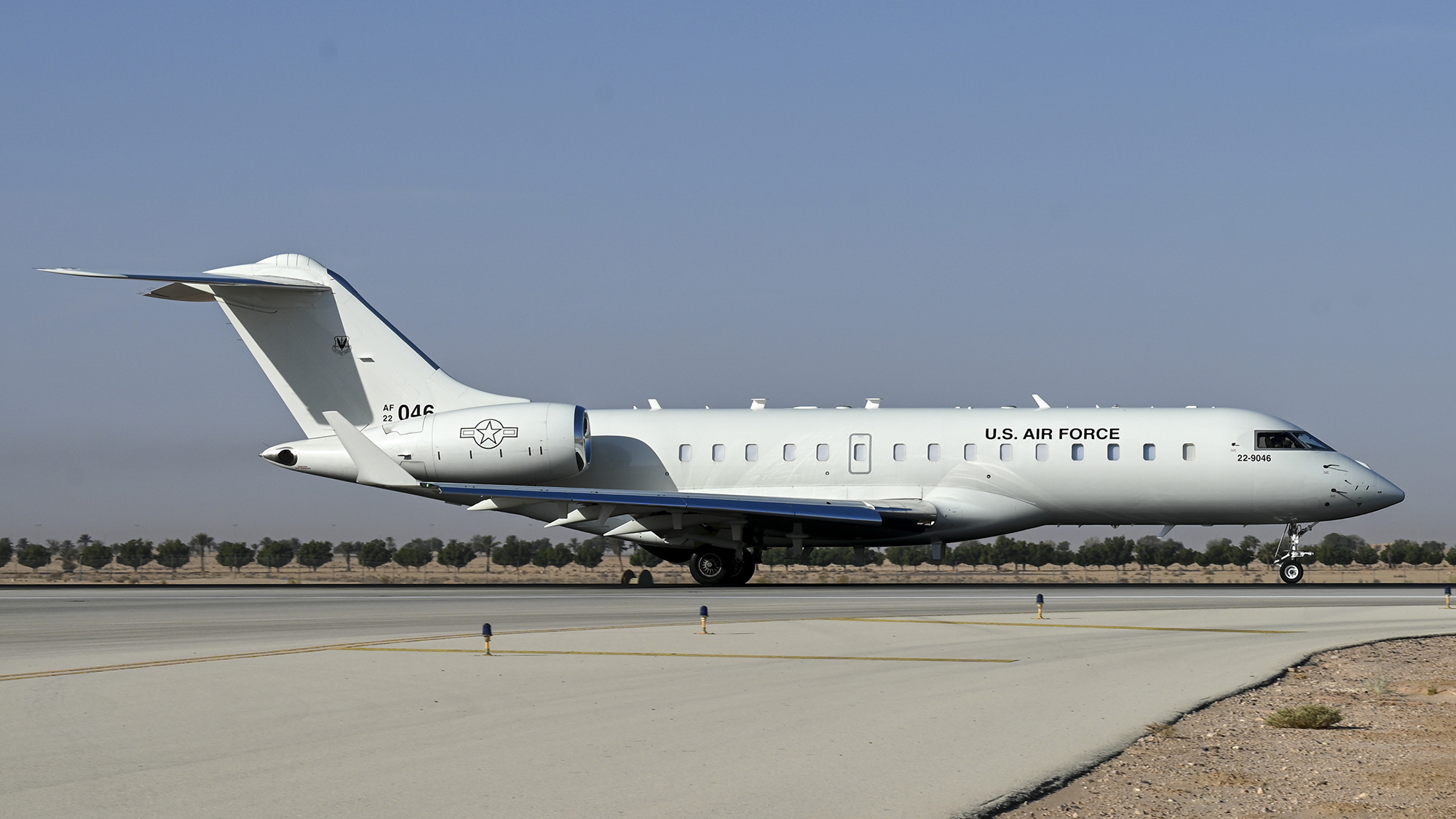
The equipment would later be fitted to the Global executive jet platform, with a lower but still impressive service ceiling of 51,000 feet, which received the designation E-11A. Notably, the first aircraft was uniquely equipped with the two large radomes that were fitted during its role as a testbed for the Royal Air Force Sentinel R1, although they were not used for the BACN payload.
Three EQ-4B Global Hawks were deployed during Operation Inherent Resolve with the same BACN payload as the E-11A fleet. This unmanned capability was retired in 2021 in favor of an increased number of E-11As, and the EQ-4Bs were handed to the Department of Defense Test Resource Management Center to support weapons development tests.
The Payload
The Battlefield Airborne Communications Node payload, often described as ‘Wi-Fi in the sky’, consists of several types of radios and data link equipment installed in the aircraft’s cabin. The technology not only allows communications to be relayed, but also facilitates the translation of otherwise incompatible radio or datalink protocols.
A similar description was also provided by Northrop Grumman, which developed the system. “BACN enables a high-altitude, airborne communications gateway that translates and distributes imagery, voice and tactical data from disparate sources,” said the company.

BACN thus allows real-time communications and data transmission across incompatible systems, both with U.S. forces and allies with different equipment. BACN is reportedly being modified to allow fourth- to fifth-generation data sharing between fighter jets.
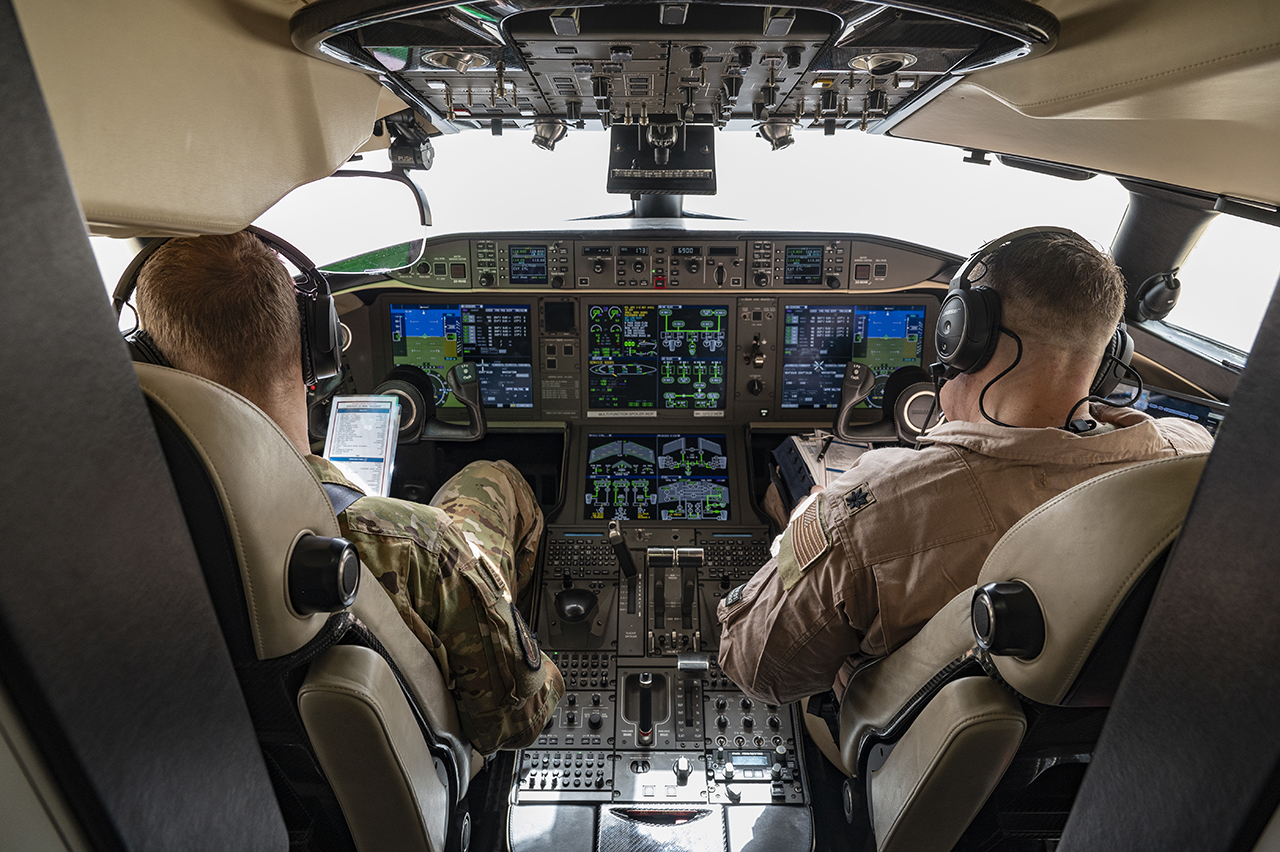
The equipment is remotely controlled from a ground station out of Robins AFB, or forward locations. In fact, the E-11’s crew consists only of two pilots and no mission specialists, with the payload configured on the ground before the sortie and then controlled remotely.
In the past, BACN has also been compared to low-Earth orbit (LEO) satellites for communications. These however present some differences which could limit their utility in military operations.
“BACN distinguishes itself by being an airborne, flexible, low-latency, interoperable communication node that bridges different tactical networks in real time, overcoming the line-of-sight and compatibility limitations that typically challenge satellite-based and ground-based communication relay,” told us Aaron Dann, vice president, connectivity and network solutions, Northrop Grumman.
In recent years, the U.S. military has been adopting Starshield, Starlink’s military equivalent, but, even if it has a low latency, it requires dedicated terminals and can’t translate data as BACN does. This was similarly mentioned by Dann: “Space-based and mesh networks offer potential for reliable, distributed networking, however, BACN remains uniquely suited for tactical bridging of diverse communication systems with low-latency and mobility in complex operational theaters.”
As connectivity and communications are mission critical items and threats to them are constantly evolving, the system needs to be easily upgradeable. “BACN was designed with open architecture from the start, which facilitates new processing techniques and the implementation of new waveform requirements as mission need drives demand,” told us Dann in this regard.
As the BACN payload has already been installed on different platforms, it cannot be excluded that this could happen again, especially with the Air Force looking to give a bigger role to cargo and tanker aircraft. “We have developed BACN to be platform-agnostic and have versions of the system that can be placed on cargo and tanker aircraft, as well as smaller-form podded systems that allow our customers to use BACN in highly versatile ways,” told us Dann.
The E-11A
The E-11A’s base airframe is a Bombardier BD-700-1A10 business jet, also known as Global 6000, modified to carry the BACN payload in the cabin. The choice of this aircraft is not casual, and is justified by some good reasons.
A first reason is found in the performance of the Global, which features a 6,000 nautical miles range and 51,000 ft service ceiling. The aircraft can fly for over 12 hours and at an optimal altitude for communications and data transmission.
Another reason is the strong track record of reliability, which helps with the maintainability of the E-11A, and the commonality of the airframe, which is highly common around the world. This allows to drive down cost and logistical complications related not only to U.S.-based operations, but also forward-deployed operations.
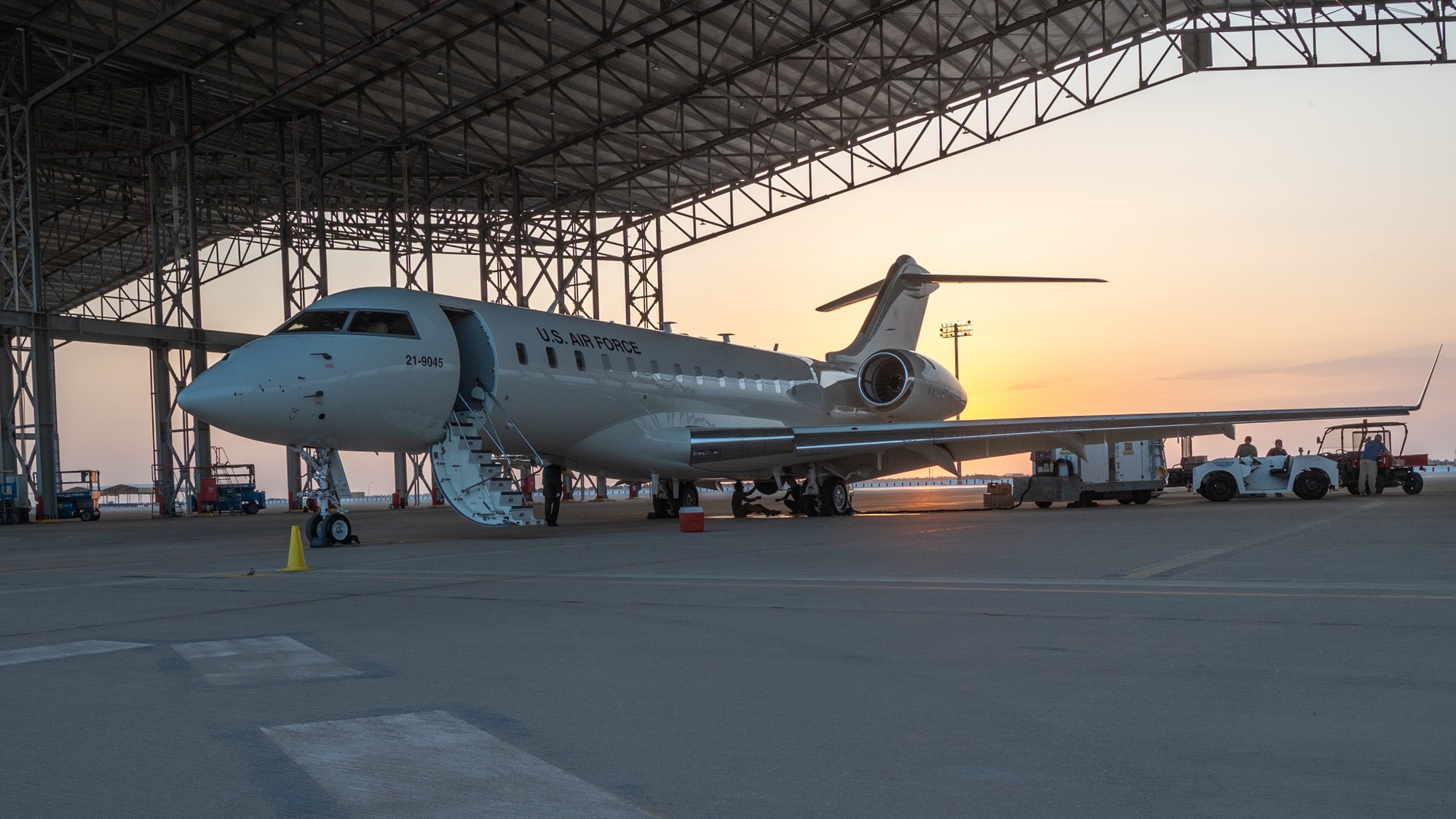
Last, but not least, the Global 6000 is known for having a spacious interior, which allows for the easy installation of BACN’s sophisticated communication and data processing systems. A rare photo of the E-11A’s interior shows several equipment racks installed aboard, while still allowing enough space for engineers to work on them.
Operational History
The E-11A was first leased at the beginning of the BACN program and later bought by the Air Force in 2011. In 2019, it transitioned to a long-term program of record with an initial fleet of four aircraft.
Initially, all the E-11A aircraft were assigned to the 430th Expeditionary Electronic Combat Squadron (EECS) at Kandahar Airfield, Afghanistan, providing near constant coverage in theater together with the EQ-4B Global Hawk UAS (Unmanned Aerial System). BACN was thus a deployed-only capability.
Following the withdrawal from Afghanistan in 2021, the unit reportedly moved to Prince Sultan Air Base, Saudi Arabia. The aircraft has since become a more traditional presence in the U.S., with an E-11A even making the type’s first ever public appearance at an airshow in 2025.
Overseas operations have continued, though, with the aircraft notably helping to coordinate multinational aid drops over Gaza in June 2024. Additionally, the E-11 also took part in Exercise Yellow Sands, a regional training event aimed at boosting teamwork in Counter-Unmanned Aerial Systems (C-UAS) and Integrated Air and Missile Defense (IAMD), filling a “critical gap” in the sharing of information.
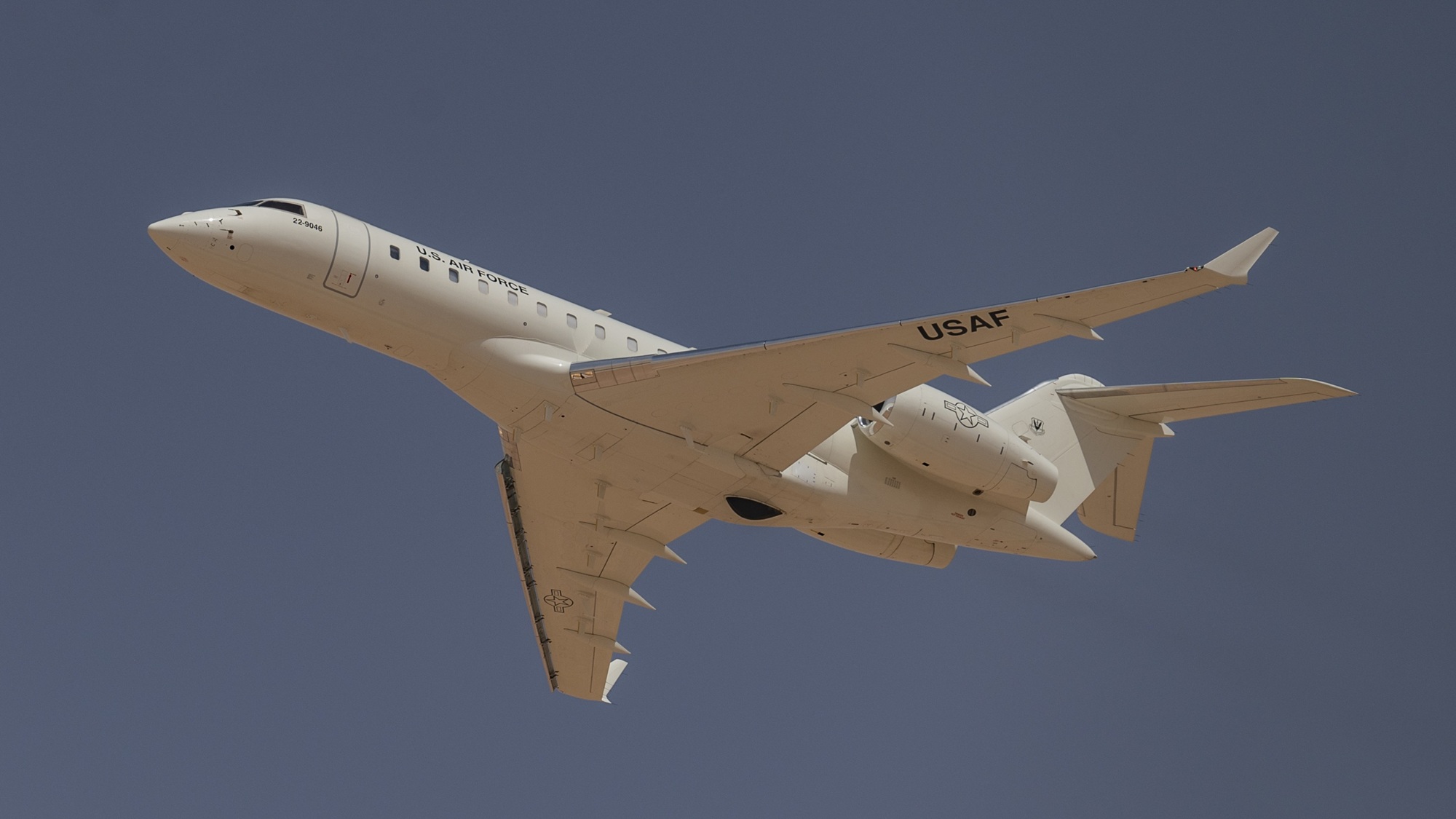
The fleet is currently reportedly deployed to Prince Sultan Air Base, supporting the operations in the U.S. Central Command’s (CENTCOM) Area of Responsibility (AoR) as part of Operation Epic Fury. According to the reports, the presence of the E-11 there was increased in early February 2026, ahead of the strikes in Iran, with all but one aircraft deployed.
🇺🇸 #USAF E-11A BACN fleet (6); last reported locations 2026-04-12Z 🥓
Prince Sultan Air Base 🇸🇦 (6)
➢ N770AG (11-9355 #ae4de1) #AA690E (52d)
➢ 22-9046 #ae77a3 (40d)
➢ 22-9047 #ae77a4 (20d)
➢ 12-9506 #ae54b4 (16d)
➢ 23-9048 #ae77a5 (15d)
➢ N898M (24-9049 #af83f0) #AC641F… https://t.co/ETOU3QMDiJ pic.twitter.com/gCtwelWiKN
— Steffan Watkins (@steffanwatkins) April 13, 2026
The Fleet
The E-11A fleet has changed composition over time. Initially, the fleet included only four aircraft, one of them being the testbed for the Royal Air Force Sentinel R1, serial 11-9001.
One aircraft was lost in Afghanistan with two fatalities in 2020, with a mechanical failure and subsequent pilot error found to be the cause. A year later, the Air Force announced the procurement of six new aircraft, with a planned fleet of nine aircraft by the end of fiscal year 2027.
The ninth aircraft was delivered to Hanscom Air Force Base, Massachusetts, in September 2025. Hanscom is the headquarters of the BACN program office and is responsible for equipping the aircraft with the BACN payload, upon which it will become an E-11A.
The aircraft, upon becoming E-11As, are stationed at Robins Air Force Base, Georgia, with the 18th Airborne Command and Control Squadron. The unit already operated three aircraft in 2023, according to reports.
While the delivery of the ninth aircraft seemed to bring the Air Force up to the planned fleet figures, it now appears that some of the oldest E-11A airframes were retired. In fact, an E-11 was included on the U.S. Air Force’s divestiture list for the 2025 financial year.
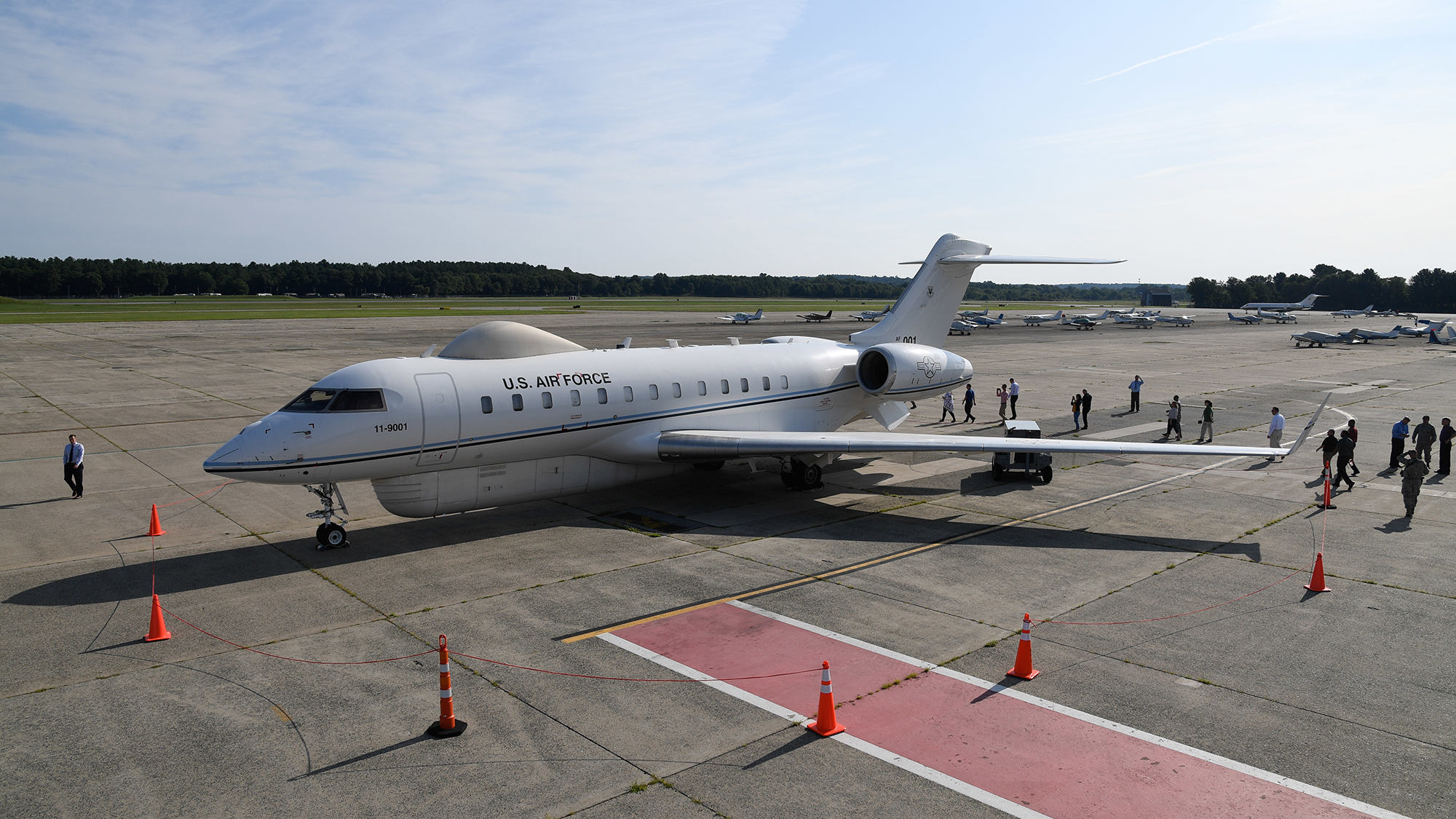
This led many to believe that the fleet would be reduced from nine to eight aircraft, however it appears that two aircraft were retired, according to justification documents. The service mentioned that “BACN is currently carried on six E-11As, and the seventh and final aircraft will be delivered by the end of 2025,” referring to the aircraft delivered in September.
Airframe 11-9001 is likely among the ones retired, as it is almost 30 years old and recorded a significant number of flight hours. While the serial is not explicitly mentioned, the document mentions a prototype aircraft, while mentioning that the procurement of an aircraft has been cancelled.
“Air Force divests one E-11A Battlefield Airborne Communications Node (BACN) prototype (original) and one procurement aircraft in FY 2025 and associated flying hours, weapon systems sustainment (WSS), O&M, and weapon systems capability (WSC) modifications. The prototype test aircraft divestment has many structural and electronic limitations and unique configurations, and it does not offer the full mission capability of production E-11s. The prototype is difficult and expensive to keep mission-ready and to upgrade (cost avoidance). The E-11 total aircraft inventory (TAI) has been reduced to seven aircraft, so the FY 2025 procurement was cancelled.”
This thus confirms the reduction of the fleet from nine to seven aircraft. While 11-9001 has not been tracked online for some time, in line with its supposed retirement, it is unclear which other aircraft was retired/cancelled.
The aircraft delivered in 2025, serial 24-9049, is still flying and has also been deployed to CENTCOM’s AoR. It is thus unclear which aircraft was the FY 2025 procurement cancellation referring to.