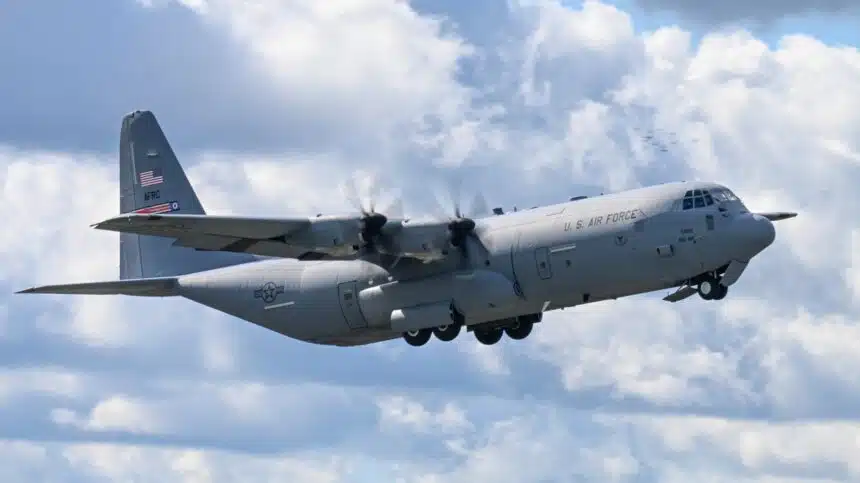
The selection of Northrop Grumman’s facility, which already supports the U.S. Navy’s E-6B Mercury, expands depot-level maintenance capacity for the C-130 Hercules fleet.
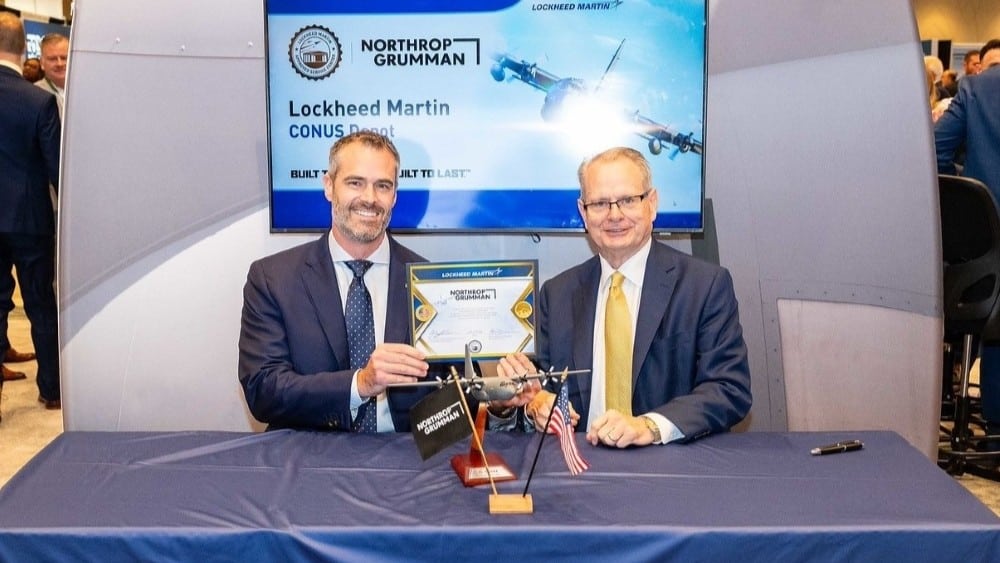
Northrop Grumman announced on Nov. 6, 2026, that its Lake Charles, Louisiana, facility has been selected as a Certified Continental U.S. depot for the maintenance of the C-130 Hercules fleet. The designation, recognized by Lockheed Martin during the recent C-130 Technical Coordination Group World Wide Review in Orlando, Florida, will allow the company to provide depot-level maintenance, including aircraft repair, overhaul and inspection.
According to Northrop Grumman, the new assignment is intended to expand maintenance capacity, improve aircraft availability and help return C-130s to service faster. The company will leverage its existing workforce, specialized infrastructure, digital engineering tools and fabrication capabilities to support the aircraft.
Notably, the same facility performs integrated modification and maintenance activities on the U.S. Navy’s E-6B Mercury aircraft in support of the Take Charge and Move Out (TACAMO) mission. Previously, the facility also conducted maintenance for the E-8 Joint Surveillance Target Attack Radar System (JSTARS).
Expanding Lake Charles’ aircraft sustainment capabilities
Located at Chennault International Airpark in southwest Louisiana, Northrop Grumman’s Lake Charles facility has long been involved in the maintenance and modification of complex military aircraft. As mentioned earlier, the site historically served as the maintenance depot of the E-8C JSTARS for approximately three decades, and in 2022 welcomed the E-6B Mercury.
The Lake Charles Fabrication Center combines aircraft maintenance with extensive manufacturing and engineering capabilities. According to Northrop Grumman, the site includes more than 500,000 square feet of hangar space and 105,000 square feet of fabrication floor space.
Northrop Grumman listed machining, forming, structural repair, finishing and heavy maintenance among the facility’s capabilities. Additionally, the company highlights its use of digital engineering and reverse engineering to develop solutions for aircraft sustainment and modernization.
According to the facility’s page on Northrop Grumman’s website, Lake Charles “specializes in addressing critical manufacturing challenges.” Among the notable examples mentioned are the reverse engineering and replacement of a damaged structural beam on the E-6B and urgent F-16 repairs which required components difficult to source.
The facility is also involved in the production of the MESA (Multi-role Electronically Scanned Array) radar for the U.S. Air Force E-7 Wedgetail.
Supporting the Hercules fleet
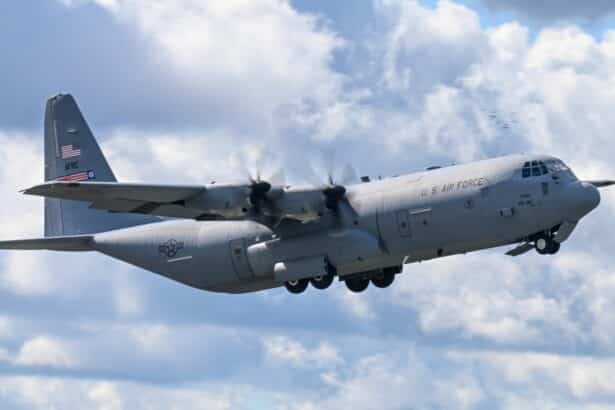
The C-130 Hercules remains a central component of U.S. military airlift capabilities, performing missions ranging from tactical transport and airdrop operations to aeromedical evacuation, humanitarian assistance and disaster relief. Its ability to operate from austere and unprepared airfields has made it a key asset for military operations worldwide.

The U.S. Air Force operates both the legacy C-130H and the newer C-130J, as well as several specialized variants. Additional variants are also flown by the U.S. Navy, Marine Corps and Coast Guard, with estimates mentioning a total of up to 600 aircraft across all services.
Obviously, the designation of Lake Charles as a Certified Continental U.S. depot does not mean that Northrop Grumman will replace Lockheed Martin’s role in the C-130 program. Rather, it expands the network of facilities available to support the fleet through depot-level maintenance, reducing the depot time and increasing the availability.
Northrop Grumman’s announcement does not specify details such as the number of aircraft expected to be inducted at Lake Charles, the timeline for the first maintenance activities, the duration of the agreement or the value of the associated work.
Expanding C-130 maintenance capacity in the United States
The addition of the Lake Charles facility to the C-130 maintenance network comes as the fleet continues to receive substantial maintenance and modernization work. In addition to facilities in the U.S., the C-130 fleet is also supported by an international network of maintenance facilities.
One of these is Marshall Aerospace in the United Kingdom. In 2020, the company was awarded a ten-year contract to provide maintenance for U.S. Marine Corps aircraft deployed outside the continental United States, with work performed at its facility in Cambridge.
The company reported in 2025 that it had worked on 42 different Marine Corps aircraft, completing 37 minor depot inspections and 15 planned maintenance intervals. The arrangement has provided a long-standing source of support, but it also means that aircraft requiring major maintenance must be sent abroad.
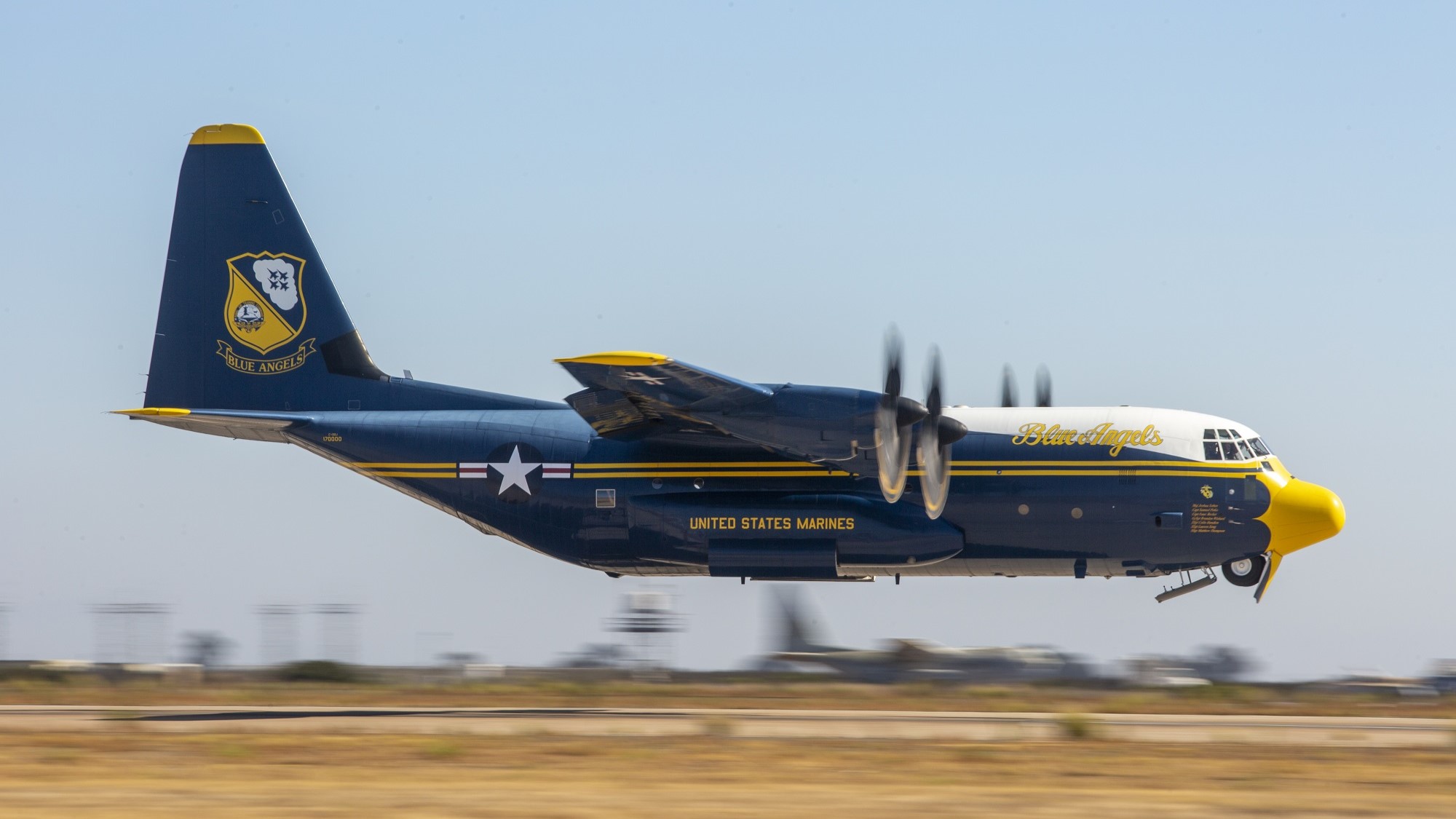
As previously reported by The Aviationist, among these aircraft is the U.S. Navy’s Blue Angels C-130J support aircraft, better known as “Fat Albert.” The aircraft was delivered to Marshall Aerospace to replace the center wing box, an extensive structural work which is expected to add decades to the aircraft’s service life.
Marshall also planned to establish a larger U.S. maintenance footprint, although the plan encountered delays. The company’s proposed $50 million facility at Piedmont Triad International Airport, North Carolina, was expected to create 240 jobs and provide six aircraft bays.
However, in November 2025, Marshall withdrew from a state incentive agreement, citing delays in U.S. military procurement timelines that had pushed expected aircraft arrivals back by more than three years. The company planned to sublet the facility while reassessing its future opportunities.
Meanwhile, Marshall was acquired by AURELIUS in October 2026. The new owner and company have described the transition as “business as usual,” with support for existing customers, including the USMC, continuing.
The reliance on overseas facilities for depot-level work has implications for fleet availability. Overseas depot work entails additional transportation and coordination, potentially extending the time an aircraft remains unavailable compared with maintenance performed closer to its operating units.
The selection of Northrop Grumman’s Lake Charles facility allows to expand C-130 maintenance capacity within the continental United States (CONUS).