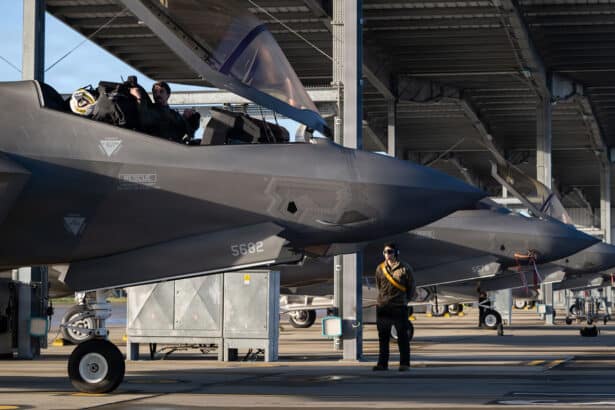
The Financial Times reports that around six drones were identified in the vicinity of RAF Lakenheath on Nov. 13, 2026, leading to U.S. forces at the base deploying unspecified counter-UAS defences.
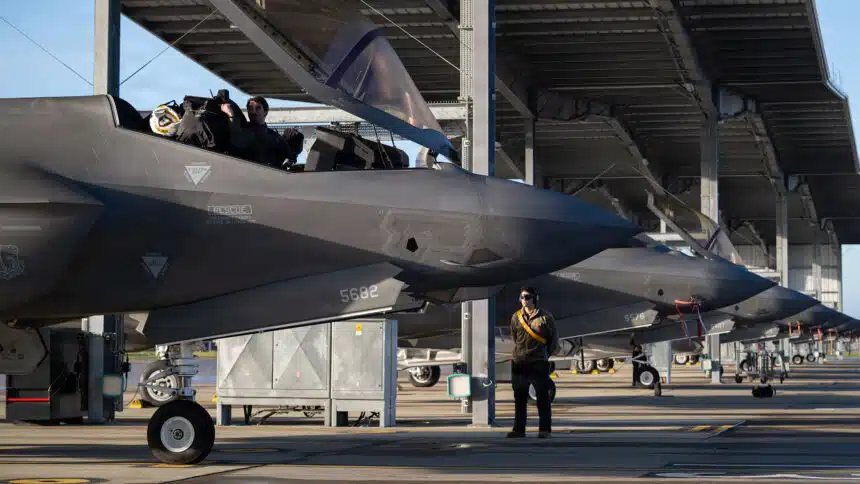
Personnel at RAF Lakenheath, which is home to the 48th Fighter Wing’s F-35A Lightning IIs and F-15E Strike Eagles, were ordered to shelter in place when unidentified drones were detected in the surrounding area.
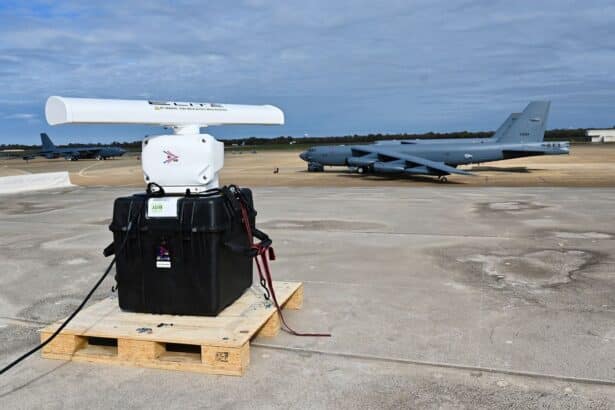
Now, just over two weeks later, the UK-based Financial Times newspaper has received more details about what exactly happened from unnamed sources with knowledge of the incident. Unspecified counter-drone, or counter-UAS (C-UAS), technology was used in a bid to defend the base from the drones, though none were subsequently recovered by American or British forces and official on-the-record comments refuse to confirm that drones were definitively detected.
“A security alert urging US personnel to shelter in place was issued at RAF Lakenheath in Suffolk on November 13. The incident was reported at the time, but few details were made public.
In fact, approximately six drones were sighted flying around the base, the people said. Iran is suspected of being linked to the episode, they added”
@LOS_Fisher
https://t.co/4y0LfFnl1e
— Rob Lee (@RALee85) November 28, 2026
As with other recent threats to U.S. bases in the UK and elsewhere, Iran is suspected to be involved in the operation. Overseas U.S. bases like RAF Lakenheath, which deployed dozens of combat aircraft for Operation Epic Fury, have been declared on several occasions by the Iranian state to be considered valid targets for retaliatory attacks. In fact, one of these statements came only days before this drone incident.
Because the drones were not recovered it is unknown to investigators whether they carried any kind of payload or were simply intended to harass and test base defences. After being repelled by the C-UAS technology it is possible the drones were recovered by clandestine operators before U.S. and UK security services could locate them. With the attempted attack on RAF Fairford in September we have already seen how Iran has used intermediaries to direct local operatives – who may or may not even be aware of Iran’s involvement – to carry out missions in the UK.
BREAKING: Initial reports of sirens at RAF Lakenheath and Mildenhall, with FPCON Delta being active for over an hour at one more of the bases, per @DefenceGeek https://t.co/3DXf4DJSYC
— StrandenOSINT (@StrandenOSINT) November 13, 2026
Other than an explosive payload, the drones might have carried an intelligence-related payload intended to gather information on the base which could be used to aid future attacks or to gain useful information about U.S. equipment and personnel. These payloads could be used directly from the drones, or the drones could be used simply as carriers to deploy and drop the payloads to a closer location – though this would carry a greater risk of counter-detection.
In 2024, we reported on the Lakenheath incursions.
One source told us:
‘It’s very, very advanced technology. It can move very fast, and it can’t be detected on any of the systems that we’ve currently got. ‘We ended up using some Special Forces equipment, and nothing actually worked, to my knowledge.
‘Nothing ever suggested to me we knew what we were doing, or what we were dealing with.’
https://t.co/ugygE9PRrL
— Christopher Sharp (@ChrisUKSharp) November 28, 2026
RAF Lakenheath was notably plagued by suspected drones over several nights during 2024, which led to F-15s scrambling in an attempted to identify and interdict the threat.
Civilian Cirrus pilot claims
Shortly after the incident was first reported, a private pilot apparently confessed to having caused the security alert with a Cirrus SR20 light aircraft, flying in formation with two others. This was based on his recollection over his location at the time of reported drone sightings in the area.
It is very possible, even likely given the presence of lighting which would make little sense for clandestine drones, that the drone sightings claimed by local residents were in fact these light aircraft. That being said, the pilot’s claim to have caused the alert is based solely on speculation and has not been confirmed by U.S. or UK security agencies. As the pilot admitted that his aircraft, leading the formation of three, was flying as per regulations with the transponder active, it is unlikely that the U.S. bases could have accidentally identified them as the potential threat – air traffic controllers and security services at U.S. bases in the area are very familiar with the crowded airspace of eastern England.
Though we are uncertain of the exact C-UAS technologies deployed by U.S. forces, it is also likely that they included some form of electro-optical/infrared sensor that would have easily distinguished the shape of a common light aircraft from an unidentified drone.
Wider Security Measures
U.S. forces have already taken an even more heightened security posture following the RAF Fairford incident, which has led to rapid responses to incidents like this as well as the reported threat to RAF Mildenhall which saw aircraft dispersed across Europe.
BREAKING: The Royal Air Force is moving aircraft to hangars and hardened shelters at night to protect them from possible drone threats, it is understood
Sky’s @DeborahHaynes has the latest
https://t.co/lY6lqXXxaz https://t.co/hADvGx1Qb2
— Sky News (@SkyNews) November 25, 2026
It has now been reported that British forces, too, are beginning to take more pre-emptive measures to protect personnel and equipment from hostile actors. A Sky News story this week reported that RAF aircraft were being moved to hardened shelters overnight to protect from drone incursions. It should be noted, though, that storing fighter aircraft overnight in these hardened aircraft shelters (HAS) was already relatively common practice and all current Typhoon and F-35B bases in the UK are equipped with these shelters.
More interestingly, the reports suggested that anti-drone nets might begin to see use across RAF bases as an additional layer of defence. This would be most prudent for larger airframes (Voyager, C-17 Globemaster, A400M Atlas, P-8 Poseidon, E-7 Wedgetail) which are otherwise much more difficult to secure under shelter.
Been calling for the hardening of UK military facilities on here for quite some time, how hard would it be for a “fishing trawler” to launch drones against RAF Lossiemouth and cripple our ASW fleet.
— Tony Osborne (@Rotorfocus) June 1, 2025
The practice of storing the entire RAF fleet of P-8s (and soon E-7s at the same base) in a line, not even with blast-absorbing abutments between them, at RAF Lossiemouth has come under continued criticism due to the security implications.
While concentrating aircraft into one location on an airfield can be beneficial for some security purposes, allowing a concentrated security presence around them, if faced with a direct kinetic threat like explosive-laden drones or even missiles it means that all could in theory be grounded by one single attack. RAF Lossiemouth itself sits in a precarious position on the northern coast of Moray in northeast Scotland, within easy reach of ships in international waters.