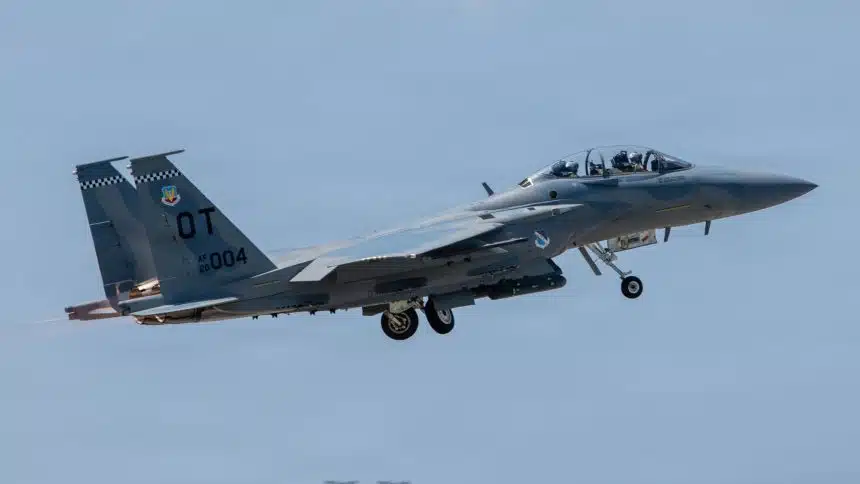
The U.S. Air Force is seeking an operational missile warning system for the F-15EX Eagle II, which was designed with the needed provisions but initially entered service without the capability.
The U.S. Air Force is looking for a Missile Warning System (MWS) for its F-15EX fleet, a capability for which provisions were already added to the airframe but was not integrated when the Eagle II first entered service. The development became public when, on Sept. 29, 2026, the Air Force Life Cycle Management Center’s F-15 System Program Office published a Sources Sought notice.
The office is seeking industry information on an “operationally qualified threat missile launch and approach warning system” that could be rapidly integrated onto the F-15EX. The notice is still part of the market-research phase of the acquisition process, meaning that the Air Force has not yet committed to purchasing the system.
While the notice did not include performance requirements to avoid compromising classified information, the disclosed requirements point to the service looking to quickly add the capability to the Eagle II with relatively limited modification to the aircraft.
A capability the F-15EX was designed to accommodate
The search for an MWS is particularly interesting because the F-15EX was already designed with provisions for such a system.
In fact, when the F-15EX made its first flight in February 2021, we noted in our reporting that the aircraft featured the same mounting provisions used for the MWS sensors installed on the F-15QA Ababil and F-15SA. At the time, however, the sensors themselves were not installed on the Eagle II.
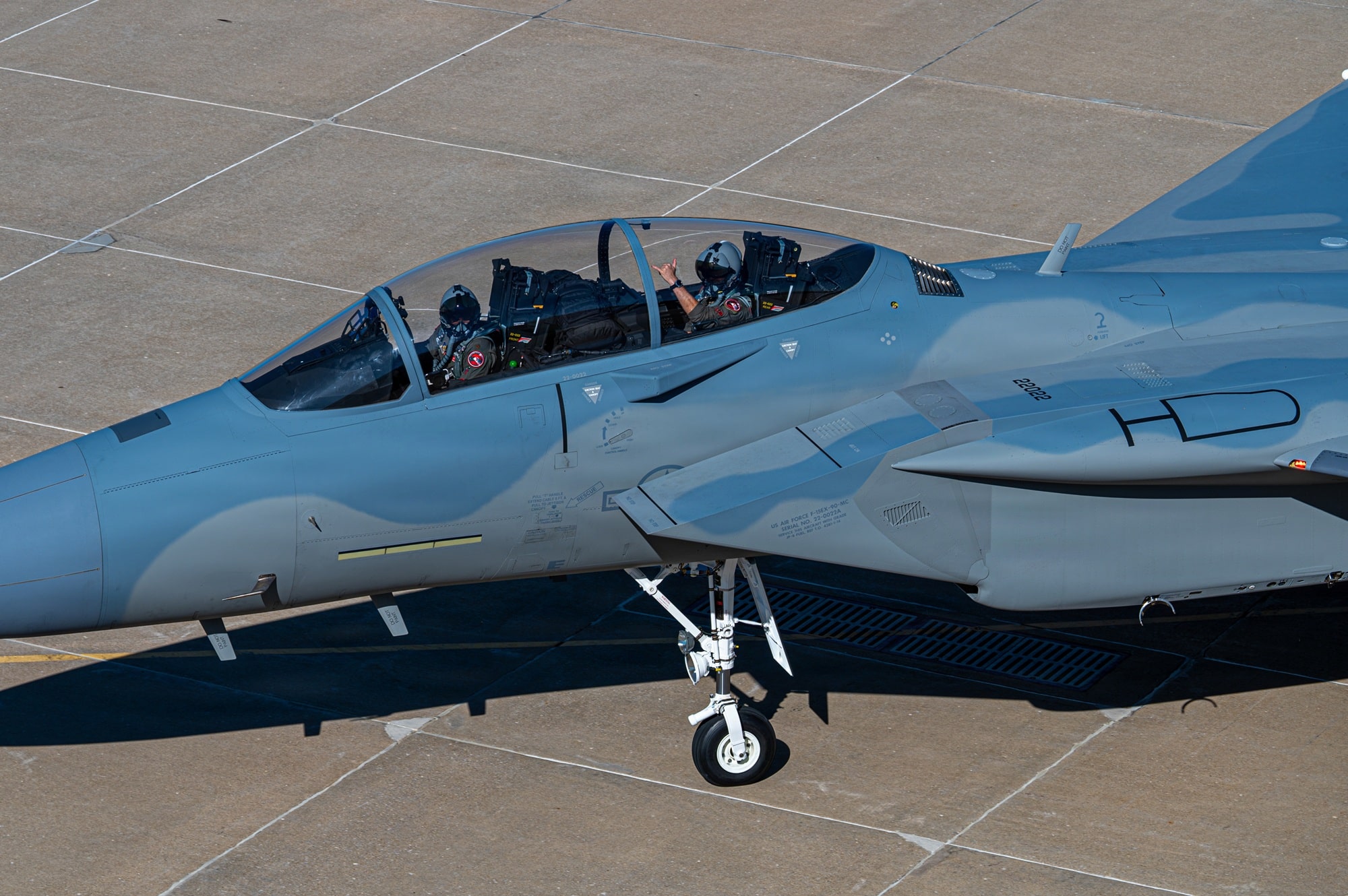
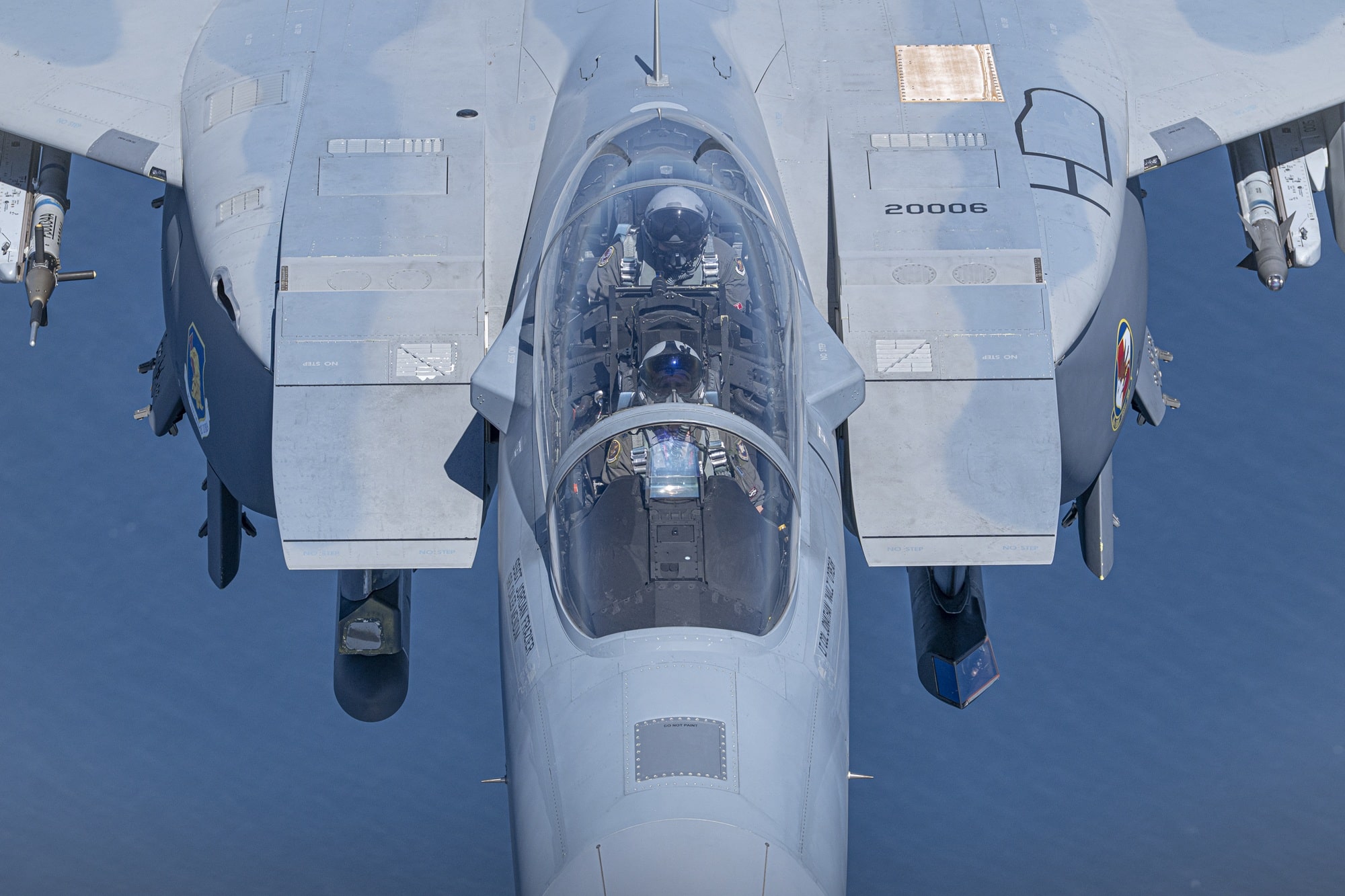
The F-15EX retained the associated provisions even though the U.S. aircraft initially entered service without an MWS. The sensors can be installed on mounting points below the cockpit’s canopy frame and on the fairings of the EPAWSS on the tail, as well as on the top and the bottom of the airframe.
According to the document released by the service, the F-15EX has six pre-existing sensor locations dedicated to MWS. The future system must use the aircraft’s existing data cables, power cables and cooling infrastructure.
The requirement also calls for the system to be “easily, safely, rapidly, and organically installable and removable” by USAF military aircraft maintenance personnel. The only change required, according to the document, would be the installation of MWS line replaceable units (LRUs) in the six pre-existing locations.
Six sensors for missile warning
The locations are distributed around the aircraft to provide coverage from different directions. The most obvious ones are the two prominent mounting points on either side of the forward fuselage, immediately below the cockpit’s canopy frame.
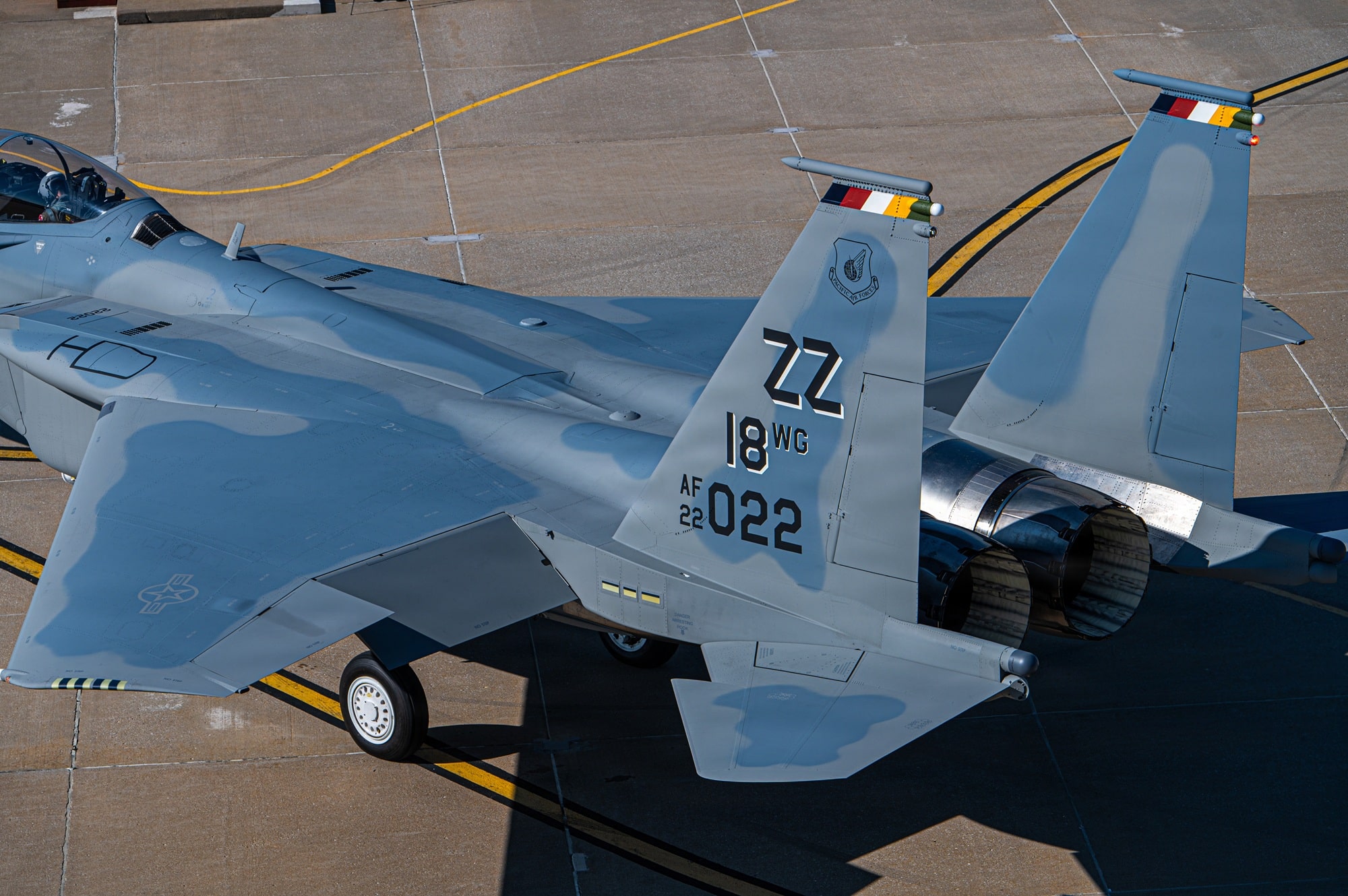
Additional locations are found toward the rear of the aircraft, installed on the fairings of the AN/ALQ-250 Eagle Passive Active Warning Survivability System (EPAWSS) on the tail booms. Other positions are intended to provide coverage from above and below, with one installed on the top between the engines, just behind the speed brake, while the last one should be on the underside in a position which is not readily visible.
Together, the six locations are intended to provide a 360° sensor coverage around the aircraft, necessary for a missile warning system to detect all possible threats.
Filling a gap in the F-15EX’s defensive suite
The F-15EX is equipped with the AN/ALQ-250 Eagle Passive/Active Warning Survivability System (EPAWSS), which provides electronic warfare and threat-warning capabilities against radio-frequency threats. EPAWSS can detect, identify and locate electromagnetic threats and provide the crew with information needed to avoid, engage or defeat them.
A missile warning system, such the one requested by the Air Force with this Sources Sought notice, addresses a different part of the threat spectrum. An incoming missile using an infrared seeker does not necessarily have to emit a radar signal that can be detected by the aircraft’s electronic support measures.
A dedicated missile warning sensor, which is usually ultra-violet based, instead looks for the optical/infrared signatures associated with a missile launch and approach. This can provide the crew with an additional warning against infrared-guided weapons, which otherwise could only be visually detected by the crew looking outside the cockpit.
The omission of a missile warning system from the initial F-15EX configuration has been somewhat unusual when compared with other recent F-15 variants. As mentioned, the aircraft was derived from versions of the Advanced Eagle that already incorporated dedicated missile warning sensors.
The inclusion of the MWS, in addition to providing another layer of protection for the aircraft, would also reduce the workloads of the crews, especially in the most critical parts of a combat mission. In fact, especially in heavily contested environments, having to continuously watch out for possible incoming missiles would add to the already heavy load of tasks inside the cockpit to manage weapons and avionics.