The integration would restore Germany’s naval aviation long-range anti-ship strike capability, lost when its Tornado aircraft were transferred to the Luftwaffe over 20 years ago.
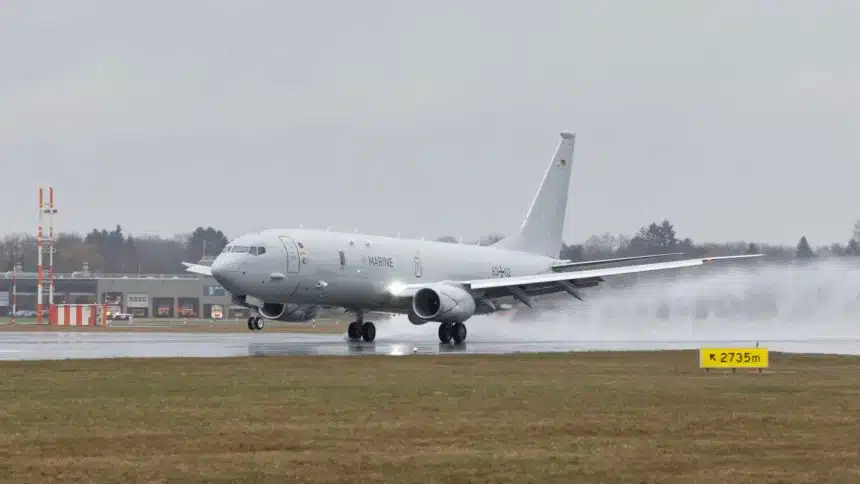
The German Navy is considering integrating the Norwegian Joint Strike Missile (JSM) onto its P-8A Poseidon maritime patrol and anti-submarine warfare aircraft, according to a Sep. 17, 2026 by Hartpunkt. The publication, quoting German Naval Aviation (Deutsche Marine’s Marineflieger) commander Capt. Broder Nielsen, said that the JSM “would represent a viable armament option for the P-8A Poseidon.”
The potential integration would restore a long-range maritime strike capability that the Marineflieger lost following the transfer of its Tornado Interdictor/Strike (IDS) aircraft to the Luftwaffe more than 20 years ago. It would also provide an additional weapon option for addressing maritime threats, including Russia, in the High North.
Germany received the first of its eight P-8A Poseidon in November 2025, and has considered acquiring four more, potentially bringing the fleet to 12 aircraft. Three aircraft have been delivered so far, according to Boeing, and are assigned to the Marinefliegergeschwader 3 (Naval Air Wing 3) “Graf Zeppelin.”
Germany has already ordered an undisclosed number of JSMs from Kongsberg, which will be used to equip the F-35 Lightning II. However, no contract or public budget allocation for integrating the missile onto the P-8A has been announced.
🇩🇪 According to Hartpunkt, the German Navy is planning to arm its P-8A Poseidon Maritime Reconnaissance Aircraft fleet with the Joint Strike Missile Cruise Missile.https://t.co/an9Eut5lkw pic.twitter.com/mkStrctYKS
— Jeff2146🇧🇪 (@Jeff21461) September 17, 2026
JSMs on the P-8A
The Hartpunkt report followed comments Nielsen made during the 2026 Farnborough International Airshow in the UK. He said the German Navy needed additional P-8As and a long-range anti-ship capability, citing the increasing Russian naval activity in the High North.
Nielsen told Defense One:
“No, eight is not enough. Give me 10, and I will say I need more. And give me 12, I will say give me more. The demand for this aircraft is so huge. And to cover these huge areas there, you have to build up a real significant fleet.”
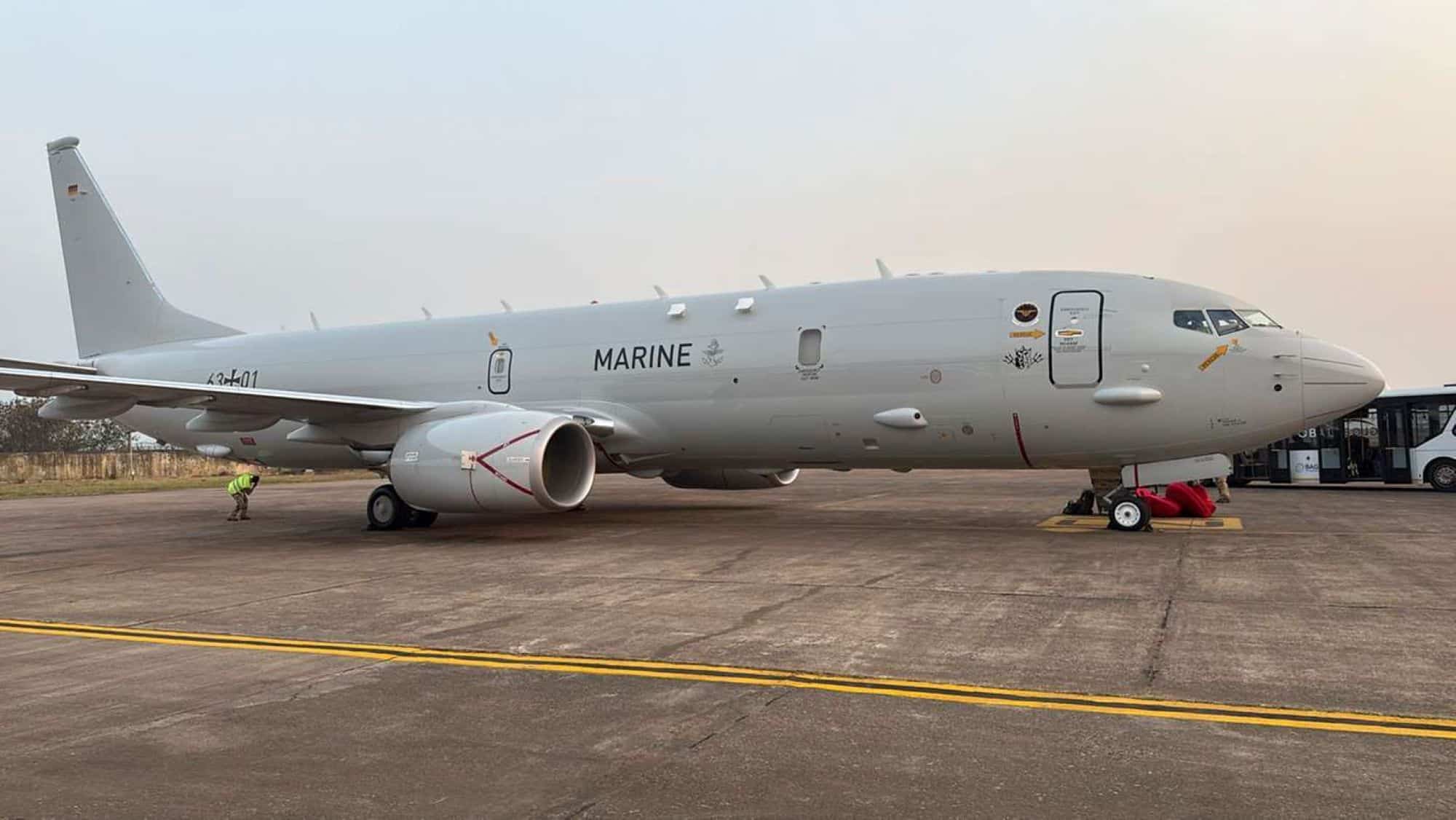
He subsequently identified the JSM as a “valid option” when discussing the introduction of long-range strike capabilities as part of the kinetic effects which will be introduced on the P-8A:
“We are in the very early stage of introducing our aircraft. So step by step, I would say. But what is even more important is our capability to launch kinetic effects. It is of high importance that we will receive the torpedoes and also deep precision strike capabilities. The German navy lost the ability to fight against surface warships. That was 25 years ago when we lost our Panavia Tornadoes and gave it to the [German air force], unfortunately. And ever since, we do not have any missiles in stock anymore against surface ships. So we need long-range surface missiles, and the [Kongsberg] joint strike missile is a valid option.”
German Navy’s maritime strike Tornados
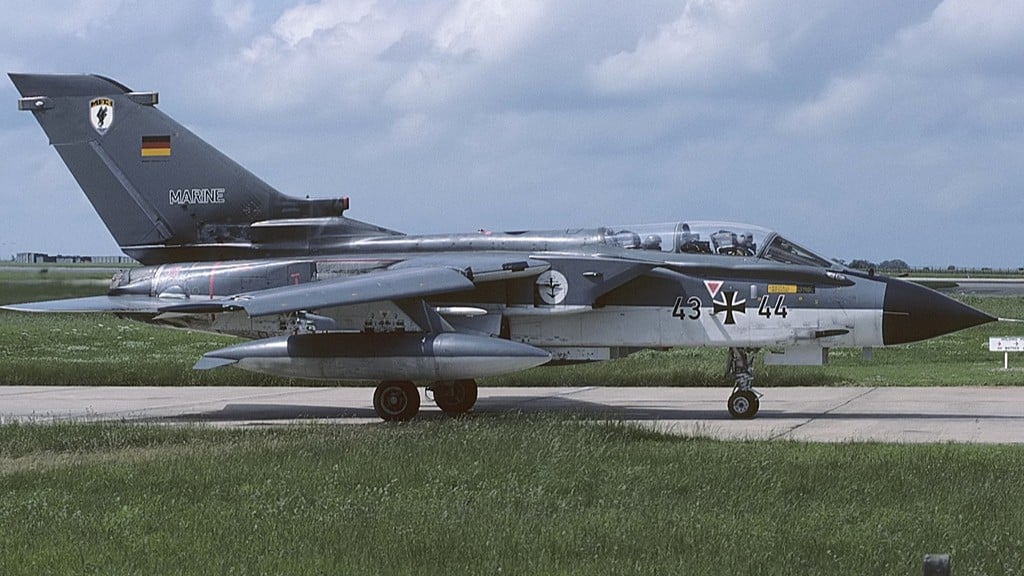
The West German Navy’s Marineflieger operated approximately 110 Tornado IDS aircraft configured for maritime strike missions. In German service, the aircraft were designated PA-200 Tornado.
They were assigned to two wings: the Marinefliegergeschwader 1 (MFG1 – Naval Air Wing 1) at Jagel Air Base and the MFG2 at Eggebek, both on the Jutland Peninsula. The aircraft initially carried the Messerschmitt-Bölkow-Blohm (MBB) AS.34 Kormoran anti-ship missile.
The Marinefliegerkommando (Naval Aviation Command) PA-200 Tornados were easily recognizable thanks to their sea gray-silver liveries. With the deactivation of the MFG2 in August 2005 and the reassignment of the remaining Marineflieger Tornados to the German Air Force (Luftwaffe), the German Navy lost its dedicated fast jet maritime strike capability.
The Luftwaffe continues to operate around 60 Tornado IDSs and 21 Tornado Electronic Combat/Reconnaissance (ECR) aircraft, according to the latest available data. Part of the Tornado ECR fleet will be replaced by the Eurofighter Tranche 5, set to be delivered between 2031 and 2034.
Germany, JSM and the P-8A
As mentioned earlier, Germany is already a JSM customer. The country placed its first order with Kongsberg, worth NOK 6.5 billion, in July 2025, followed by a NOK 3.5 billion ($380 million) contract on May 18, 2026. The number of missiles remained undisclosed in both contracts.
Germany is also a future F-35A Lightning II user, with the first of its 35 jets taking flight on Sep. 8, 2026 at Lockheed Martin’s Fort Worth facility. The JSM will be integrated with the Luftwaffe’s F-35, building upon the integration trials with the U.S. Air Force’s F-35As.
The P-8A is currently cleared to employ the AGM-84 Harpoon, while the AGM-158C Long-Range Anti-Ship Missile (LRASM) is being introduced on the P-8A fleets of the U.S. and Australia. Germany has not publicly confirmed LRASM integration for its aircraft.
Germany could potentially benefit from its existing JSM procurement and experience integrating the missile with the F-35A. However, adapting the weapon for the P-8A would still require dedicated integration, testing and certification work.