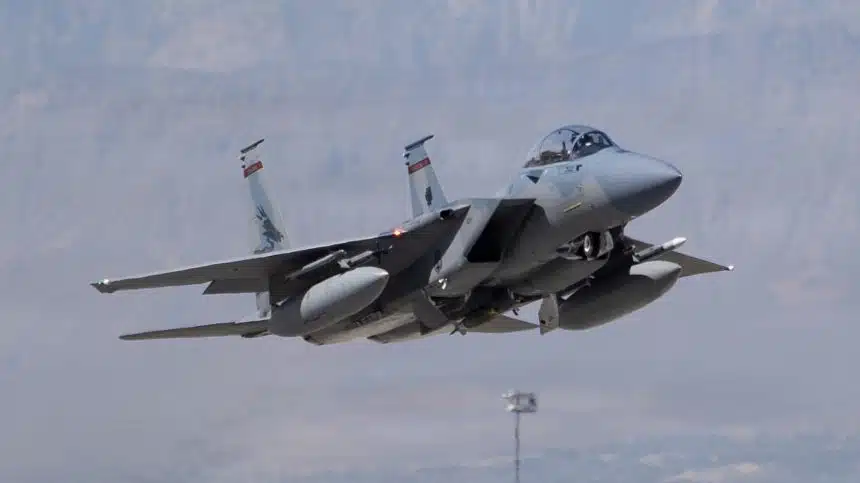
The Oregon ANG’s 142nd Wing deployed to Nellis AFB for three weeks in support of the U.S. Air Force’s Weapons Instructor Course (WIC), dropping live bombs from operational F-15EXs for the first time.
Operational F-15EX Eagle II fighter jets assigned to the Oregon Air National Guard’s 142nd Wing have dropped live bombs for the first time, achieving what the service defined as “a historical milestone.” The bomb drops were recorded when the 142nd Wing’s fleet of F-15EXs operated at Nellis AFB, Nevada, for three weeks in late August and early September in support of the U.S. Air Force’s Weapons Instructor Course (WIC).
The photos of the operations were captured in the last week of August, although they were only released on Sept. 9. The F-15s were shown in the official photos flying with either a Mk-82 500 lb bomb (although spotters also captured the F-15EXs departing from Nellis with the larger Mk-84 2,000 lb bomb) or an AN/AAQ-33 Sniper targeting pod on the centerline station.
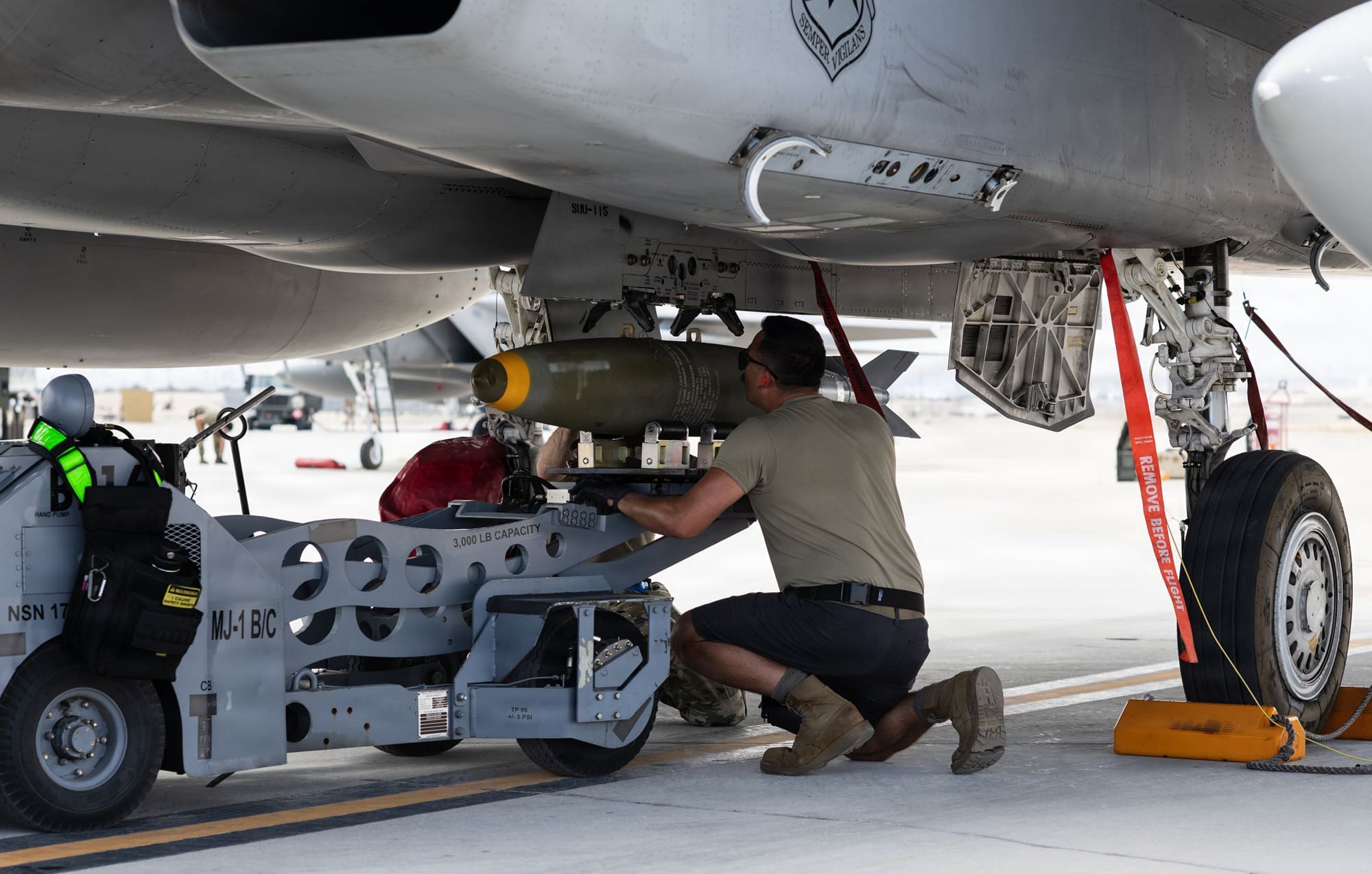
U.S. Air Force Master Sgt. Jay Aebi, non-commissioned officer in charge of weapons loading, 142nd Aircraft Maintenance Squadron, loads a bomb onto an F-15EX Eagle II aircraft at Nellis Air Force Base (AFB), Nevada on August 27, 2026.This is not casual, as the F-15EXs currently being delivered to operational units are not equipped with the conformal fuel tanks (CFT) which, similar to the F-15E’s CFTs, would have provided mounting points for air-to-ground weapons. It is unclear, however, why the Sniper was installed on the centerline, similarly to the F-15C, instead of the left (port) engine intake pylon, where it can be usually found on the F-15E Strike Eagle.
The campaign at Nellis AFB was preceded by a deployment to Mountain Home Air Force Base, Idaho in early May. While there, the aircraft employed 500 pound BDU-50s and 2,000 pound BDU-56s, the inert variants of the Mk-82 and Mk-84 bombs.
Visualizza questo post su Instagram
While the F-15EX has already been tested in this capacity under the 85th Test and Evaluation Squadron at Eglin Air Force Base, Florida, this was the first time an operational EX unit has loaded and dropped bombs, says the service. Both the campaigns with inert and live weapons are part of the steps towards the introduction of the air-to-ground capability for the F-15EX.
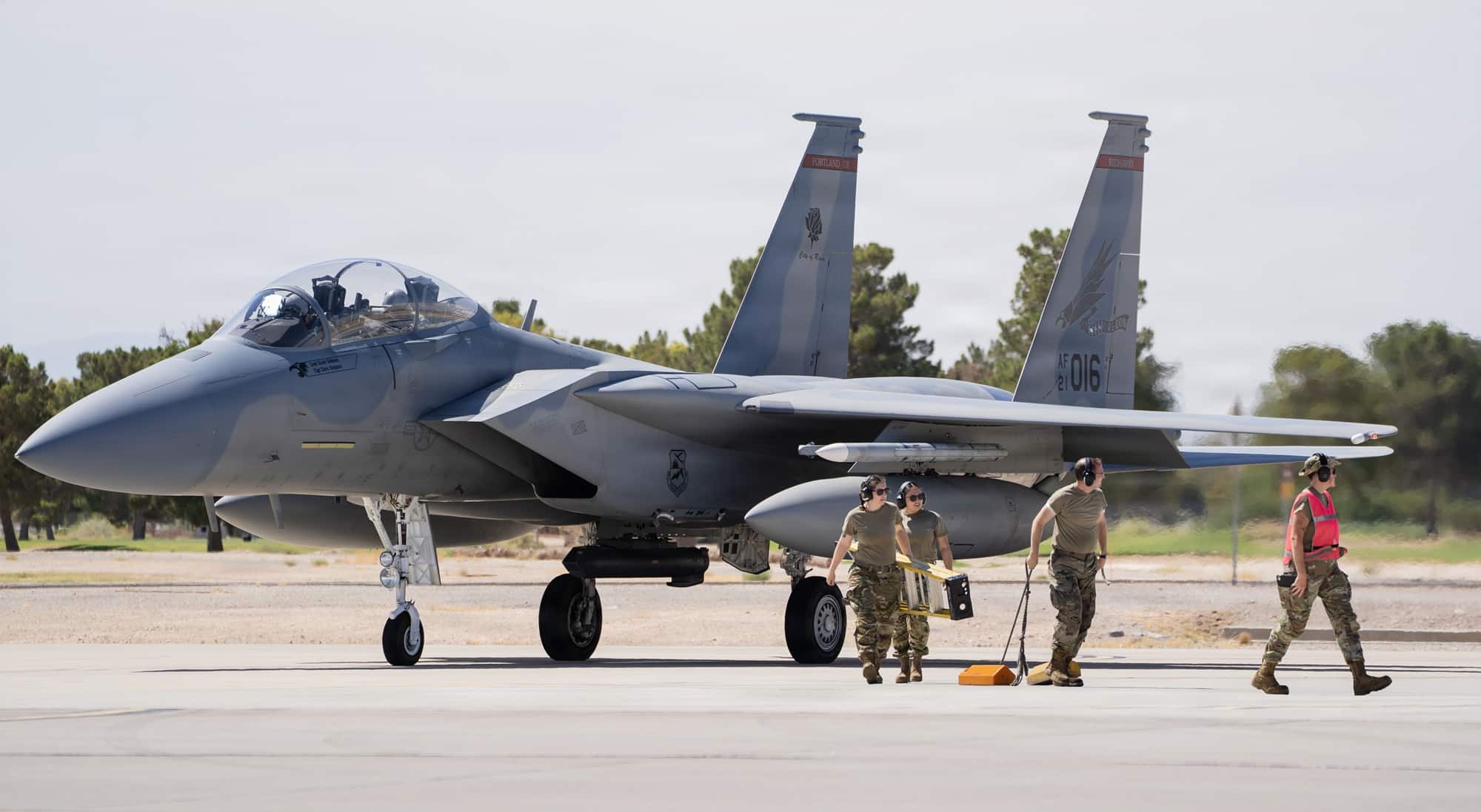
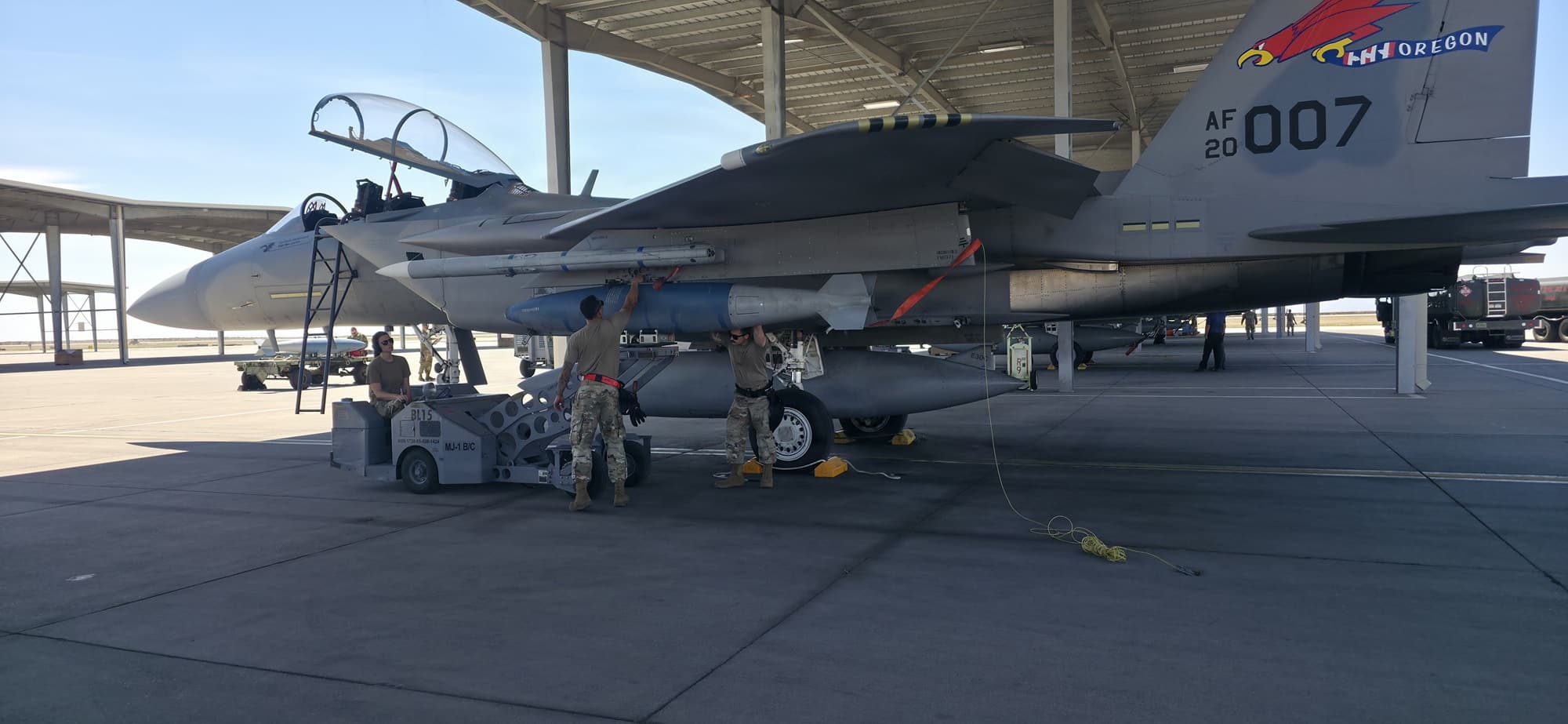
A total of 24 BDU-50s and 12 BDU-56s were dropped over 10 missions in the Mountain Home firing range complex with zero safety incidences and satisfactory scores, says the service. The photos show that the inert bombs were also carried under the wings in place of the external fuel tanks.
Training for Air-to-Ground Operations
In a press release published in July 2026, described the preparations to introduce the air-to-ground capability of the F-15EX Eagle II and make it a multi-role fighter aircraft. On that occasion, the 142nd Wing said three of its pilots had former experience and expertise in air-to-ground operations.
The pilots previously “attended a 9-month training course to understand the science behind dropping bombs and the tactics involved.” The unit then added “they were tasked with creating a program to train the rest of the wing’s pilots on the basics so they could make the first steps to be able to drop munitions.” The training was done on a much shorter timeline, according to the statement, although precise figures where not provided.
Similarly, some weapons loaders had previous experience with air-to-ground ordnance. Earlier this year, they traveled to Nellis Air Force Base, where they worked with F-15Es assigned to the 59th Test and Evaluation Squadron to become certified on loading bombs. Upon return, they trained other weapons loaders for the upcoming live-fire campaigns.
“The speed at which this wing established a completely new capability is a testament to our Airmen,” explained the 142nd Operations Group Commander, Col. Joshua Hovanas. “That rapid progress was powered by the drive and seamless collaboration of the entire team, from the flight line to the cockpit. It speaks volumes about the caliber of our people.”
“What we’ve demonstrated is our ability to deliver ordnance to a pre-determined target. This is the first milestone on our path to becoming a premier multi-role fighter squadron,” he explained. “It’s about building a dynamic and versatile organization, and we are just getting started.”