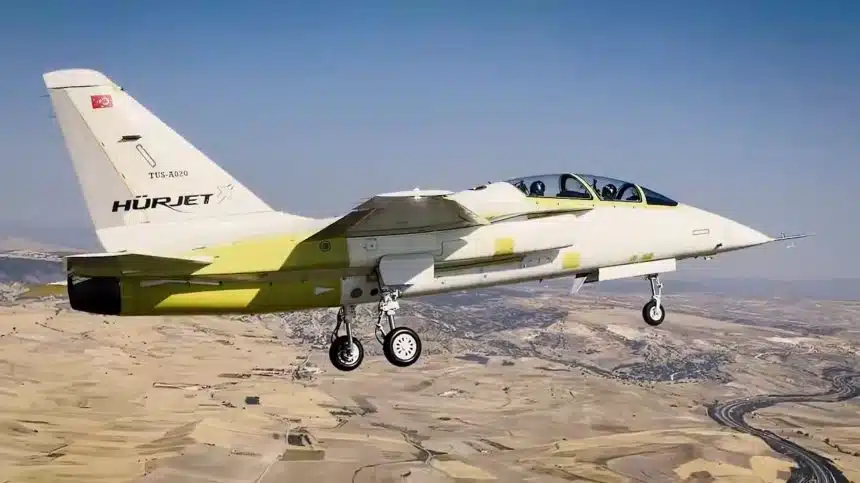
The first Hürjet jet trainer destined to the Turkish Air Force, part of a first batch of 12 aircraft, flew for the first time on Aug. 30, 2026.
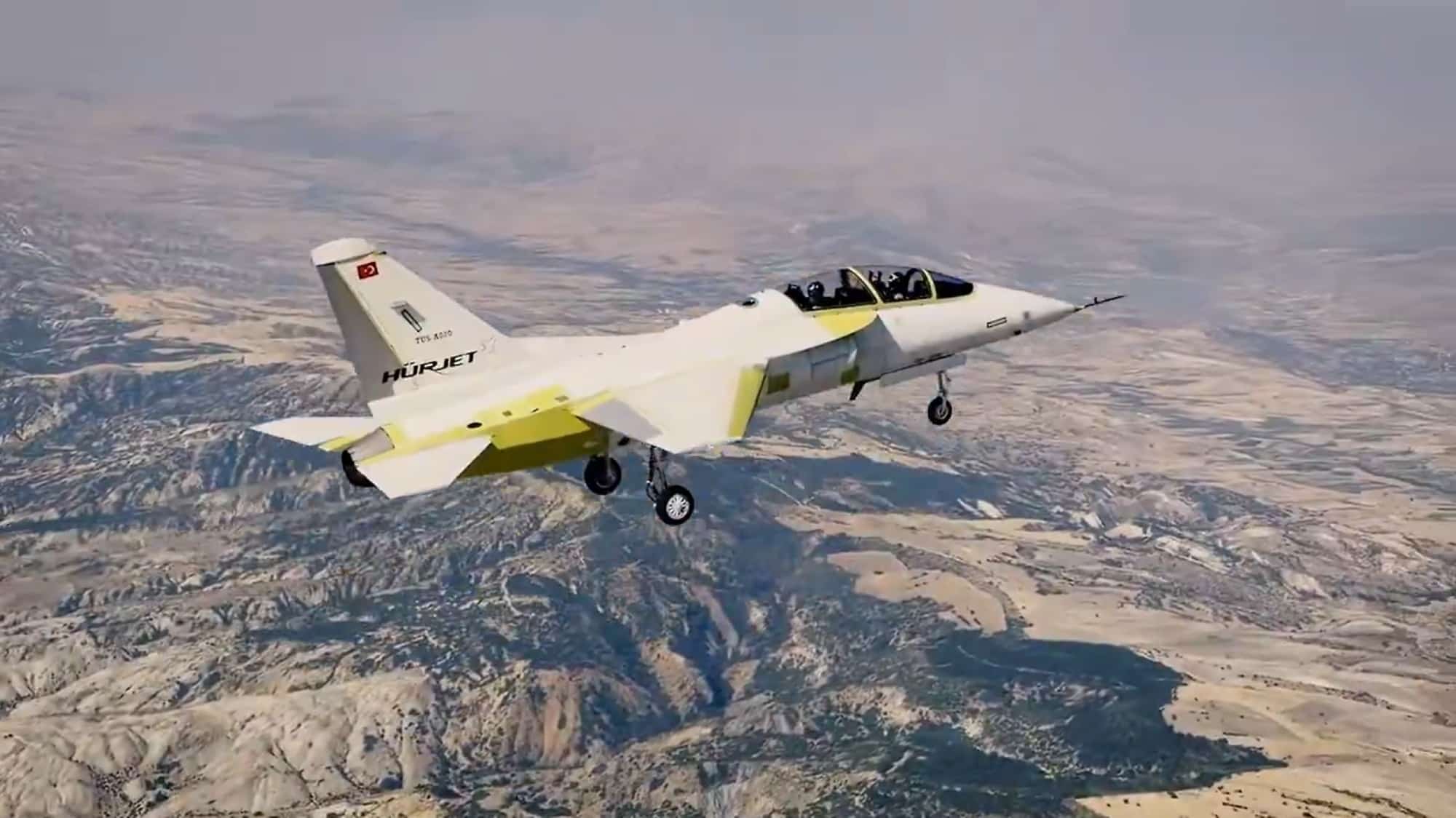
The first production-representative Hürjet jet trainer aircraft destined to the Turkish Air Force (Türk Hava Kuvvetleri – THK) made its maiden flight on Aug. 30, 2026, announced the manufacturer TUSAŞ/TAI (Türk Havacılık Ve Uzay Sanayi Anonim Şirketi/Turkish Aerospace Industries). The flight took place on the 30th Anniversary of Turkey’s Victory Day, celebrated on Aug. 30.
Turkish reports mentions regular deliveries of the Hürjet to the THK, of which the service has ordered 12 aircraft, are slated to begin by 2027. According to TurDef and SavunmaSanayiST, an initial batch of six will be delivered to the THK in the first phase, while production of additional production-representative aircraft is underway and activities continue with the prototypes.
The Hürjet that took to the skies on Aug. 30, 2026, is now the third airframe to be built, following the two existing prototypes. Among these, TUS-A003 had previously flown with a new paint scheme, and was spotted flying with weapons pylons in May 2026.
The new milestone also boosts the international prospects for the Hürjet program, which enters the highly competitive advanced jet trainer and light attack aircraft market. The Ejército del Aire y del Espacio (Spanish Air and Space Force – SASF) is the first international customer, which is acquiring 30 jets under the SAETA-II program.
A new chapter begins for HÜRJET. 🇹🇷✈️
On the 104th anniversary of Türkiye’s August 30 Victory Day, the first HÜRJET Jet Trainer destined for the Turkish Air Force has successfully taken to the skies, marking another important milestone on its journey toward operational service. pic.twitter.com/fwrkItJOPT
— Turkish Aerospace (@TUSAS_EN) August 30, 2026
Another potential market opportunity is the United Kingdom, which is searching for a new jet trainer. TAI chief Mehmet Demiroğlu said at the recent Farnborough International Airshow (FIA) that the company is intending to participate in the competition.
Maiden flight of production aircraft
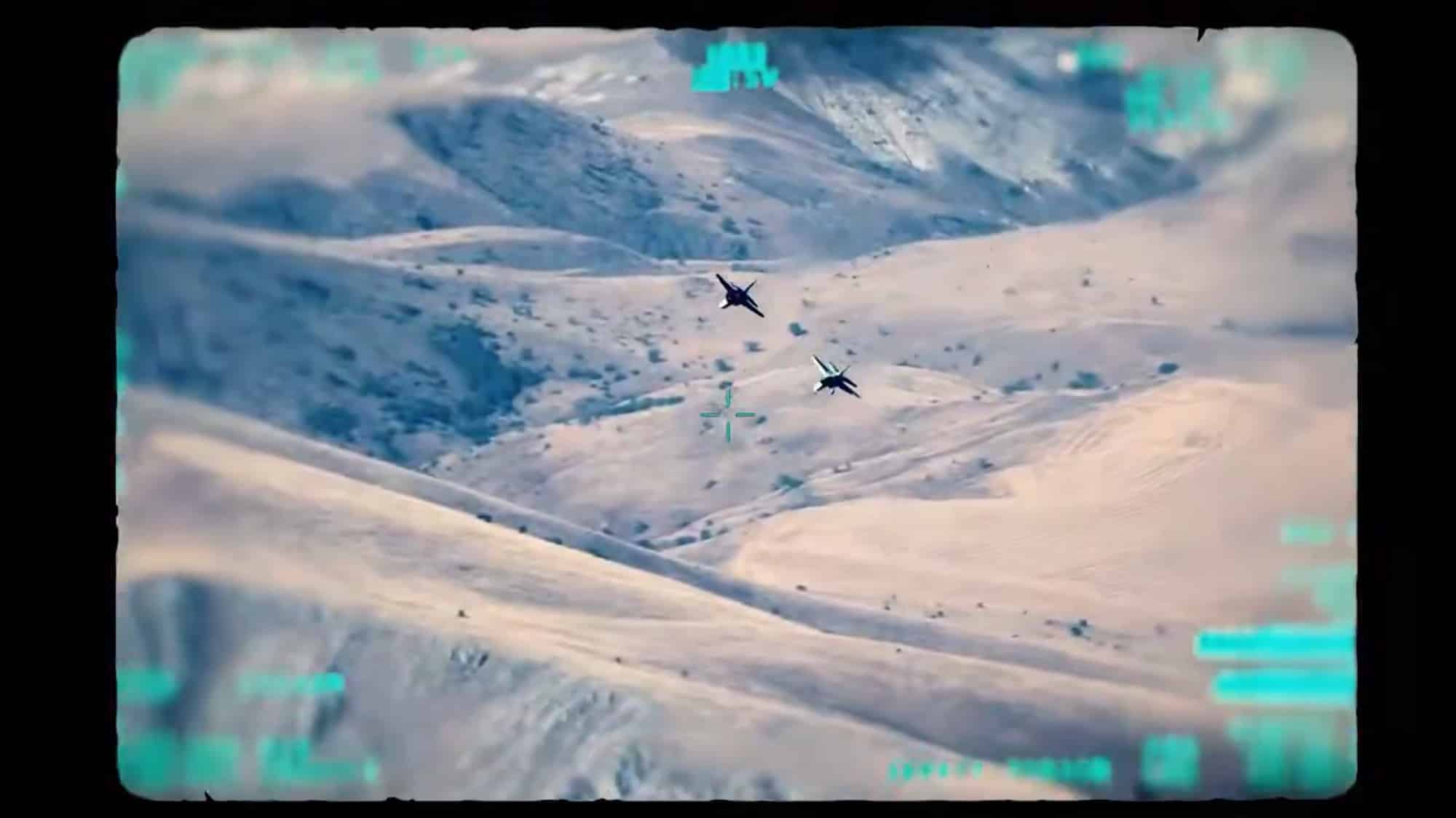
The first production-representative Hürjet airframe, tail ‘TUS-A020’, sported a white factory primer during the maiden flight. It was accompanied by ‘24-001’, the first early pre-production prototype that bears the red-and-white paint scheme.
Footage from inside ‘24-001’ showed the TUS-A020 flying with two crew members and its landing gear down the entire 18 minute flight. This is a common procedure for maiden test flights of a new aircraft.
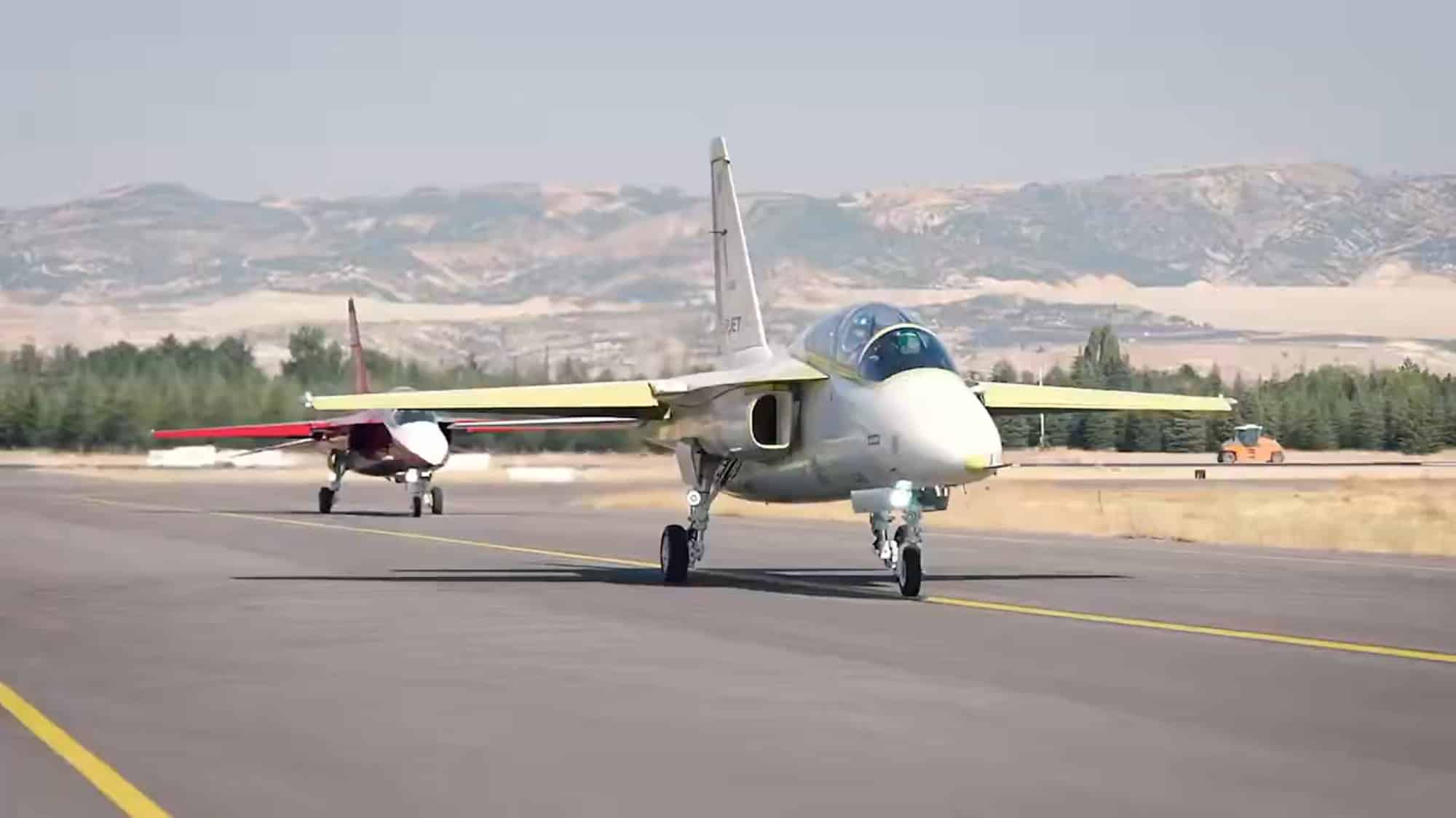
Both aircraft also have their flight data probes (pitot tubes) installed on the nose. Other footage from an electro-optical sensor showed both the aircraft flying in close formation, possibly taken by an unmanned aircraft, although this could be confirmed at the time of writing.
Demiroğlu described this first flight as “another important milestone for our national aviation.”
Future
The Hürjets will primarily replace the THK’s older T-38 Talon jet trainers, of which reportedly 68 are still in service. In Spain, the Hürjets will replace the F-5M Freedom Fighter trainers, of which 19 are reported to be still in service, at Talavera La Real Air Base. Local manufacturing in Spain under SAETA II will oversee 68% of the jet being produced by an Airbus-led consortium incorporating domestic components and subsystems.
In the THK and SASF, the Hürjet will be part of a broader Integrated Combat Training System (ITS-C), including ground simulators, theoretical and practical instructions training aids, to better prepare aviators for future Gen. 4.5 and Gen. 5 aircraft. Turkey is rapidly moving towards operationalizing its indigenous Kaan fighter, while also lobbying to be admitted back into the F-35 program.
Both future production batches of the Hürjet and the Kaan fighter are also planned to integrate the domestically-developed TEI’s TF-series engines, and are currently flying with U.S.-made GE 404 and GE F110 powerplants.
Demiroğlu had also previously talked about the Hürjet’s naval version, envisioned to fly off the future Mugem carrier, and stated the company could meet production orders. He however did not divulge details on whether the Turkish Naval Forces had evinced specific interest in such a variant.