A Royal Air Force official at the Global Air and Space Chiefs’ Conference 2026 has confirmed that the planned GCAP fighter will be designed for boom refueling, meaning it will not be compatible from the outset with the RAF’s hose and drogue refueling system.
Gareth Jennings, Aviation Desk Editor for Janes, quotes an unnamed official at the Air Power Association’s annual Global Air and Space Chiefs’ Conference, saying: “We currently do not have boom in the UK. We have a requirement for boom from GCAP. We have to resolve that requirement, and that is what we’re now looking at.”
.@RoyalAirForce confirmed today that #GCAP will be refuelled via boom rather than hose. “We currently do not have boom in the UK. We have a requirement for boom from GCAP. We have to resolve that requirement, and that is what we’re now looking at.” – service official at… https://t.co/ucPQby1Yjv
— Gareth Jennings (@GarethJennings3) July 15, 2026
This follows previous renderings which have depicted the GCAP fighter with what appears to be a door for a refueling receptacle but not with any similar hatch that would contain an extendable refueling probe.
The RAF has long maintained a preference for hose and drogue refueling, sometimes at the significant cost of bespoke modifications to aircraft designed for boom refueling.
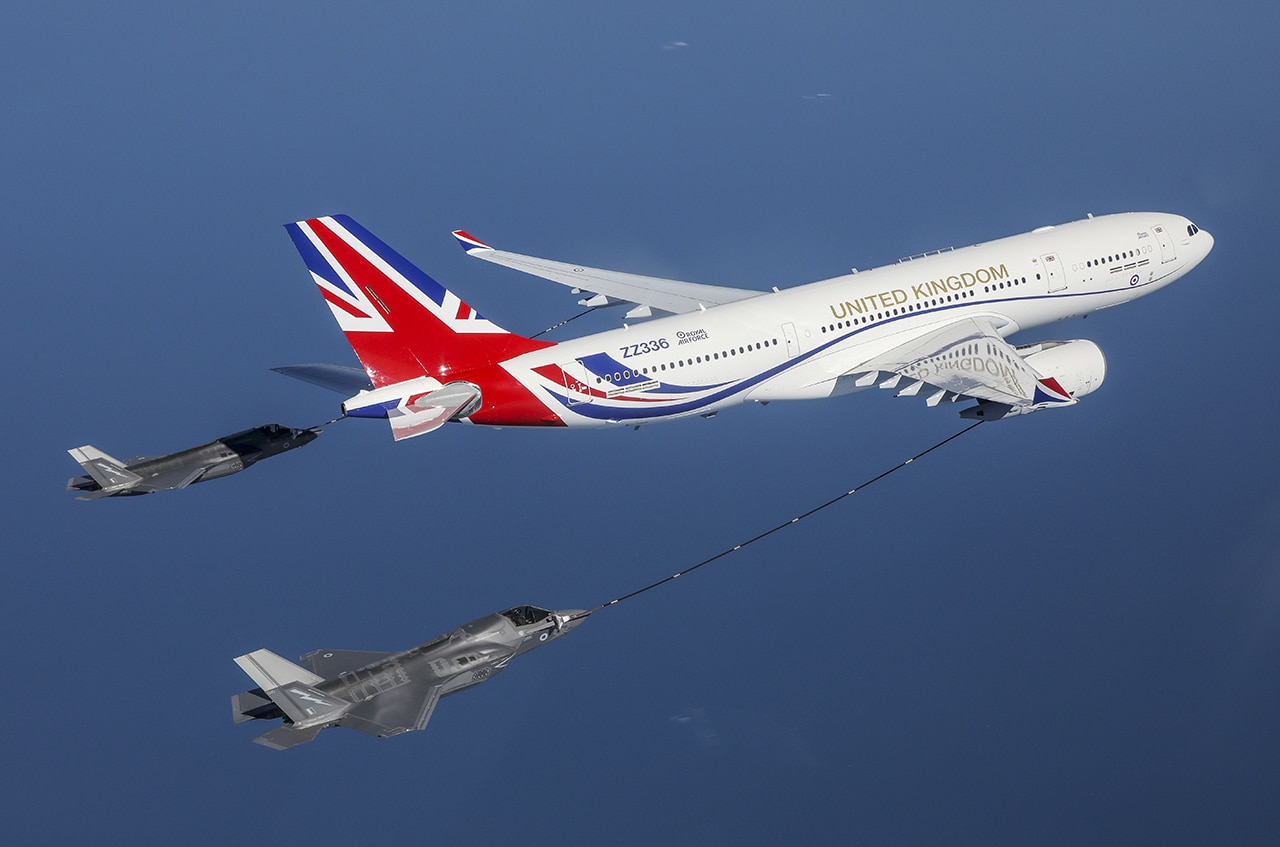
While offering a reduced fuel transfer rate compared to the flying boom system preferred by the U.S. Air Force and subsequently adopted by many other air arms, the more compact hose and drogue system can allow the simultaneous refueling of multiple receivers from one tanker aircraft, and has historically allowed aircraft without a built-in refueling capability to be modified with fixed probes and fuel piping.
#OTD 28 April 1982, and following its successful first flight from Woodvale the day before, a #Nimrod MR2P conducted its first air-to-air refueling mission with one of the few #Victor tankers left remaining in the UK. #Falklands40 pic.twitter.com/2xyErzW0gP
— John Shields (@airpower1982) April 28, 2022
Such modifications were made to the RAF’s VC10s and Tristars when converted from civilian specification, and were adopted onto the Avro Vulcan and Handley-Page Victor early in their careers. The Hawker Siddeley Nimrod also received this upgrade as an urgent requirement for the 1982 Falklands War. This continued in use for decades until the 2006 crash of Nimrod MR2 XV230 over Afghanistan, causing the death of all 14 on board. The cause was narrowed down to a fuel leak or overflow suffered during aerial refueling, and all aerial refueling operations with the Nimrod were halted from 2007.
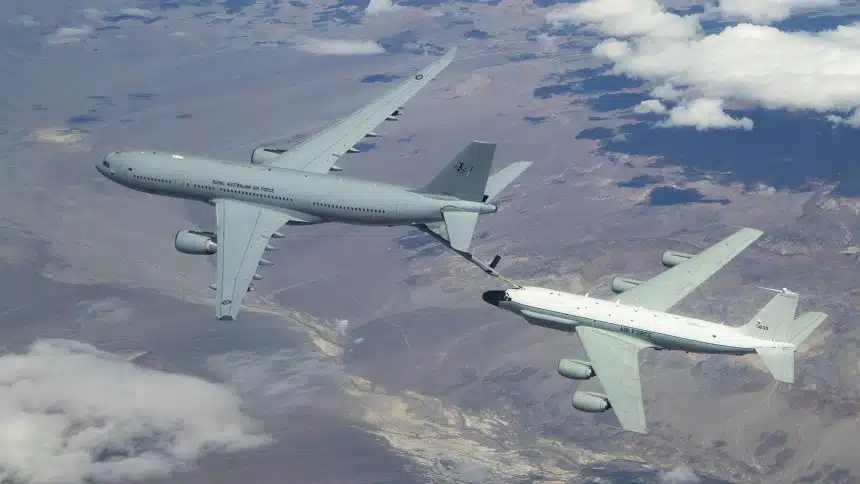
Modern, stringent airworthiness regulations had already called the Nimrod’s safety into question, and they most certainly would prevent any further modifications to an aircraft’s fuel system without a significant testing and certification process. As such, many aircraft have now been introduced into RAF service without any modifications and therefore without any chance of being refueled by the RAF’s own tanker fleet. This includes the RC-135W Rivet Joint, the P-8A Poseidon MRA1, the C-17A Globemaster III, and, soon, the E-7A Wedgetail AEW1.
A good thing it is, because the RAF Rivet Joint will literally be the first victim if 100 Wing USAF leaves with its tankers.
USAF tankers have refueled Rivet Joint so far, enabling it and its missions towards Russia. The RAF’s own tankers can’t do that for lack of the boom… https://t.co/esZUP4tDGv
— Gabriele Molinelli (@Gabriel64869839) June 19, 2026
The recent decision to procure 12 F-35A Lightning II aircraft as part of the next tranche of F-35 orders will add yet another boom-refueling only aircraft to the RAF’s inventory. While a hose and drogue modification for the F-35A is said to be possible, no customer has specified this option and it is unlikely it would be put into service for such a small purchase of jets.
Although the A330 MRTT is used across the world with a flying boom system, the RAF’s examples, known as Voyagers – owned by the AirTanker consortium and leased to the RAF through a private finance initiative (PFI) – are fitted for hose and drogue refueling operations only. Voyager KC2 aircraft are configured with two wing-mounted Cobham 905E hose and drogue units while Voyager KC3 aircraft additionally feature a Cobham 805E Fuselage Refueling Unit (FRU) in the rear fuselage with the option for a higher fuel transfer rate for larger aircraft like the Airbus A400M.
French air force A330 MRTT conducting nighttime aerial refuelling of Polish air force F-16s over Poland.
🇫🇷🇵🇱⛽️
📸by 31. Baza Lotnictwa Taktycznego Poznań-Krzesiny / FB pic.twitter.com/jjJtiWykpe
— Tom Antonov (@Tom_Antonov) June 25, 2026
While still relatively new, the RAF’s Voyagers are among the oldest MRTTs in service. Deliveries began in 2011, and were completed in 2016. Of the fourteen aircraft delivered, nine form a ‘core’ fleet permanently available for military service while the five remaining jets can be made available for civilian charter or lease when not required by the Ministry of Defence (MoD).
Each Voyager has both a military serial and a civilian registration assigned to it for this reason, and aircraft have occasionally moved between the core and surge fleets as required. When carrying a civilian registration the military modifications are removed and for all intents and purposes they revert to being Airbus A330-200s. One particular aircraft, ZZ336, was chosen to receive special upgrades for VIP transport in 2015, and was later adorned with a UK Government paint scheme. Though still occasionally used for VIP duties, this is now more often covered by an A321neo on a long term charter from Titan Airways. ZZ336, or Vespina as it is also known, is therefore commonly seen supporting UK training sorties or Quick Reaction Alert (QRA) operations.
Enjoy These Stunning Shots Of RAF Voyager “Vespina” During Aerial Refueling Ops With RAF F-35Bs And Typhoons: https://t.co/DrNjDyYVJv pic.twitter.com/fBNMcQdiQo
— The Aviationist (@TheAviationist) June 26, 2020
It has frequently been said that AirTanker would oppose the modification of Voyager aircraft with the flying boom system as it would complicate moving aircraft between the civil and military fleets. However, whenever approached with such an idea AirTanker officials have suggested there would be no issue with such a move, and that it just required the commitment and funding from the MoD to make it happen.
Notably, the current PFI for the Voyager aircraft is due to expire in 2035, less than 10 years away, and the official out of service date for the Voyager matches this. By this time, the oldest Voyagers will be over 20 years old and be ideal candidates for replacement. It may, instead of modifications, therefore be prudent to instead pursue an alteration and/or extension of the contract that covers the procurement of new-build airframes with the flying boom system already installed.
The first A330 Multi Role Tanker Transport aircraft “CC330 Husky” for the @RCAF_ARC took to the skies for the very first time today at our Getafe facilities in Spain! ✈️🇨🇦
Everything is on track for delivery next year. ⏳ The RCAF’s A330 MRTT will be equipped with both… pic.twitter.com/9pT33EhpdG
— Airbus Defence (@AirbusDefence) July 2, 2026
Adding boom refueling to the RAF’s capabilities has been one of the most talked about ‘small’ improvements that could be made for some time, both among seasoned commentators and enthusiasts. As well as opening up the opportunity of better supporting the RAF’s boom-only aircraft, which currently rely primarily on U.S. Air Force tanker support when required, it would permit greater interoperability with the many NATO allies who operate boom-only aircraft like the F-35A and the F-16.
The prospect of GCAP joining the ranks of boom-only RAF aircraft may become the straw that breaks the camel’s back. The long range of the P-8, C-17, and E-7, and the close cooperation of RAF RC-135s with USAF operations, can allow the RAF to argue that organic refueling of these aircraft is a low priority, but being unable to refuel what is due to be the RAF’s premier combat aircraft of the future would introduce a critical flaw in the service’s ability to project sovereign air power.
RAF P-8A Poseidon Tests Mid-Air Refueling for the First Time
The RAF notoriously lacks a boom air-to-air refueling capability to support the Poseidon, and the simulated refueling with a KC-135 signals steps are being taken to address the issue.
Story: https://t.co/vp4913FAlk
— The Aviationist (@TheAviationist) September 25, 2025
However long-legged the GCAP fighter will be, we can see from current operations that fighter missions without some form of tanker support are almost unheard of.