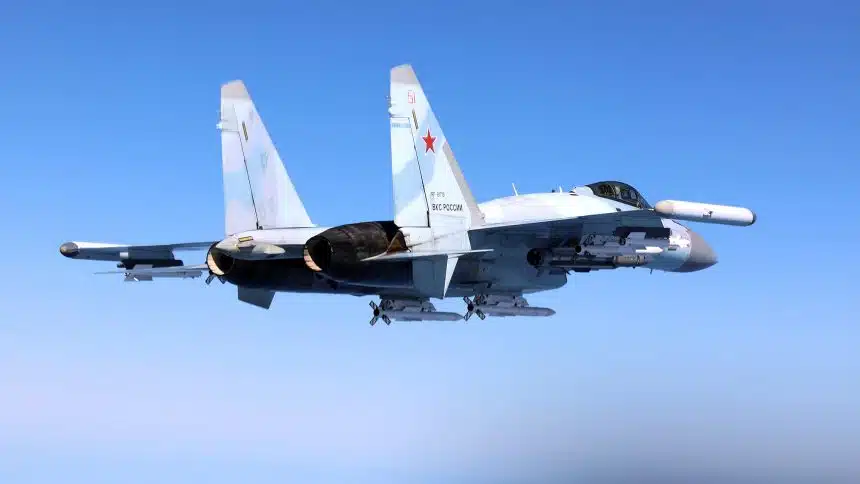
Royal Air Force RC-135 surveillance sorties have been the subject of more interceptions over the Black Sea, with the UK Ministry of Defence labelling the actions of the Su-27 and Su-35 fighter pilots dangerous and unacceptable.
The UK’s Ministry of Defence (MoD) revealed the news of the intercepts on May. 20, 2026, though all appear to have occurred during April. A Russian Su-35 Flanker-E fighter aircraft intercepting the Rivet Joint, which was operating in international airspace, came close enough to the aircraft to cause emergency alerts on the British jet to be triggered and its autopilot to be automatically disabled.
Another intercept, this time by an Su-27 Flanker, saw the Russian jet make six passes between six and fifteen meters in front of the RC-135. These incidents are the latest in a long line of intercepts which NATO forces have said were conducted unprofessionally.
Russian jet flew within SIX METRES of an RAF spy plane over the Black Sea, the most dangerous Russian intercept of a UK aircraft since 2022. pic.twitter.com/H9m5zD2r1P
— UK Defence Journal (@UKDefJournal) May 20, 2026
These are the most notable publicly acknowledged intercepts of RAF aircraft over the Black Sea since a 2022 incident where one of the two intercepting fighters engaged the RC-135 with two air to air missiles. Neither missile hit its target. Initially categorised by the UK Government as a potentially catastrophic technical error, it was later revealed that Russian radio chatter suggested the missiles were intentionally fired by a confused pilot.
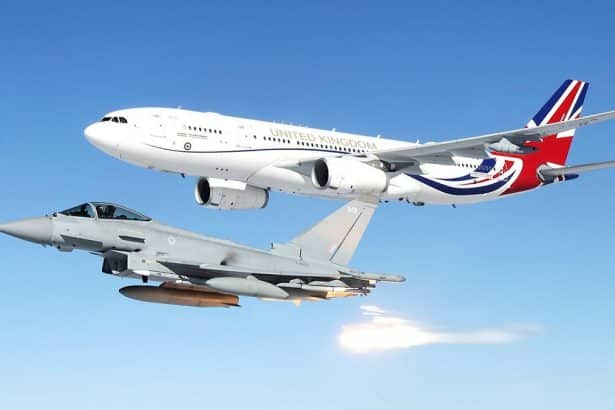
Since this incident, many RAF RC-135 sorties over the Black Sea have been flown with a defensive fighter escort – usually RAF Typhoon FGR4s. These have been seen in video footage responding to interception attempts by Russian fighters. France has also taken part in some of these missions, while the U.S. Air Force’s known patrols over the Black Sea are predominantly carried out by unmanned aircraft.
Video of yesterday’s intercept of a Royal Air Force Boeing RC-135W Rivet Joint being escorted by 2 Eurofighter Typhoons over the Black Sea by 2 Russian Air Force Su-27s. Notice the 1 Typhoon breaks away from the RC-135 and the Su-27 turns to follow it. pic.twitter.com/fPs7s7BL6L
— Thenewarea51 (@thenewarea51) October 21, 2023
Interestingly, in these new images released of the April 2026 intercepts we can see that the Su-35 Flanker-E involved was carrying a single Kh-31 (AS-17 ‘Krypton’) anti-ship missile alongside its air to air missile payload.
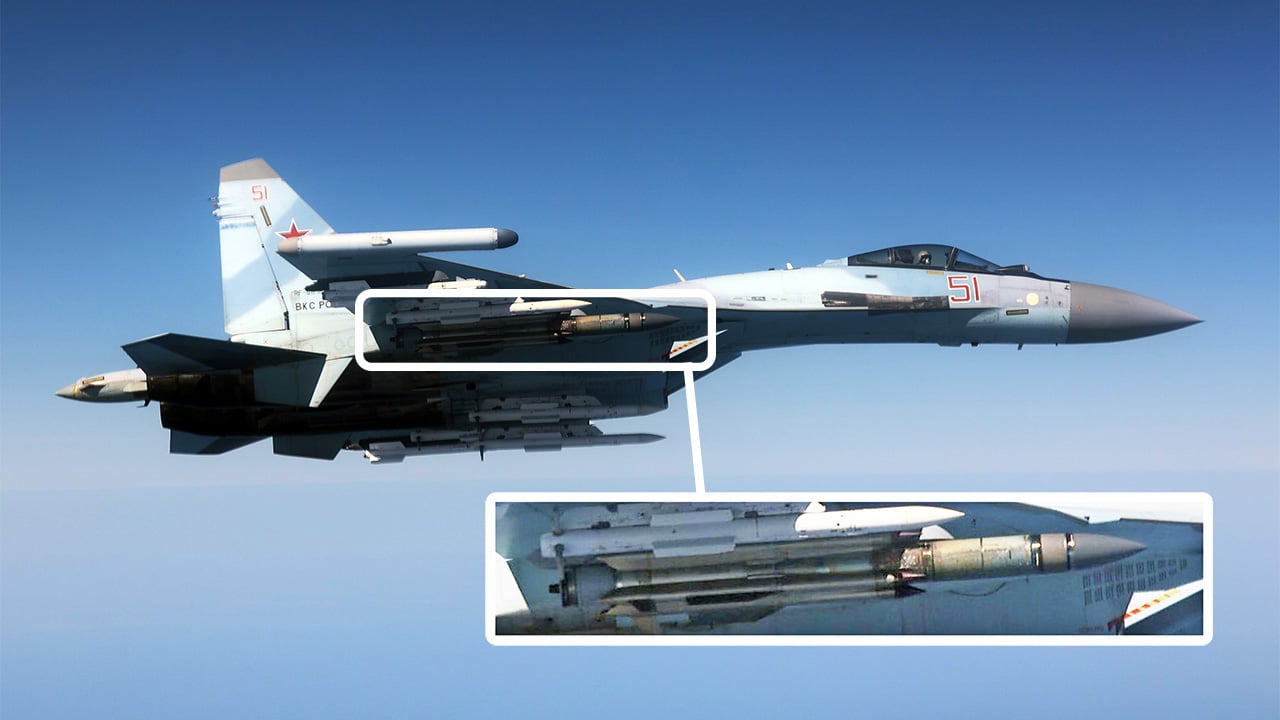
The Su-35 pictured, RF-81718, is in fact one of the same jets which was intercepted by U.S. forces alongside two Tu-95 ‘Bear’ bombers off Alaska last year.
On February 18, 🇺🇸 U.S. F-35A fighters from Eielson AFB intercepted two 🇷🇺 Russian Tu-95MS bombers (RF-94189, RF-94201) from Ukrainka AFB and at least three Su-35S fighters (RF-95493, RF-81718, RF-93648), likely from Centralnaya Ugolnaya AFB, in the Alaskan Air Defense Zone. pic.twitter.com/mylsWTCvom
— AviVector (@avivector) February 21, 2025
“This incident is another example of dangerous and unacceptable behaviour by Russian pilots, towards an unarmed aircraft operating in international airspace, commented UK Secretary of State for Defence John Healey. “These actions create a serious risk of accidents and potential escalation.”
“This incident will not deter the UK’s commitment to defend Nato, our allies and our interests from Russian aggression,” he added.
The UK Government has raised the issue of the unprofessional interception with the Russian Embassy in London.
The actions of Russian pilots towards an unarmed @RoyalAirForce aircraft are dangerous and unacceptable.
I pay tribute to the outstanding bravery of the RAF crew, who completed their mission safely.
This will not deter the UK’s commitment to defend our @NATO allies. pic.twitter.com/jJw73MeCEp
— John Healey (@JohnHealey_MP) May 20, 2026
The RC-135W Rivet Joint operated by the RAF’s 51 Squadron from RAF Waddington is a dedicated signals intelligence (SIGINT) platform. Three Rivet Joints were acquired by the RAF and began to enter service in 2014 as a replacement for the Nimrod R1, retired in 2011. 51 Squadron works closely with its U.S. counterparts, the only other operator of the RC-135, and the aircraft regularly receive upgrades in the U.S. alongside those of the U.S. Air Force.
Flying at cruise altitude, an RC-135 in international airspace over the Black Sea can receive signals from deep inside both Russia and Ukraine. The contents of these signals – or even the characteristics of the signals themselves – can then be analyzed both on board in real-time and externally post-flight to generate extremely valuable intelligence for the UK and its allies.