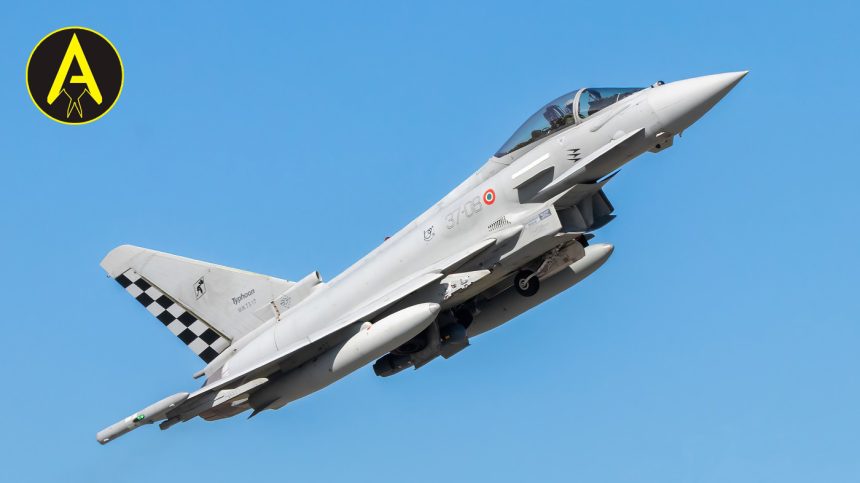
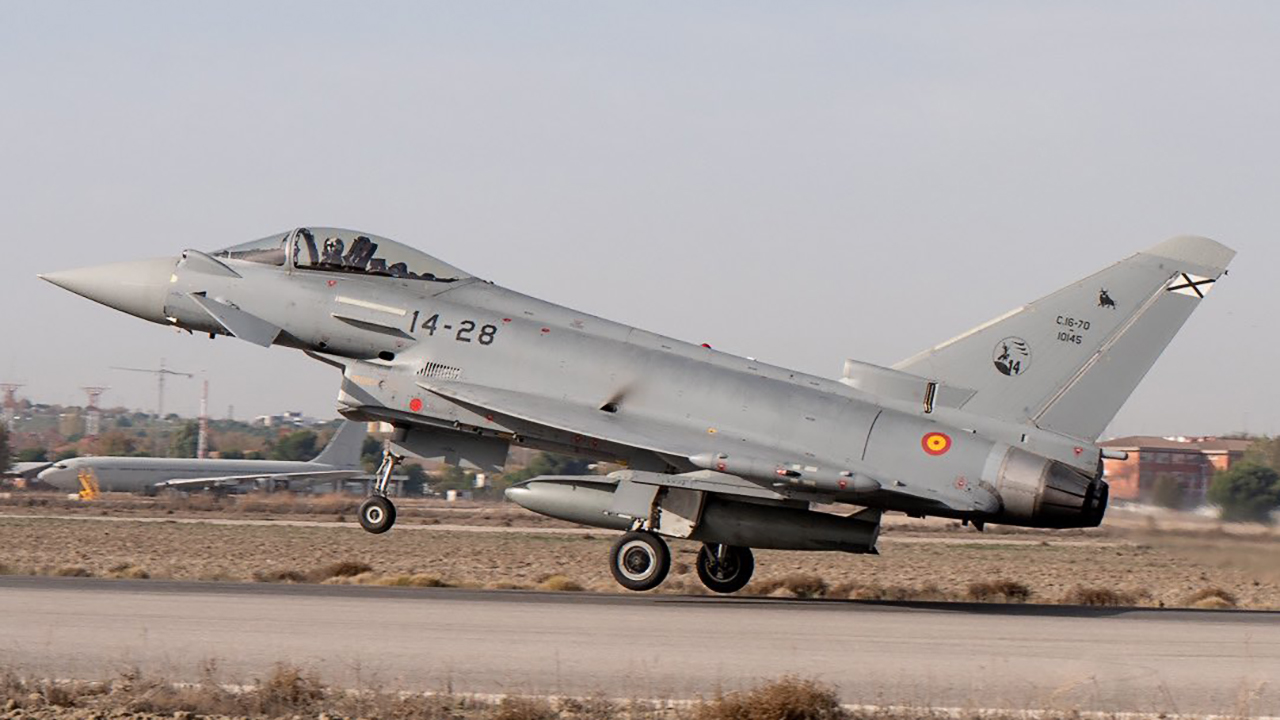
The Eurofighter Typhoon global fleet, counting 610 aircraft in service across nine nations, has reached the one million flight hours milestone.
The Eurofighter consortium has announced on Jan. 29, 2026, that the Typhoon fleet has reached one million flight hours. The milestone is accompanied by the EJ200 engine reaching 2 million flight hours, as two of the engines are installed on each aircraft.
One Million Flight Hours
The first Eurofighter development aircraft, DA1, performed its maiden flight on March 27, 1994, with deliveries to the four partner nations – United Kingdom, Italy, Germany and Spain – starting ten years later. Since then, a total of 769 aircraft have been ordered by ten nations, with 617 delivered and 610 operational, according to data provided by Airbus.
“One million flying hours is a truly historic milestone that reflects three decades of teamwork, innovation, and commitment from thousands of people across Europe,” said Jorge Tamarit-Degenhardt, Chief Executive Officer of Eurofighter. “It underscores the Typhoon’s enduring performance, adaptability, and vital role in today’s complex global security landscape. The million flying hours achievement illustrates the deep trust placed in our programme and jet by our partner nations and export customers. It also reflects the outstanding professionalism of the Typhoon pilots, engineers, and technicians who operate and support it every single day.”
The @eurofighter Typhoon fleet passes one million flight hours! A milestone powered by expertise, innovation and partnership.
The #EurofighterTyphoon is the world’s most advanced multi-role combat aircraft and the largest European defence collaboration programme, with aircraft… pic.twitter.com/BLTFFzs0vf
— Leonardo (@Leonardo_live) January 29, 2026
Currently, nine nations operate Typhoons distributed across 38 squadrons in 19 air bases. More than 1,000 pilots have been trained to fly the European fighter jet, together with over 4,500 ground personnel.
“The Eurofighter Typhoon is recognised globally as a cornerstone of NATO and allied air defence, fully interoperable and adaptable to a wide range of mission requirements,” added Eurofighter’s CEO. “For those involved in the programme – past and present – this is a moment of pride and a reminder that Eurofighter is not only a symbol of European technological excellence, but also of long-term international collaboration.”
🚀 One million flying hours – and counting!
The global @eurofighter Typhoon fleet has passed one million flying hours with air forces across Europe and the Middle East.
Flying to secure the skies across Europe, 24/7, 365 days a year, working alongside @NATO and international… pic.twitter.com/33ZNP80xqs
— BAE Systems Air (@BAESystemsAir) January 29, 2026
According to the consortium, around 80% of the Eurofighter Core Nations’ operational missions are flown by Typhoons, with the jet quickly becoming their backbone. The Typhoon has been involved in a multitude of activities, primarily conducted in Europe and the Middle East, including air policing, joint patrol initiatives, combat missions and Quick Reaction Alert.
The Eurofighter Typhoon Today
The Eurofighter Typhoon was developed jointly by four European countries: Germany, Great Britain, Italy and Spain, with the first three exploiting the experience they accumulated with the Tornado. The aircraft’s development effectively began in 1983 with the Future European Fighter Aircraft programme, later incorporating experience from the British Aerospace EAP.
32 years after the first flight, the Eurofighter Typhoon fully matured into the all-weather, twin-engine, multi-role combat aircraft that can be employed efficiently for air-to-air and air-to-ground combat that we know today. Development is still ongoing to keep the Typhoon state-of-the-art for the next three decades with the Long-Term Evolution.
“Eurofighter Typhoon has established itself as the backbone of European defence and a fundamental asset for our air forces,” said then Eurofighter CEO Giancarlo Mezzanatto for the 30th anniversary of the first flight. “At the same time, the Eurofighter programme has played a pivotal role in fostering the fighter industry in the UK, Germany, Italy and Spain and will continue to do so for many years to come. The product vision is to keep Typhoon operationally effective for another 30 to 40 years.”
The global Eurofighter fleet has surpassed 1 million flight hours, a historic milestone that proves its status as the backbone of European air defence.
Since its first flight, this jet has proven its reliability in the most demanding environments, protecting our skies and… pic.twitter.com/w7SCJt5zOJ
— Airbus Defence (@AirbusDefence) January 29, 2026
The aircraft is built by the Eurofighter consortium, which involves Airbus (Germany and Spain), BAE Systems (UK) and Leonardo (Italy). The main components for the aircraft come from the four Eurofighter partner companies: Airbus Germany supplies the centre fuselage section; Airbus Spain the right wing; BAE Systems contributes the front fuselage section, the fin and, together with Leonardo, the rear fuselage; Leonardo also produces the left wing.
The components are then delivered to the four final assembly lines. Airbus produces the Eurofighter in Manching near Ingolstadt (for the German Air Force) and in Getafe near Madrid (for the Spanish Air Force). BAE Systems and Leonardo produce the aircraft in the UK (Warton) and Italy (Turin) respectively.
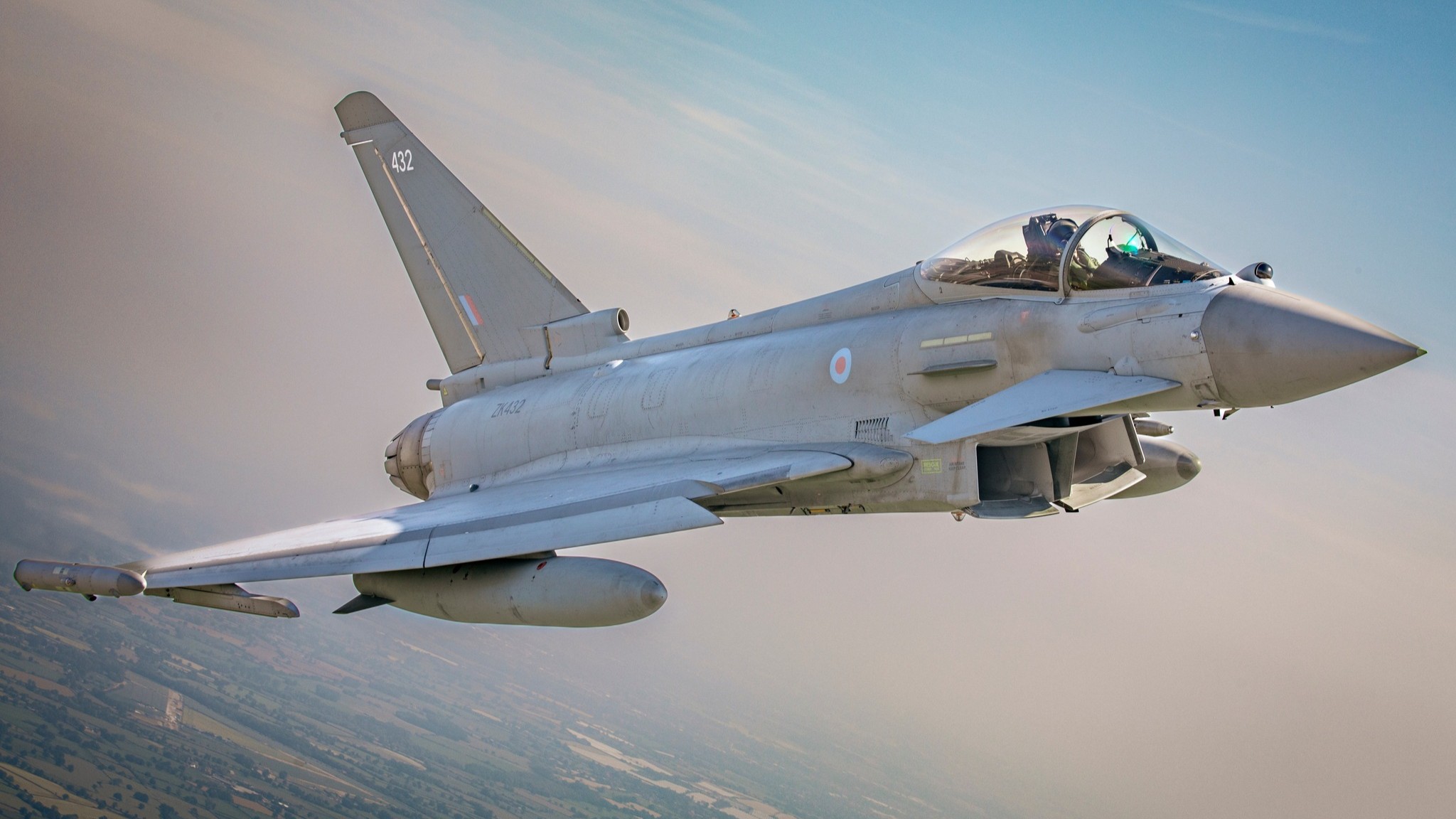
The Eurofighter Typhoon forms the backbone of the German, British, Italian and Spanish air forces. Five export customers currently fly the Typhoon – Austria, Saudi Arabia, Oman, Kuwait and Qatar – with Turkey recently joining the club with an order for new build Typhoons and agreements for second hand aircraft.
The Eurofighter Typhoon Tomorrow
Originally, the Eurofighter roadmap was anchored in a long-term evolution (LTE) plan a comprehensive future growth path which focused on major architecture overhauls and capability insertion, similarly to the “Blocks” of U.S.-made fighters. That development plan, however, has now been placed on hold.
A million flying hours. 🛫@eurofighter Typhoons across the globe have now flown over 1,000,000 hours, a landmark achievement for one of the world’s most advanced multi‑role fighters.#RAF #Typhoon #StrongerTogether@NATO @BAESystemsplc @Leonardo_UK @DefenceES@DefenceOps pic.twitter.com/8RYGpRDMc6
— Royal Air Force (@RoyalAirForce) January 29, 2026
“We need to rethink what’s the operational need of the Eurofighter within the FCAS and GCAP theater and reassess what is the need of the long-term evolution,” Degenhardt told reporters in 2025, referring to the Franco-German-Spanish Future Combat Air System (FCAS) and the British-Italian-Japanese Global Combat Air Programme (GCAP).
At the heart of this shift is a new electronic architecture that would allow Typhoons to operate seamlessly alongside sixth-generation fighters and uncrewed loyal wingmen. This would likely see the Typhoon becoming a digitally connected node within the evolving European combat air ecosystem, which is increasingly populated by advanced variants of the Typhoon, Rafale and Gripen, as well as the 5th gen F-35.
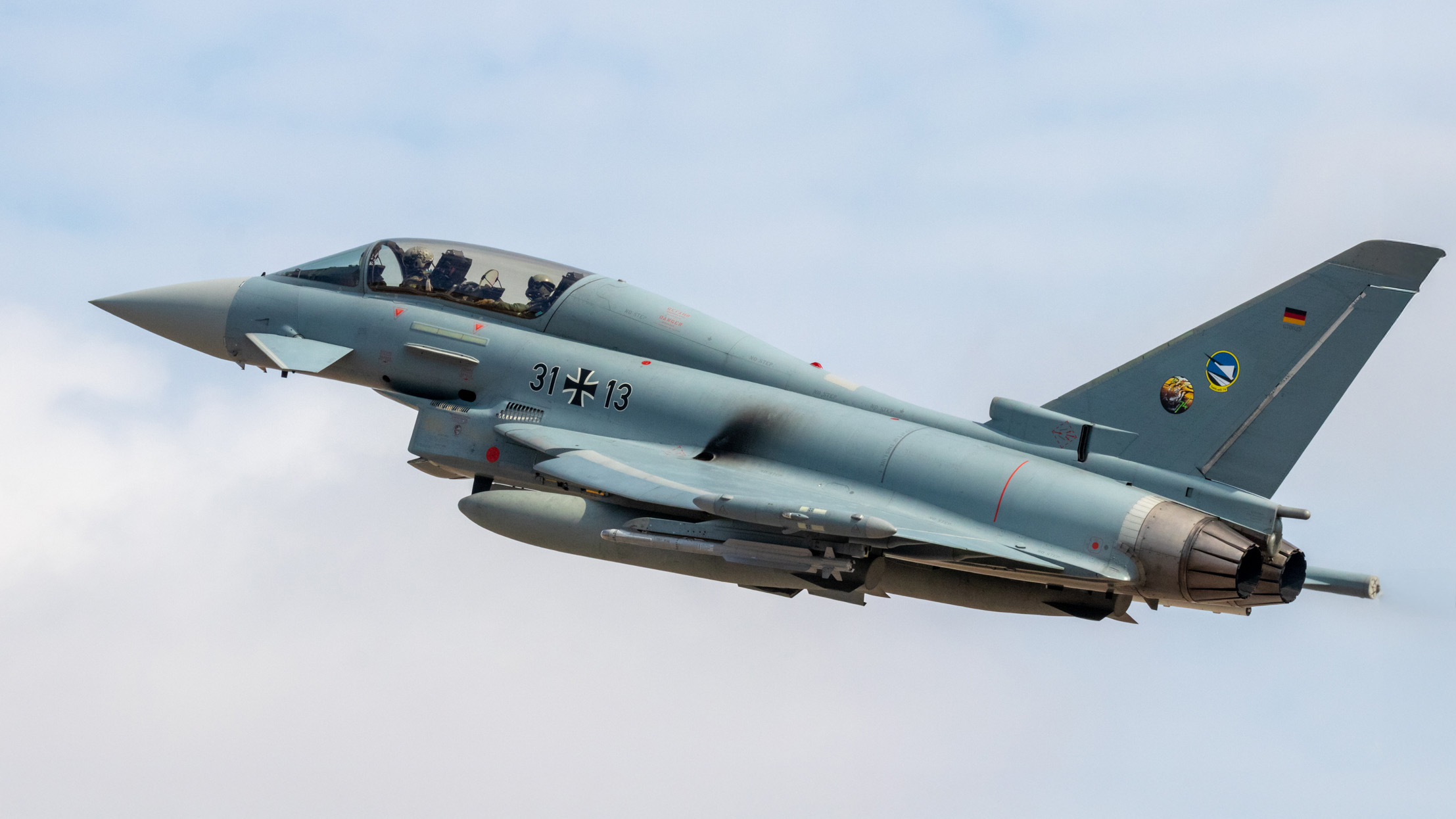
Eurofighter officials acknowledge the aircraft is “reaching the limit” of its current avionics and processing hardware. A “computing capacity issue” must also be overcome to support future mission systems.
The MLU is intended for both new production aircraft and retrofits to in-service fleets. A life-extension program could be bundled into retrofit packages, extending the Typhoon’s service life while integrating key upgrades to mission computers, avionics buses, and electronic warfare systems.
“Jets delivered today will fly into the 2060s,” Degenhardt emphasized. However, despite the urgency of the requirement, the CEO noted that none of the four partner nations – Germany, Italy, Spain, and the UK – have yet committed funding for the effort.
The upgraded Typhoon might not be able to be considered as an alternative to sixth-gen programs, however it could be a critical enabler acting as a bridge platform that will ease the transition into the next era of airpower. As a matter of fact, the Typhoon and the GCAP manned fighter are expected to serve together for some years during the transition.
While the specifics of the MLU are still being defined, some expected areas of focus might include:
- New mission and flight computers with enhanced processing capacity;
- Modernized electronic warfare systems, with potentially a new upgrade to the Praetorian DASS suite or even a combination with the Saab Arexis suite;
- AI-assisted data fusion for network-centric warfare and AI assistance for the pilot;
- Modular architecture to support the rapid integration of new capabilities.
Meanwhile, work is continuing towards the introduction of the new Phase 4 Enhancement (P4E) configuration, first announced in 2024. This contains a number of new developments, including an automated sensor management capability for all Typhoon radars that will allow to exploit the capabilities of the new ECRS AESA radar to complete multiple simultaneous tasks, while reducing the pilot workload.
The package is also said to include an improved cockpit interface and enhanced Radio Frequency Interoperability (RFIO), which will improve survivability and lethality. While the development of a Large Area Display for the Typhoon has been confirmed, it is unknown at this time if it will be included in the new improved cockpit interface.
In addition to the automated sensor management capability, P4E will introduce DASS (Defensive Aids Sub-System) upgrades for all customers and includes the IOC (Initial Operating Capability) for the additional German electronic warfare capability. As we previously reported here at The Aviationist, Germany is working on a dedicated Suppression of Enemy Air Defenses (SEAD) variant of the aircraft, dubbed Eurofighter EK.