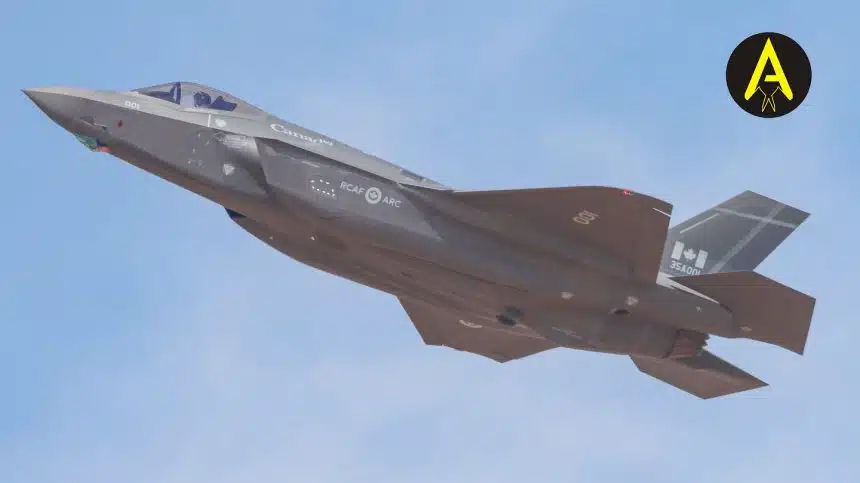
The Royal Canadian Air Force’s first F-35A Lightning II flew for the first time, marking a milestone in Canada’s controversial fighter acquisition program to replace the CF-188 Hornet fleet.
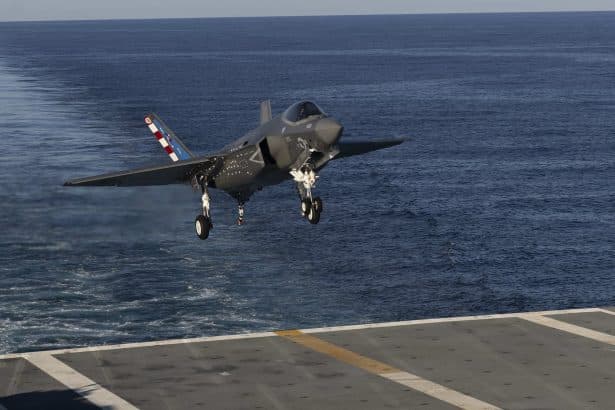
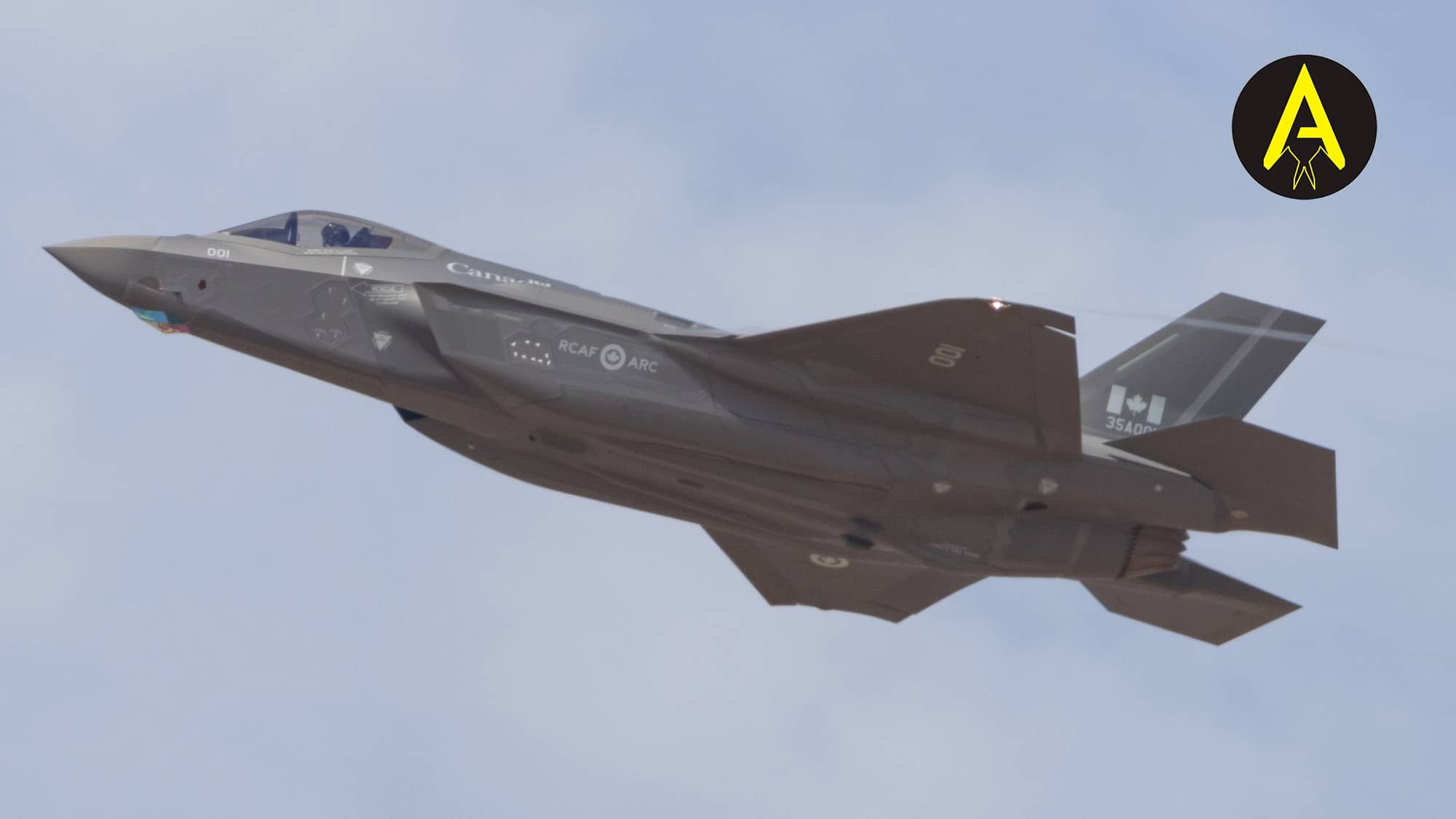
The first F-35A Lightning II destined for Canada has conducted its maiden flight from Naval Air Station Joint Reserve Base Fort Worth, Texas, where Lockheed Martin’s production facilities are based, on Sept. 23, 2026. The aircraft, construction number AR-1, will be designated as CF-35A in service with the Royal Canadian Air Force (RCAF).
Our friends and contributors Gherardo and Victoria Fontana caught the aircraft during the maiden flight, which started at around 12:00 pm local time. The fighter flew accompanied by an F-35C acting as safety chase.
Oh, Canada! 🇨🇦
The first test flight of the Canadian F-35 took place this afternoon from Lockheed Martin in Fort Worth. This is the aircraft on landing after completing a 90-minute test flight.
Check out @TheAviationist for the article featuring photos from both myself and my… pic.twitter.com/tzAIN8ayMI
— Tori Mae Fontana (@LensOfMae) September 23, 2026
As it can be seen in the images, the aircraft has already received its full markings and insignia which are similar to the ones already used by the CF-188 Hornet. On the exterior of the air intakes we can see the bilingual RCAF – ARC (Royal Canadian Air Force – Aviation Royale Canadienne) markings, together with the roundel. Behind the cockpit there is the “Canada” writing, while on the tail a low-visibility Canadian flag has been applied.
This first F-35 flight represents an important milestone for Canada’s controversial fighter acquisition program. While it was considered at risk amid the tensions with the neighboring U.S., the program nevertheless went ahead silently and is following the timeline shared by the Canadian government.
Canada and the F-35
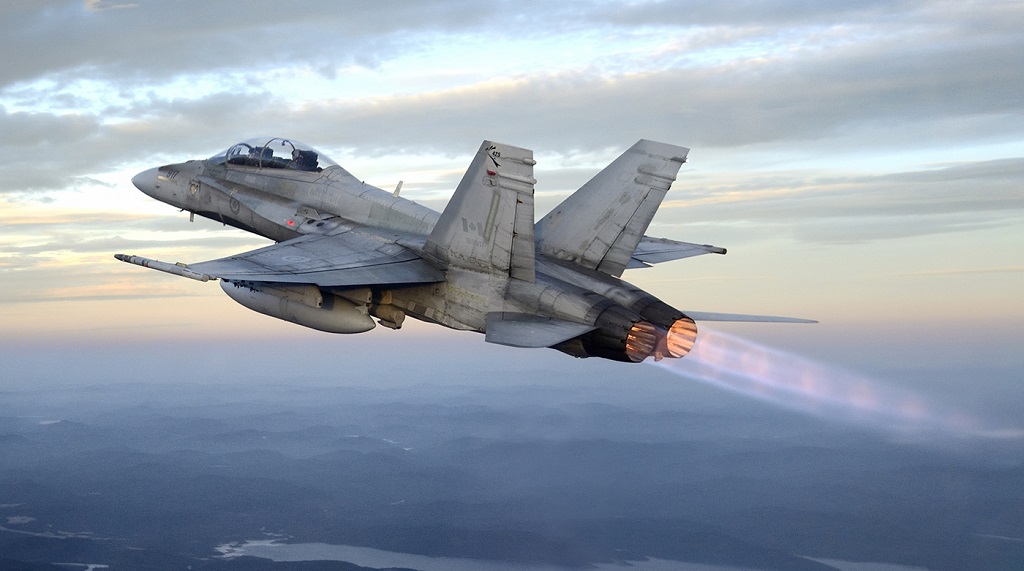
Canada has been part of the F-35 program since 2002 as a Level 3 partner, however it did not immediately procure the 5th generation fighter jet. The government selected in 2022 the F-35A Lightning II for its Future Fighter Capability Project (FFCP) launched in 2017, which aims to replace the Royal Canadian Air Force’s fleet of legacy CF-188 Hornets (local designation of the F/A-18).
A year later, the country finalized the agreement to acquire 88 fighter jets with an estimated investment of $19 billion. The government said this procurement represents the most significant investment in the RCAF in more than 30 years.
The first CF-35A took to the skies for the first time today. pic.twitter.com/SAHsXdKwas
— Lockheed Martin Canada (@LMCanadaNews) September 23, 2026
In March 2025, following the tensions between Canada and the U.S., Canada’s then Defense Minister Bill Blair told reporters that discussions were ongoing about what best serves the country’s defense needs. Blair hinted that the plan to acquire the F-35 could change, with future purchases potentially involving European suppliers.
Later on, in October 2025, the government said it would get at least the 16 jets Canada already paid for. The Secretary of State for Defense Procurement Stephen Fuhr said he “doesn’t think the federal government plans to get out of its contract to buy American-made F-35 fighter jets as 16 planes are currently being manufactured.”
A spokesperson later added that “Canada is contractually obligated to 16 aircraft, which are in various stages of production with the manufacturer. A decision on the full program is currently under review.”
According to the publicly shared timeline, Canada expect the first F-35 to be delivered by the end of 2026. The aircraft will go to Luke Air Force Base in Arizona, to enable the training of Royal Canadian Air Force pilots while the Department of National Defense completes the necessary infrastructure to support aircraft delivery in Canada.
The first aircraft to be delivered on home soil in Canada is expected in 2028, with a planned Initial Operational Capability in 2029-2030. The government plans a Full Operational Capability in 2032-2034, with the F-35s continuing to serve beyond 2060.
Thanks again to Gherardo and Victoria Fontana for the photos they sent us, you can find more of their work on Instagram at @gfontana767 and @lensofmae.