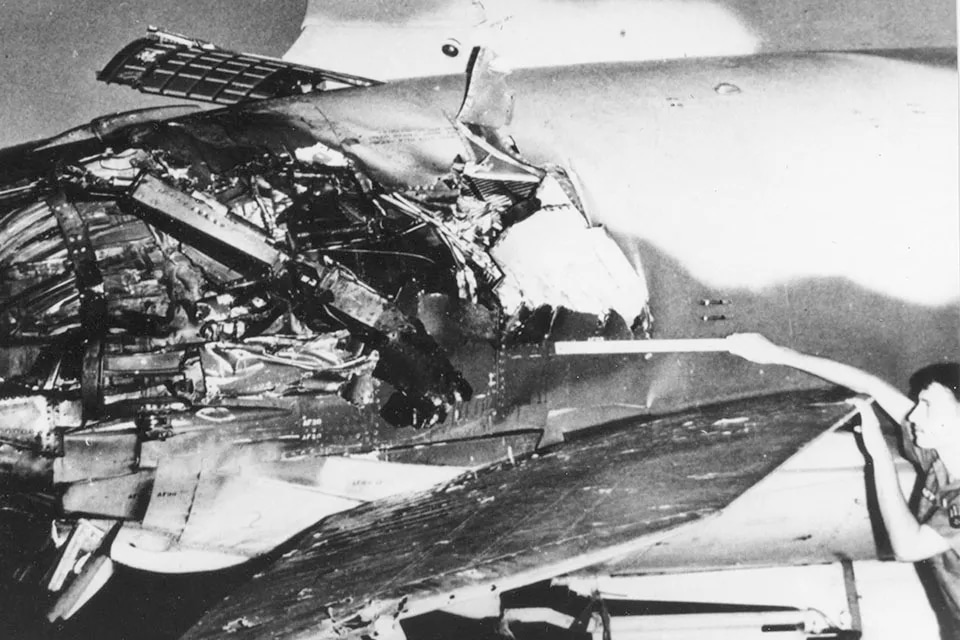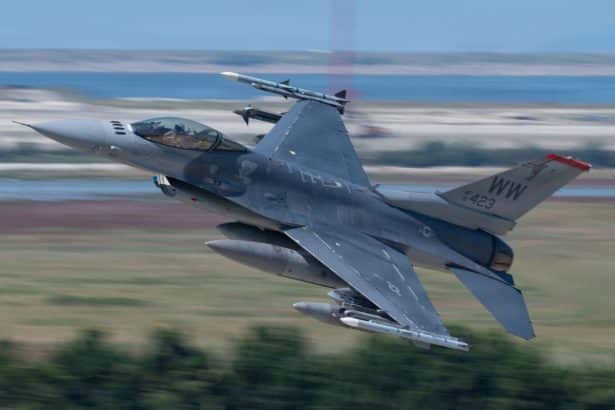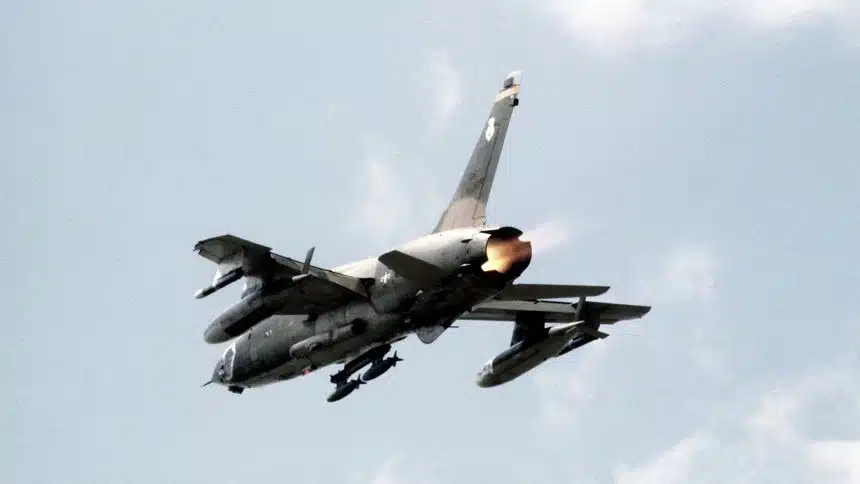
Fast and agile at low altitudes, the F-105 gained new respect for the amount of punishment it could dish out as well as absorb.
Designed as a Cold War fighter-bomber capable of delivering tactical nuclear bombs at low altitudes, the F-105 carried the air war in Vietnam to the enemy at high speeds and at tree-top level. Laden with lethal payloads, they suffered heavy losses but continued day after day to penetrate the impressive array of air defenses possessed by North Vietnam.
Another Thunder is born
Several ‘Thunder’ aircraft had been produced by the Republic Aviation Corporation, including the P-47 Thunderbolt, the F-84 Thunderjet, the swept-wing F-84F Thunderstreak, RF-84 Thunderflash, and even the XF-84H known by the unaffectionate name ‘Thunderscreech.’
Chief designer Alexander Kartveli conducted studies in the early 1950s for a replacement for the F-84 in order to continue a business relationship with the United States Air Force (USAF). The proposal became known as AP-63 (Advanced Project), and was created to meet USAF requirements for a large new nuclear-capable fighter-bomber that could perform high-speed, low-altitude penetration of enemy defenses.
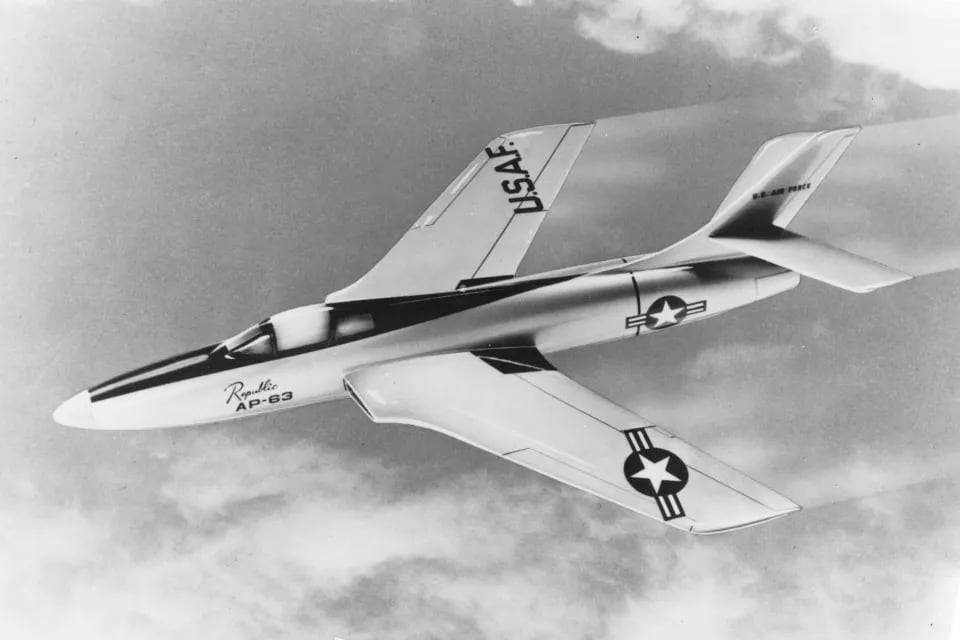
In 1952, Republic presented a revised AP-63 proposal to the USAF, gaining endorsement of continued development over further improving and developing the existing F-84 platform, including a scaled-up version of the RF-84F.
A contract was issued to Republic in September 1952 for further development, preproduction, tooling, engineering, and a verbal order for 199 production aircraft. After a series of orders, cancellations, and reorders, a pair of YF-105As was produced at the Farmingdale plant in Long Island, New York.
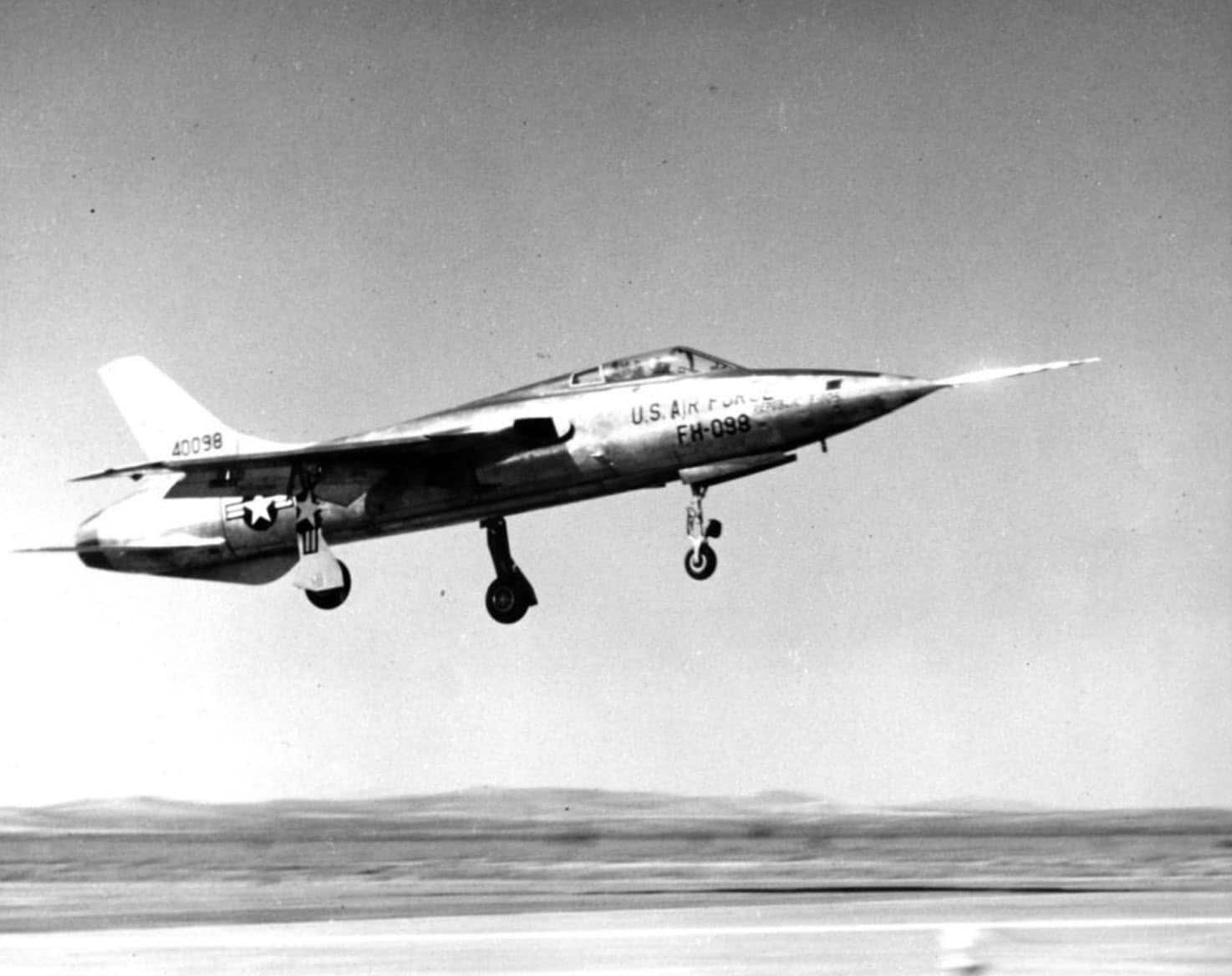
Both aircraft were shipped to Edwards Air Force Base (AFB), California, for testing. The first flight took place on Oct. 22, 1955. Test pilot Russell ‘Rusty’ Roth broke the sound barrier on the 45-minute flight.
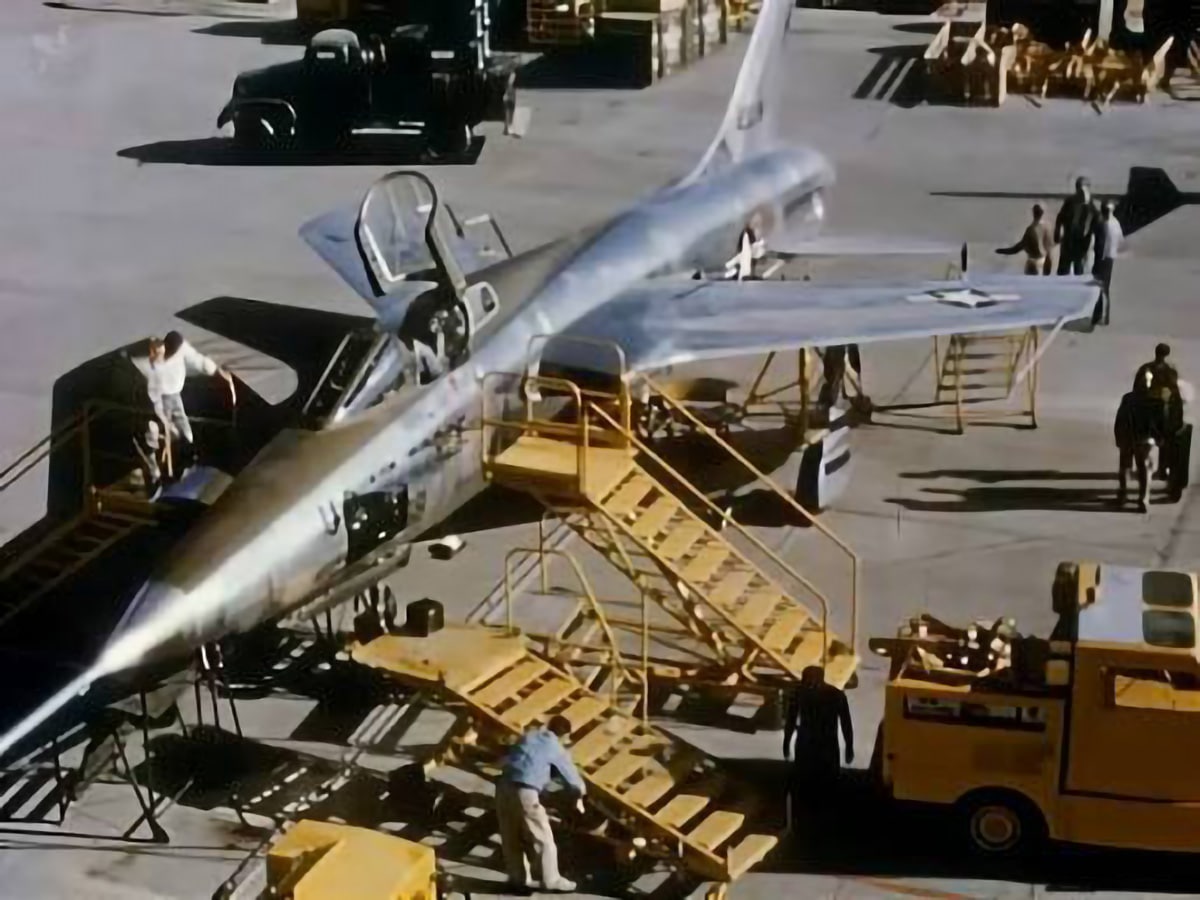
The first YF-105 was lost after Roth made forced belly landing after the starboard landing gear accidentally deployed during flight with the slipstream tearing the landing gear from the aircraft. The aircraft was deemed too costly to repair and, after only 29 flights and 22 flight hours, it was grounded.
Continued flight tests revealed issues such as drag problems as well as complications with the engine inlets. Engineers solved these issues by the incorporation of a bulge beginning near the wing’s trailing edge along the fuselage, reducing drag and giving the aircraft its distinct ‘wasp waist’ look.
In addition to this, Republic added computer-controlled variable airflow ramps to the elliptical swept forward engine inlets. These ramps would control the airflow to the engine and, coupled with the YJ75-P-5 engine, allowed the aircraft to reach Mach 1.5.
These revisions along with a taller vertical tail and a four-petal exhaust nozzle led to the first production model now designated the F-105B and officially named by the Air Force the Thunderchief on July 25, 1956, at Republic’s request to continue the line of aircraft names that included ‘Thunder.’
Into Production
The production F-105B was a large aircraft, with a length of 63 ft 1 in, a wingspan of 34 ft 11 in and a height of 19 ft 8 in. The aircraft tipped the scales north of 25,800 lb empty, with a maximum weight of 52,000 lb.
Republic installed the Pratt & Whitney J75-P-19 power plant in later models of the F-105B, allowing speed exceeding Mach 2. The large, heavy aircraft was thirsty, and with full ordinance load had a limited combat range, necessitating the ability to refuel in midair. A retractable refueling probe was mounted on the port side forward of the cockpit.
Armament included a six-barreled General Electric 20 mm M61A1 Vulcan cannon with 1,028 rounds of ammunition. An internal weapons bay could carry a single 3,400 lb nuclear bomb or a fuel tank. A centerline pylon and four under the wings could carry up to 12,000 lb of ordinance.
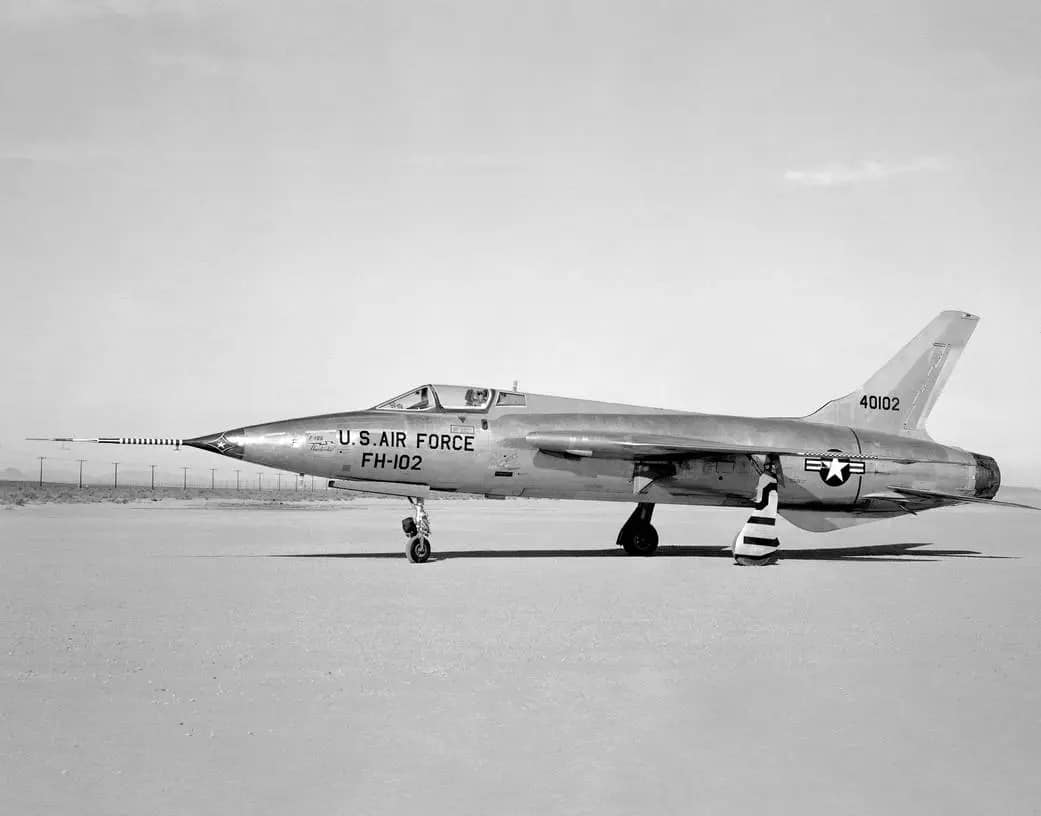
A total of 75 F-105Bs were produced with production ending in late 1959. A model designated the F-105C was a planned two-seat trainer version of the B but was cancelled. The B model never saw combat in Southeast Asia. The F-105D would be the next production variant that included the all-weather capability the B lacked.
Chief Thunderchiefs
Additional avionics equipment resulted in the F-105D being even larger and heavier, increasing length to 64 ft 5 in, and empty weight increased to 26,855 lb. Maximum weight is listed at 52,838 lb. The main landing gear was strengthened to support the additional weight. The pitot tube was relocated from the port wing to the tip of the radome. Power came from a Pratt & Whitney J75-P-19W afterburning turbojet engine providing 24,500 lb of thrust, pushing the big plane to Mach 2.08.
Being such a large and heavy aircraft, the F-105 required a longer take off than most tactical fighters, a condition exacerbated by the hot and humid air of Southeast Asia. This, coupled with a troubled early service life, lead to the Thunderchief becoming known as the ‘Thud’ or ‘Lead Sled’ among other unflattering names. ‘Ultra Hog’ was another favorite name for the aircraft.
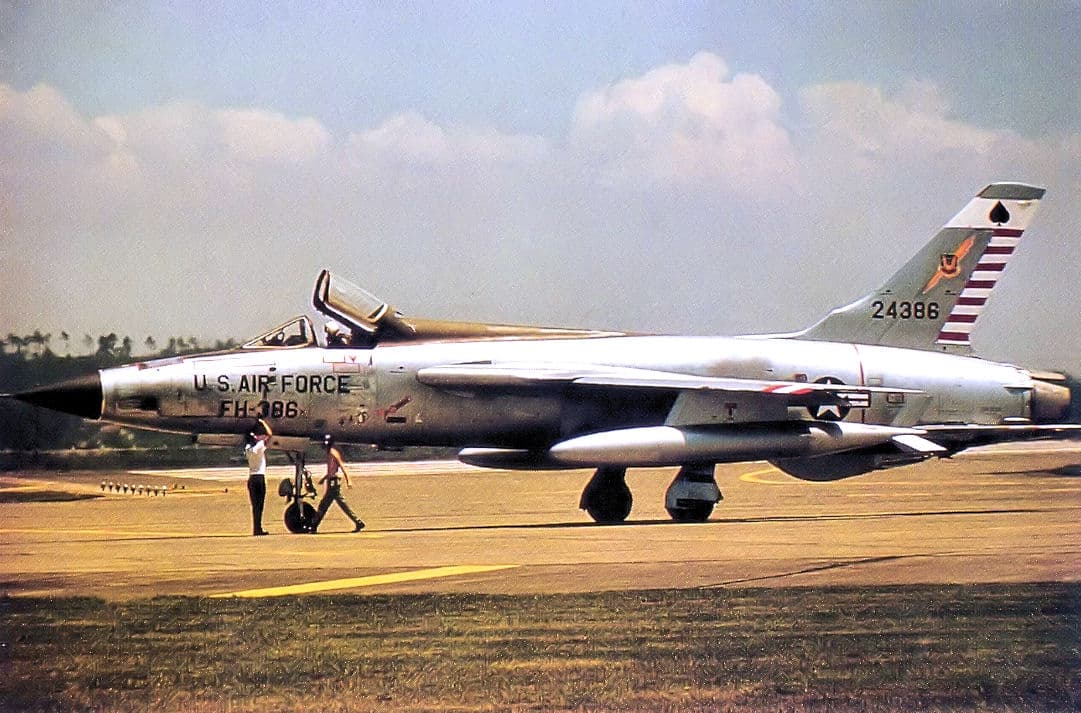
However, the aircraft did have strong performance at high speeds and low altitudes with responsive controls, and was loaded with impressive electronics. After all, it was designed to carry nuclear bombs deep into enemy territory at low altitudes to avoid detection, and move at high speeds to give enemy interceptors fits trying to target it. The ‘Thud’ name eventually became a term of endearment for some F-105 pilots.
The D model would be the definitive single-seat Thunderchief, with 610 built between 1959 and 1964. The 20 mm cannon stayed, but a new system utilizing linkless rounds was now used instead of linked ammunition belts. The five external pylons could now carry 14,000 lb of ordinance, including conventional bombs and napalm, while AIM-9 Sidewinders could be carried for air-to–air threats. Electronic Counter Measures (ECM) pods could be carried on the outer pylons in lieu of the Sidewinders.
The internal weapons bay could carry a tactical nuclear weapon or 390 gallon fuel tank. Later, the Martin AGM-12 Bullpup Air-to-Surface (ASM) would be installed on the wing pylons, along with other upgrades during Project Look Alike.
Some of the upgrades introduced during Look Alike included updated equipment, hydraulic and fuel lines, and wiring. Combat experience led to a third hydraulic system being later installed along the upper fuselage, as the primary and secondary systems had been located close together making them both vulnerable to damage from a single hit.
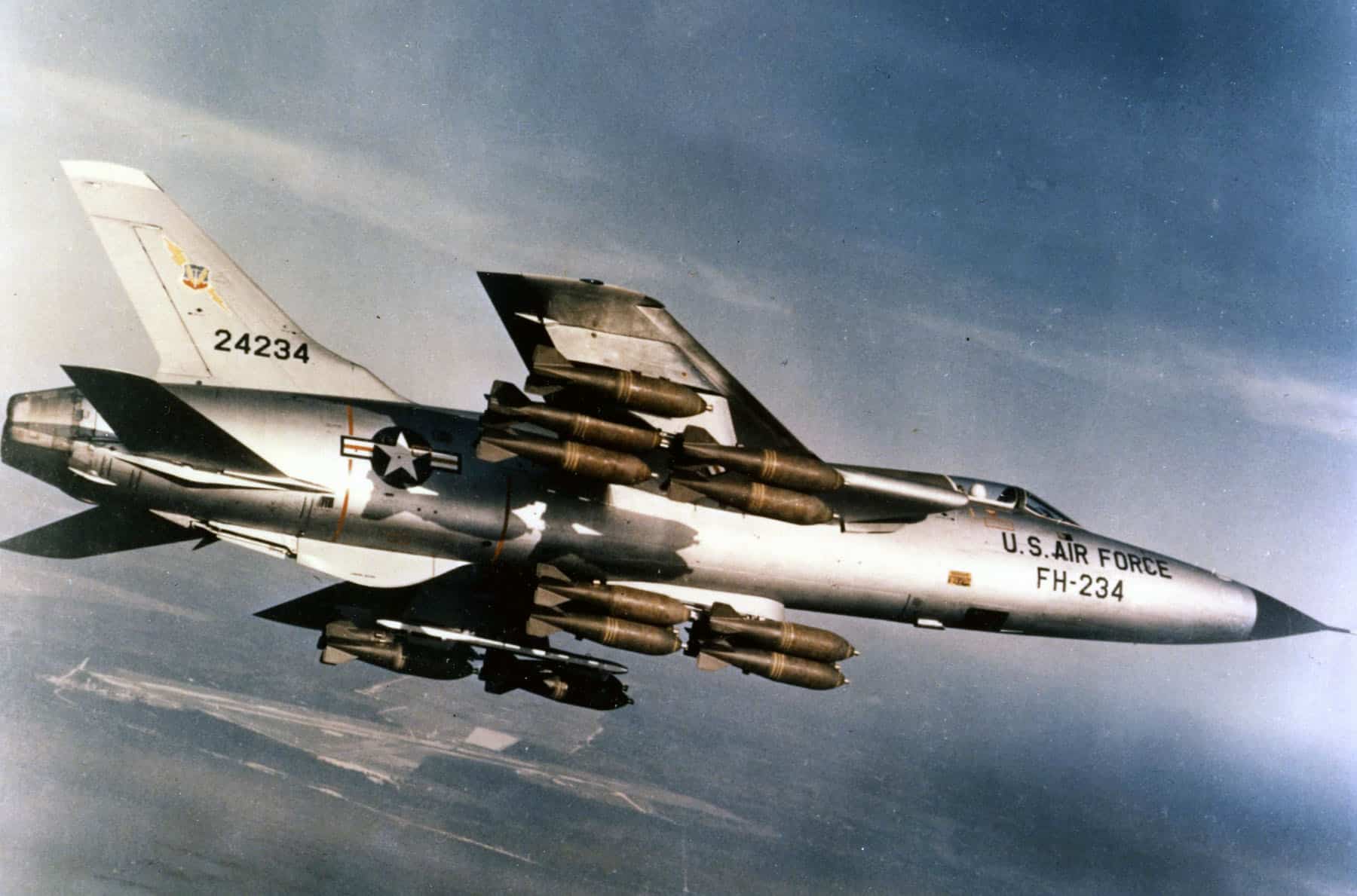
The F-105D had significant changes to the cockpit instrumentation and avionics. The AN/ASG-19 Thunderstick bombing navigation system included the fire control system, allowing for visual or blind bombing techniques for both nuclear and conventional weapons. The system included both air-to-air and air-to-ground modes and incorporated a General Electric FC-5 automatic flight and fire control system. An APN-131 Doppler navigation radar was placed just aft of the nose gear bay.
A more advanced version of Thunderstick, known as Thunderstick II, involved upgrading selected F-105D models with the installation of equipment inside an enlarged dorsal spine atop the fuselage. The new system increased the bombing accuracy as well as terrain avoidance capability. No Thunderstick II aircraft were deployed to Southeast Asia, with all 30 aircraft converted assigned to McConnell AFB in Wichita, Kansas.
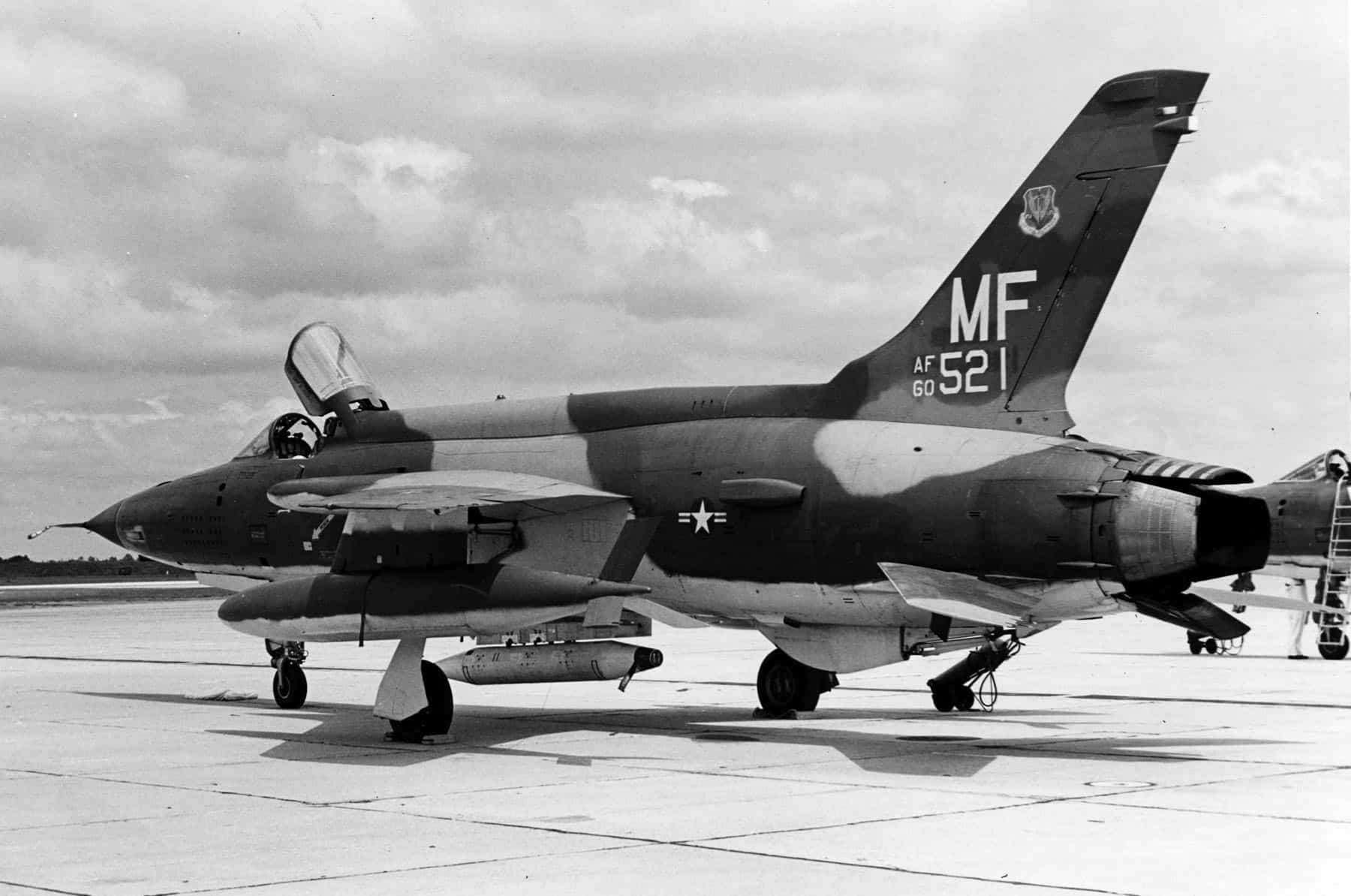
The Air Force and Republic had been toying with a two-seat F-105 since the beginning, but the budget axe had always prevailed. Finally a two-seat variant was authorized in May 1962. A total of 143 two-seat aircraft known as the F-105F were ordered.
The F-105F had a taller vertical tail to add stability for the increased fuselage length, bringing the overall height to 20 ft 1 in. Length was 67 ft with the added cockpit fitted with dual controls. The F maintained the D variant’s engine, cannon, avionics, ordinance loads, and performance was similar for the most part. The added length had added weight, now up to 54,580 lb, and required the main landing gear to be strengthened once again.
Those Wild Wild Weasels
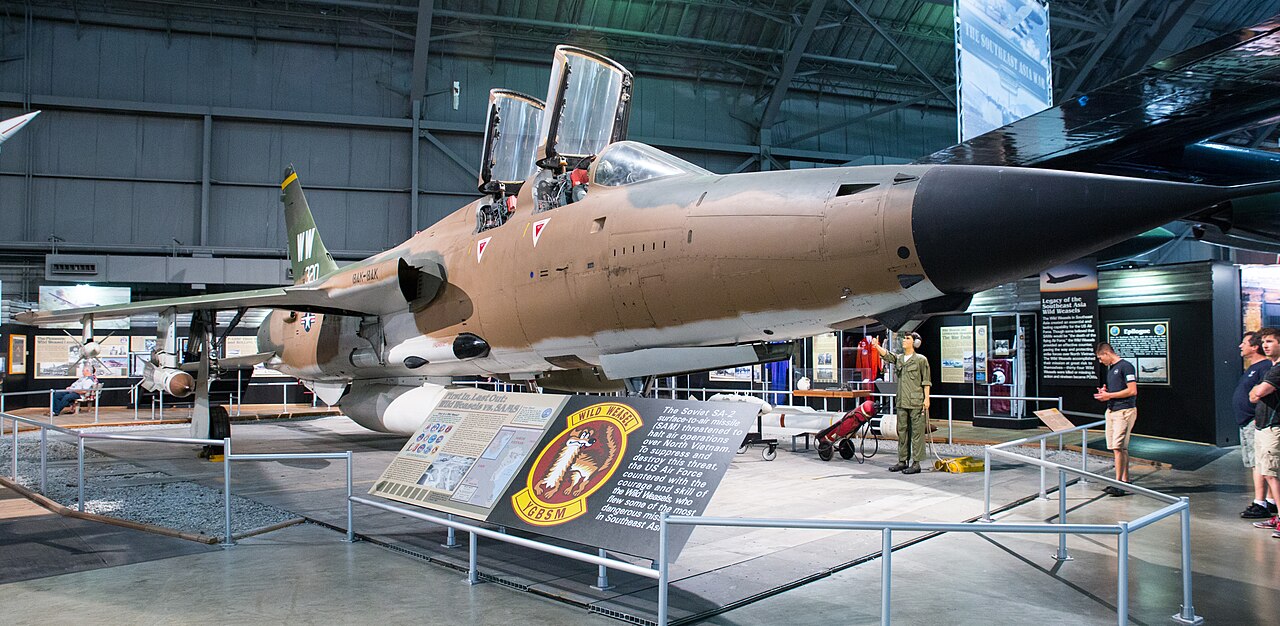
The F-105F found duties as a trainer, as the F-100F Super Sabre supply of trainers normally used for F-105 drivers was drying up. The two-seater F-105Fs also went to war alongside their D model stable mates, flying bombing missions and also taking on the Wild Weasel role, suppressing enemy air defenses (SEAD) in Southeast Asia, aiding in securing the skies for the low-level attacks by the Ds.
Wild Weasels utilized AGM-45 Shrike Anti-Radiation Missiles (ARM), along with other munitions, to silence North Vietnamese radar so the Ds could bomb the SAM (Surface-to-Air-Missile) sites. While performing the Wild Weasel role, the rear seat was occupied by an Electronic Warfare Officer (EWO), known as the ‘Bear’, to operate the electronics and systems involved.
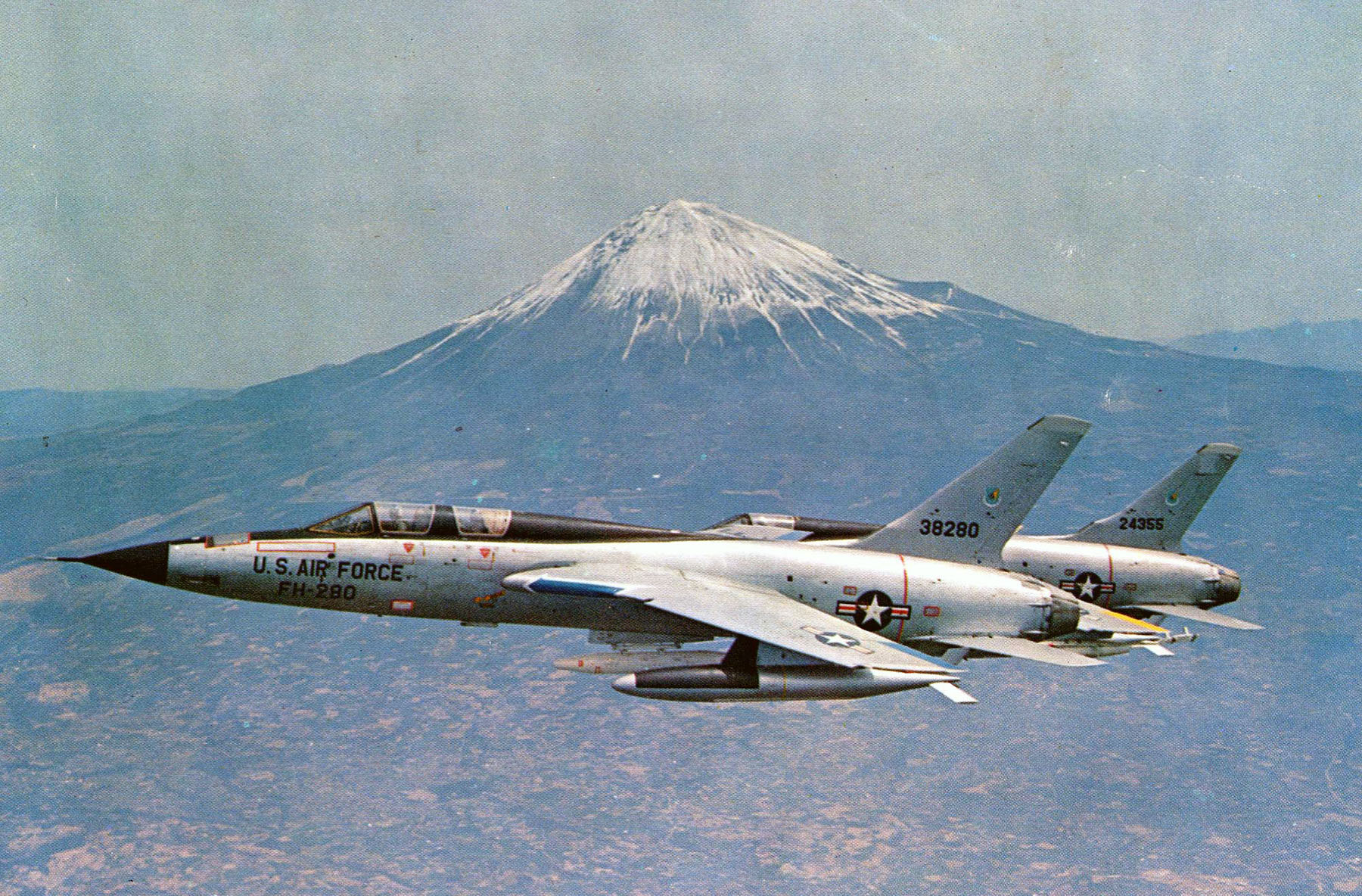
In the fall of 1967, Fairchild Republic (Fairchild acquired Republic in 1965) and Westinghouse, along with the USAF, teamed up and split a Westinghouse ALQ-101 ECM pod in halves, with one half mounted on each side of an F-105F above the weapons bay. The F-105F also received an improved Itek AN/APR 35 and 36 RHAW (Radar Homing And Warning) system. A combat camera was also installed in the lower nose aft of the radome along with a Loral AN/ALR-31 RHAW system with antennas in the wingtips. A target acquisition system known as the Bendix APS-107 found a home in the fuselage, and upgraded displays and instrumentation in the aft cockpit, further taxing the already very busy EWO. These modifications led to the USAF designating the upgraded aircraft the F-105G.
The F-105G maintained the 20 mm Vulcan and often carried two AGM-45 Shrikes on outboard wing pylons along with a single AGM-78 Standard ARM on the inboard portside pylon. Empty weight was now 31,279 lb and maximum weight 54,580 lb.
Into the Abyss
Five days after the Gulf of Tonkin incident that took place on Aug. 4, 1964, eight F-105D Thunderchiefs left Yokota, Japan, for Korat RTAB (Royal Thai Air Base) in northeast Thailand. By early 1966, large numbers of F-105s were in theater.
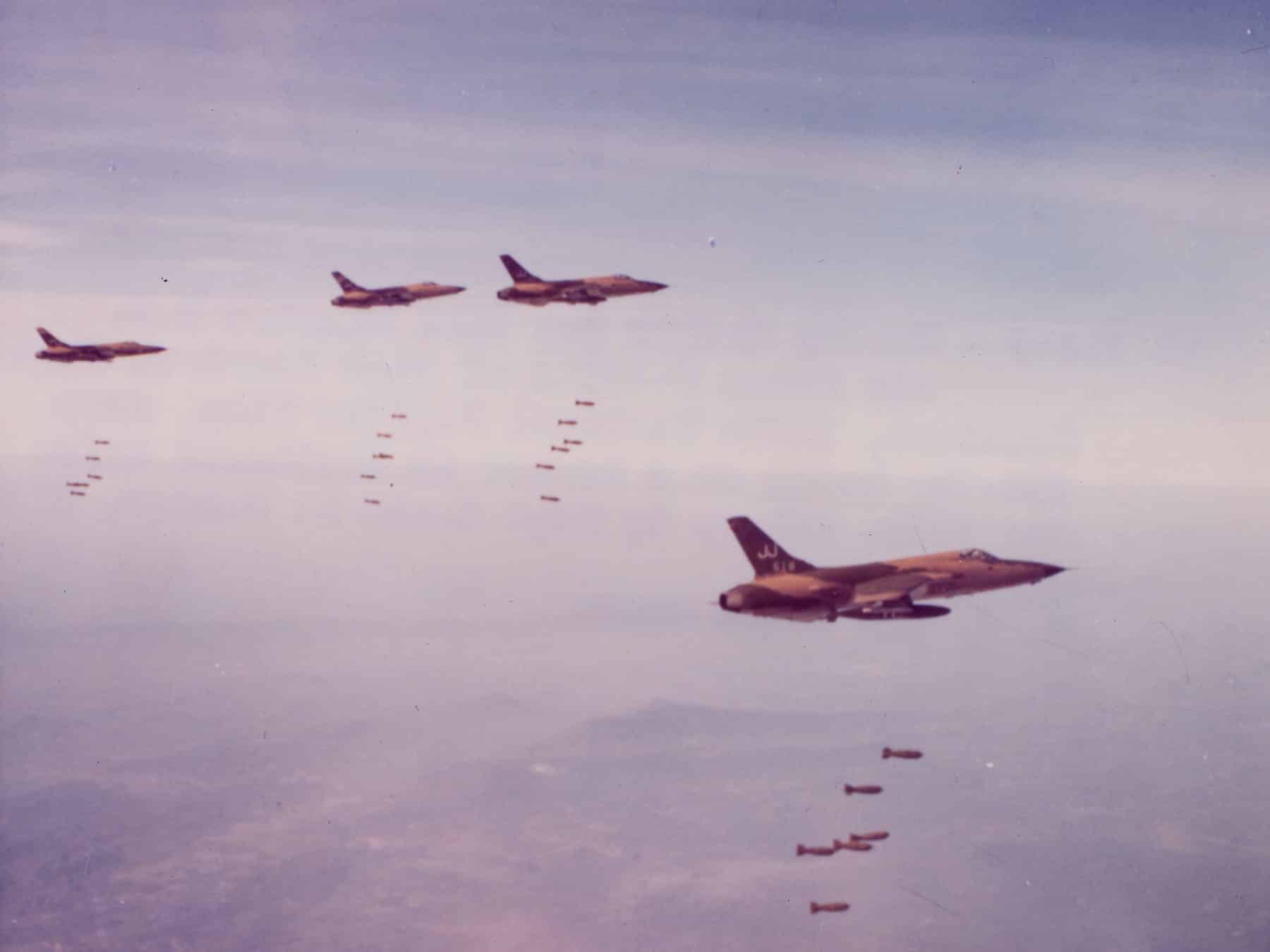
It soon became apparent the ‘Thud’ would be the USAF primary fighter-bomber in Vietnam, conducting sustained bombing campaigns against the North during operations such as Rolling Thunder and Commando Nail.
F-105Ds filled the role with their payload capacity, high-speed maneuverability along with stability at low altitude, and ability to take punishment. However, low-level attacks also subjected the aircraft to the heavily defended skies of the enemy consisting of MiG-17s, SAM missiles, and a wide assortment of Anti-Aircraft Artillery (AAA).
As the war progressed, the two-seat F-105Fs joined the fray and were used in the Wild Weasel role. This role was latter taken on by the more capable F-105G. The F-105 Wild Weasels would continue to fly during operations Linebacker and Linebacker II.
Between July 1965 and November 1972, F-105 pilots flew over 20,000 missions over Vietnam, conducting over 75 percent of the United States Air Force’s bombing missions during the conflict. 382 F-105s were lost due to enemy action and accidents. The last ‘Thud’ downed over Vietnam was an F-105G in November 1972.
The F-105 did what was asked of it in Southeast Asia but at a high price. It was what the USAF had and they made good use of it. No other aircraft in inventory at the time could carry the payload at those speeds at tree-top level and penetrate enemy defenses, go those distances day in and day out and do it again and again. Nobody and no other aircraft, could keep up with the ‘Thud’.