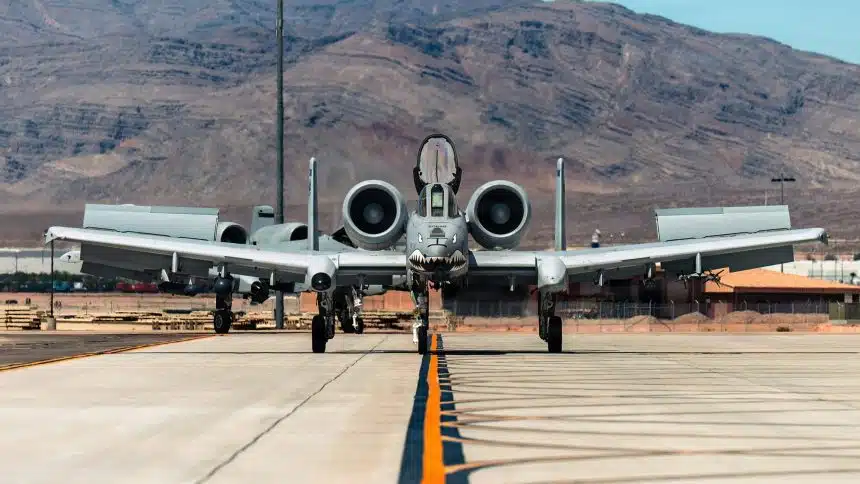
The A-10C completed its final training sortie with the 66th Weapons Squadron at Nellis AFB, marking the end of the aircraft’s operations with the U.S. Air Force Weapons School.
The A-10 Thunderbolt II has completed its final training flight with the U.S. Air Force Weapons School at Nellis Air Force Base, Nevada, bringing the service’s dedicated A-10 weapons training program to an end. The milestone was marked by the 66th Weapons Squadron on Aug. 18, 2026, with the base releasing photographs of the aircraft following its final sortie a month later, on Sept. 18.
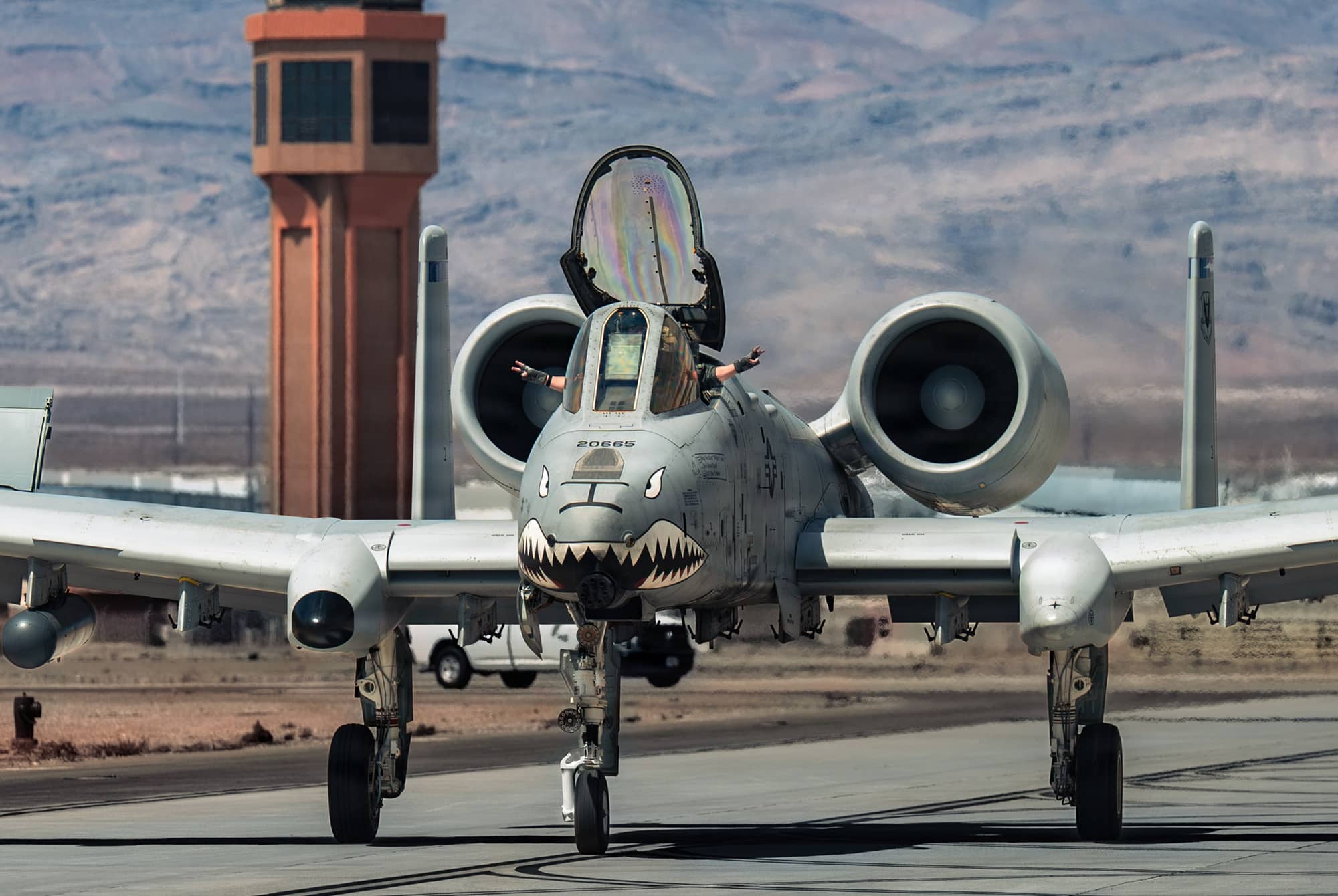
Notably, one of the aircraft involved in the last flight was 82-0665, the last A-10 ever built, delivered to the service in 1983. For the occasion, it was flown by the squadron’s commander, Lt. Col. Ridge Flick.
Visualizza questo post su Instagram
According to the official caption accompanying the images, the flight marked the end of the U.S. Air Force Weapons School‘s A-10 program. The 66th Weapons Squadron has been responsible for advanced weapons and tactics instruction involving the Thunderbolt II, supporting the development of highly specialized personnel for combat operations.
The A-10 and the Weapons School
The milestone follows the recent last flight of the A-10 at Davis-Monthan AFB, Arizona, on July 29. The end of the operations at the Weapons School was expected by the end of the summer, few months after the graduation of the latest class of A-10 weapons instructors.
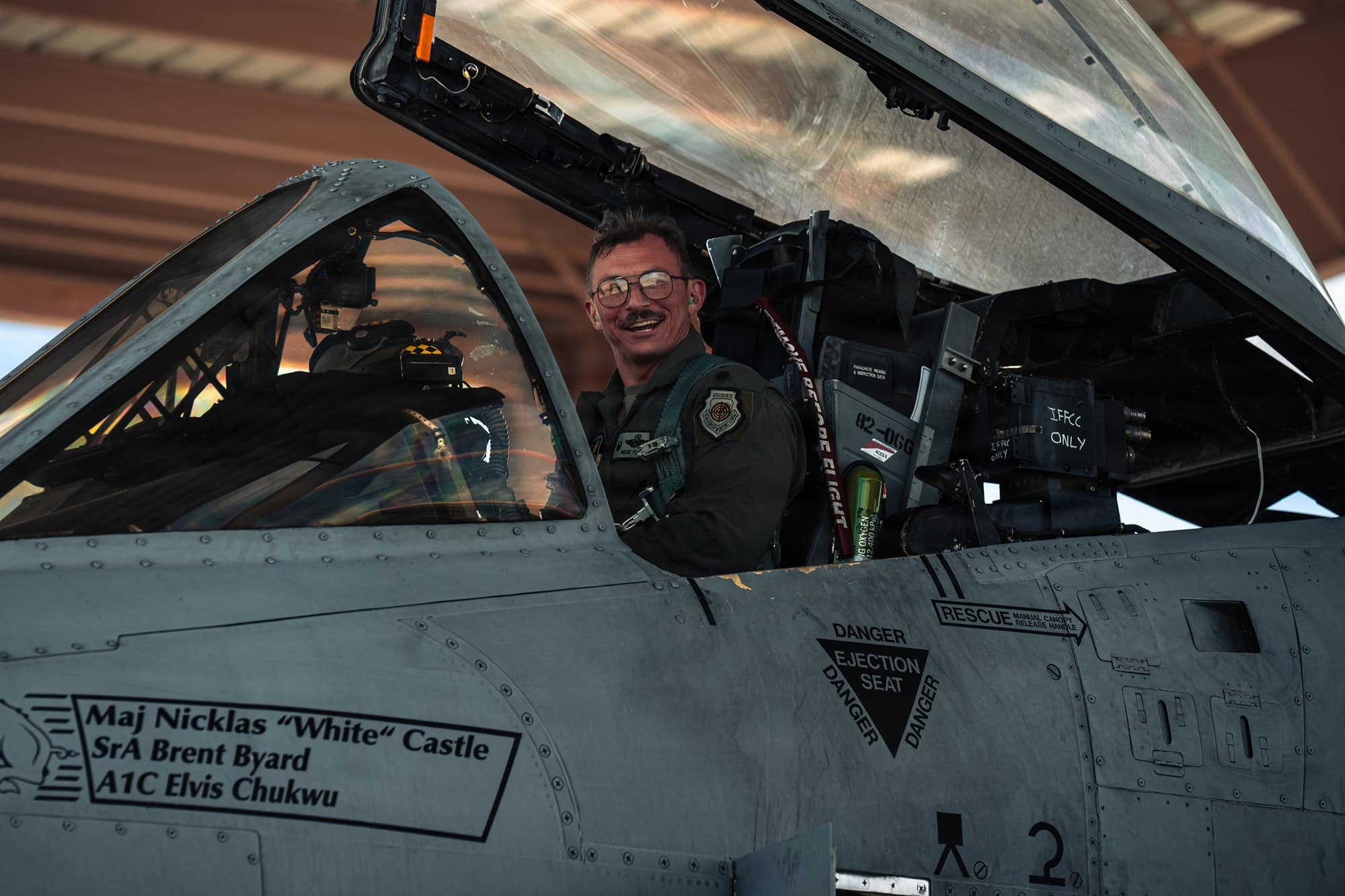
The A-10 has played an important role in the U.S. Air Force’s close air support mission since entering service in the 1970s. Designed around the requirements of supporting ground forces, the aircraft combines a heavily protected airframe with the GAU-8/A Avenger 30 mm cannon and the ability to employ a wide range of precision-guided and unguided weapons.
At Nellis, the A-10 has been used to train weapons officers in the employment of the aircraft in complex combat scenarios, including the integration of close air support with other elements of joint and combined air operations. The Weapons School’s graduate-level instruction is intended to prepare personnel to return to operational units with advanced expertise in tactics, weapons employment, and mission planning.
The conclusion of the A-10 program at the Weapons School comes as the Air Force continues to reorganize its tactical aviation force and training structure. While the Thunderbolt II remains associated with close air support, the service has been transitioning toward newer aircraft, with the A-10 continuing to fly only with a handful of units.
The A-10’s legacy at Nellis is closely tied to the aircraft’s contribution to close air support training and the development of specialized weapons officers. With the 66th Weapons Squadron’s final training flight now complete, the Weapons School’s A-10 program becomes another part of the aircraft’s extensive operational and training history.
The A-10’s retirement
The end of the A-10’s flight operations represents yet another step towards the retirement of the aircraft. These steps appear to be continuing even if the service announced that it would retain two squadrons through 2030.
These will be one active-duty squadron at Moody Air Force Base, Georgia, and one Air Force Reserve squadron at Whiteman Air Force Base, Missouri. However, things might still change and the A-10’s time in the Air Force further extended.
In fact, in an attempt to further delay the retirement, Rep. Abe Hamadeh (R-Ariz.) introduced in the U.S. Congress the ‘BRRRRT Act’, or ‘Bolstering Recognition, Resurgence, Retention, and Remembrance of the Thunderbolt’, (H.R. 9780) on July 20, 2026. The bipartisan bill would require the U.S. Air Force to maintain a viable A-10 fleet through Fiscal Year 2033, as well as halting the dismantling of the infrastructure needed to sustain the aircraft.
The bill was referred to the Committee on Armed Services, and goes considerably further than simply preventing the U.S. Air Force from retiring the A-10 Thunderbolt II. The bill would require the Air Force to maintain at least 126 A-10 aircraft and restore depot maintenance, pilot training, sustainment activities and flight testing.
In order to proceed with the retirement, the Secretary of War would have to certify that a replacement aircraft has fully assumed the A-10’s mission before any further divestment could proceed. That certification would also need to be approved in writing by the Secretary of the Army, the Commandant of the Marine Corps, and the Commander of U.S. Special Operations Command.