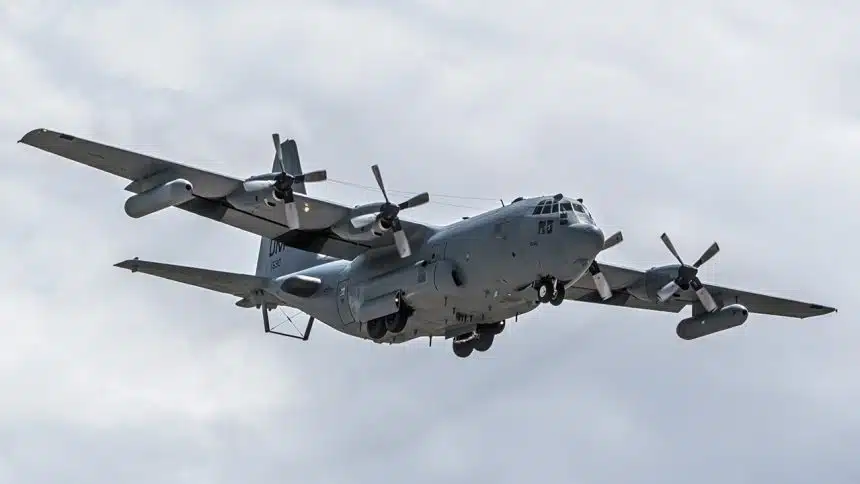
The U.S. Air Force’s EC-130H has conducted its last ever flight, marking the end to an illustrious career spanning more than four decades.
On September 2, 2026, EC-130H reg. 73-1590 departed Davis-Monthan Air Force Base, Arizona, under the callsign VOLT01, for what was scheduled to be the final flight of the type. The aircraft took off at approximately 07.00 local time before returning to Davis-Monthan around six hours later, marking the formal end of the U.S. Air Force’s EC-130H operations.
73-1590 was initially delivered to the USAF as a generic C-130H, after which it underwent modification and conversion to be delivered as an EC-130H in 1992.
“VOLT01 right base, gear, full stop” And with that, the era of the EC-130H comes to an end after 43 years of service. pic.twitter.com/z2sy0MXmYU
— Steven Fortson (@zaphod58) September 3, 2026
Goodbye forever friend! Enjoy retirement!!! pic.twitter.com/SinA7ciQNi
— Jacob “after burner enthusiast” Burgardt (@JacobBurgardtWX) September 2, 2026
EA-37B 17-5567 working the pattern at DM as the final EC-130H flight was taking place. pic.twitter.com/mP4o0dAc4s
— Steven Fortson (@zaphod58) September 2, 2026
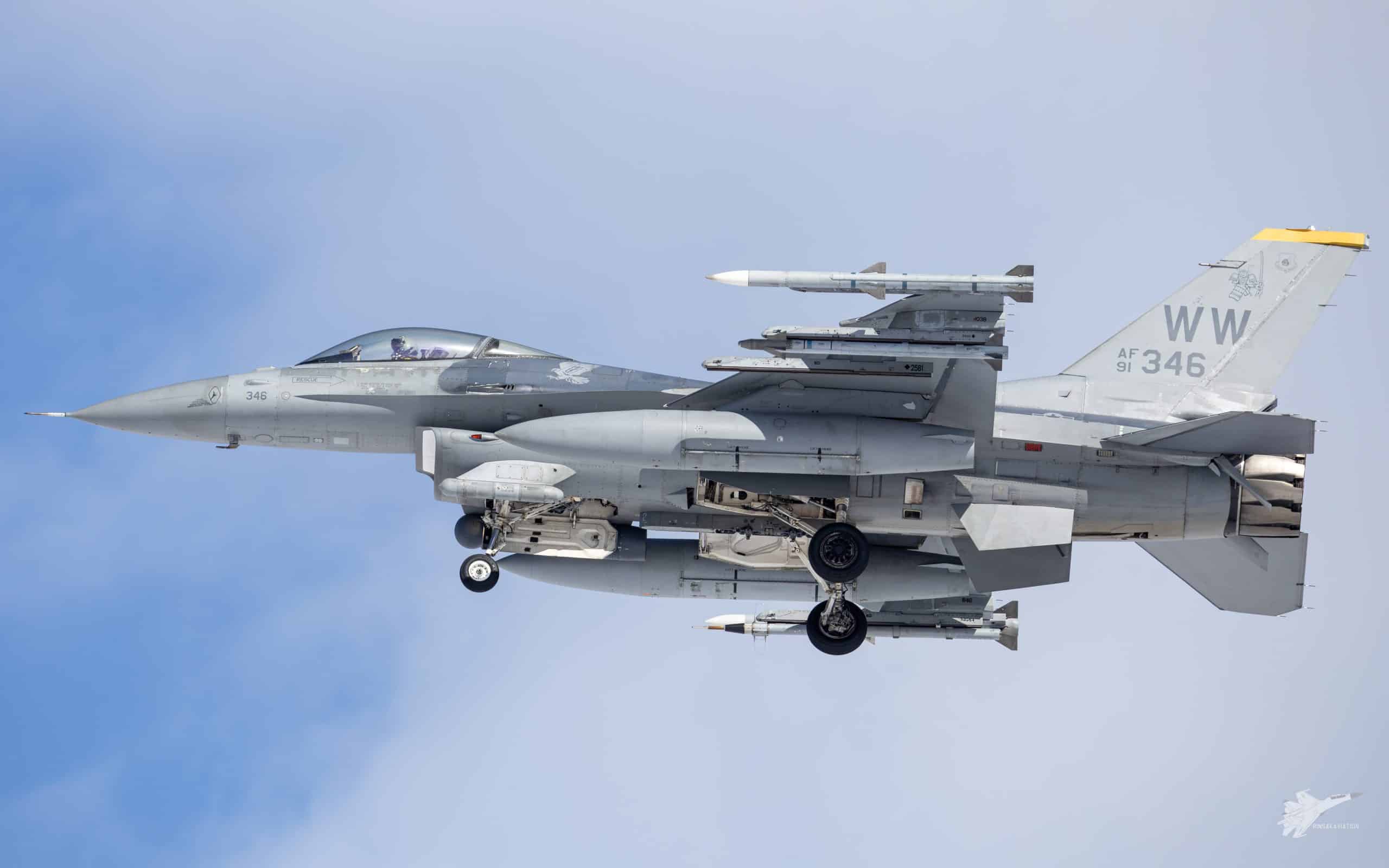
Our long time friend Steven Fortson, who posts on X/Twitter as Zaphod58, was on site during the landing, and reported the presence of an F-16D from the 152nd Fighter Squadron based at the nearby Morris ANGB (Air National Guard Base), as well as an EA-37B – the type replacing the Compass Call, the first of which was delivered to Davis-Monthan just under two years ago. It is implied that the three aircraft participated in a photo-mission to officially record the final flight of the EC-130H, with the backseater of the F-16 serving as the cameraman.
F-16D Block 42H 90-0785, part of the 152nd Fighter Squadron, 162nd Wing based at Morris ANG Base, Tucson International Airport. This was most likely the camera bird for the final EC-130H flight today. pic.twitter.com/grRG3TrBHd
— Steven Fortson (@zaphod58) September 2, 2026
The EC-130H and the EA-37B
As the designation implies, the EC-130H was developed from the Lockheed C-130H Hercules, and was extensively modified to undertake airborne electronic warfare missions. Its main role was to disrupt enemy C4 (Command, Control, Communications, Computers) networks and mount offensive counterinformation attacks. The large antenna arrays, fairings, and wing-mounted pods mounted on an otherwise familiar C-130H airframe easily give away its specialised mission set, which proved crucial in conflict zones such as Kosovo, Haiti, Panama, Libya, Iraq, Serbia and Afghanistan in operations like Iraqi Freedom, Enduring Freedom, and Inherent Resolve.
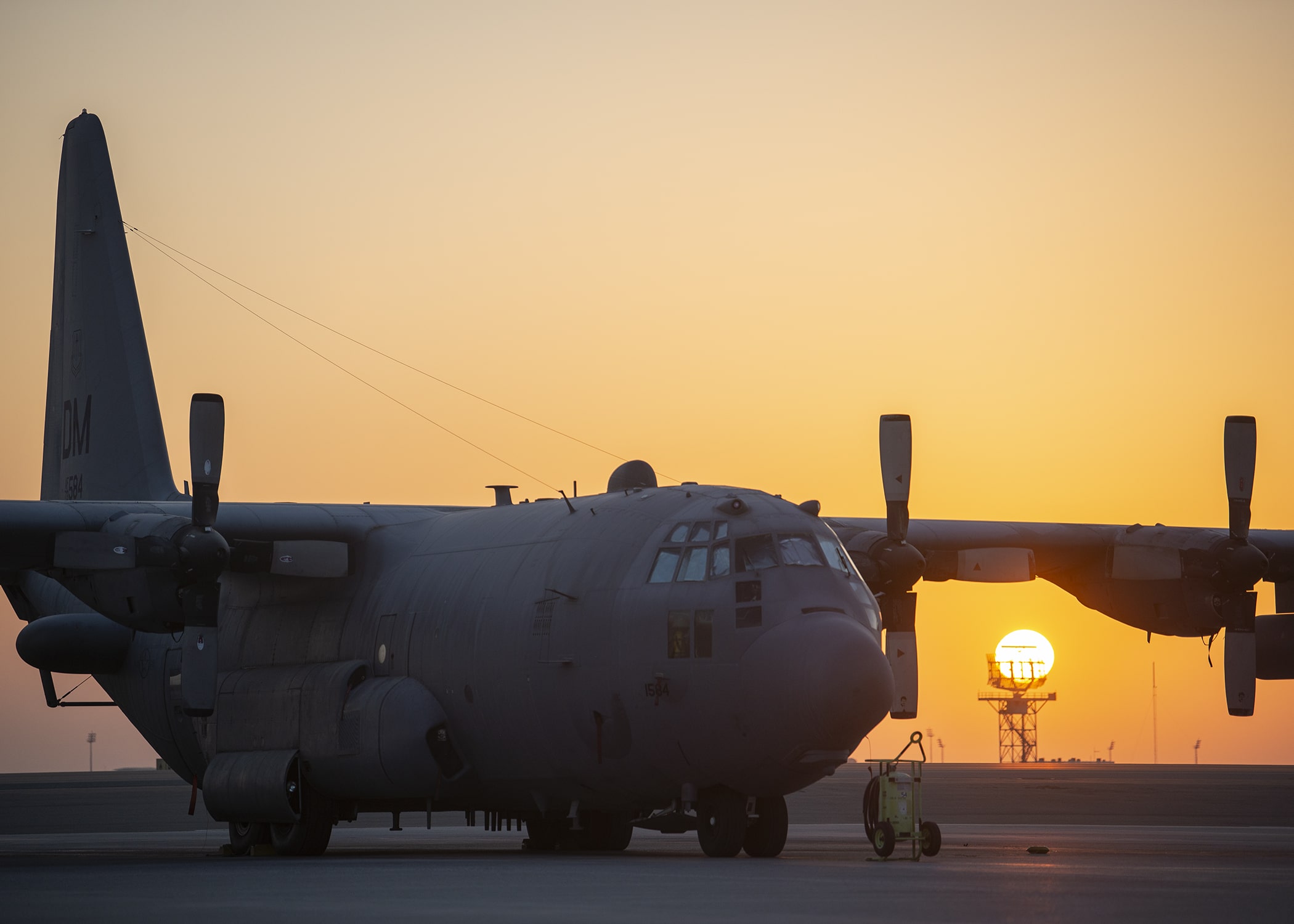
The EC-130H flew for the first time in 1981, and the first example was delivered to the USAF on Mar. 12, 1982. The type gained IOC (Initial Operational Capability) in 1983, and was continuously upgraded as advancements were made in the potential threats it could face. All EC-130Hs were operated by the 55th ECG (Electronic Combat Group), which although based in Davis-Monthan AFB, reported to the 55th Wing at Offutt Air Force Base, Nebraska.
It served as one of the core components of the US’s SEAD (Suppression of Enemy Air Defences) triad, alongside the Navy’s EA-18G (which replaced the now retired EA-6B) and the USAF’s Wild Weasels operating the F-16CM.
By the mid-2010s, however, the aging airframes of the EC-130H became increasingly difficult to ignore. The airframes themselves were modified C-130Hs, already largely obsolete and replaced by the newer C-130J in US service; meanwhile, the electronic warfare environment had also dramatically changed since the type entered service. Considering this, the type was scheduled for retirement in 2014. The first EC-130H to be modified, 73-01587, flew for the last time on Jan. 15, 2020 after almost 29,000 hours of flight time.
By 2025, DoD (Department of Defence) budget documents noted that the EC-130H aircraft had reached the limits of their programmed depot maintenance lives and were being operated under waivers because of their planned retirement. The final aircraft’s extended waiver was due to expire on September 30, 2026, and keeping the aircraft flying beyond that point would also have required significant additional investment. According to the same document, extending the EC-130H’s service life by up to two years would cost approximately $14 million per aircraft.
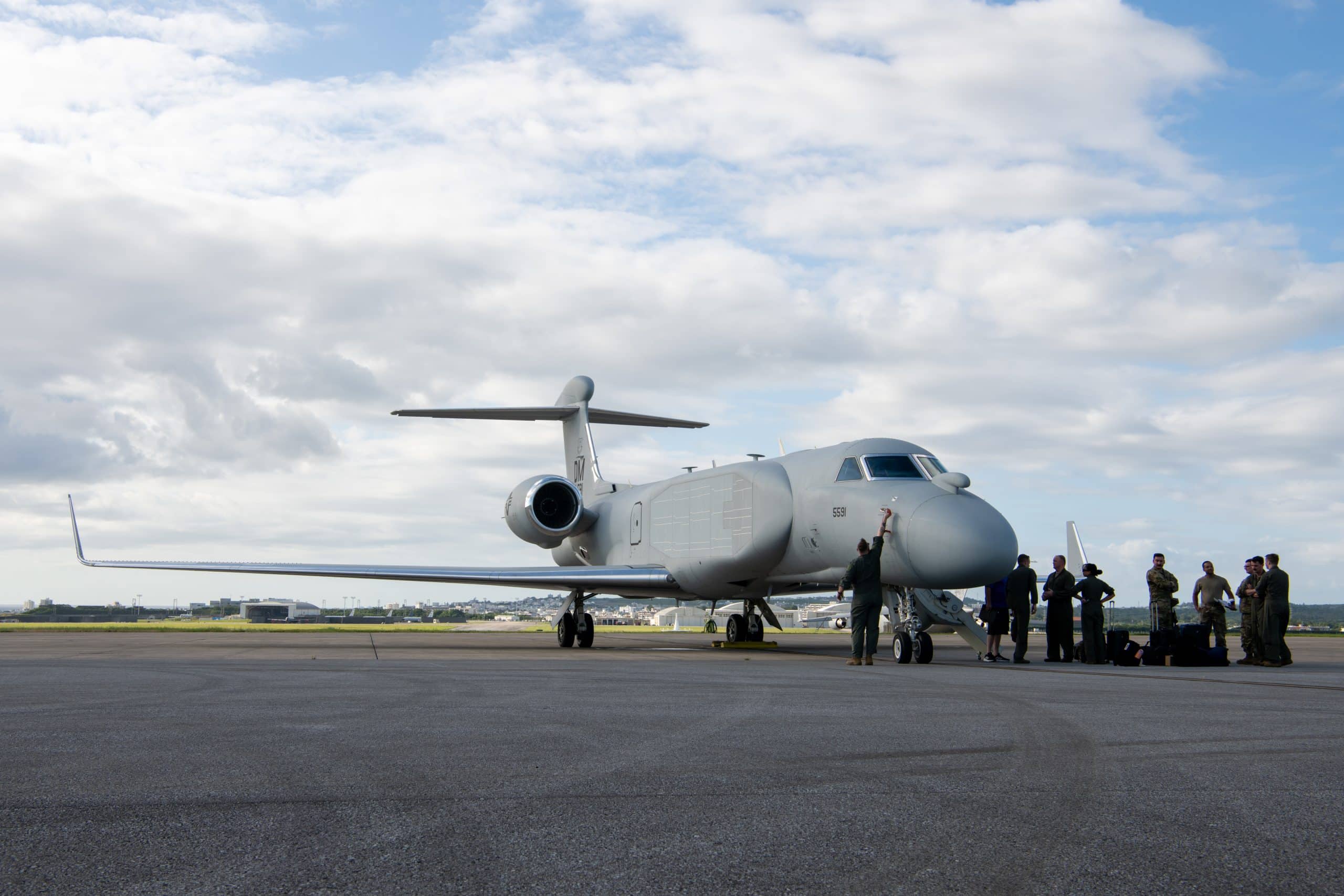
The replacement aircraft for the EC-130H is the EA-37B Compass Call, also known by its nickname of Banshee, based on Gulfstream’s G550 business jet. The EA-37B is significantly faster and capable of operating at a much higher altitude than the EC-130H, while also offering a much larger range and capability upgrade than that of its predecessor at an almost 50% decrease in operational cost.
The transition has also already taken the new aircraft beyond CONUS (CONtinental United States) and into combat – it was one of the participating aircraft in Operation Epic Fury, the recent conflict between the US and Iran.
A big thank you to Steven Fortson/zaphod58 for providing his images for this article.