A U.S. Air Force C-17 was noted making an unusual journey into Russian airspace on Aug. 25, 2026 shortly before U.S. media outlets broke the story that CIA Director John Ratcliffe was in Moscow for undisclosed talks.
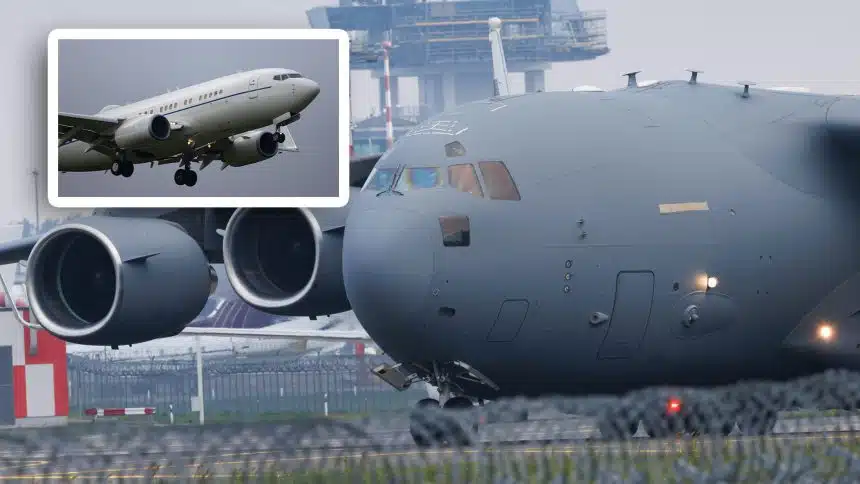
The C-17 Globemaster III, flying under Air Mobility Command (AMC) callsign REACH 4555 (four digit callsigns have been noted regularly for ‘high priority’ C-17 taskings), took off from Riga International Airport on the morning of Aug. 25 after arriving from Andrews Air Force Base. 07-7181, the airframe in question, is one of a significant number of AMC aircraft almost completely devoid of identifying markings, sporting only a U.S. flag and a low-visibility U.S. Air Force roundel.
In a rare move, the C-17 flew east across the Russian border and to Vnukovo International Airport, Moscow. Hours after this was first reported, U.S. media outlets reported on a surprise trip by John Ratcliffe, Director of the Central Intelligence Agency, to Moscow for high level talks – his first known visit to Russia. Neither the U.S. nor Russia have officially acknowledged the visit.
WSJ: CIA Director Ratcliffe arrived in Moscow after the US gathered intelligence indicating mobilization preparations and plans to test NATO's resolve.
Former Deputy Director of US National Intelligence Beth Sanner told the publication that Ratcliffe may have met with Putin to… pic.twitter.com/49R7Ml5TIM
— WarTranslated (@wartranslated) August 25, 2026
Ratcliffe and his entourage appear to have travelled from Andrews to Riga using a C-40B (a military Boeing 737-700 BBJ) before transferring over to the C-17.
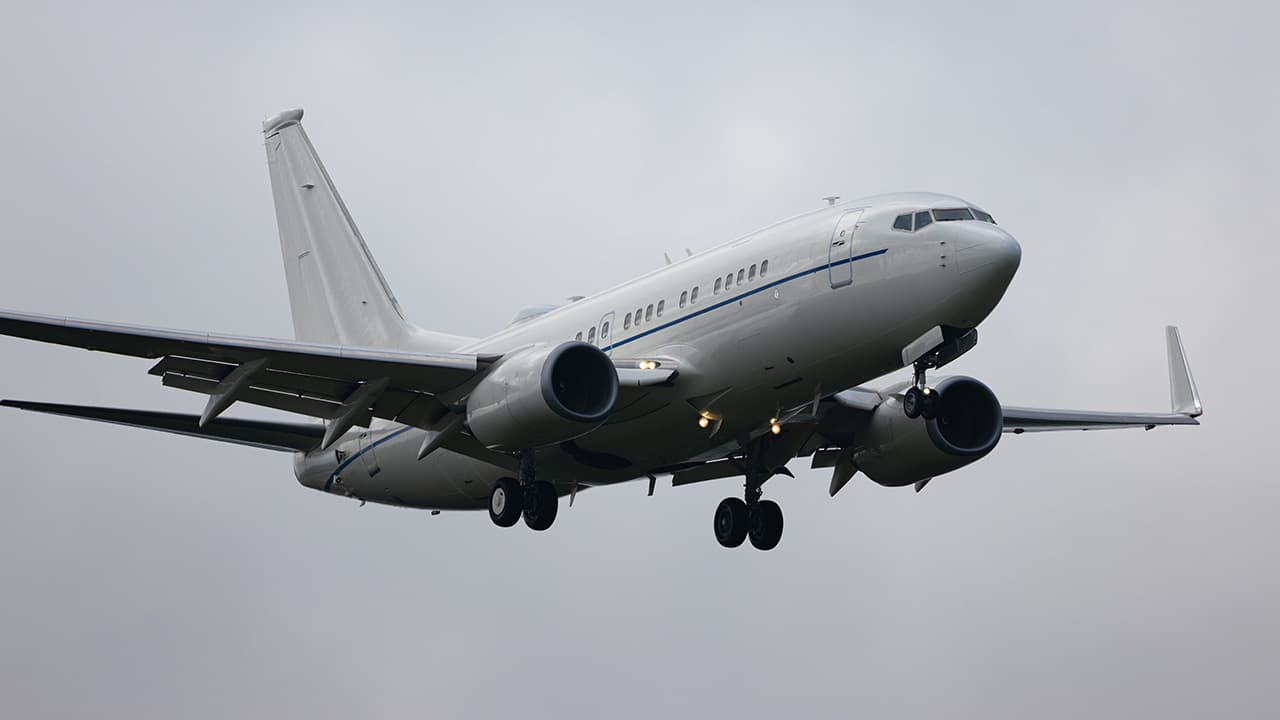
The C-17 would have likely still needed to travel via Andrews to collect a Roll-On Conference Capsules (ROCC), which provides a more comfortable travel option for VIPs compared to the very rudimentary seating options usually offered in an airlifter’s cargo hold.
Russian media report that a motorcade with American diplomatic license plates was spotted on the streets of Moscow following reports that a U.S. Air Force Boeing C-17 Globemaster III had landed at Vnukovo Airport. https://t.co/EiKsKdnu6t pic.twitter.com/Hzrppj9fFy
— Anton Gerashchenko (@Gerashchenko_en) August 25, 2026
The ROCC, certified as a Sensitive Compartmented Information Facility (SCIF), features a conference room, living quarters, toilet facilities, and an array of secure communication options. These containerized units replaced the famous ‘Silver Bullet’ trailers which – unlike the ROCC – could not be occupied during takeoff or landing, nor during air to air refueling or moderate turbulence.
C-17s (and other airlifters) have routinely been used to accommodate VIP airlift into less secure locations, being much more discreet than a dedicated executive aircraft while also boasting a defensive aids suite (DAS) designed for flying into potential threat zones. This type of mission is what originally spawned the creation of the Silver Bullet system, and why an investment was made into the ROCC.
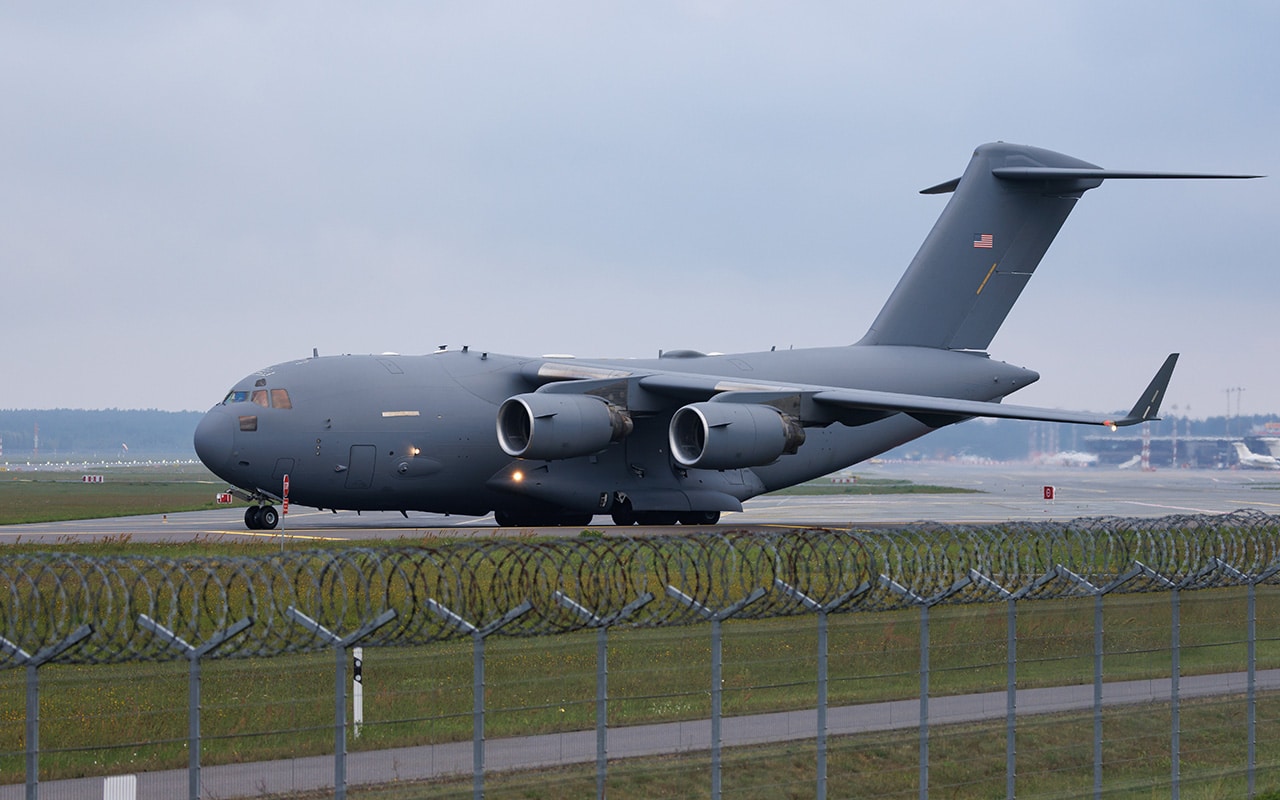
In theory, an arranged trip into Russian airspace should be considered relatively safe and it is not known exactly why this additional layer of security was considered necessary. Notably, in 2025, a U.S. Air Force C-37B in the highly visible blue and white VIP scheme made a brief trip to Moscow for unknown reasons. The last time a C-17 is recorded to have visited Moscow was, according to Russian media, in 2017.
Our most tracked flight — after spending less than an hour on the ground in Moscow, a US Air Force C-37B is headed west again. https://t.co/HX0Slz8zey pic.twitter.com/arEBr934Ol
— Flightradar24 (@flightradar24) February 13, 2025
When the flight was first spotted on flight tracking sites like Flightradar24.com, many initial assumptions were that the C-17 was taking part in a fairly routine support mission for the U.S. Embassy in Moscow. C-17s conduct these missions on a regular basis across the world, often with the callsign REACH 1815, keeping the extensive network of U.S. Embassies and diplomatic offices linked together. It was only after reports of the C-40’s simultaneous presence at Riga did the mission spark additional interest, before the news about Ratcliffe began to hit the headlines.
An unusual visitor to Moscow this morning. 👀
A US Air Force C-17A Globemaster III flew from Riga to Moscow Vnukovo Airporthttps://t.co/D7vylYesDQ pic.twitter.com/jXbOSj0LXM
— Flightradar24 (@flightradar24) August 25, 2026
U.S. diplomatic relations with Russia have soured but not ceased during the latter’s full scale invasion of Ukraine, and official visits to Russia by high level officials were notably resumed under President Trump’s second term after being curtailed by President Biden’s administration. In return, Russian President Vladimir Putin made a short visit to U.S. territory in Alaska last year for a major summit with Trump himself.
Russian aircraft have also ventured regularly to New York, using a complicated route to avoid overflying many European nations, in order to support Russia’s presence at the United Nations.
#RuAF Russian Air Force – Special Flight Detachment
Ilyushin Il-96-300 1x
#157713 RA-96019 – STATE AERO 788
RSD788 appears to be inbound to New York from Morocco. pic.twitter.com/PlKBCohi3U
— Armchair Admiral 🇬🇧 (@ArmchairAdml) June 29, 2026
The C-17 departed Moscow after around eight hours, heading back to Riga. The accompanying C-40 then departed Riga bound for Bangor, Maine (fuel efficiency is decreased when flying westbound across the Atlantic).
Many thanks to our friend Gustavs Gailitis for contributing his images for this story!