The award follows other investments in munitions production capacity aimed at reducing delivery times, strengthening supply chains and supporting U.S. and allied demand.
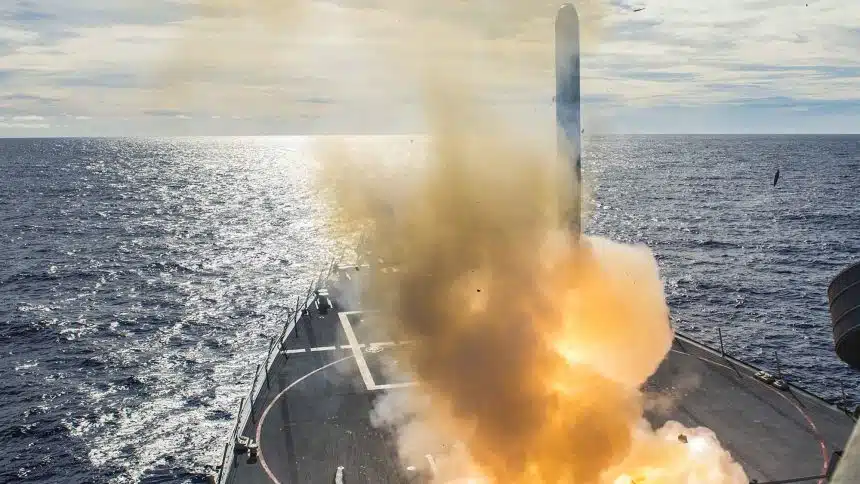
Raytheon, an RTX business, has received a $22.9 billion, seven-year contract from the U.S. Navy to accelerate production of Tomahawk cruise missiles, the company and Department of War announced on Aug. 17, 2026. The contract is part of the Department’s Arsenal of Freedom initiative and is intended to increase annual BGM-109 Tomahawk Land-Attack Missile (TLAM) production to more than 1,000 missiles.
The award follows a broader landmark agreement from February to “increase production capacity and speed deliveries” of the TLAM and other munitions like Advanced Medium Range Air-to-Air Missiles (AMRAAM), Standard Missile-3 (SM-3) Block IB, SM-3 Block IIA and SM-6 interceptors. Under the agreement, RTX said the annual production of Tomahawks would increase to more than 1,000, the AMRAAM’s production would reach at least 1,900, the SM-6 more than 500, while SM-3 IIA and SM-3 IB figures have not been disclosed.
The @DeptofWar and @USNavy just awarded a $22.9B contract to @Raytheon to ramp up Tomahawk missile production. This major investment fortifies the defense industrial base and delivery to the Joint Force. https://t.co/FSOwzUUjpm pic.twitter.com/nj1MlGqncb
— USW(A&S) (@DoW_USW_AS) August 17, 2026
The new contract comes after the U.S. used a significant number of Tomahawk missiles during the war with Iran, including at least 1,000 reportedly fired during Operation Epic Fury. RTX said supporting the increased annual production of the missiles “ensures a stable, predictable supply for the Navy and allies.”
Fortify supply chains, reduce delivery timelines
Under Secretary of War for Acquisition and Sustainment Michael P. Duffey said the contract will increase manufacturing throughput, strengthen the missile’s supply chain and reduce procurement lead times. Calling the TLAM “a critical long-range strike capability,” he further added its accelerated production “increases our ability to equip the Joint Force, ensuring our Warfighters never face a fair fight.”
We called on industry to rapidly scale up munitions output, and @RTX_News is delivering.
This landmark Tomahawk contract ensures our warfighters continue to have the lethal firepower they need to win. pic.twitter.com/YekpFgKXSg
— Acting Secretary of the Navy Hung Cao (@SECNAV) August 17, 2026
“This landmark $22.9 billion investment will accelerate Tomahawk missile delivery to our warfighters at unprecedented speed,” Acting Secretary of the Navy, Hung Cao said. By working closely with industry to expand our munitions industrial base’s capacity, the Department is utilizing every available tool to meet the demands of our current operations, ensuring they are equipped to fight, win, and come home safe.”
In its latest statement, RTX said that its recent investments in manufacturing capacity to ramp up TLAM production translated into three times as many missiles being delivered in the first half of 2026 compared to the corresponding period of 2025. “With this contract, RTX will increase capacity and collaborate closely with hundreds of small and mid-sized suppliers nationwide to rapidly scale output to meet long-term needs,” added the company.
BGM-109 TLAM
The Tomahawk is a long-range, subsonic cruise missile that has been in U.S. service for over forty years and is one of the most widely known missile types even outside of the defence industry. The weapon is primarily launched from surface ships and submarines, but it has also been integrated with the U.S. Army’s ground-based Typhon system and is being acquired by several U.S. allies.
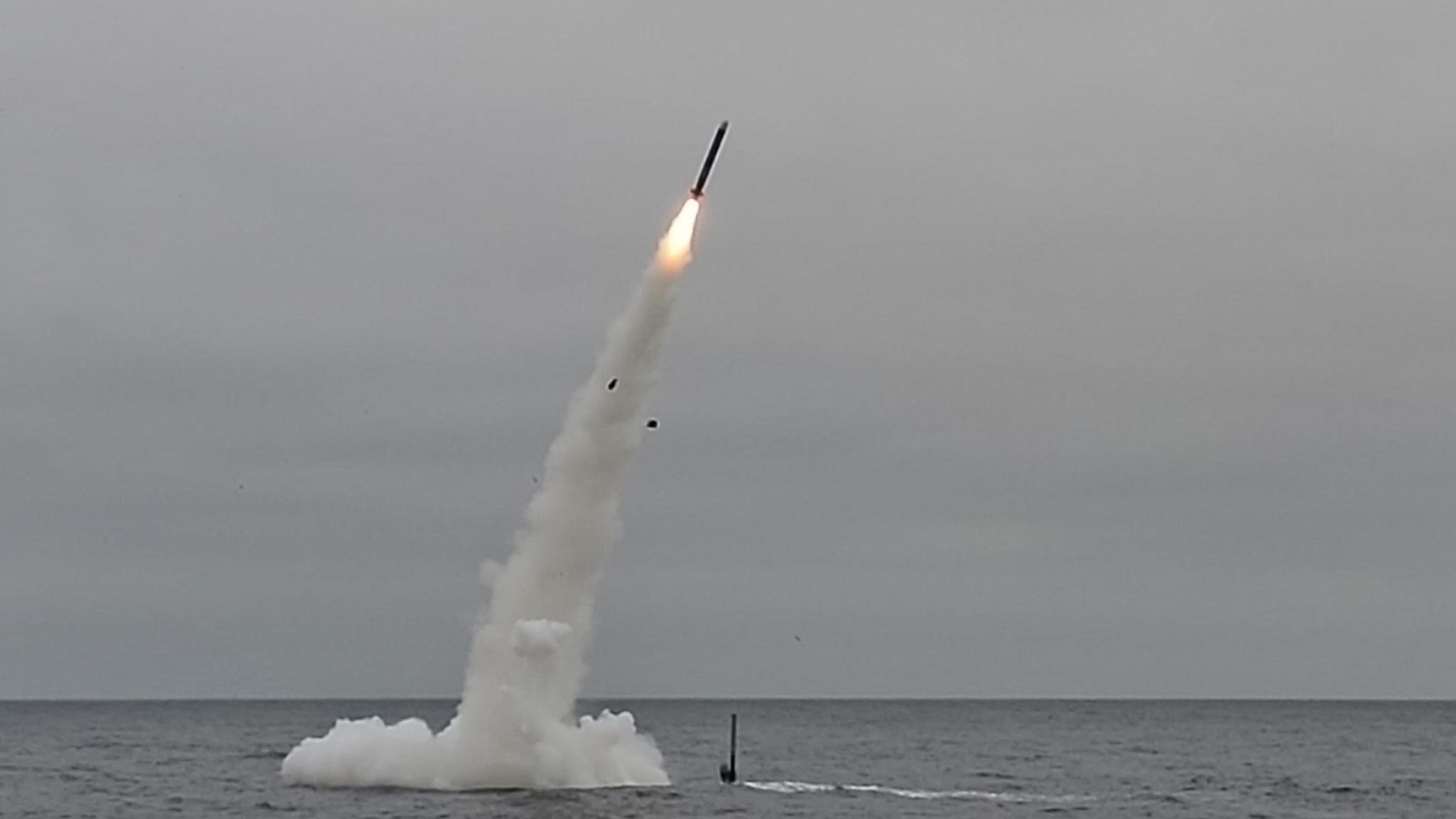
The Block IV and Block V Tomahawks have a publicly stated range of more than 1,600 km and carry a 1,000-pound-class warhead. The missile uses a combination of inertial navigation, GPS and terrain following capabilities that allow high-speed low level flight to increase survivability.
Tomahawk international users
Japan is also expanding its Tomahawk inventory. In July, the Japan Maritime Self-Defense Force’s Kongō-class destroyer JS Chōkai became the country’s first warship to launch the TLAM during a live-fire test. Japan is acquiring 400 missiles to strengthen its long-range strike capability.
Germany is also moving toward acquiring the missile. Reuters reported on July 9 that German Chancellor Friedrich Merz told lawmakers that Berlin had signed a letter of intent with Washington to purchase Tomahawks on the sidelines of the NATO summit in Ankara.
🇯🇵JMSDF conducts its first firing of a Tomahawk Land Attack Missile from JS Chokai.
Japan is purchasing around 200 Block IV and 200 Block V TLAM to equip at least 5 of its AEGIS destroyers.
Via @JMSDF_PAO pic.twitter.com/nRiMlO1oTE
— Navy Lookout (@NavyLookout) July 30, 2026
While the number of Tomahawks to be purchased remains undisclosed, the LoI signed with Washington was expected to be followed by formal approval in August. The deal would also include ground-based Typhon launchers.
Australia, the Netherlands and the United Kingdom are other TLAM users, with London using the missile from its submarines. Canberra and Amsterdam, on the other hand, use the missile from their surface combatants.