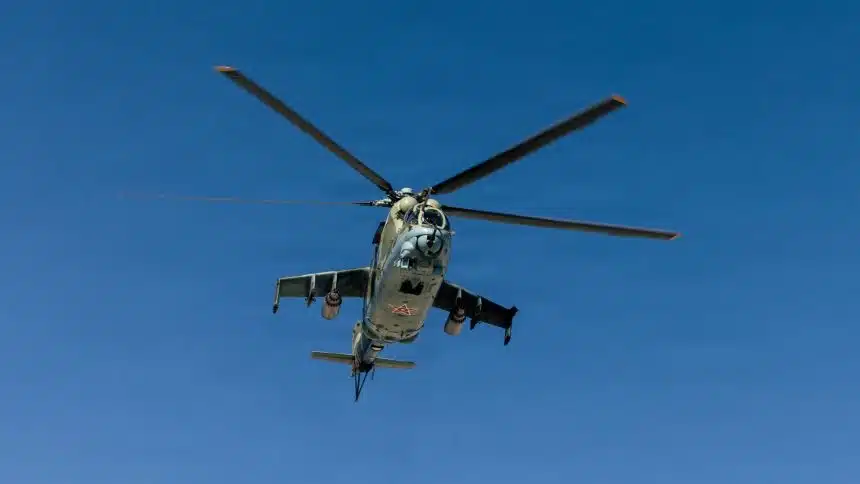
Since 2020, two Mi-24D Hind helicopter gunships have provided invaluable threat replication to the U.S. Marine Corps, Army and Air Force.
The participation of a Russian-made Mi-24D Hind attack helicopter in the U.S. Marine Corps Adversary Force Exercise (AFX) 4-26 at the Marine Corps Air Ground Combat Center in Twenty Nine Palms, California, has again shone the spotlight on dissimilar combat training with actual threat platforms the U.S. has been running for a while.
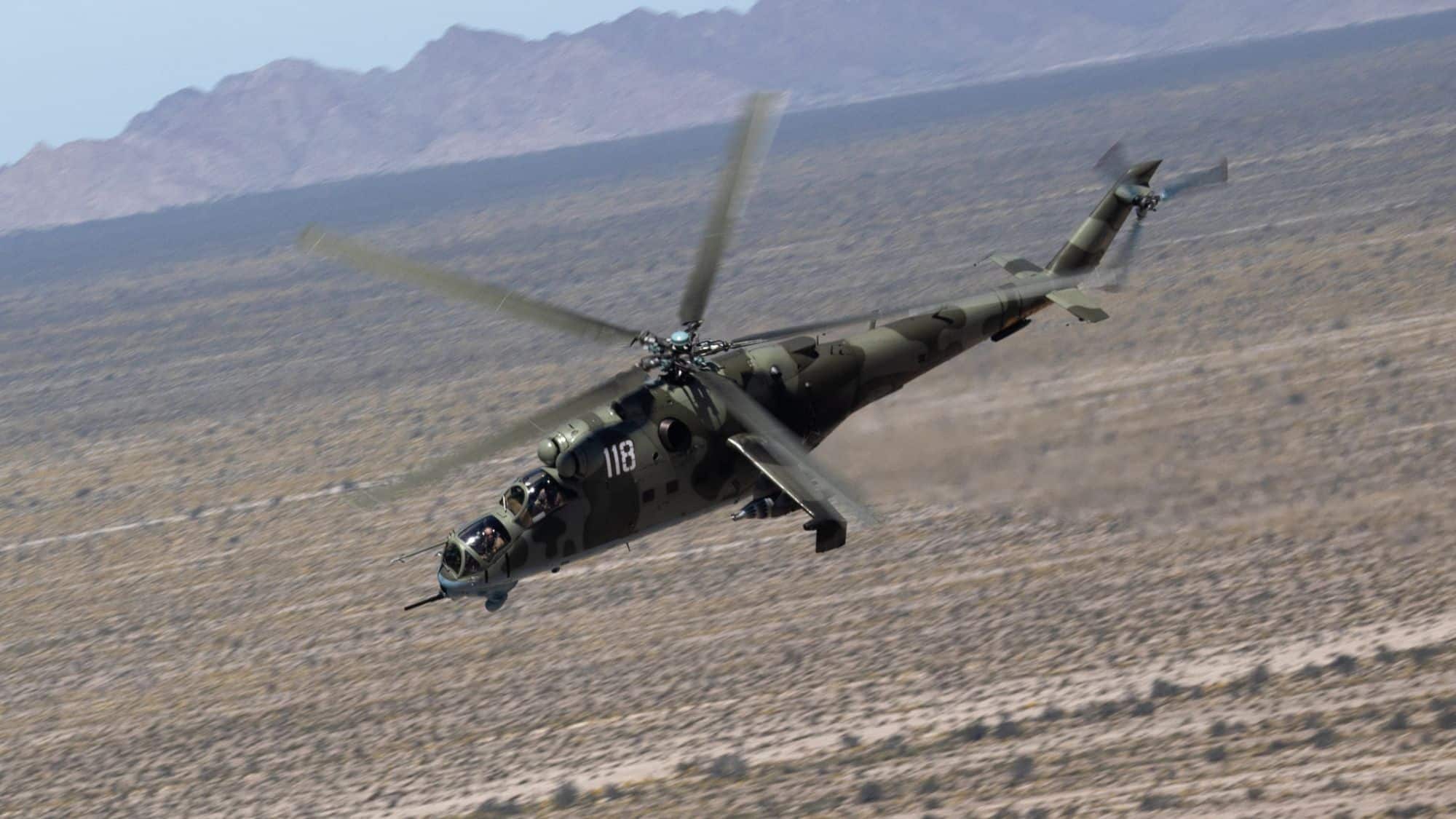
Two known Mi-24 airframes, ‘118’ and ‘120’ – with the numbers stenciled just before the engine exhausts, have appeared in Marine and U.S. Air Force press releases on DVIDS since 2020. The two Hinds have served realistic threat replication in aerial ground attack for the Marines, the U.S. Army, and helicopter-on-helicopter testing against both the U.S. Air Force Rescue Squadrons’s (RQS) HH-60G Pave Hawks and Army UH-60 Black Hawks.
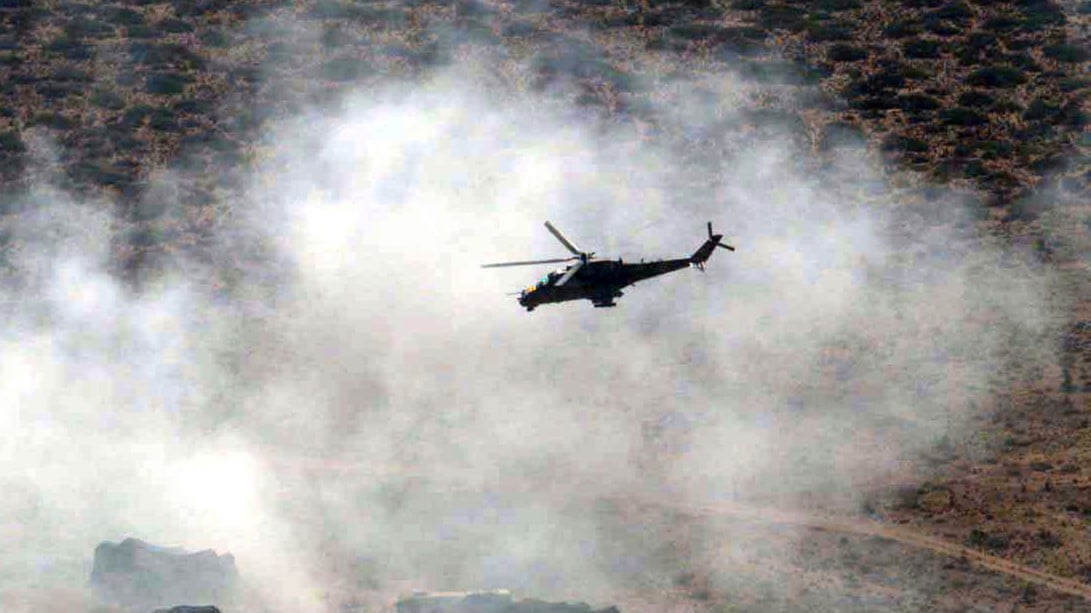
The latest official images, captured on Jul. 31, 2026 released on the DVIDS network on Aug. 9, show ‘118’ providing “air support during a company attack” during the AFX. The AFX offers “training and certification across multiple warfighting functions in realistic force-on-force scenarios,” explains the service.
An ex-Bulgarian Air Force Mi-24D Hind-D (N118NX) provides air support during a company attack as a part of Adversary Force Exercise 4-26 at Marine Corps Air-Ground Combat Center Twentynine Palms, California, Aug. 1, 2026.
(📸/U.S. Marine Corps photo by Sgt. Vincent Needham) https://t.co/I2LtujCXeQ pic.twitter.com/ro7Ze3Uy1G
— Guy Plopsky (@GuyPlopsky) August 10, 2026
It is important to note that this is not the first time Russian aircraft have been used by the U.S. government. In fact, around 30 Russian Mi-17s and the type’s export variant, the Mi-171, are estimated to be operated by the CIA and the U.S. Army’s Aviation Technology Office (ATO), and are periodically sighted flying without recognizable markings.
Mi-24s in U.S. military exercises
We previously reported here at The Aviationist on Jan. 24, 2020 about the first time U.S. Air Force used an actual adversary aircraft to replicate threats instead of their own HH-60 Pave Hawks. The exercise saw the 355th Wing’s 55th RQS “training with two Russian Mi-24 attack helicopters at Davis-Monthan AFB outside Tucson, Arizona.” Both ‘120’ and ‘118’ were seen in the official images.
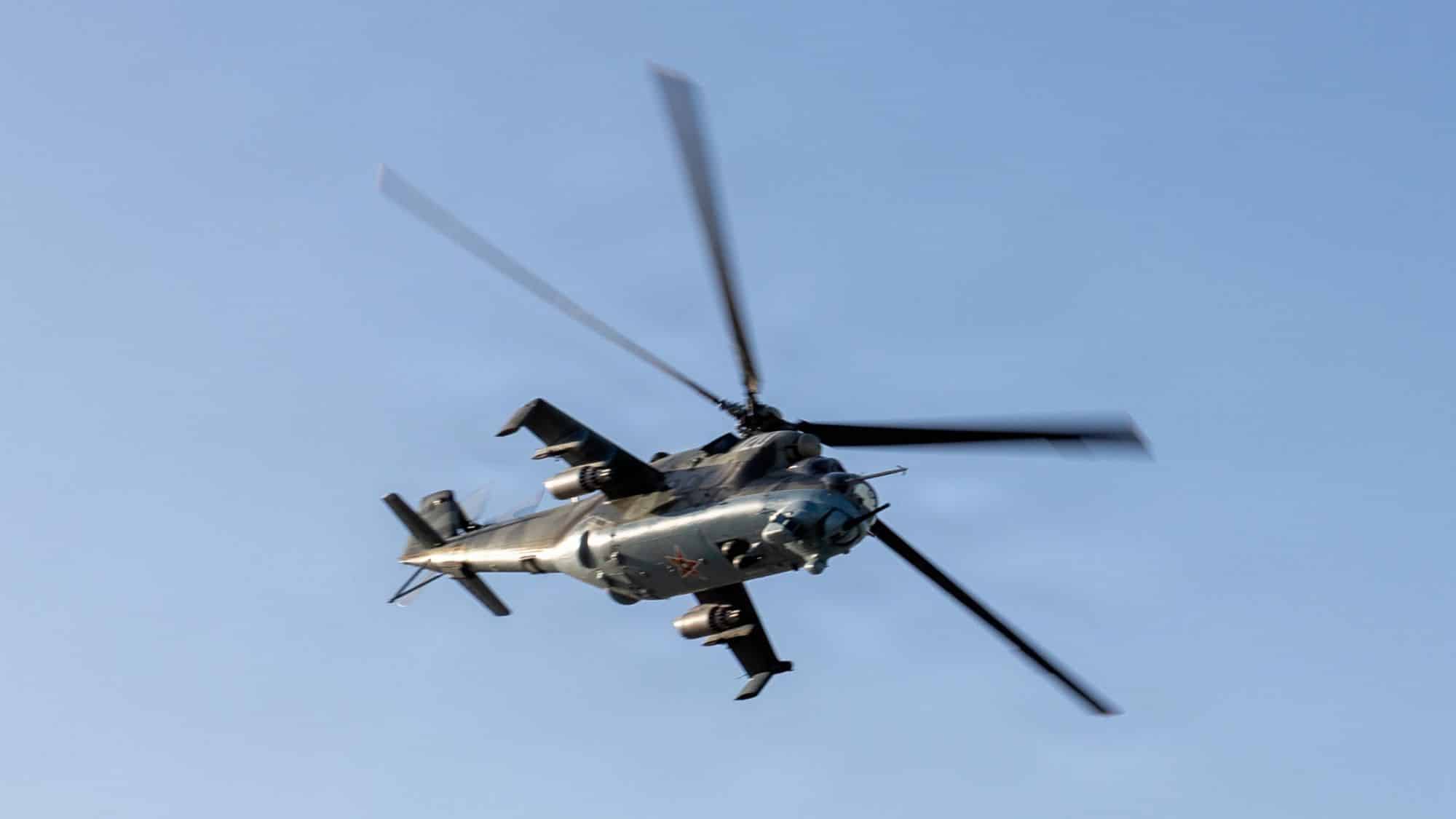
The then 55th RQS flight commander Capt. Kurt Wallin said: “This is the first time this training has been done outside the weapons school at Nellis AFB. This is [also] the first time we have trained outside of HH-60G Pave Hawk versus HH-60G. This training lets us see the capabilities of other aircraft against our own tactics and procedures.”
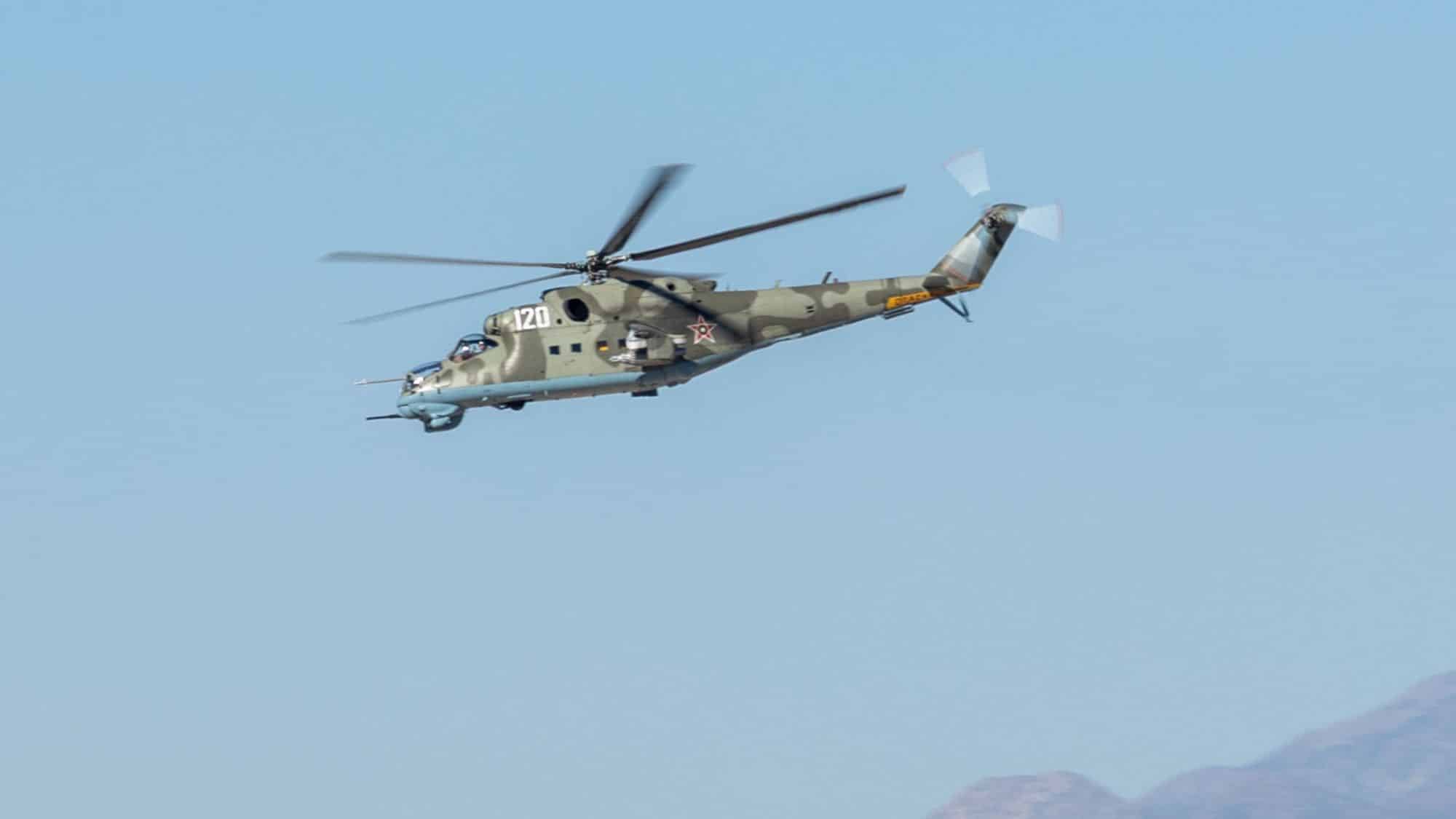
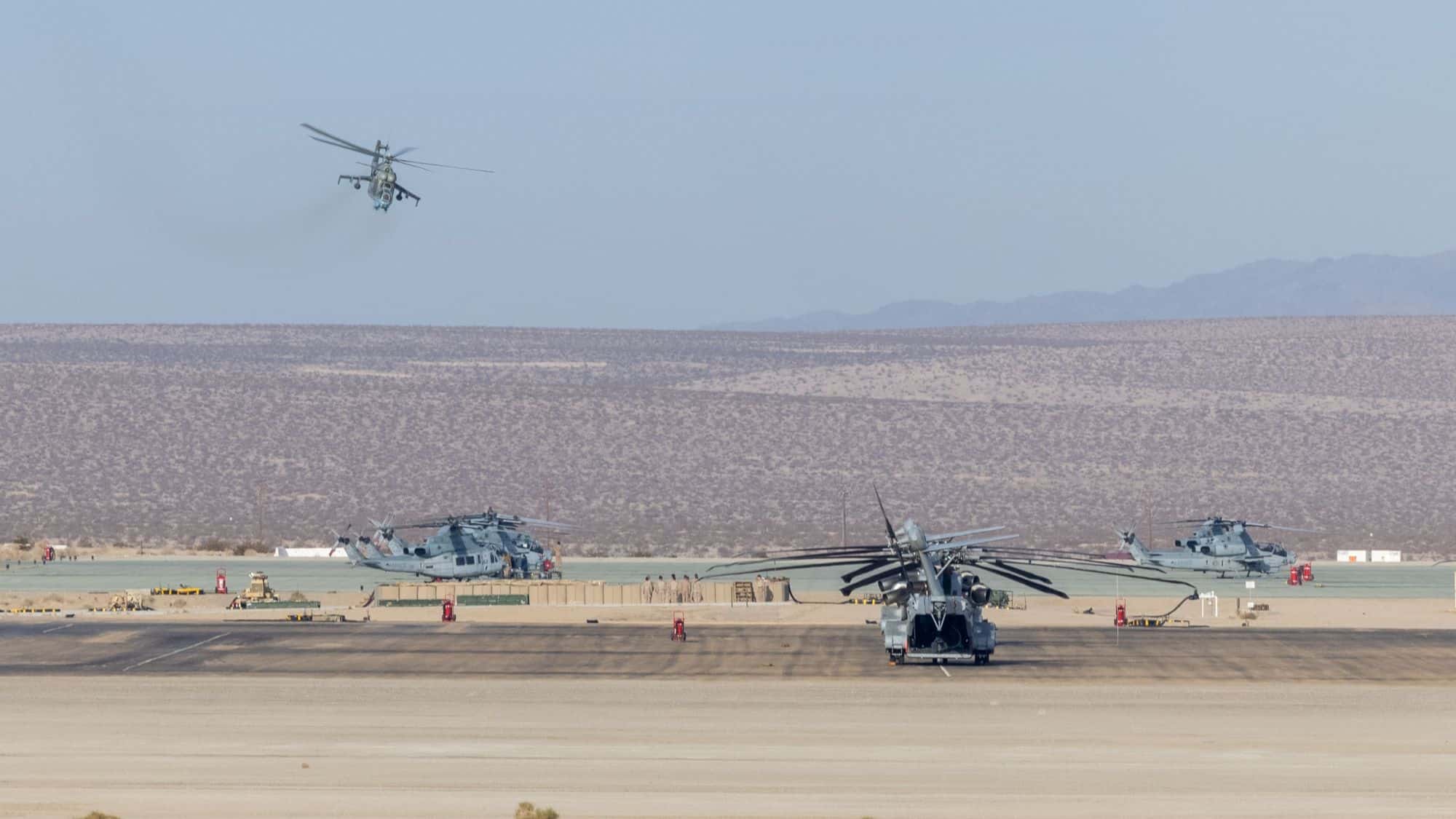
Since then, ‘120’ has appeared in Base Recovery After Attack Training (BRAAT) drills at Twenty Nine Palms on Jan. 31, 2026 and Aug. 2, 2025. The BRAAT drill from Feb. 1, 2025 doesn’t clearly show the Mi-24’s airframe number.
One Mar. 27, 2024, the Weapons and Tactics Instructor (WTI) Course 2-24 near Marine Corps Air Station (MCAS) Yuma, Arizona, saw ‘118’ flying as an opposing force against U.S. Army UH-60 Black Hawks. This also marked the first time Army Black Hawks participated in a Marine WTI exercise, which integrates Marine ground forces, command and control systems, logistics and air defense.
A Feb. 15, 2022 video again featured the U.S. Air Force’s 55th RQS which employed a Hind for “more realistic training against a potential adversary aircraft,” according to Capt. Glynis Facciano.
Then, on Jun. 6, 2022 at Moody AFB, Georgia, the 41st RQS maneuvered its Pave Hawk against ‘118’. Pilots Capt. Tyler Hudson and Maj. Matthew Keough said the “fight against an actual threat helicopter” in “basic helicopter maneuvering” gave an “accurate representation both visually and aerodynamically.”
Another event dates back to Apr. 20-22, 1997 reported on DVIDS on Jun. 27, 2025, where a Mi-24 conducted a ground attack in a simulated aerial chemical strike at the Dona Ana Range at Fort Bliss. The caption said this airframe was operated by the Optec Threat Support Activity based at Biggs Army Airfield in Texas.
A few months later in Jun. 1997, the U.S. and Saddam Hussein’s Iraq clashed diplomatically over United Nations Special Commission Weapons (UNSCOM) weapons inspectors.
Origins
A Mar. 15, 2018 feature by Elan Head for Vertical Magazine, said that the Hinds used in the threat simulation likely belong to VTS Aviation LLC (VTSA) out of Tacoma, Washington, and System Studies & Simulation (S3) Inc. out of Huntsville, Alabama.
The two Hinds have Bulgarian origins and were displayed at the Cold War Air Museum until 2017 when the venue closed, and then began to appear in threat simulations under contract for the U.S. military.
It appears however that the U.S. Marine Corps might now have stepped in, as the captions accompanying the latest images mention that the Mi-24s are operated by the service. The captions of the 2024 images further mentioned that the helicopters are assigned to Marine Aviation Weapons and Tactics Squadron One (MAWTS-1).
Mi-24 Hind
The Mi-24 Hind is the only heavyweight-class attack helicopter that is also a tactical troop carrier. The cabin, with an eight-person capacity, primarily extensively served troop insertion and exfiltration, especially during the Soviet-Afghan War.
The helicopter was first introduced in the 1970s for combat in eastern Europe with NATO. The eight-year-long counter-insurgency war in Afghanistan later exposed its limitations, as safety concerns for the on-board infantry restricted Hind crews from more aggressive tactics. Troops were thus often flown on Mi-8s, with the Mi-24s providing fire support.
A Ukrainian Mi-24 performing an ultra-low-level flight over fortified defensive lines. pic.twitter.com/vX75CZqlFO
— Special Kherson Cat 🐈🇺🇦 (@bayraktar_1love) June 12, 2026
However, an attack helicopter with a large cabin with reconfigurable seats and stretchers does offer a ton of functionality across MEDEVAC/CASEVAC, tactical resupply and Combat Search and Rescue (CSAR) roles – especially in the absence of separate assets for these missions. In Ukraine, Russia’s rotary-wing CSAR package typically consists of a weaponized Mi-8/Mi-17, supported by a Ka-52 Alligator and/or a Mi-28 Havoc.
Attack helicopters today have adopted a counter-drone role, with the Ukrainian Mi-24 too being used widely in hunting Russia’s One-Way Attack (OWA) UAVs. However, this mission profile imposed on Ukraine’s limited Hinds restricts their massive utility in pushing back Russian forces on the ground, although helicopters themselves have been vulnerable to small drones.
The Mi-35M is the Hind’s most heavily upgraded variant developed by Mil. It features an improved engine, rotor blades, transmission, drivetrain offering enhanced ‘hot and high’ performance, a digital night vision-capable glass cockpit and improved navigation and communications suites.
Another Ukrainian Mi-24 bearing an impressive 98 kill marks for Russian drones shot down. https://t.co/WQy5T79k1b pic.twitter.com/zmgXG19T0f
— Special Kherson Cat 🐈🇺🇦 (@bayraktar_1love) August 6, 2026