GA-ASI and MBDA announced a cooperations which will allow the integration of the SPEAR munitions on the MQ-9B and Gambit 6 uncrewed platforms.
General Atomics Aeronautical Systems (GA-ASI) and MBDA have signed a Memorandum of Understanding (MoU) to integrate the SPEAR (Selective Precision Effects At Range) precision munitions onto the MQ-9B Remotely Piloted Aircraft (RPA) and the Gambit 6 Collaborative Combat Aircraft (CCA). The MoU expands the long-standing partnership between the two companies that began with the integration of the Brimstone missile on the Royal Air Force’s Protector RG Mk1.
The agreement, announced during the Farnborough International Airshow 2026, was signed by GA-ASI President David R. Alexander and MBDA UK Managing Director Chris Allam. The collaboration aims to provide current and future operators with a new long-range precision strike capability for both remotely piloted aircraft and autonomous combat platforms.
Building on the Brimstone-Protector Partnership
The new agreement builds directly on the successful integration of MBDA’s Brimstone missile, which was initially known as the SPEAR 2, onto the UK’s Protector RG Mk1, the Royal Air Force designation for the MQ-9B SkyGuardian. Notably, on the same occasion, GA-ASI also announced the completion of the weapon qualification testing of the Protector, which involved the Paveway IV guided bomb and Brimstone 3 missile.
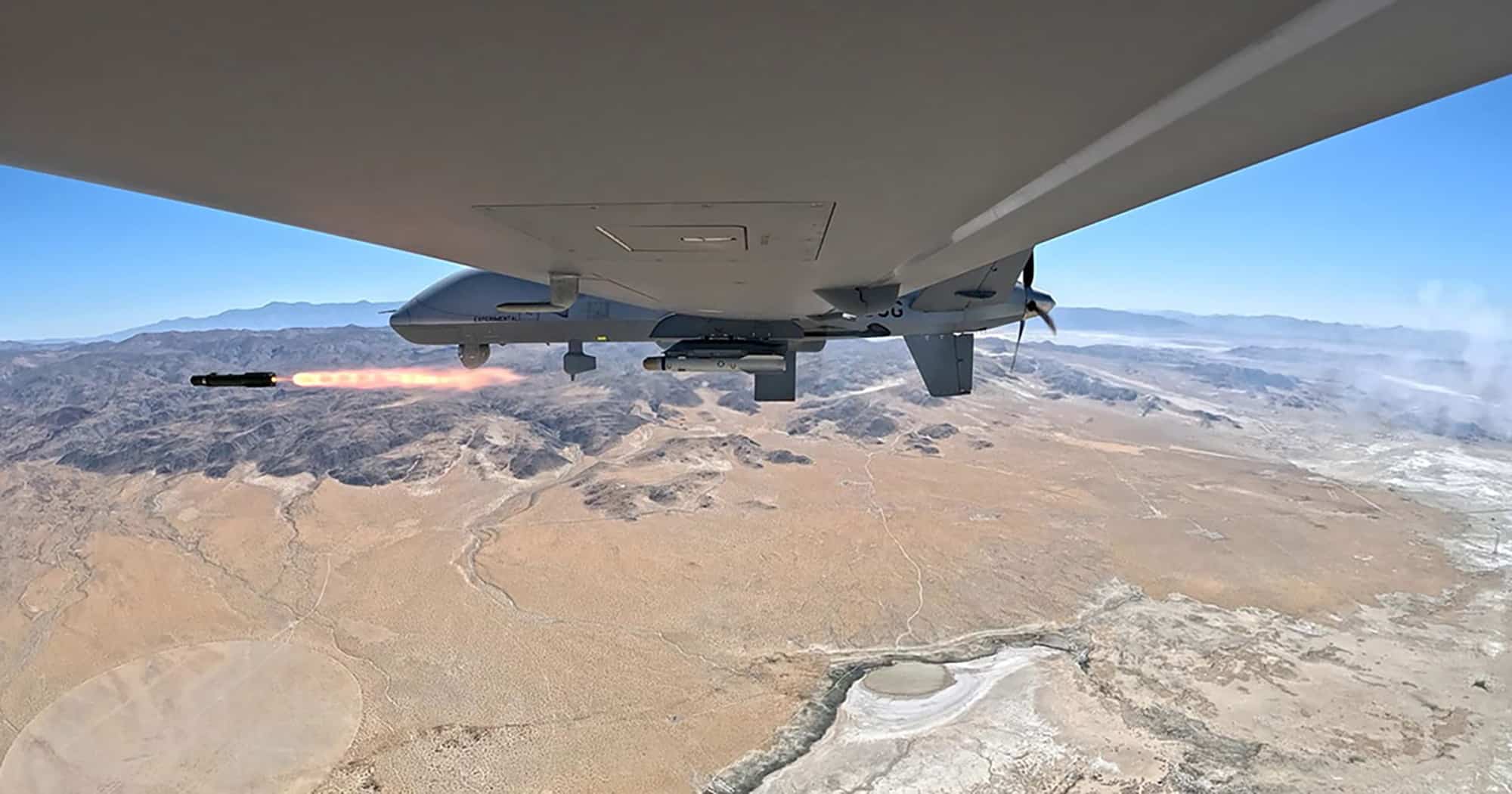
“We’ve built an excellent business relationship with MBDA as part of the integration of the Brimstone missile onto the UK’s Protector,” said Alexander. “So, working with MBDA to enable SPEAR on our broader MQ-9B line, and our Gambit CCA, feels like a very natural extension of our partnership.”
Allam described the agreement as another milestone in the long-standing cooperation between the two companies. “The consolidation of MBDA’s relationship with GA-ASI is a testament to the strength of our long history of cooperation, most recently with Brimstone and Protector,” he said, echoing Alexander’s comments.
“Remotely piloted aircraft and autonomous/collaborative platforms, such as MQ-9B and Gambit, are revolutionizing modern air combat,” further added Allam. “Integrating the innovative capability of SPEAR multiplies the effect these platforms provide into decisive operational advantage.”
Extending the Reach of MQ-9B
The integration of SPEAR would significantly enhance the strike capabilities of the MQ-9B family, allowing operators to engage targets from beyond the range of modern air defense systems. This would add another layer of capabilities in modern operational scenarios, while maintaining the aircraft’s characteristic long-endurance surveillance and reconnaissance capabilities.

The press release did not specifically identify the variant of SPEAR, however its description leads to the SPEAR 3 that is currently being tested by the UK. “SPEAR is MBDA’s miniature cruise missile, a next-generation air-launched surface attack weapon that provides a low collateral damage precision effect, with a high load out for persistence,” said the statement, similarly to previous descriptions by MBDA for SPEAR 3.
The weapon, designed to equip the UK’s F-35 fleet, combines stand-off range with a compact size, enabling aircraft to carry multiple missiles while minimizing collateral damage. Its range allows launch platforms to remain safely away from hostile air defenses, while engaging a broad range of targets.
GA-ASI and MBDA did not disclose whether there are MQ-9B operators already interested in the new capabilities. The RPA is currently in service or on order with nearly a dozen countries, including the UK, Germany, Denmark, Belgium and Poland.
SPEAR for Collaborative Combat Aircraft
The agreement also includes integration of SPEAR onto the Gambit 6, GA-ASI’s Collaborative Combat Aircraft designed to operate alongside crewed fighters in high-threat environments. The aircraft was first unveiled in November 2025 as the latest iteration of the Gambit Series of Unmanned Combat Air Vehicles (UCAV).
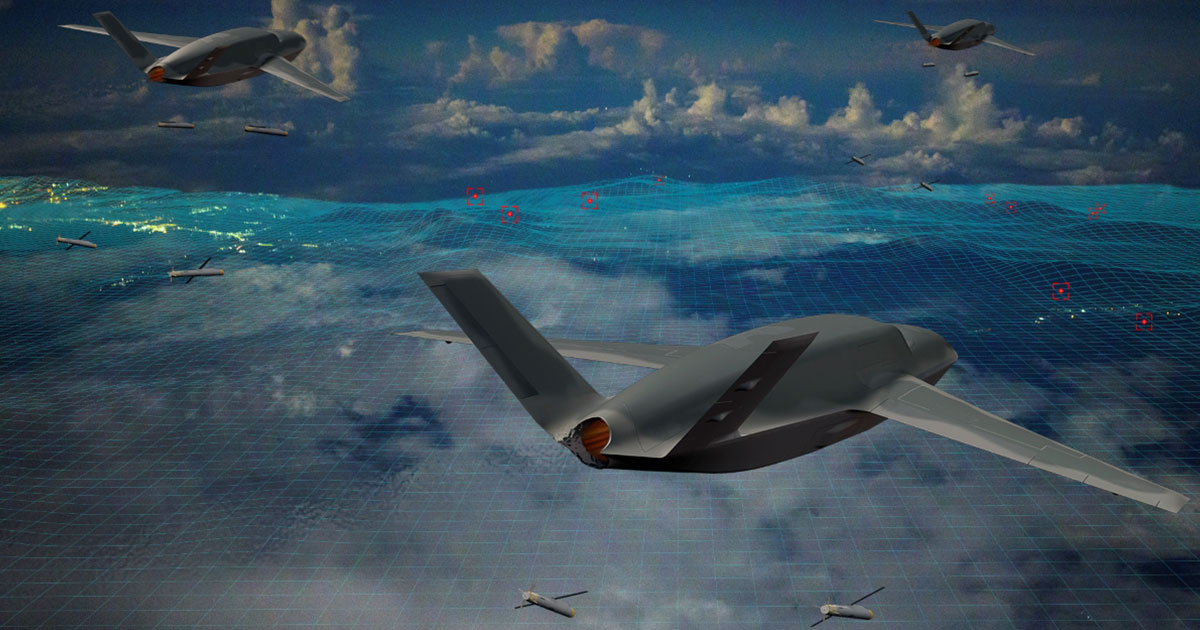
Gambit 6 will be a multirole Collaborative Combat Aircraft (CCA), adding air-to-ground operations to its already available air-to-air capability. GA-ASI says the platform is optimized for roles such as Electronic Warfare (EW), Suppression of Enemy Air Defenses (SEAD), and deep precision strike.
GA-ASI plans to offer Gambit 6 for international CCA programs, although there are no available details about possible interested operators. The company previously said the new platform will be available for international procurement starting in 2027, with European missionized versions deliverable in 2029.
Gambit 6 has been initially shown with the GBU-53/B StormBreaker precision-guided glide bomb. Equipping the platform with SPEAR would provide it with another precision stand-off weapon well suited to these missions, particularly against defended targets where survivability and engagement range are critical.