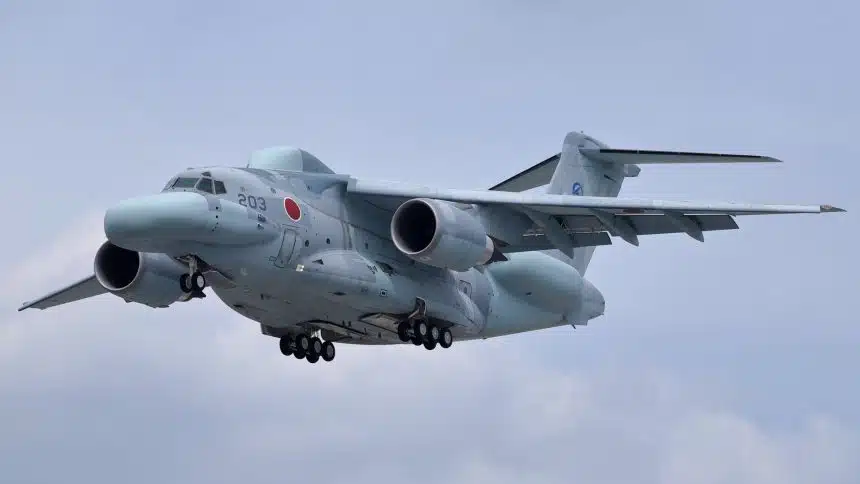
The new XEC-2 SOJ, which first flew in March 2026, has now started operational flight testing with the JASDF’s Air Development and Test Wing (ADTW) at Gifu Air Base.
The Japan Air Self-Defense Force’s EC-2 Electronic Warfare Stand-Off Jammer (EW-SOJ) aircraft, now designated the XEC-2, began its operational test and evaluation campaign on Jul. 15, 2026. Images and media recorded by several Japanese aviation photographers show the aircraft taking off and landing on tJuly 15, while the Air Development and Test Wing (ADTW) released a video on July 17 on X, confirming the development.
The JASDF released the first official images of the XEC-2 at Gifu AB on Mar. 12, 2026, nearly a month after it was spotted at the same base in an unofficial image, while parked on the apron. Japanese aviation photographers then reported on Mar. 16, 2026 the EC-2 was undergoing taxi trials, taking off for the first time a day later on Mar. 17.
飛行開発実験団は、令和8年7月15日にスタンド・オフ電子戦機(XEC-2)の飛行試験をはじめました!
隊員一同、雨にも負けず、暑さにも負けず、着実かつ安全に試験評価をすすめてまりいます。#飛行開発実験団 #航空自衛隊 #電子戦 pic.twitter.com/8wVoYAenB2
— 航空自衛隊 航空開発実験集団 (@jasdf_adtc) July 17, 2026
At the time, as it can be seen in the images by the spotters during both these events, the aircraft was not bearing the ATDC logo on the tail.
Months later, Japan’s MoD reported on Jun. 9 that the JASDF had deployed the “first stand-off electronic warfare aircraft” to the ADTW. These developments suggest the aircraft is being put through an operational test campaign.
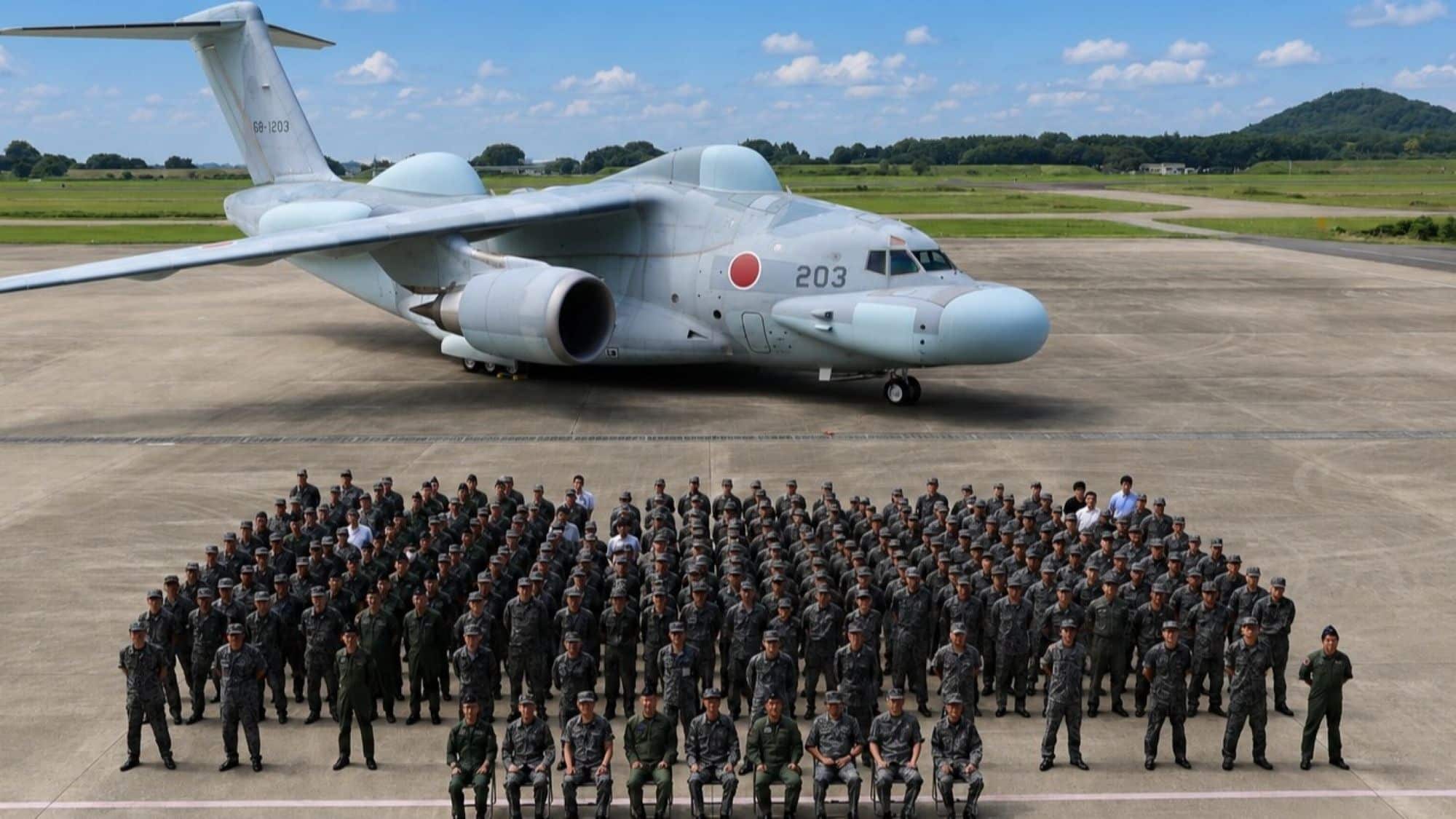
First operational test flight
Some interesting features were observed by plane spotters during this milestone event. The XEC-2 tail number ‘68-1203’ now also bears the tail flash of the JASDF’s Air Development and Experiment Command/Testing Command (ADEC/ADTC), which will undertake the operational testing campaign.
During the flight, the aircraft was also accompanied by a JASDF F-2 (the Japanese indigenous fighter based on the F-16s) as a chase aircraft. The short video released by the ADTC showed the XEC-2 taking off and recorded by the F-2, before coming back to land.
岐阜基地 飛行開発実験団
XEC-2 68-1203
部隊マークつけて飛びました。
ちょっと懐かしいコールサインでした🤭☺
(2026.07.15) pic.twitter.com/znf3uEoVfq
— Taka.Dx (@TakaDx1) July 15, 2026
“The Flight Development Experiment Squadron began flight testing of the Stand-Off Electronic Warfare Aircraft (XEC-2) on July 15, Reiwa 8! The squadron members, undeterred by rain or heat, are steadily and safely advancing the test evaluations,” the ADTC said on X.
Probably the scariest Electronic Warfare plane ever made.
Japanese XEC-2 Platypus 🔥 https://t.co/69wsh9eNkD pic.twitter.com/7CA65059pn
— Airforce Nerd (@PrecisionLabs0) July 16, 2026
Spotters listening in on open radio communications and ATC channels noted that the aircraft flew with the “BOXER” call sign. The callsign is usually associated with the C-1 transport aircraft of ADTC at Gifu AB.
岐阜基地
F15さん 機動飛行
と
カモノハシさん XEC-2 pic.twitter.com/UqaZ7gqWMh
— ☆NARU☆稲沢市 (@naruse1001) July 15, 2026
Flight tracks of the aircraft on the date reported by one account showed the XEC-2 flying just a little off Japan’s eastern waters in the western Pacific at an altitude of 8,750 feet.
2026/7/15 岐阜基地
2nd
XEC-2(1203)
随伴機:F-2B(105)
飛実マークを引っ提げて、新生カモちゃん空をゆく。
少し懐かしいコールサインも聞けて嬉しい限り。#岐阜基地 pic.twitter.com/dozHleIt2U
— Naoki_O (@naoki_o_0557) July 15, 2026
Images released by both the agencies did not show the ADTW tail flash on the aircraft, suggesting it may have been added only around Jul. 15, before the commencement of the operational testing campaign under that body. The ADTW also invited spotters to capture the historic event, suggesting how special a place the “platypus” – named so because of its oddly-shaped nose sensor – has among the spotter community.
今日はXEC-2いっぱい撮れたので追加掲載です! pic.twitter.com/NimzL5RmXg
— tujimon (@orapo960) July 15, 2026
2026/07/15 正式に”XEC-2″と命名のシンカモノハシ、本日、岐阜基地に配備されてからの初飛行、F-2 105がお供してました。
戻りのローパス、フルストップです。
コールサインはあっと驚く、、、、、、、すぐわかります。
私は小牧で聞いてチャット走って降りに間に合いました、ラッキーでした。 pic.twitter.com/NfF5JMYFp9
— rikizo misono (@rikizomisono) July 15, 2026
Japan’s SOJ aircraft
The June 9 update by the MoD described the XEC-2 saying that “A standoff electronic warfare aircraft is an aircraft that supports the execution of Japan Self-Defense Forces air operations through effective electromagnetic jamming.” The statement continued: “We will steadily develop this stand-off electronic warfare aircraft as a new force for the Japan Air Self-Defense Force, and we appreciate your continued support.”
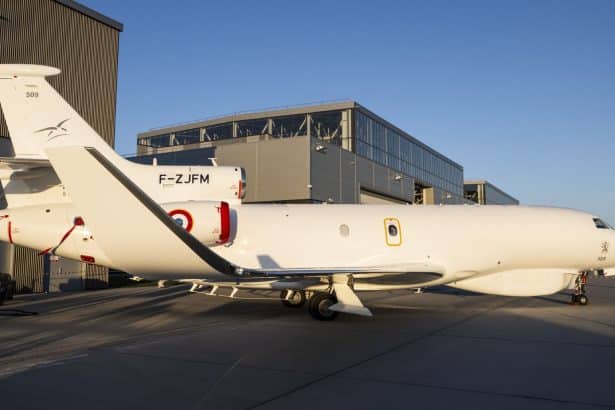
The XEC-2’s role and mission profile is very similar to other electronic warfare aircraft like the Turkish Hava SOJ, the Australian MC-55A Peregrine, the U.S. EA-37B Compass Call and the French Archange. The aircraft was pursued as a domestic project to have indigenous capability in the “sensitive and strategic” electromagnetic spectrum warfare technologies.
2026/3/16 岐阜飛行場
川崎重工改修機地上滑走試験
C-2(203)SOJ改修機
いよいよ出てきました、次期カモノハシ。
本日は地上滑走試験を実施。
異様な姿で見慣れるには時間が要ります。#岐阜飛行場#川崎重工
しっかしこれ…コクピット視界(前下方)どうなってるんだろ… pic.twitter.com/K28lOY5Nnc
— Naoki_O (@naoki_o_0557) March 16, 2026
The aircraft, beside the nose sensor, has two large bulbous dome-shaped arrays on the top of the fuselage along the spine, and on the rear sides between the wing and the vertical stabilizer. The new platform will replace the unique EC-1 which has been in service since 1986.
2026/3/17 岐阜飛行場
川崎重工改修機試験飛行
C-2(203)SOJ改修機
ついに新カモノハシ、空へ!
案外普通のC-2と同じように離陸していきました。#岐阜飛行場#川崎重工
…今更だけど、カモノハシが飛ぶって(以下略 pic.twitter.com/OPEj4GEUGo
— Naoki_O (@naoki_o_0557) March 17, 2026
The EC-2 is the second specialized variant of the C-2, after the RC-2 signal intelligence (SIGINT) aircraft which flew for the first time in 2018. The aircraft, the type’s second prototype 18-1202, was modified with similar, but smaller, bulges compared to the ones of the EC-2.
The J/ALQ-5 electronic countermeasures (ECM) system is among the known equipment inherited from the EC-1 by the XEC-2. The aircraft is expected to be operated by the Denshi Sakusengun (Electronic Warfare Operations Group) at Iruma Air Base, the same which operated the EC-1 and will in future also operate the RC-2.