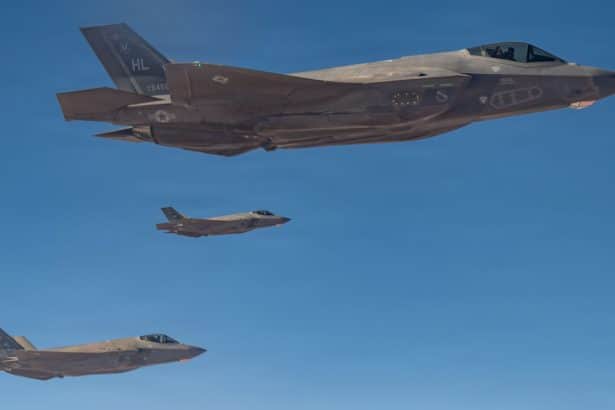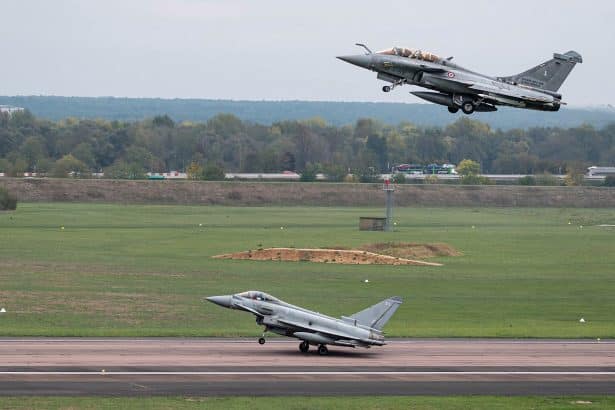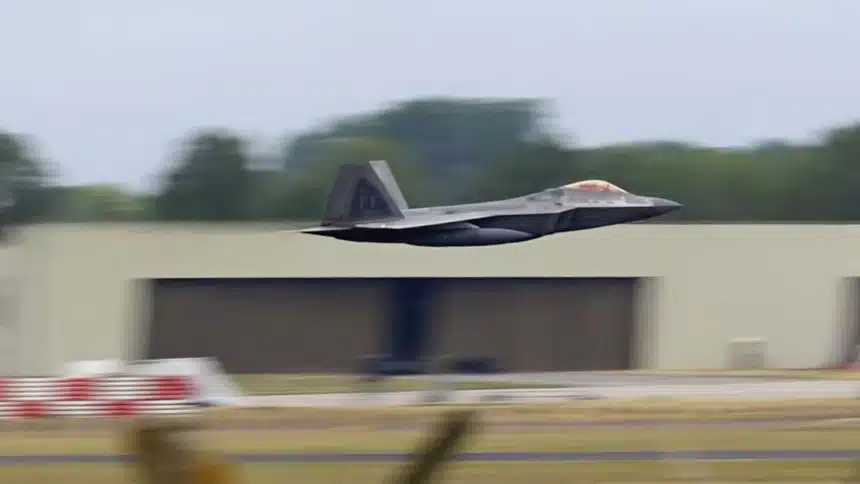
Deployed to Israel since February, F-22 Raptors from the 1st Fighter Wing at Langley AFB transited towards home with an unusual stopover at RAF Fairford over the weekend.
Twelve 1st FW Raptors in total are thought to be part of the package heading home. Ten jets made it to RAF Fairford on Jul. 10, 2026, with nine then departing on Jul. 14. The two remaining aircraft that didn’t make it to Fairford are rumored to have stopped along the way – presumably for technical reasons – at Naval Air Station Sigonella, Italy, though this is unconfirmed.
We reported on the deployment of these F-22s in February, alongside other moves towards the Middle East which were in anticipation of the then-unannounced Operation Epic Fury. After passing through RAF Lakenheath, the jets were stabled at Ovda Airbase, Israel, for the conflict.
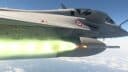
One of the first F-22s to taxi out today at RAF Fairford, lots of heat coming from that Raptor. pic.twitter.com/Sx3esFN8UJ
— Saint1 (@Saint1Mil) July 13, 2026
Unusually, on their way back through, the F-22s transited through the Gloucestershire base of RAF Fairford. Fairford has been used extensively during Epic Fury, providing a forward base for B-1B Lancer and B-52H Stratofortress strategic bombers. The B-1s remain at Fairford, though the B-52s departed for home earlier this month when the ceasefire was still officially holding.
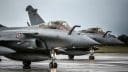
2 of 2: FF tails. pic.twitter.com/UPjCuGmD7O
— Saint1 (@Saint1Mil) July 10, 2026
Fighter stopovers at the base are uncommon – Lakenheath, itself a fighter base, is a much more common location, with some other movements occasionally going through Glasgow Prestwick Airport. F-15E Strike Eagles from Lakenheath’s 48th Fighter Wing notably also themselves returned home in recent weeks, decorated with a variety of nose artworks.
Our friend, who goes by Saint1 on X/Twitter, was at Fairford for both the arrival and departure of the F-22s and captured footage on both occasions.
The Raptors used the Coronet callsign TREND for both legs of the trip. The ten jets that arrived were 05-4099, 05-4104, 08-4154, 08-4158, 08-4168, 08-4171, 09-4175, 09-4177, 09-4187, and 10-4194. 05-4104 is the single jet still on the deck at Fairford, while 08-4152 and 09-4173 appear to be the jets still somewhere downrange – either still in Israel or at an intermediate base like Sigonella.
While these jets head back toward the U.S., the situation in the Middle East is deteriorating rapidly. The ceasefire between the U.S. and Iran has now officially been declared over, and the U.S. has resumed daily attacks against Iranian targets. Notably, this included a strike against the Bandar Abbas Naval Base near the Strait of Hormuz employing unmanned surface vessels (USVs) in a one-way attack role.
Yesterday, using multiple one-way attack surface drones, CENTCOM forces successfully struck a submarine and ship maintenance facility in Iran. Three Corsair unmanned surface vessels hit the port at Bandar Abbas Naval Base, marking the first time American forces have employed sea… pic.twitter.com/bOM2kmgRxz
— U.S. Central Command (@CENTCOM) July 13, 2026
Some have asked why the Raptors would head home at this time, though it should be considered that any aircraft and any squadron has a finite amount of time they can reasonably be forward deployed while maintaining a high level of operational capability. The resumption of hostile action against Iran will also take a very different approach compared to the opening days of Operation Epic Fury – much of the air defence threat has already been neutralised, without enough time to fully regenerate, and high end ‘exquisite’ capabilities like the incredibly stealthy F-22 might be lower on the list of required assets.
Indeed, in the later stages of the war, we saw more vulnerable aircraft types like the A-10 Thunderbolt II getting closer and closer to the frontlines after previously being relegated to targeting Iranian proxies in Iran and Syria.
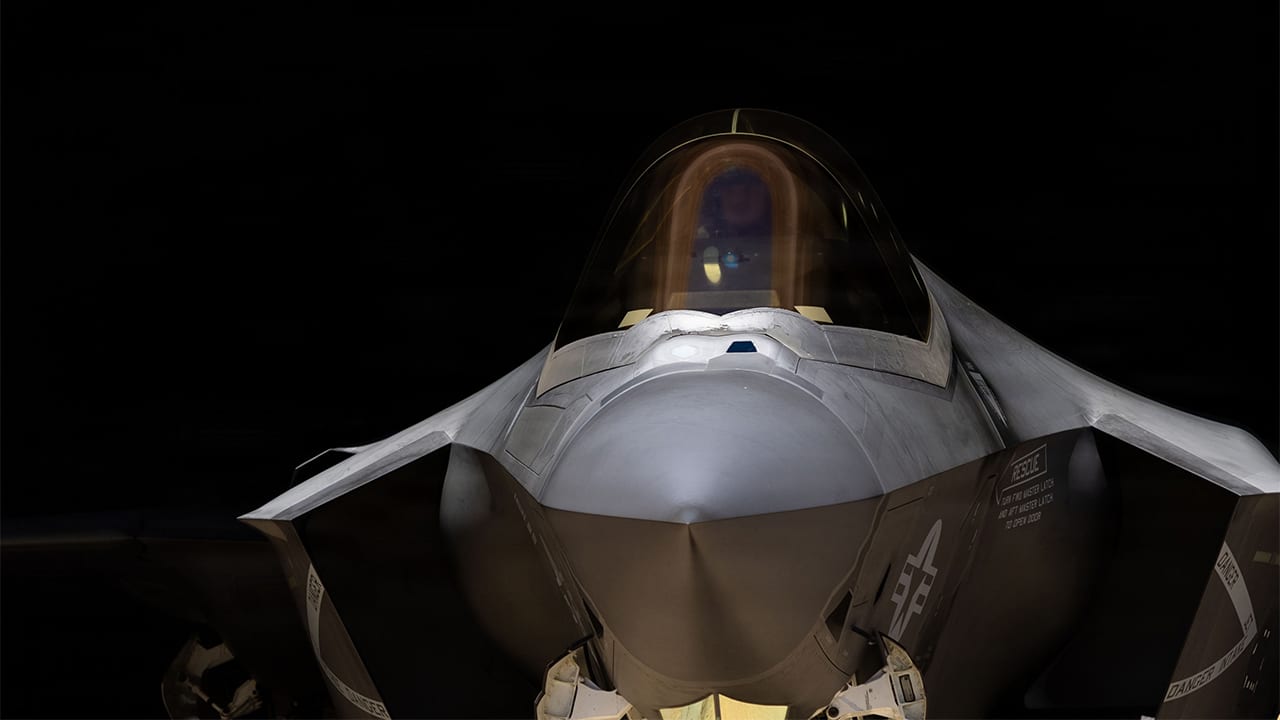
Even with the return of the 1st Fighter Wing’s F-22s, the U.S. maintains a significantly heightened presence of assets across the Middle East including fourth and fifth generation fighters, the Abraham Lincoln and George H. W. Bush carrier strike groups (CSGs), and the Boxer amphibious ready group (ARG).
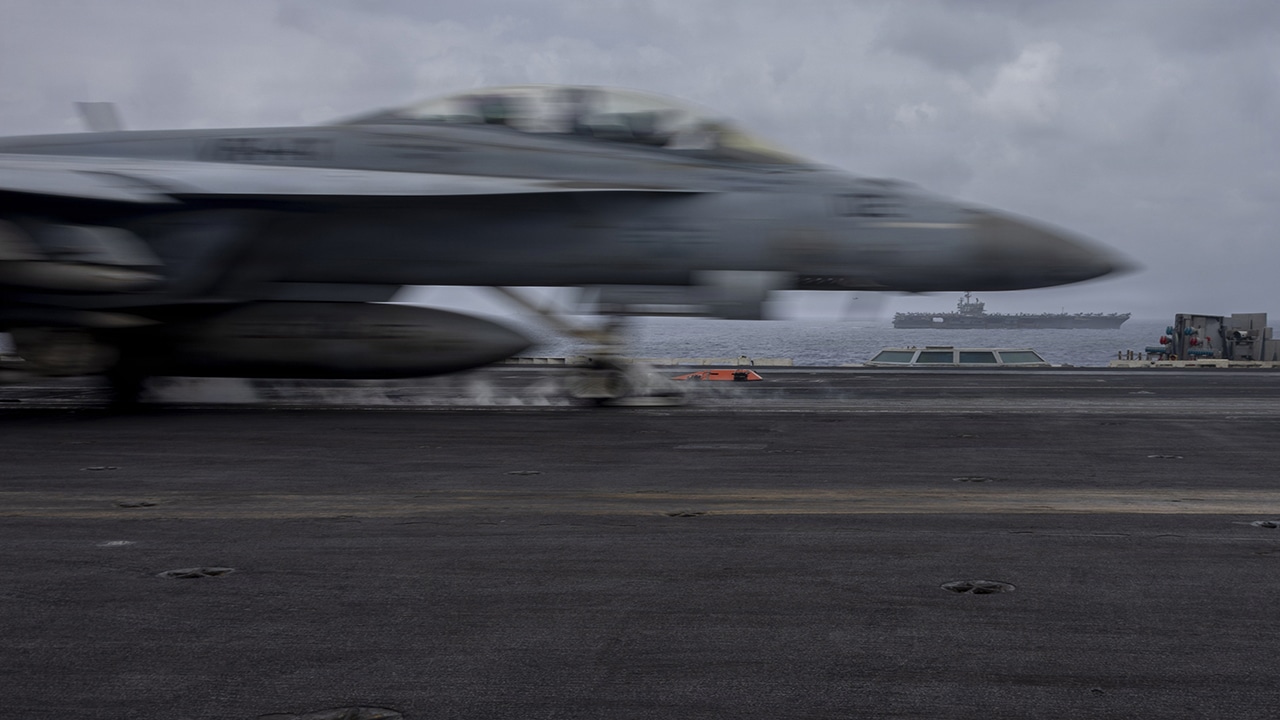
President Trump formally notified Congress on Jul. 10 that hostilities with Iran had resumed. Any efforts since to resume peace talks have appeared to fail.
News w/ @AndrewDesiderio: Trump formally notified Congress of the resumption of military activities against Iran on July 10 under the war powers resolution.
Dems say the war is illegal and the president cannot restart the 60-day clock for military action. pic.twitter.com/SpFjBiYMx0
— Anthony Adragna (@AnthonyAdragna) July 13, 2026
He wrote: “These strikes are limited, measured, planned, and executed in a manner designed to minmize civilian casualties. They are focused on military capabilities posing a threat to the United States Armed Forces in the region, protecting the United States homeland, advancing United States national interests, securing safe passage of commercial vessels through the Strait of Hormuz, and defending our regional allies and partners.”
Many thanks to our friend @Saint1mil for letting us use his footage to illustrate this article. You can find more footage on his YouTube channel.