The Royal Navy proved that Unmanned Surface Vessels (USV) can survive at sea after an airdrop and without support from ports or manned vessels.
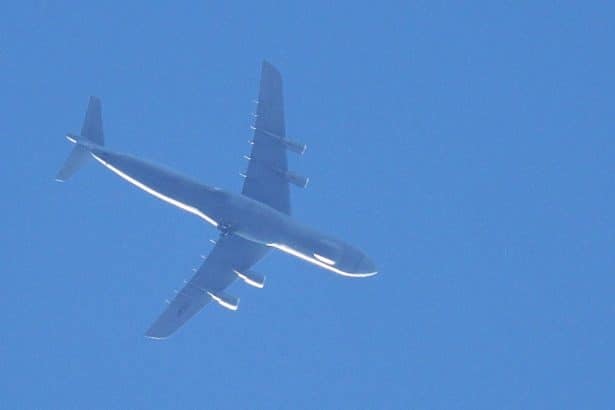
The Royal Navy announced on Jul. 8, 2026 that it airdropped an Unmanned Surface Vessel (USV) from an A400M in the North Sea, before the uncrewed system began operating in the water in a major first-of-its-kind exercise. The milestone was part of a six-day demonstration which involved vessels procured under Project Beehive.
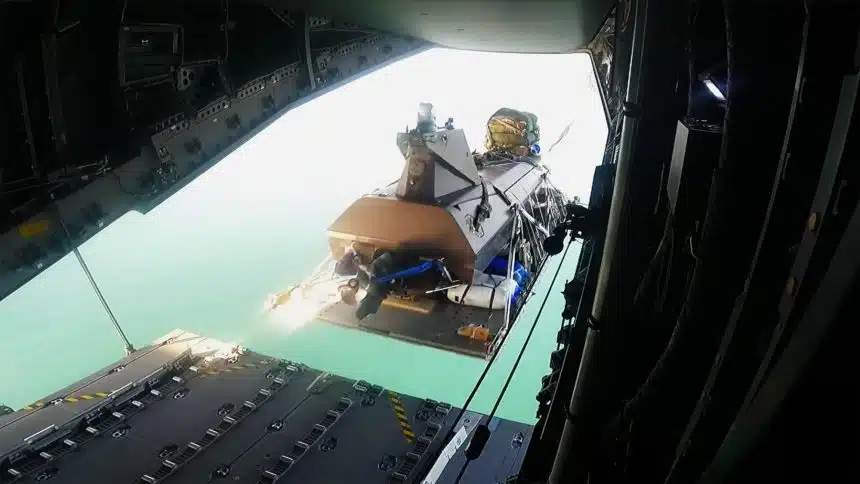
During the trials, Kraken Technology Group’s Kraken K3 Scout USV was released four times from an altitude of 1,300 feet using the extracted-load airdrop method. This sees the load – in this case the USV – installed on a pallet which is then extracted from the cargo bay with the use of a drogue chute, followed by the deployment of the main chutes.
Capewell supported the Royal Navy and the Kraken Technology Group during the exercise by providing its Universal Maritime Craft Aerial Delivery System (UMCADS). The reconfigurable Type V parachute-based UMCADS was described in the press release as “a sort of a sled to which the craft is attached, and used Kraken’s optional airdrop kit.
The operation demonstrated that the unmanned maritime platform can survive an airdrop and operate at sea without support from ports or larger manned vessels. Notably, this could also be the world’s first USV airdrop, as no other drill of the kind has been reported to date.
USV dropping in… 🪂
The Royal Navy is a step close to launching uncrewed surface vessels from the skies after a pioneering trial which saw the first airdrop of its kind from a military transport aircraft.
Read more: https://t.co/27q2A6bCxG pic.twitter.com/rb1s4g5Vbc
— Royal Navy (@RoyalNavy) July 8, 2026
First airdrop of a USV
The video released by the RN showed the K3 Scout on the UMCADS sled, rolled off the A400M’s rear cargo ramp. The small pilot parachute pulled out the sled out of the rear ramp, before the three main cargo parachutes opened.
The K3, still on the UMCADS, then descended and joined what appeared to be five other smaller boats operating in the water. Whether these too were USVs airdropped by other A400Ms as a part of project beehive, or manned patrol craft, is not clear.
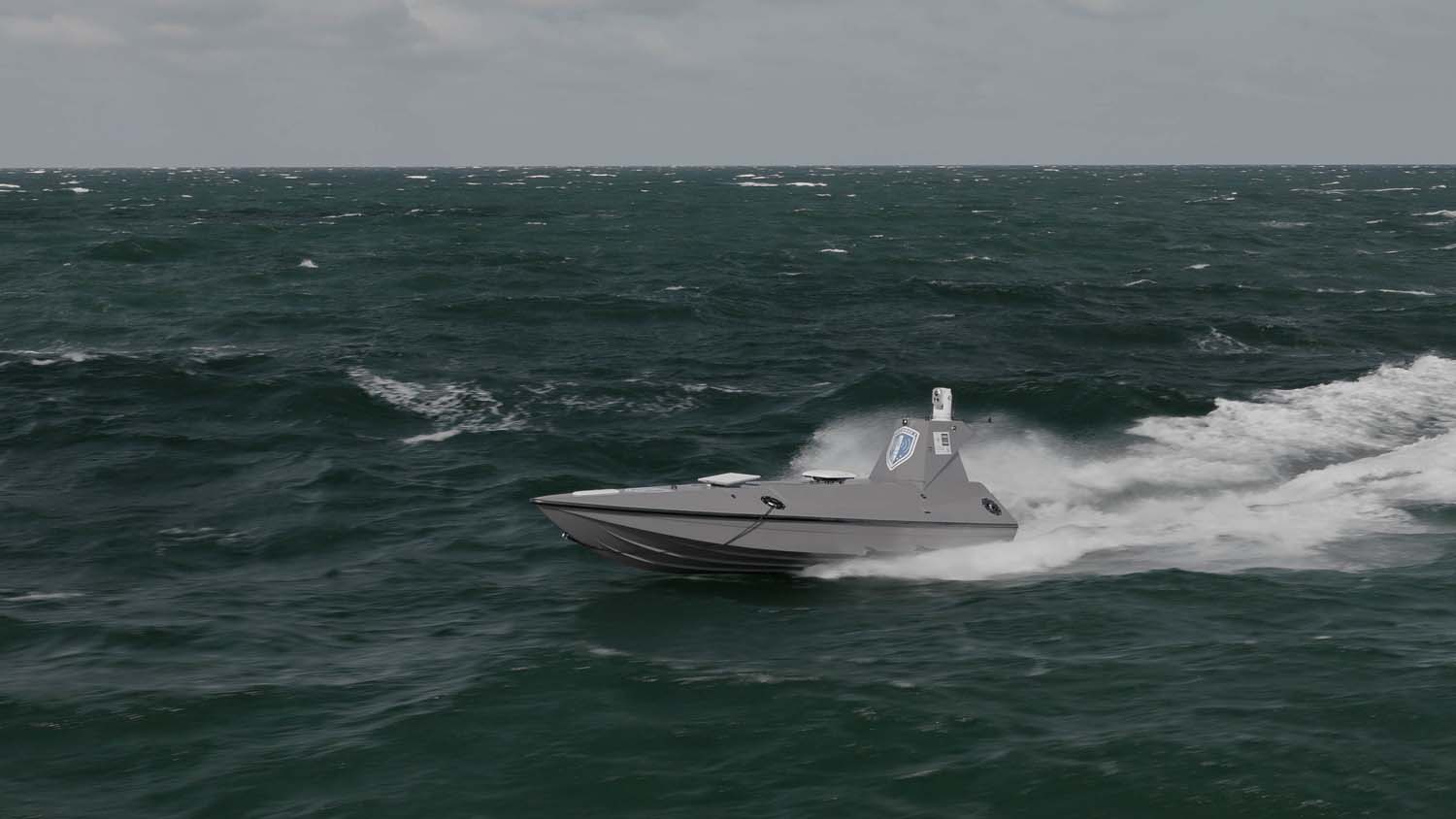
Notably, a statement from the Kraken Technology Group (KTG) specified that the USV was dropped into waters during Sea State 4, which has significantly choppy and rough waters. “These demonstrations successfully proved a new force projection capability to rapidly insert high-performance uncrewed vessels into contested or difficult-to-access maritime environments,” said the company.
The trial campaign also validated a new pioneering IN-Release system. The system is described as a configurable electro-mechanical release mechanism that enables reliable, synchronized load disconnect across a wide range of aerial and maritime applications.
As mentioned earlier, the RN’s press release said that the six-day demonstration “proved that a crewless boat can both survive an airdrop and then operate without the need for a support ship or a nearby port.” This is “valuable progress as the Royal Navy continues to embrace uncrewed and autonomous technology.”
The proof-of-concept airdrop also showed that the “speed, range, and flexibility” of uncrewed maritime platforms, particularly those procured under Project Beehive, can be expanded. The release quoted Captain Adam Ballard, who described the goal and scope of Project Beehive and said it “was set up to allow the RN to rapidly learn lessons and develop the skills necessary to effectively operate Uncrewed Surface Vessels.”
Ballard added: “One of the limitations of small Uncrewed Surface Vehicles is their ability to self-deploy and so we are actively looking at concepts for deployment from motherships or ‘mother aircraft’. The recent air dispatch trials that Kraken have conducted show the potential of this capability to rapidly deploy globally.”
Furthermore, he pointed out how warfare has gone from “air power deploying from maritime power,” since the earliest aircraft carriers that launched sea planes, to “a future where maritime power can be deployed from air power.”
KTG’s founder and CEO Mal Crease stressed upon the modular K3 Scout’s ability to rapidly operate from airdrops in rough seas and “difficult-to-access” maritime environments. We recently also saw how a U.S. pilot was rescued in the Strait of Hormuz by an USV, showing unmanned systems can considerably unburden larger and costlier manned platforms of many routine tasks.
🇬🇧 Kraken Technology Group and Capewell, supported by the Royal Navy under Project Beehive, have successfully completed the world’s first extracted-load airdrop of an uncrewed surface vessel (USV) from an A400M military transport aircraft. @KrakenTechGroup @CapewellDefense… pic.twitter.com/rFG59BZdIS
— DefPost (@defpostmedia) July 8, 2026
Mark Lavender, Director of Business Development and Training at Capewell said:
“In collaboration with Kraken we were able to validate the integration of a complex payload with our UMCADS platform while demonstrating the ease with which the system can be reconfigured for alternative mission essential equipment be they maritime or land applications. This was further validated in that we conducted 4 live airdrops in 6 working days with the same boat and platform during this campaign.”
Kraken USV and Project Beehive
Project Beehive was established by the Royal Navy to introduce emerging uncrewed technology into service and draw a roadmap for operating unmanned systems alongside conventional platforms. The service ordered 20 Kraken uncrewed boats earlier this year for £12.3 million.
The boats will be used by the Coastal Forces Squadron and 47 Commando Royal Marines. You can read more about the Royal Navy’s efforts to create a hybrid naval force here and here.
UK Kraken Group has closed a $175 million Series B funding round at a $1 billion valuation,the funding will support further development of its uncrewed surface vessels & payload capabilities, while accelerating the expansion of localised manufacturing facilities around the world. pic.twitter.com/qrA7AmdZEn
— Valhalla (@ELMObrokenWings) July 9, 2026
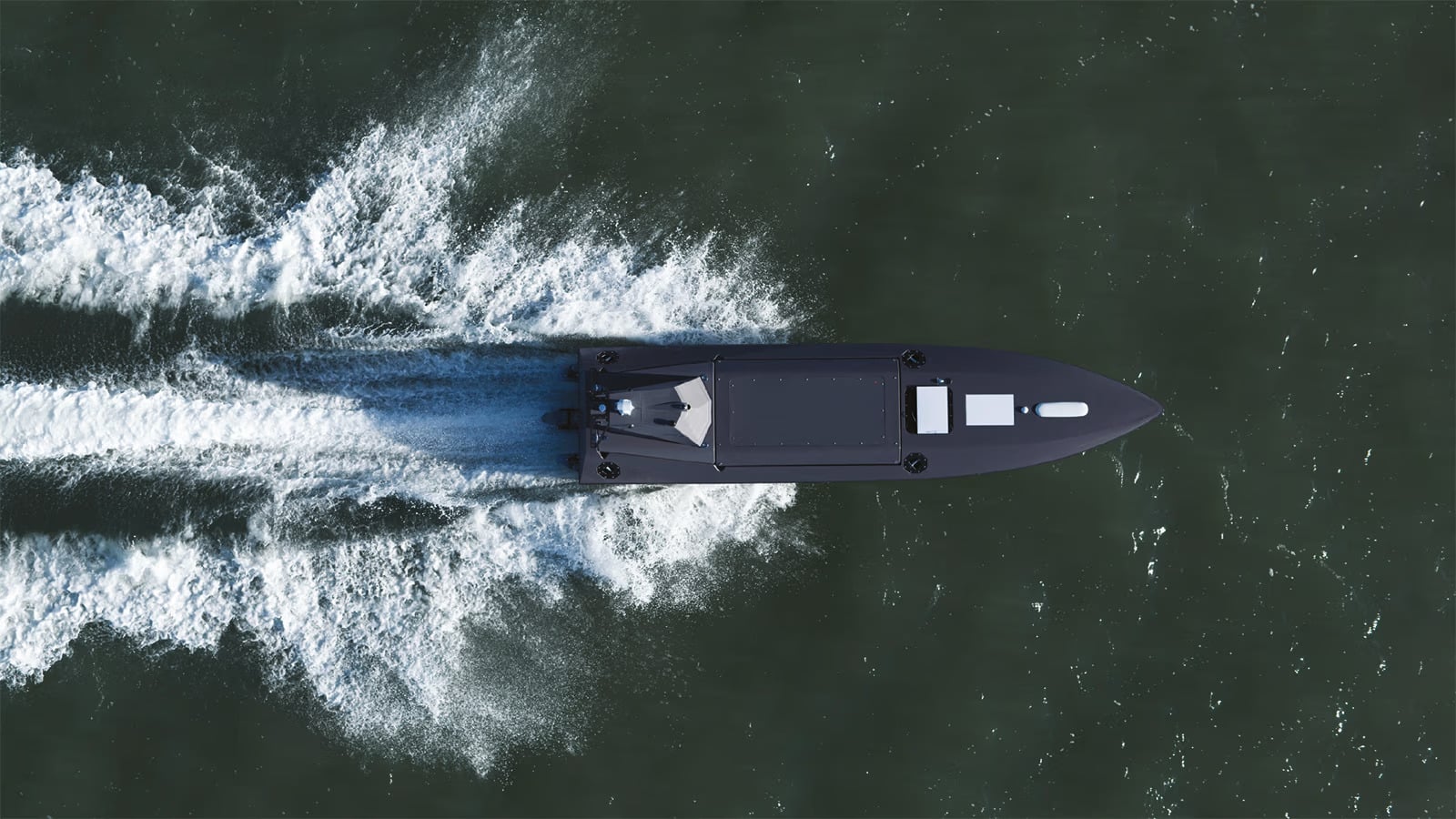
The Kraken K3 Scout can be used for a variety of tasks, ranging from surveillance, force protection, escort, search and rescue, tactical logistics and precision strikes.
According to Kraken, the K3 Scout is 8.4m long and can carry a payload of 600 kg. The USV can touch a top speed of 55 knots, and can go up to 650 nautical miles at 25 knots.