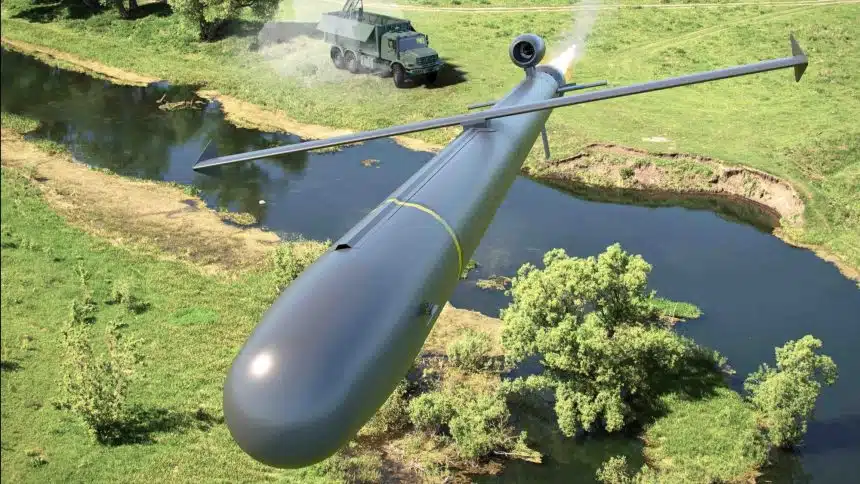
Named One Way Effectors (OWE), these weapons are ground-launched and capable of hitting targets more than 500km away while carrying a powerful 225kg warhead.
Over the last year, three British defence companies, MBDA UK, MGI Engineering, and Rotron Aerospace, have produced new OWE weapons for the Ukrainian military under a programme named ‘Project Brakestop’. Each system has now been successfully test launched leading the way to the next phase of the project in which £15 million contracts are being awarded for further development of the OWEs.
Each company will produce 15 improved weapons, alongside a number of launchers and support vehicles which will be tested extensively. Once this has been achieved the three weapons will eventually begin serial production and for delivery to the Ukrainian Armed Forces (AFU) by the end of the year.
The project was launched in late 2024 with the requirement for a weapon system that has a range of at least 500km (310 miles), a warhead weighing at least 225kg (around 500lbs), speed of more than 600km/h (373 mph), a target unit cost of around £400,000 ($526,600) excluding the warhead and the ability to produce at least 20 weapons a month within months of a production order.
Not reported in the British government’s official statement on the project, but reported by the Financial Times, is the intention for the weapons to also be free of US components and navigation data, allowing the UK to make independent sovereign decisions on their use by Ukraine. MBDA’s Storm Shadow missile, first gifted to Ukraine in 2024 were initially delayed in their employment due to their use of American components and guidance data. Due to the US’ more bellicose attitude to Ukraine in recent months, it is now more important than ever for Ukraine to have weapons that are politically reliable.
At the start of the competition, 27 bids were received from the UK’s defence industry, with initial pitches made to the Ministry of Defence (MOD) in February 2025. Six British companies were then awarded contracts worth around £5 million each to design and build prototype weapons for testing that would take place within seven months. However, by December of that same year only the three listed suppliers remained to test fire their new weapon systems.
This represents an extremely fast moving programme which has become a rarity amongst British defence projects, with the Ajax armoured vehicle programme seemingly indefinitely on pause after an eight year delay, whilst the RAF Wedgetail project continues on after a three year delay. The success of project Brakestop so far is a reminder that when pressured British industry can deliver high quality weapon systems at scale.
Each weapon system was then tested at the MOD Hebrides Range, a specialist trials site managed by QinetiQ which is used for large scale live fire exercises and military trials of a number of British weapons, including the DragonFire laser system.
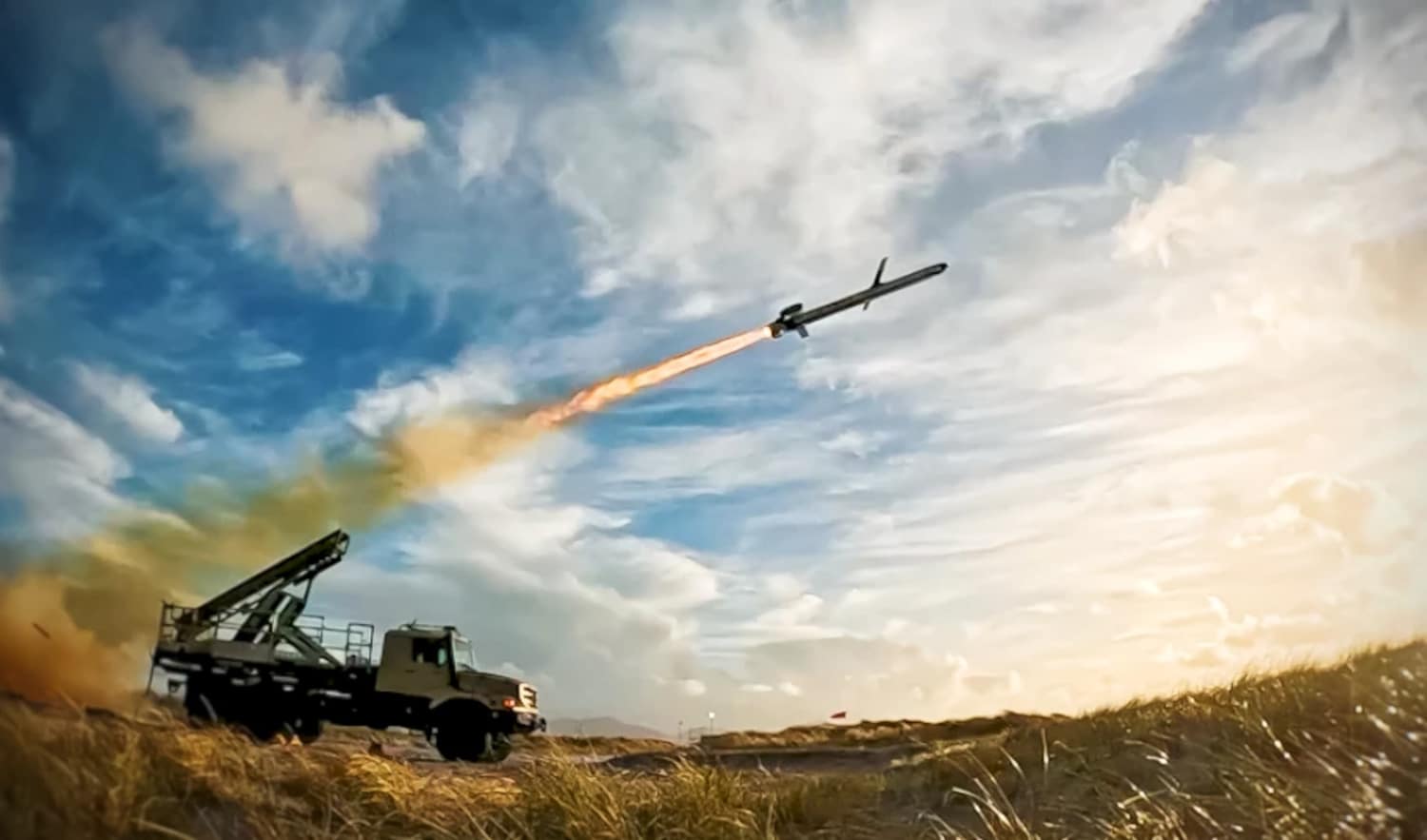
MBDA announces successful #CROSSBOW firings, marking a key milestone in ground-launched #DeepStrike 🚀
Conducted in Dec 2025 & Feb 2026, it moved from design to demo in 9 months. Its modular design delivers range, lethality & survivability.
🔗 Read more: https://t.co/TNFvtpCNVR pic.twitter.com/T4GFAQIcfM
— MBDA UK (@MBDA_UK) June 20, 2026
The Minister for the Armed Forces Louise Sandher-Jones MP stated:
“The UK stands shoulder-to-shoulder with Ukraine, and we will continue to provide the support it needs to defend itself against Russian aggression.
Project Brakestop shows what happens when we combine that commitment with the talent and ingenuity of British industry. In less than a year, UK companies have taken an ambitious concept from the drawing board to flight testing, delivering a new generation of capability at remarkable speed.
This is a clear demonstration that Britain has the industrial strength, innovation and determination to meet the challenges of modern warfare and support our allies.”
What is a One Way Effector (OWE)?
A OWE is intended to be a catch-all term for the types of low-cost kamikaze drones growing in popularity around the world. They sit in a category between cruise missiles and unmanned aerial vehicles (UAV) in their cost and firepower, whilst sharing similarities with both.
As a result, they can be hard to properly define as the category is by its nature extremely broad. For example, a Russian/Iranian OWE would be the Shahed 136 type drone that have been used to target Ukrainian cities to overwhelm local air defences with a low cost, but dangerous munition. Ukraine on the other hand has used converted civilian aircraft in a similar role, packing them with explosives, fitting them with rudimentary guidance kits and a remote control to fly them into Russian territory at a lower cost than a cruise or ballistic missile.
The low cost and high manufacturing speed of these types of systems means that both Ukraine and Russia have been able to launch massive daily air raids against the other, with the number of weapons employed reaching over 1,000 OWEs at a time. For the US or the UK to employ a similar number of cruise missiles, they would deplete entire decades worth of production in just a few days. These OWEs allow a nation to have a capability similar to the 1,000 bomber raids of the Second World War with just a fraction of the cost.
Drone shot! Well, not exactly… A UkAF MiG-29 intercepting a Russian Shahed-136 over the Odesa coast. Absolutely cracking view of an R-73 “Archer” launch! pic.twitter.com/Jp4BHgmR6e
— Air Power (@RealAirPower1) June 21, 2026
Both Ukraine and Russia use attack drones that rely on human control from safe territory to fly the weapon to the target zone, before an AI system built into the platform takes control for terminal guidance against a target. This ensures that the weapon is able to avoid being downed by electronic warfare that would usually disable them by disconnecting the pilot to the weapon.
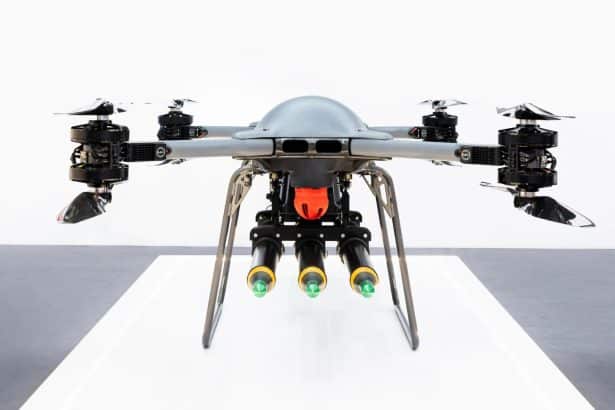
The area of OWEs is now extremely broad, with even small FPV drones attached to explosives being included despite their small size, range and payload.
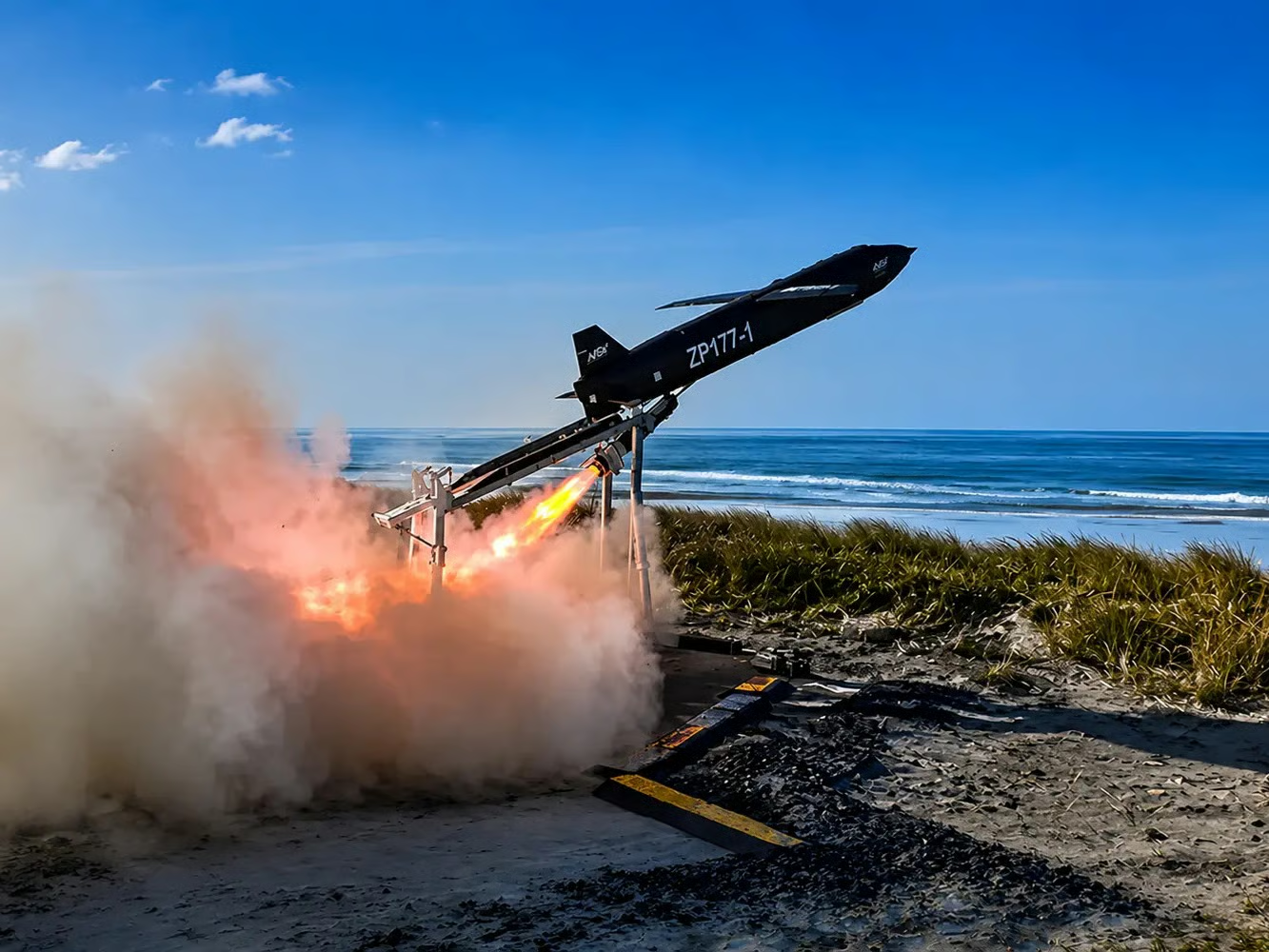
MGI Defence describes an OWE as an autonomous or semi-autonomous aerial platform designed for a single-use mission. They are intended to be more flexible than a missile, less expensive than a reusable drone and faster to produce than conventional missile systems.
On the other hand, MBDA describes an OWE as a weapon designed to exhaust an opponent’s resources by exerting constant pressure on their air defence systems, so that those defences can be detected and neutralised, allowing for more expensive long range weapons to reach their targets farther inland. MGI Defence prioritises the weapons autonomous guidance systems and its cheap nature whilst MBDA uses the mission parameters and target type to describe what makes an OWE.
🇬🇧 Rotron, now part of Ondas Inc. (@OndasHoldings) announced a successful demonstration and firing of its Skylance long-range one-way effector (OWE) platform.
“The new defence era is here for the UK. The successful demonstration of SkyLance validates our ability to deliver… pic.twitter.com/jafTIOZsS9
— Counter Unmanned Systems (@CUAS_NEWS) May 14, 2026
The concept behind an OWE is extremely broad and constantly evolving thanks to the ongoing war in Ukraine, which keeps the pace of development of these weapons extremely high.
MBDA – Crossbow Heavy
MBDA Missile Systems has a long pedigree of producing advanced missile based systems for the British and French militaries, from air-launched cruise missiles, such as Storm Shadow/SCALP-EG, to the ship-launched air defence missiles of the Aster 15 and 30 range. They are continuing to produce high cost missile systems with the Stratus next generation cruise missiles that will replace the Storm Shadow/SCALP-EG in British and French service.
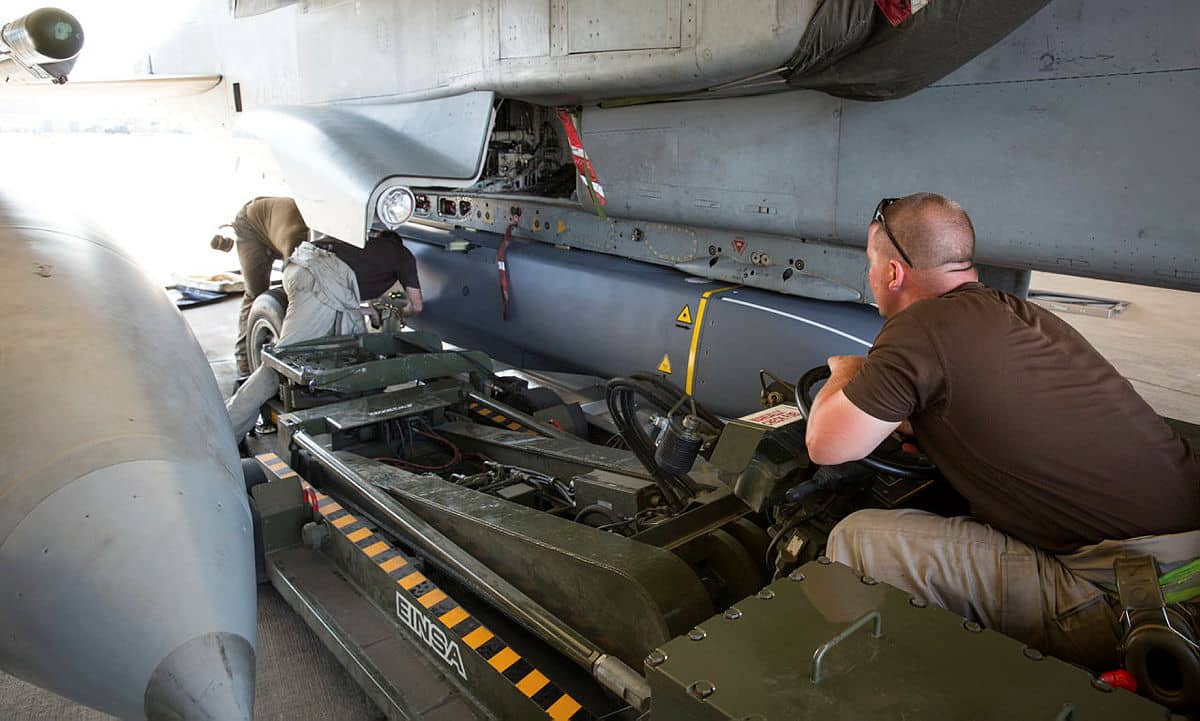
The creation of a cheaper alternative in the OWE category is therefore an interesting change of direction reflecting the battlefield realities stemming from Ukraine.Their product, the Crossbow OWE Heavy, is designed to be a deep-fires capability which can operate in the complex electronic warfare (EW) environment of Ukraine, at a cost that enables significant combat mass in comparison to MBDA’s more sophisticated weapons.
In this regard Crossbow is a modular design utilising military and commercial off the shelf components that have so far enabled the rapid development of the system which can then be produced at a scale that far outstrips their annual production of Storm Shadow missiles. The Crossbow is ground launched from the back of a vehicle, delivering multi-role kinetic and non-kinetic payloads up to 300kg out to ranges in excess of 800km.
MGI Defence – Tigershark
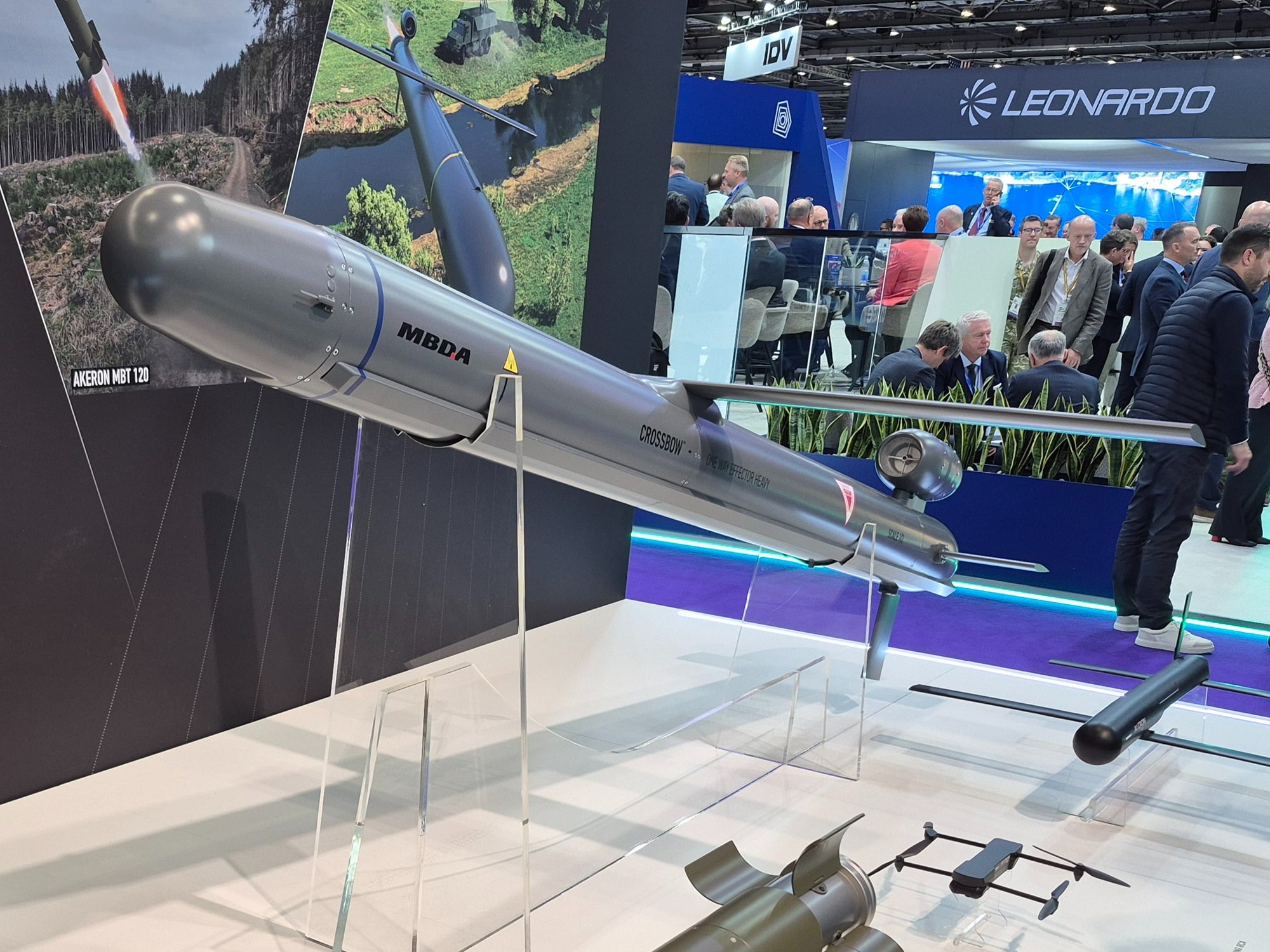
The second chosen company, MGI Defence, is a part of MGI Engineering, which has a 25 year long history in producing parts for Formula 1 cars. ‘Project Brakestop’ is their first successful foray into defence though it is not their only drone product.
Their flagship OWE is called the Tigershark, which has a speed of 750 km/h, a 300 kg payload, and it is capable of striking targets at ranges exceeding 1,000 km. This weapon was developed in close strategic partnership with Auterion, a US firm that produces on board autonomous systems for one way attack munitions.
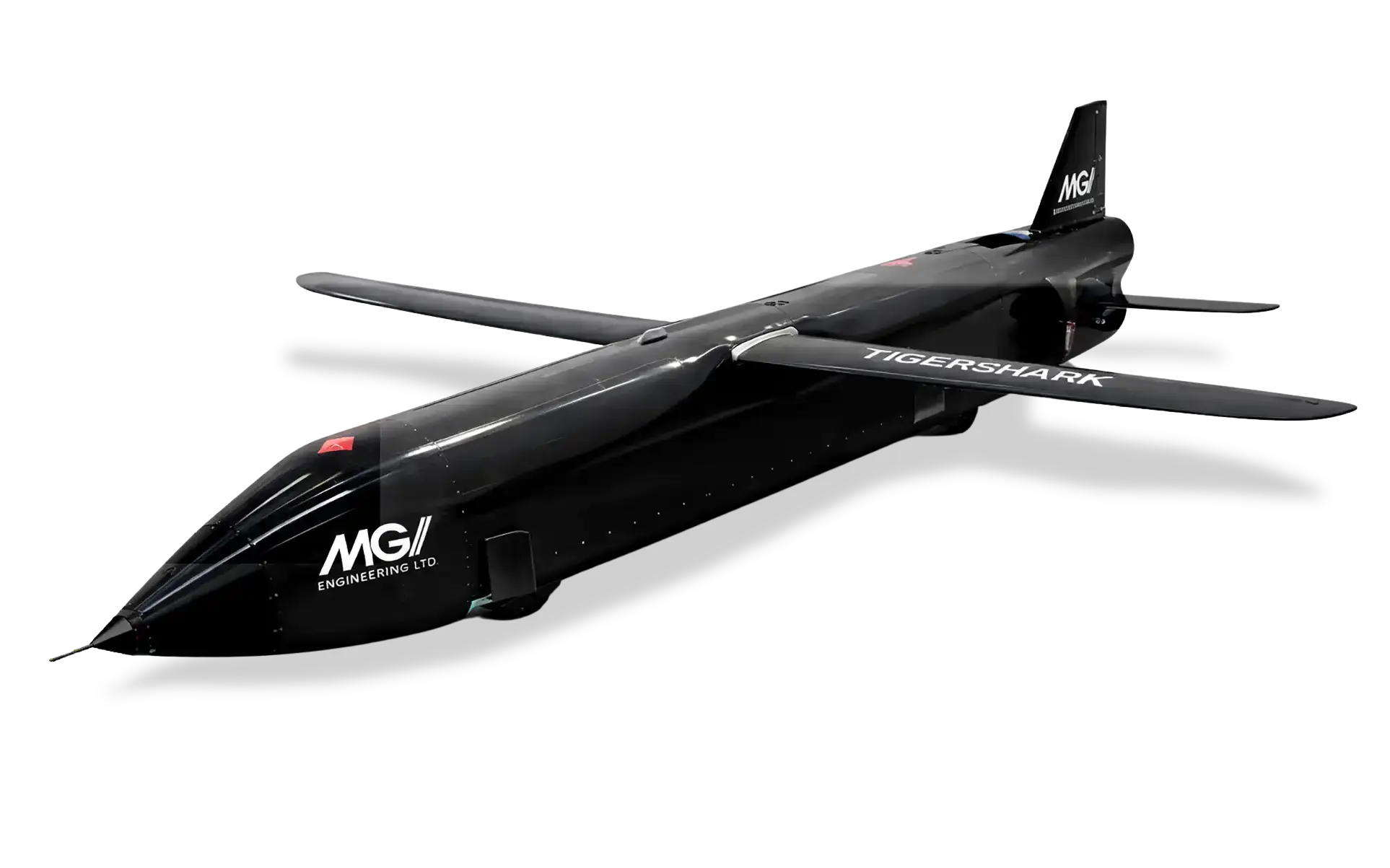
Mike Gascoyne, CEO of MGI Engineering, commented:
“The successful launch of TigerShark is a defining moment for MGI. This platform exemplifies our approach to engineering excellence—rapid, agile, and mission-focused. Partnering with Auterion has allowed us to integrate world-class autonomous capabilities into a system designed from the ground up for flexibility and future growth. Together, we are delivering a solution that meets today’s needs while anticipating tomorrow’s challenges.”
Rotron Aerospace – SkyLance
The final company forming a part of ‘Project Brakestop’ is Rotron Aerospace, a British enterprise that produces a number of UAVs of multiple types from small quadrotors to its larger SkyLance OWE. Their area of expertise is the professional use of the Wankel type rotary engine which allows for a decent output of power from a relatively compact engine, making it ideal for light vehicles and UAVs.
This enabled Rotron to quickly pivot to producing helicopter type UAVs following the start of the war in Ukraine. Due to this, the SkyLance OWE is the only weapon of the three selected to not use a jet engine for its mid-course propulsion, instead using a wankel engine powered propeller.
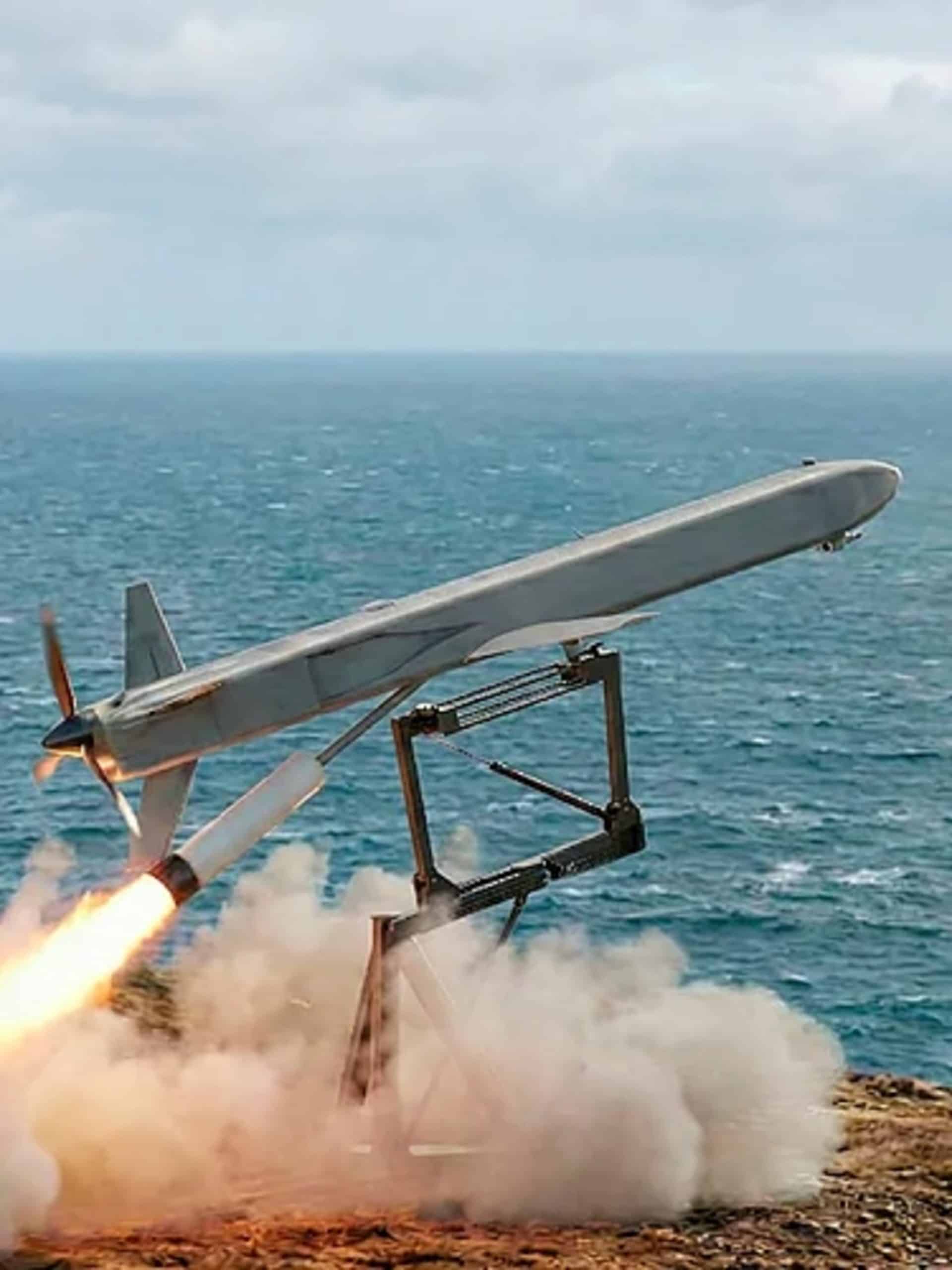
The weapon does still utilise a rocket assisted take off system, much in the same vein as the Tigershark and has a very similar effective range of 1,200km. However, its speed is much reduced thanks to its lack of a jet engine.
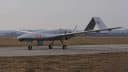
All three OWEs are very similar visually, with minor differences in payload capacity, effective range and their onboard guidance systems. Given the importance of these deep strike weapons to the Ukrainian military, it is likely that all three will be deployed to Ukraine in large numbers, instead of the government selecting just one weapon to mass produce. This allows for a diversity of weapon systems that the Russian military have to deal with, whilst maximising the effects on the British defence sector, giving all three companies a well needed funding boost.
🇬🇧 At #DSEI2025, our expert Bill introduces our latest innovation: #Crossbow the ONE WAY EFFECTOR HEAVY.
🚀 A battle ready #missile designed to provide a lower cost, higher mass deep fires solution with #AI enhanced navigation.
🎥 Check out the video!#MBDA #OWE #innovation pic.twitter.com/zXogjy1QAR
— MBDA (@MBDAGroup) September 9, 2025
These weapons are but a small part of the UK’s support for Ukraine under Operation Scorpius, which is the name given to the MOD’s overarching framework to coordinate military aid, equipment, and logistical support for Ukraine following Russia’s invasion. Within this framework is Taskforce Kindred, a team of MOD staff who manage the response to requests from the Ukrainians and work with Defence Equipment & Support to develop and procure the required equipment. Taskforce Kindred receives regular feedback from Ukrainian forces about the effectiveness of the equipment it is providing, which it considers for future procurement requests.
New footage confirms that an errant Russian surface to air missile was responsible for the tank roof toss at the Moscow Oil Refinery this morning. pic.twitter.com/H5kdsuO2pY
— OSINTtechnical (@Osinttechnical) June 18, 2026
This is the mechanism through which British industry can understand the requirements for the AFU as well as the lessons learned from the conflict in regards to what weapon systems work, which is how the OWE has become so prominent in their defence portfolios.
If Ukraine wishes to continue upping its pace of strikes against Russia, to achieve continual results similar to those seen during a recent attack on Moscow, the OWEs these companies offer will be of extreme importance to the AFU.