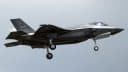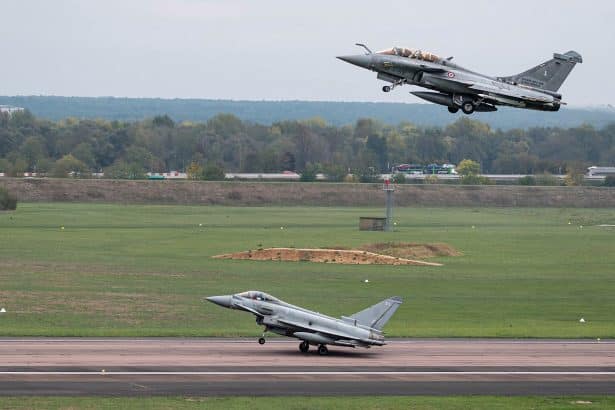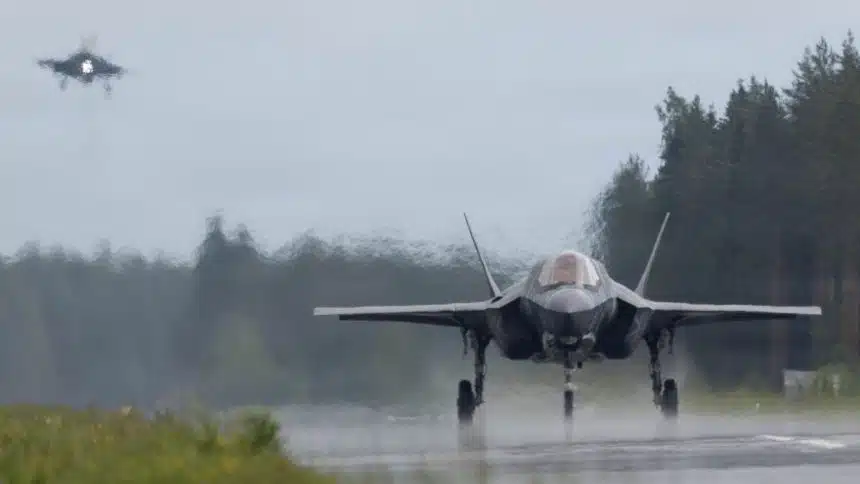
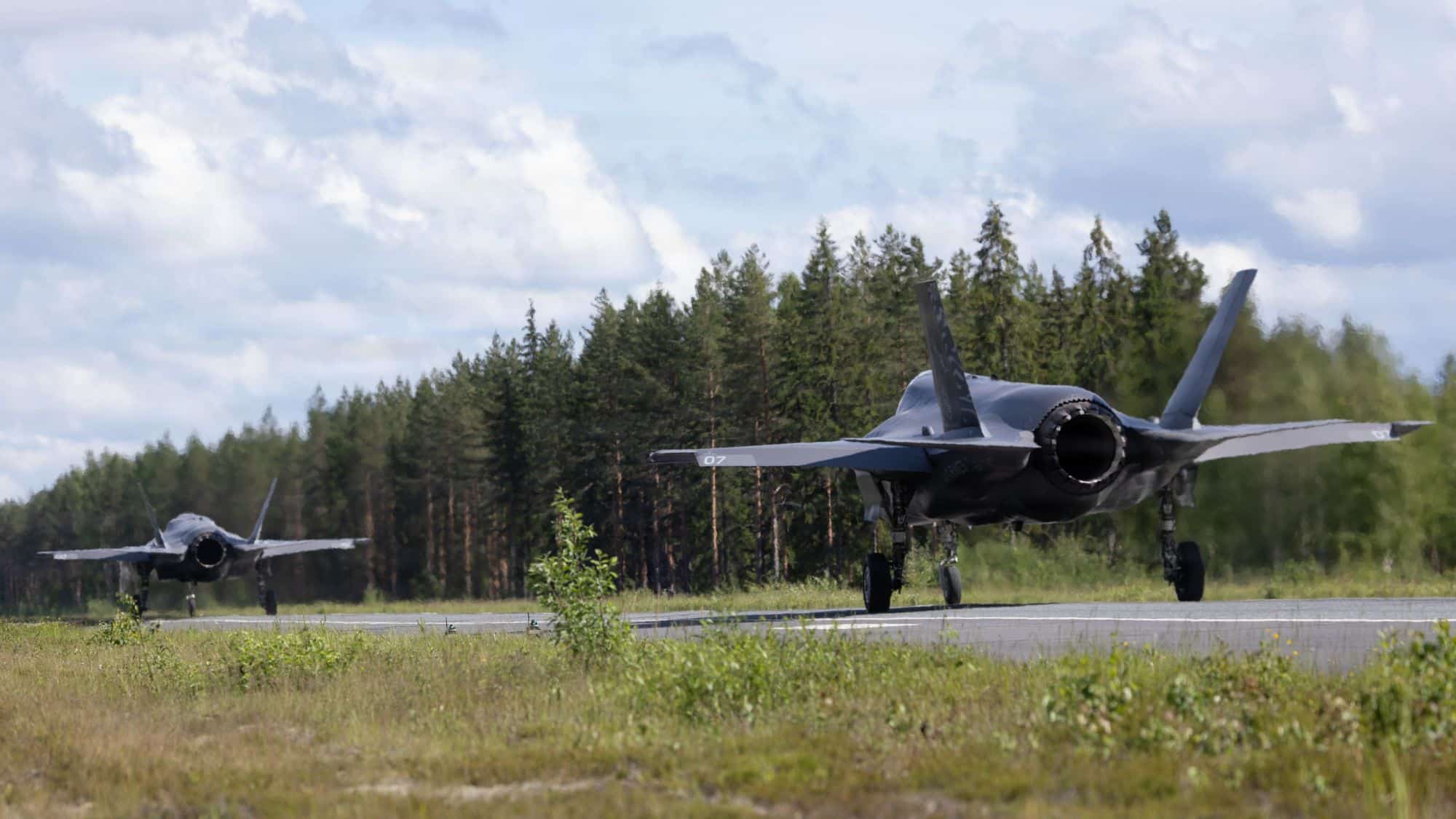
U.S. Marine Corps F-35B Lightning II from VMFA-224 conducted landing and takeoff operations on a highway strip in Finland during Exercise Ramstein Flag 2026.
For the first time, F-35B Lightning II jets of the U.S. Marine Corps conducted highway operations in Finland during the Ramstein Flag 2026 exercise. The maneuvers took place from Jun. 8 to 12, 2026 at a highway strip in Tervo.
The F-35Bs from Marine Fighter Attack Squadron-224 (VMFA-224) “Fighting Bengals” were not the only ones at their first participation in the highway operations in Finland. In fact, the F-35s were joined by Spanish EF-18s (Spanish Air and Space Force’s designation for the the legacy F/A-18C/D Hornets) and F-16 Fighting Falcons and M-346 trainers from the Polish Air Force (PolAF), the Corps said in a release.
The Finnish component of RAFL26 was overseen by the Illmavoimat’s Lappland, Karrelia and Satakunta Air Wings, which operate Pirkkala and Rovaniemi air bases. Finland also hosted the first such highway operations of Italian F-35Bs as well, during the Imminent Field 26 exercise that ran from May 18 to 22.
🪖En ‘Ramstein Flag 26’, el @EjercitoAire , junto a aliados de Estados Unidos y Polonia, han operado por primera vez desde una pista habilitada en una autopista de Finlandia.
💪 Reforzando la cooperación, la interoperabilidad y la capacidad de respuesta.
📹 @FinnishAirForce pic.twitter.com/pyUKlgUbCq
— Ministerio Defensa (@Defensagob) June 17, 2026
The highway operations were supported by the unit 2nd Marine Aircraft Wing’s (2nd MAW) Marine Wing Support Squadron 272 (MWSS 272), offering forward arming and refueling. At least two of each of the EF-18s, F-16s and F-35Bs can be seen in the visuals released by all the parties involved in the exercise.
2nd MAW liaison personnel also supported the Combined Air Operations Center (CAOC) that was established last year at Bodø in Norway, which coordinated the larger 19-nation Ramstein Flag exercise that saw over 200 aircraft participating. For the drills within Finland, the Ilmavoimat deployed 12 F/A-18 C/Ds Hornets while the foreign aircraft participation stood at 50.
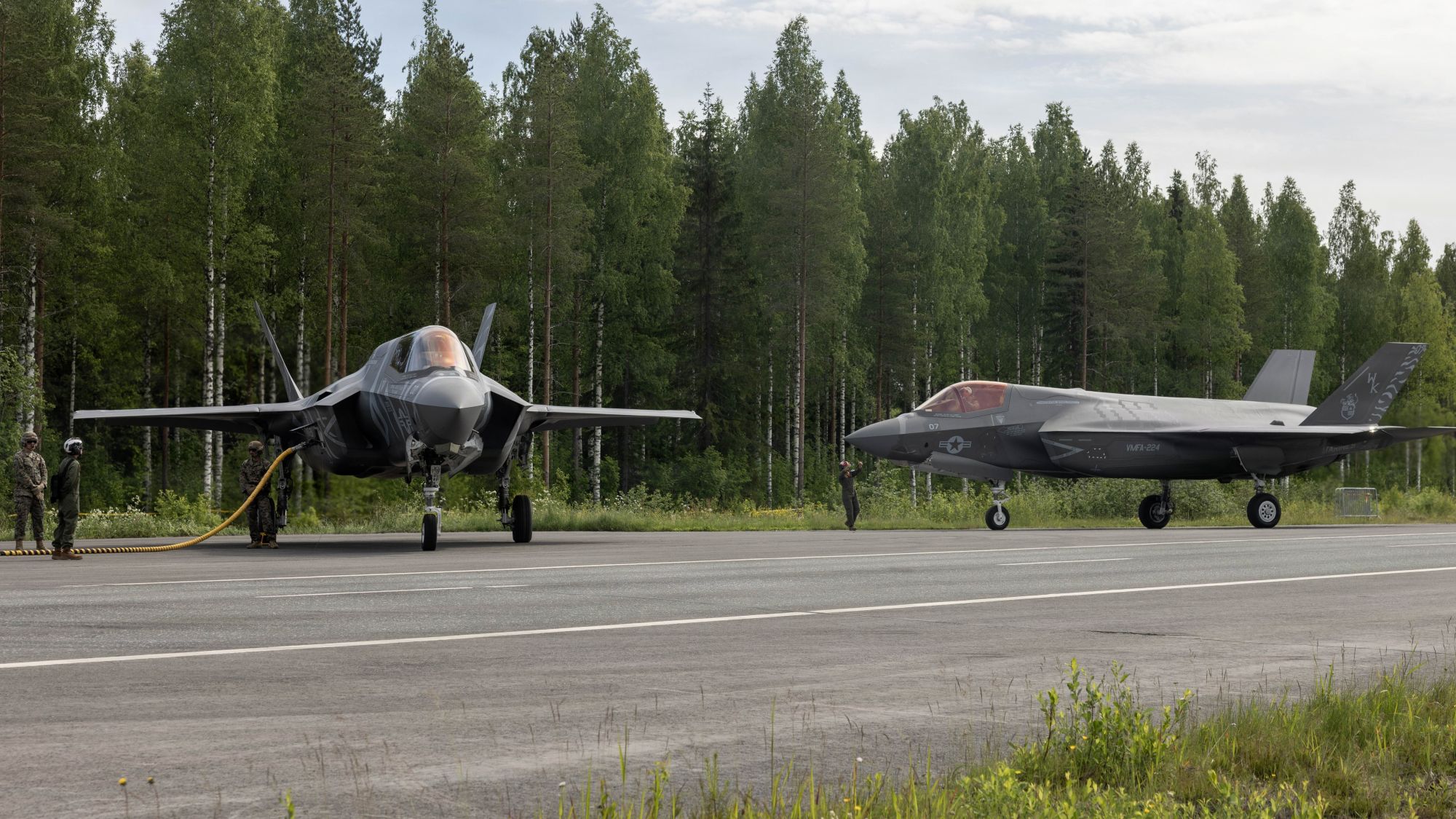
U.S. F-35s in Finland
Before the highway landing drills, the Marine Corps’ F-35Bs first flew with Finnish F/A-18C/D Hornets from the larger Rovaniemi Base, where they were originally based. From Rovaniemi, the Marine F-35Bs also stopped at Karelia Air Wing’s Rissala Air Base, where they underwent hot pit refueling, the Ilmavoimat said on X.
U.S. Marines with @2nd_MAW and the Finnish Air Force, take to the skies during Exercise Ramstein Flag 2026 at Rovaniemi Base, Finland.
📸 By Lance Cpl. Perri Wood @USMC @DeptofWar pic.twitter.com/lpidfUCLQc
— II MEF (@iimefmarines) June 18, 2026
The U.S. press release quoted U.S. Air Force Lt. Gen. Jason T. Hinds, commander of Allied Air Command, who said the latest iteration of Ramstein Flag – from the northernmost parts of Norway to the southern reaches of Spain – showcased Allied Airpower’s 360-degree approach to defend NATO.
Operating from Rovaniemi Air Base, the U.S. Marine Corps F-35B Lightning II fighter jets took part also in the BALTOPS 26 exercise in the Baltic Sea. The jets stopped at Karelia Air Wing’s Rissala Air Base for hot-pit refueling. 🇫🇮🇺🇸#ilmavoimat pic.twitter.com/6glLiOJMcV
— Ilmavoimat (@FinnishAirForce) June 17, 2026
The release added: “The operation provided NATO Allies with a unique opportunity to practice agile combat employment concepts, a strategic capability that enables NATO to project combat power from dispersed and non-traditional locations. During conflict, this concept would allow allied air forces to extend the reach of aircraft fare beyond traditional airfields and infrastructure.”
Finland, Sweden, Norway, and Denmark acted as joint hosts for the northern part of Ramstein Flag 26. The successful execution of the exercise strengthened Nordic Air Power as part of NATO.
Read more: https://t.co/uYNFUx0lv8#ilmavoimat #RamsteinFlag pic.twitter.com/qtManBwag7
— Ilmavoimat (@FinnishAirForce) June 18, 2026
Ramstein Flag in Finland and Finnish F-35s
The Ilmavoimat said that, during the first week of the exercise, the Karelian Air Force took over the Tervo alternate landing site in Northern Savo. While it has been building F-35-centric maintenance and support infrastructure at Rovaniemi and Rissala Air Bases under the Lapland and Karelia Air Wings, respectively, the service admitted that “the capacity for storing material and aircraft stands at the bases is limited,” adding that “this partly challenged operations, but did not prevent the reception of allies.”
The Ilmavoimat is also using the opportunity to familiarize itself with F-35 operations, after the first of its 64 airframes was delivered to the U.S.-based training unit at Ebbing ANGB, Arkansas, in October 2025. One goal was to attain interoperability between the diverse fighter fleet of fourth and fifth generation aircraft, which “will play an important role for years to come.”
This will particularly aid the upcoming transition phase from the legacy F/A-18s to the F-35As, which the Ilmavoimat said will operate both types simultaneously for a certain time after the first F-35 will arrive in the country by autumn of 2026. The Allies meanwhile familiarized themselves “with the use of alternate landing sites as part of the Finnish Air Force’s mobile and distributed combat strategy.”
✈️ Polskie statki powietrzne lądowały na drodze w Finlandii! 🇵🇱🇫🇮
W ramach ćwiczenia NATO Ramstein Flag 2026 polskie F-16 z 31 Bazy Lotnictwa Taktycznego, jako pierwsze w historii Polski, wykonały lądowanie na drogowym odcinku lotniskowym Tervo w Finlandii. Chwilę później na… pic.twitter.com/kjzcn64wIn
— Dowództwo Generalne (@DGeneralneRSZ) June 9, 2026
Other operations and aircraft
The overall operations from Finland, Sweden and Norway saw smaller “shadow circuits” being flown in the morning and larger “main circuits” in the afternoons, all coordinated by the COAC Bodø. “The airspace available allowed for a total of over 100 aircraft to typically participate in the main wave circuits,” said the press release.
Imavoimat Col. Mäntylä named mission sets like Suppression/Destruction of Enemy Air Defense (SEAD/DEAD), airborne radar surveillance, aerial refueling and electronic warfare being practiced in the main circuits.
Ready to respond. ⚡
An F-35A Lightning II, assigned to the 493rd Fighter Squadron of RAF Lakenheath, UK, prepares to taxi on the flightline during Ramstein Flag 26 at Pirkkala Air Base, Finland.
This premier tactical exercise tests the ability of NATO forces to respond to… pic.twitter.com/cLqxW2AA08
— F-35 Lightning II Joint Program Office (@theF35JPO) June 17, 2026
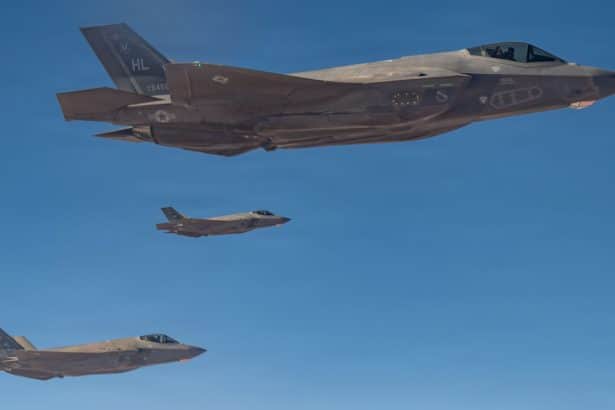
U.S. Air Force F-35As from the 493rd Fighter Squadron (493rd FS) at RAF Lakenheath in the U.K, the U.K.’s own F-35Bs from the HMS Prince of Wales aircraft carrier, and at least two of the NATO Intelligence, Surveillance and Reconnaissance Force (NISRF) RQ-4D Phoenix HALE-class surveillance drone practiced from Pirrkala AB under the Satakunta Air Wing.
British F-35B Lightning II fighter jets take part in Ramstein Flag 26 from the aircraft carrier HMS Prince of Wales. The jets visited Satakunta Air Wing’s Pirkkala Air Base for hot-pit refueling. 🇫🇮🇬🇧🇺🇸#ilmavoimat #RamsteinFlag pic.twitter.com/8jck55v9RK
— Ilmavoimat (@FinnishAirForce) June 17, 2026
🇫🇮 Two NATO RQ-4D Phoenix high-altitude, long-endurance (HALE) intelligence, surveillance, and reconnaissance (ISR) UAVs sit on the flight line at Tampere–Pirkkala Air Base, Finland, June 2026, during exercise Ramstein Flag 26.
(📸/NATO Intelligence, Surveillance and… pic.twitter.com/YqyCHwmgSz
— Guy Plopsky (@GuyPlopsky) June 18, 2026
The Lapland Air Wing also hosted German Air Force (Luftwaffe) Tornado strike aircraft and Eurofighters. The refueling fleet based at Rovaniemi, Lapland AW’s main operating base, consisted of A330 Multi-Role Tanker Transport (MRTT) aircraft from NATO’s Multinational MRTT Unit and a U.S. Marine Corps KC-130J Super Hercules.