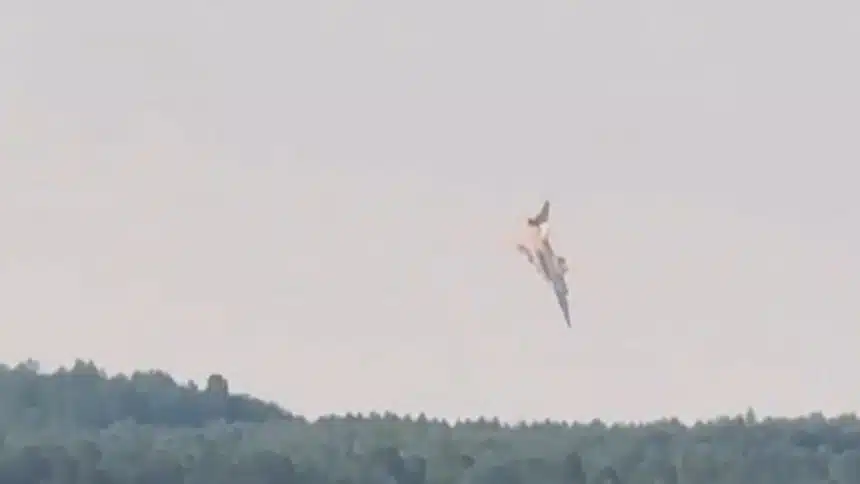
Footage captured the Tu-22M3’s steep descent moments before the crash in the Irkutsk region, with Russian officials reporting that the crew ejected safely.
A Russian Aerospace Forces (RuAF) Tupolev Tu-22M3 strategic bomber crashed on June 15, 2026. Videos circulating on social media show the aircraft entering a steep nosedive before disappearing behind a hill and crashing.
Thick black smoke soon emerges following the explosion, with subsequent footage showing the crash site and the burning debris on an open field. Some accounts geolocated the spot in the Svirsk area of the Irkutsk region.
Notably, the Irkutsk region hosts Belaya Air Base, one of the principal operating locations for Russia’s Tu-22M3 fleet and home to the 200th Heavy Bomber Aviation Regiment. The base was among those targeted during Ukraine’s Operation Spiderweb drone attacks in June 2025.
Additional footage of the Russian Tu-22M3 heavy bomber nose diving into the ground in Irkutsk this evening pic.twitter.com/Ie0wIxUtzN
— OSINTtechnical (@Osinttechnical) June 15, 2026
Posts on Kremlin-aligned Russian Telegram channels quoted eyewitnesses and a statement from the Russian Ministry of Defense (RuMoD), which said that the pilots ejected from the aircraft and survived. The incident occurred during a planned training flight, said a post on a Russian TG channel quoting the RuMoD.
The attitude of the aircraft while going down might hint that the technical malfunction may have happened at a substantial altitude. This would have afforded enough time for the crew to pilot the aircraft over an unpopulated area, before commencing ejection procedures.
Footage from the crash site of the Russian Tu-22M3 bomber. https://t.co/4lnFDUp0pZ pic.twitter.com/agQxbqVPy2
— Special Kherson Cat 🐈🇺🇦 (@bayraktar_1love) June 15, 2026
s
Tu-22 and Russian bomber fleet
The Tu-22M3 (NATO reporting name Backfire-C) is the most advanced variant of the Tu-22 that first flew in 1977, and entered service in the 1980s. Known upgrades were improved NK-25 engines and an enhanced “navigation/attack” system from Almaz PNA.
The Tu-22M3 is one of the three leading strategic bombers of the RuAF, with the other two being the Tu-160 and the Tu-95. According to the last count by the World Air Forces 2026 report that counted figures up to December 2025, Russia operated 57 airframes, with the latest crash now bringing that figure to 56.
A Russian Tu-22M3 strategic bomber based in the Belaya air base in Irkutsk, went down and got totally destroyed.
At the moment there is no news what caused the crash or what is the status of the crew. In the past the air base was struck by Ukrainian drones during the Spiderweb… pic.twitter.com/uSMC8CPsTh
— (((Tendar))) (@Tendar) June 15, 2026
This mishap follows several recent Tu-22M3 incidents, including crashes reported in 2024 and 2025, underscoring ongoing concerns regarding the aging fleet’s operational readiness and maintenance burden. In fact, while modernization programs have sought to extend the aircraft’s service life, the fleet’s average age now exceeds three decades.
Since the start of the full-scale invasion of Ukraine, Tu-22M3 bombers have been regularly employed to launch Kh-22 and Kh-32 long-range missiles against targets across Ukraine. The aircraft’s ability to conduct standoff strikes from Russian airspace has made it one of the key components of Russia’s long-range strike capability.
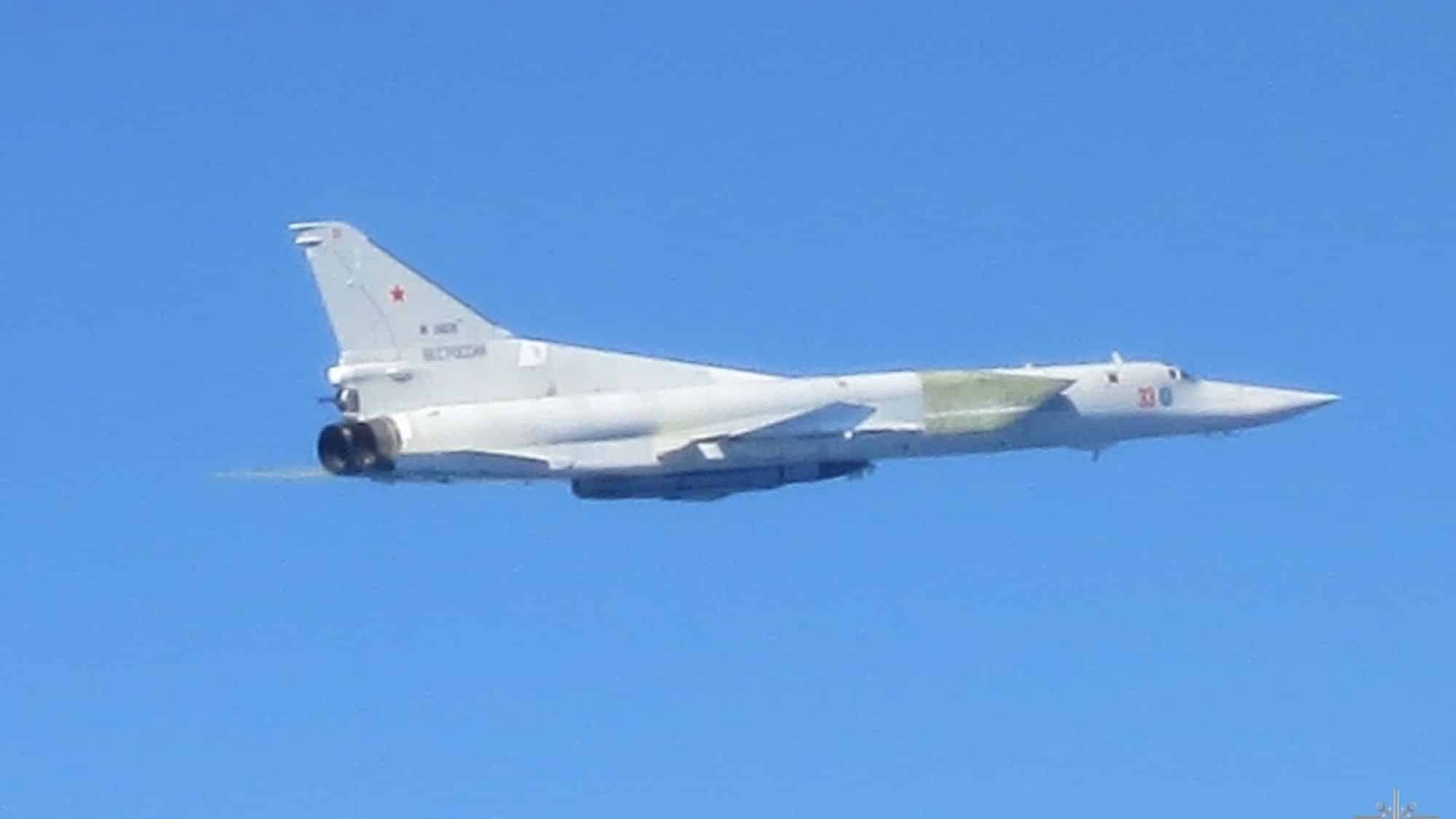
The Tu-22M3 fleet has suffered both combat and non-combat losses during the conflict. In April 2024, Ukraine claimed responsibility for the shootdown of a Tu-22M3 over Russia’s Stavropol region using a modified S-200 air defense missile.
June 2025’s Operation Spiderweb also saw at least four Tu-22M3s being targeted by Ukrainian first-person view (FPV) drones at Belaya Air Base in Irkutsk, with Ukrainian officials claiming the bombers were completely destroyed. Other aircraft targeted by that operation included at least one A-50 Airborne Early Warning and Control (AEW&C) aircraft, seven Tu-95s, and an An-12.
— Visioner (@visionergeo) June 15, 2026
Tu-22M3s carrying Kh-32/Kh-22 air-launched cruise missiles are frequently intercepted over the Baltic Sea by NATO and Swedish Air Forces. You can read more about these intercepts in our previous reports here, here and here.
As per the Military Balance 2025 report by the International Institute for Strategic Studies (IISS), the Tu-22M3 is operated by four units of the RuAF: the 40th Mixed Aviation Regiment at Olenya Air Base; the 200th Heavy Bomber Aviation Regiment within the 326th Heavy Bomber Aviation Division at Belaya Air Base in the Irkutsk Oblast; the 43rd Center for Combat Application and Training of Aircrew for Long Range Aviation at Dyagilevo in the Ryazan Oblast; and the 52nd Heavy Bomber Regiment, within the 22nd Guards Heavy Bomber Aviation Division at Shaykovka in Kaluga Oblast.