CENTCOM has released photos of F-16s loaded with cluster bombs for operations in Iran, a week after BLU-91/B ‘Gator’ anti-tank mines were found on the ground.
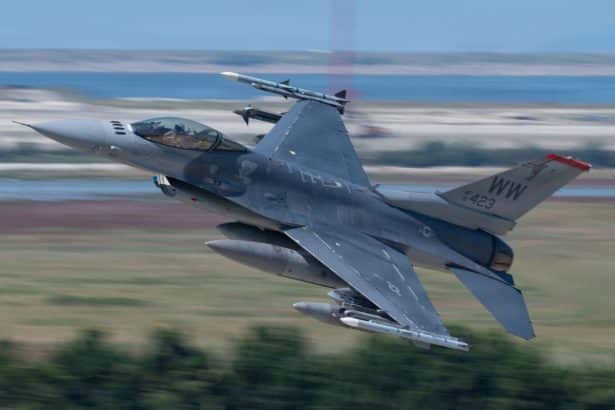
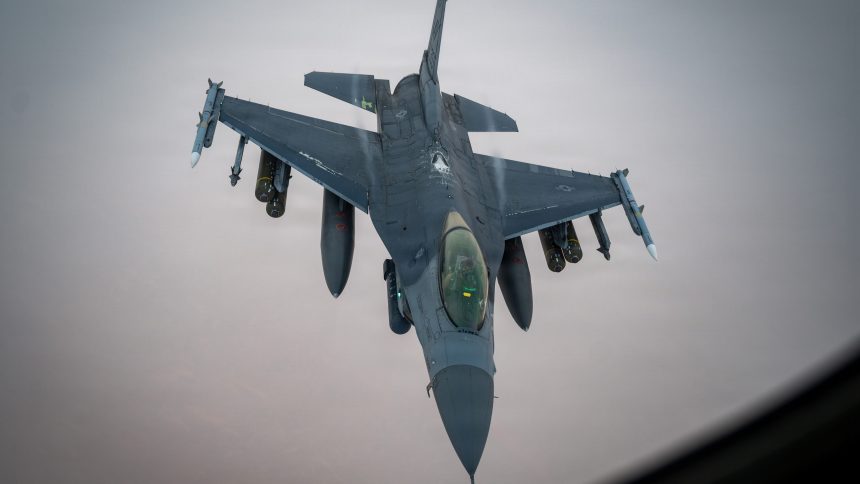
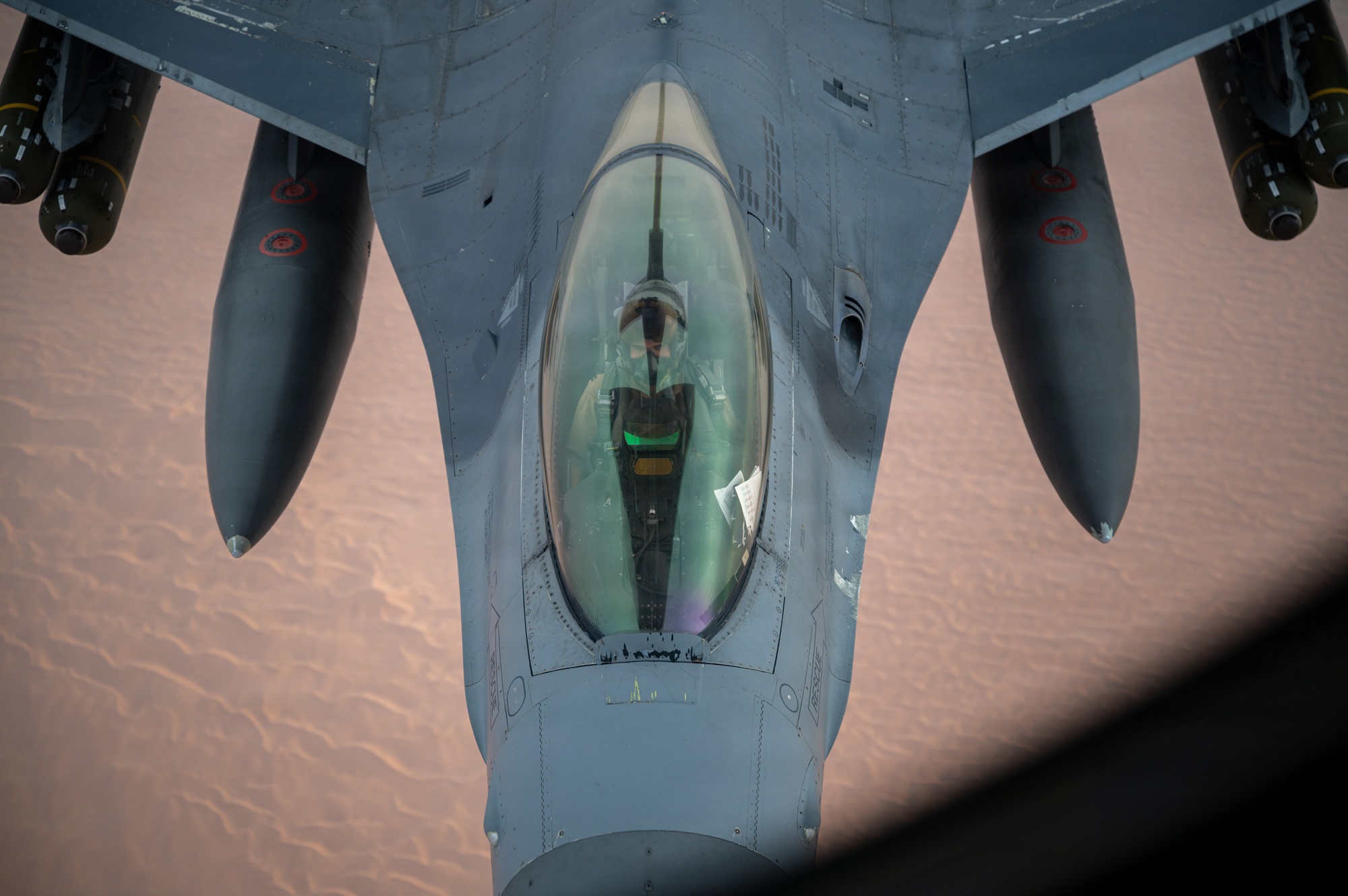
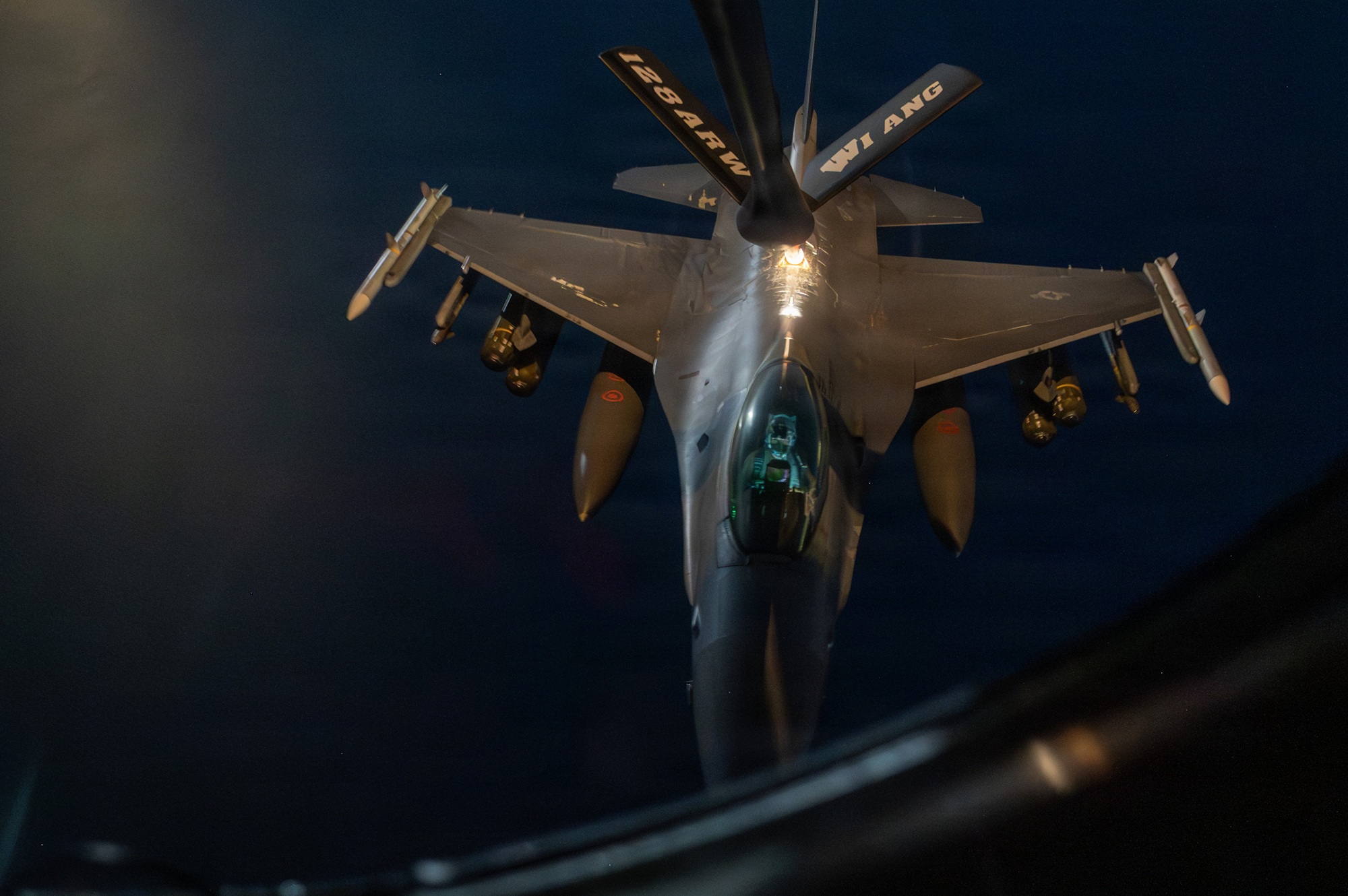
The U.S. Central Command has released on Apr. 4, 2026, new photos of U.S. Air Force F-16CM Fighting Falcon fighter jets (specifically Block 40s from Aviano, Italy) being refueled in the air during Operation Epic Fury. Notably, the fighters can be seen each armed with four cluster bombs, two under each wing installed on a triple ejector rack.
GATOR Mines
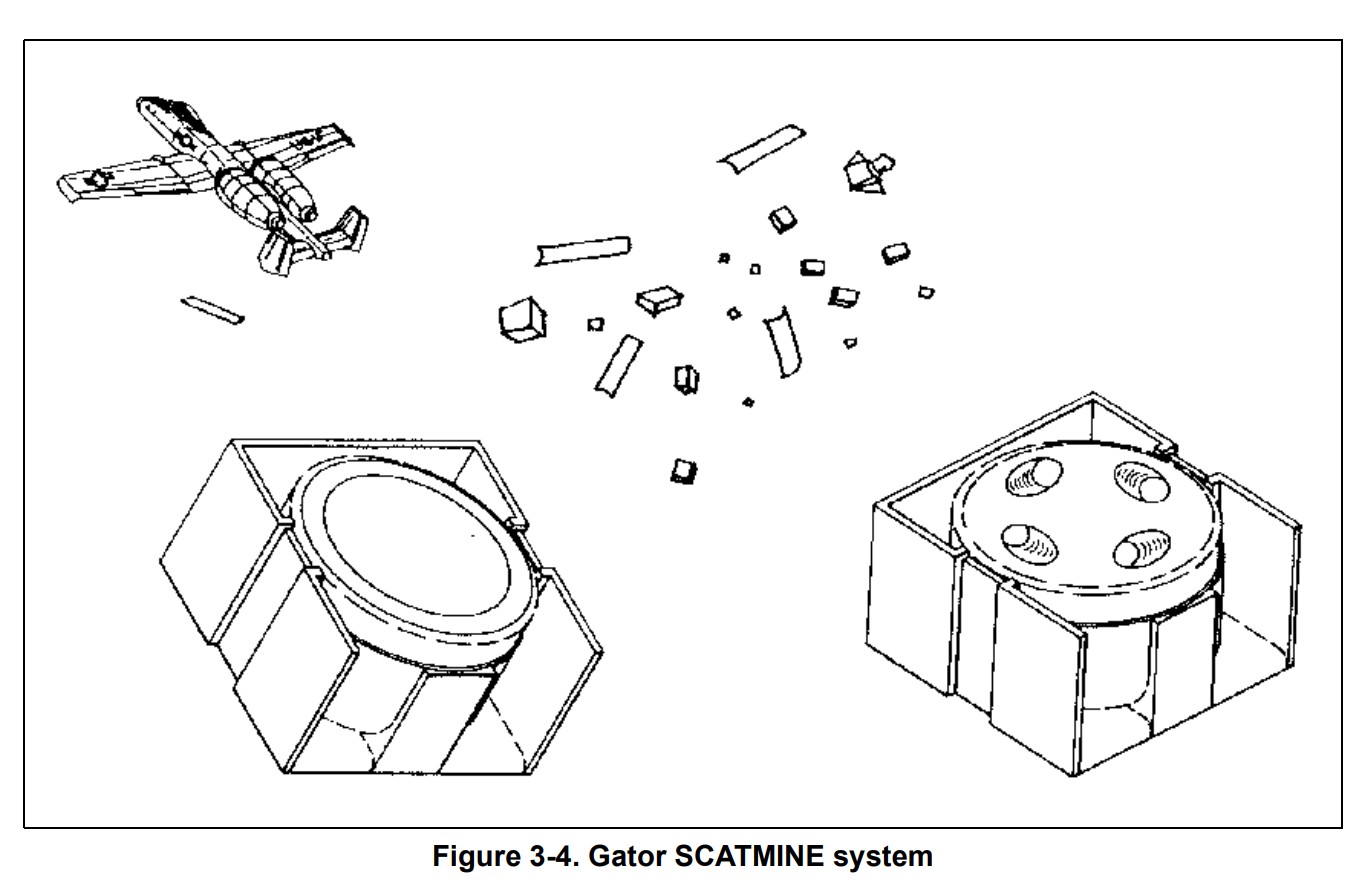
Just a week ago, photos emerged online showing anti-tank mines scattered in the southern Iranian countryside, with some ending in a village. These were later identified as air-scattered BLU-91/B anti-tank mines, recognizable by their rectangular aeroballistic shell.
More evidence of USAF F-16s deploying Tactical Munition Dispenser units, likely loaded with BLU-91/B scatterable anti-tank mines, over Iran. 👇 https://t.co/IxTvbMiX0g pic.twitter.com/hSo23zXdVW
— Air Power (@RealAirPower1) April 4, 2026
The mine, which weighs just shy of 2 kg (4.4 lb) and is 12.7 cm (5 inches) in diameter, uses a magnetic sensor to detect targets. A shaped charge is then triggered, with the potential of penetrating 70 mm (2.75 inch) armor.
Bellingcat identified the mines found overnight in Kafari, Iran as US BLU-91/B anti-tank mines from the Gator Scatterable Mine System. At least two people were reportedly killed.
These mines were deployed over a village near a Iranian missile base. pic.twitter.com/Ymzb9iu9Bp
— Trevor Ball (@Easybakeovensz) March 26, 2026
The BLU-91 is part of the GATOR family of mines which also includes the BLU-92/B anti-personnel mine, although the latter was not reported in Iran. These mines are deployed by the CBU-89/B 450-kg (1,000 lb) cluster munition and its guided variant CBU-104, obtained with the addition of a Wind Corrected Munitions Dispenser (WCMD) guidance kit.
BLU-91/B anti-tank mines from the U.S. GATOR aerial mining system were discovered in the village of Kafri, two kilometers from a missile base in southern Shiraz.
The system uses CBU‑78/B or CBU‑89/B cluster bombs, which deploy both BLU‑91/B anti-tank mines and BLU‑92/B… https://t.co/N9qqTuP2xR pic.twitter.com/uYEjT3tMHw
— OSINTWarfare (@OSINTWarfare) March 26, 2026
Both weapons are reported to contain 72 BLU-91 antitank and 22 BLU-91 antipersonnel mines, although it might be possible the latter were removed to reduce collateral damage to civilians. While the two variants of the cluster bomb are highly similar, it is possible to identify the one carried by the F-16s in the photos released by CENTCOM as the CBU-89.
Being an unguided free-fall weapon, the CBU-89 can be installed on a standard BRU-42/A Improved Triple Ejector Rack (ITER). On the other hand, the guided CBU-104 requires the BRU-57/A Smart Rack, which is commonly seen used with GBU-38 JDAM bombs and GBU-52 Laser JDAM bombs.
The U.S. is not among the countries who signed the Convention on Cluster Munitions in 2008, which prohibits all use, transfer, production, and stockpiling of cluster munitions. However, a 2008 U.S. policy was instead announced to block the use of cluster munitions that result in more than 1 percent unexploded ordnance (UXO) from 2019, but in 2017 its implementation was indefinitely delayed.
Use in Iran
According to an investigation by Bellingcat, some of the BLU-91 anti-tank mines were found in the vicinity of Shiraz South Missile Base, in the south of the country. The base was already targeted by the U.S. military, resulting in the destruction of several missile launcher.
For more than a month, U.S. and Israeli forces have continued to strike Iranian missile capabilities, however attacks with ballistic missiles still continue to target neighboring countries. According to CNN, U.S. intelligence determined that “roughly half of Iran’s missile launchers are still intact and thousands of one-way attack drones remain in Iran’s arsenal.”
Earlier this week, CENTCOM stated that U.S. forces struck more than 12,300 targets inside Iran. Additionally, Secretary of Defense Pete Hegseth said that “ballistic missile attacks against our forces, down 90 percent since the start of the conflict, same with one way attack UAVs, think kamikaze drones, down 90 percent.”
CENTCOM’s videos have shown many mobile launchers being destroyed, often hidden in tunnels and brought to light shortly before firing. Iran has an extensive network of underground facilities and tunnels, which makes difficult to targets these high-value launchers.
Since the launchers might only be in the open for a short time, this makes them a time-sensitive targets, and the extension of Iran doesn’t make easy to have persistent surveillance on the entire territory.
The use of CBU-89s or CBU-104s to scatter GATOR mines could thus be an effort to make difficult for the Iranian military to move mobile missile launchers, as well as other heavy equipment. In fact, with strikes also targeting the entrance of underground facilities, the mines would not only prevent the exit of mobile launchers, but also the arrival of heavy equipment to repair the facilities.