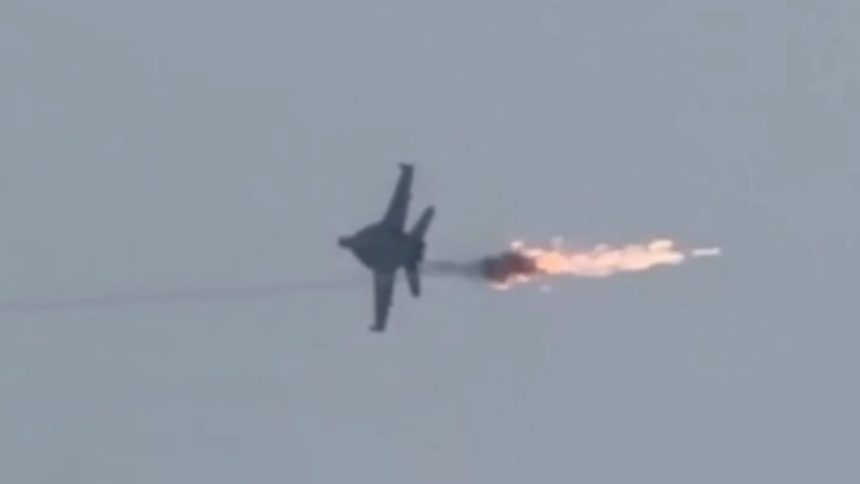
A U.S. F/A-18 Super Hornet was involved in a near miss after being targeted by an apparent Iranian MANPADS system during a low altitude strafing run with the 20 mm M61 cannon.
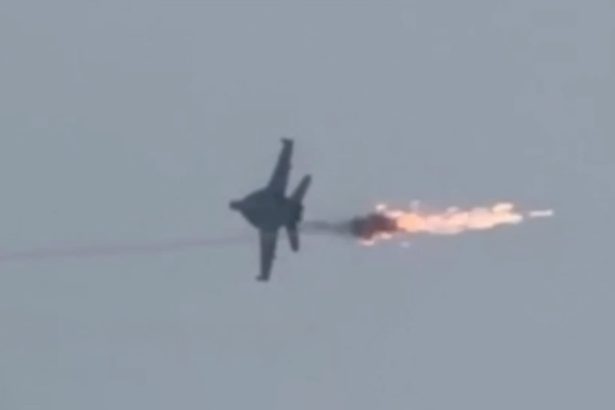
Videos emerged online on Mar. 26, 2026, show a U.S. Navy F/A-18 Super Hornet fighter jet targeted by an apparent Iranian MANPADS (Man-Portable Air-Defense Systems). The videos, geolocated near the port of Chabahar in Iran’s Sistan and Baluchestan Province, show a near-miss from multiple points of view.
The Videos
According to the videos, reportedly captured on Mar. 25, the Super Hornet was conducting a strafing run with its M61 20 mm cannon against an Iranian target. The exhaust gases of the cannon can be clearly seen in the video, followed by the sound.
WATCH: Iranian MANPADS hit came very close to taking out a U.S. Navy F/A-18E/F Super Hornet jet over Iran yesterday. pic.twitter.com/GwSz9xlXQb
— Clash Report (@clashreport) March 26, 2026
Shortly before the missile came into view, the F/A-18 is seen conducting a left-hand turn. It is unclear if the crew spotted the threat, as no disposable countermeasures – such as chaff and flares – were deployed by the aircraft, and such turns are often performed after strafing runs to clear the target area.
GeoConfirmed Iran.
A U.S. Navy F/A-18 was hit near the Iranian city of Chabahar after being targeted with what appears to be a MANPADS system. He was flying near or above the Imam Ali Independent IRGC Naval Base.
Rough location, area grid of the F/A-18 –
25.332214, 60.602761… https://t.co/aeS3LB1V2c
— GeoConfirmed (@GeoConfirmed) March 26, 2026
The missile is then seen exploding behind the aircraft, which flew away apparently unscathed. Shrapnel can be seen flying around the explosion, which was possibly triggered by a proximity fuse.
Video reportedly of a US Navy F/A-18 getting hit by IRGC Air Defense over Chabahar.
IRGC Public Relations Office claimed the fighter crashed in the Indian Ocean.https://t.co/0k4NXBJl0R pic.twitter.com/jS8Jur2HSp
— Mehdi H. (@mhmiranusa) March 25, 2026
In fact, with an elongated flame developing on the missile’s trajectory, it is apparent that a direct hit on the jet was not achieved. Had the missile hit the Super Hornet, the explosion would have developed around the airframe, resulting in a wider flame rather than an elongated one.
Better video of a U.S. Navy F/A-18 Super Hornet fighter jet being targeted by the Iranians with a surface-to-air missile, perhaps fired from MANPADS, over the city of Chabahar in southern Iran on Wednesday.
The missile didn’t immediately appear to cause any significant damage to… pic.twitter.com/LrguBu7YVI
— Status-6 (War & Military News) (@Archer83Able) March 25, 2026
The quality of the videos and the perspective don’t help to get a clearer view of what happened. Especially the perspective, which can be further altered by the zoom, might appear to show a direct hit.
However, comparing the different videos which emerged of what appears to be the same engagement – including one showing the incident from a more frontal point of view instead of the rear, the most likely outcome is the near-miss.
The Response
The Islamic Revolutionary Guard Corps (IRGC) immediately claimed that the aircraft was struck and later crashed in the Indian Ocean. Iran’s Fars News Agency published the statement from the IRGC:
“The enemy F-18 fighter jet was accurately hit in the sky of Chabahar by missiles from the IRGC Navy’s advanced modern air defense system, under the command of the country’s integrated air defense network, and crashed in the Indian Ocean.”
The U.S. Central Command (CENTCOM) responded with a fact check stating that this was false, and “No U.S. fighter aircraft have been shot down by Iran.” Social media users and the OSINT community noted the specific wording used by CENTCOM, as they were responding to the claim saying an “F/A-18 fighter was struck” without mention of the shoot down’s claim.
🚫FALSE: The Islamic Revolutionary Guard Corps announced a U.S. F/A-18 fighter was struck over Chabahar using new advanced air defense systems.
✅TRUE: No U.S. fighter aircraft have been shot down by Iran. pic.twitter.com/I25QFjYo0l
— U.S. Central Command (@CENTCOM) March 25, 2026
Users thus noted that the wording and the statement’s focus on “shot down” might indicate the Super Hornet was at least hit by shrapnel. However, without the means to independently verify it, this would be only speculative.
>Struck? No! Nothing was shot down.
That wasn’t they were saying, but ok. https://t.co/IixHsPqdUY
— Evergreen Intel (@vcdgf555) March 25, 2026
Super Hornets at Low Altitude
The U.S. Navy’s F/A-18 Super Hornet fighter jets have been spotted multiple times while flying at low altitude over Iran, and especially over port cities. In fact, videos showing this already appeared between the second and the third week of Operation Epic Fury.
USS Abraham Lincoln continues flight operations against military targets in Iran while sailing in regional waters. pic.twitter.com/GsLQKNaTbN
— U.S. Central Command (@CENTCOM) March 26, 2026
Notably, some of the videos were reportedly captured near Chabahar, the same location where the near miss was recorded. According to the accounts who posted the videos, some of the first instances of Super Hornets conducting strafing runs in the area were already witnessed during the operations’ second week.
Initially, media released by CENTCOM showed F/A-18 Super Hornets mainly employed to lob stand-off weapons at targets in Iran. Now, with the continued targeting of Iranian military equipment, it appears that the airspace has become permissive enough to conduct operations at low altitude.
Strafing run happened last week, but Navy Super Hornets have continued to operate at low level over Chabahar since. https://t.co/J5JT3FaywK
— OSINTtechnical (@Osinttechnical) March 15, 2026
However, even if the U.S. military now says it has struck over 10,000 Iranian targets since Feb. 28, 2026, when Epic Fury was initially launched, some threats are still present. In fact, while larger air defense systems such as static and vehicle-mounted missile launchers can easily be spotted and targeted, the MANPADS threat is more subtle, as the size of those systems means they can be more easily hidden.
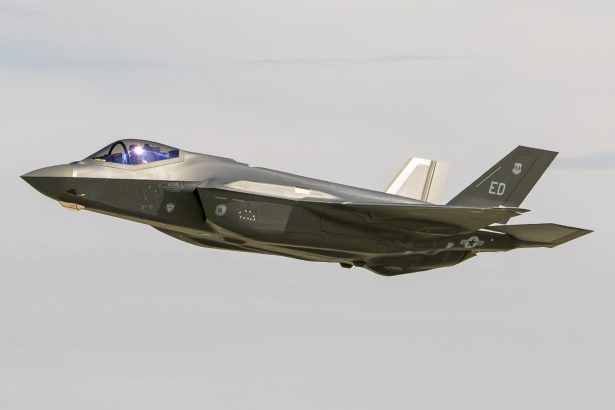
MANPADS are also claimed to be behind the incident which prompted the emergency landing of an U.S. F-35 after a combat mission over Iran. Reports say that the aircraft was allegedly hit by Iranian fire, with the pilot suffering shrapnel wounds.
The extent of the damage is not known, as CENTCOM declined to comment on that, however sources claim that the aircraft might have conducted a “hard landing” and might not be repairable. Either way, should the report about a missile striking the F-35 be true, the airframe has demonstrated itself to be sturdy enough to allow the pilot to safely return back to base instead of ejecting.