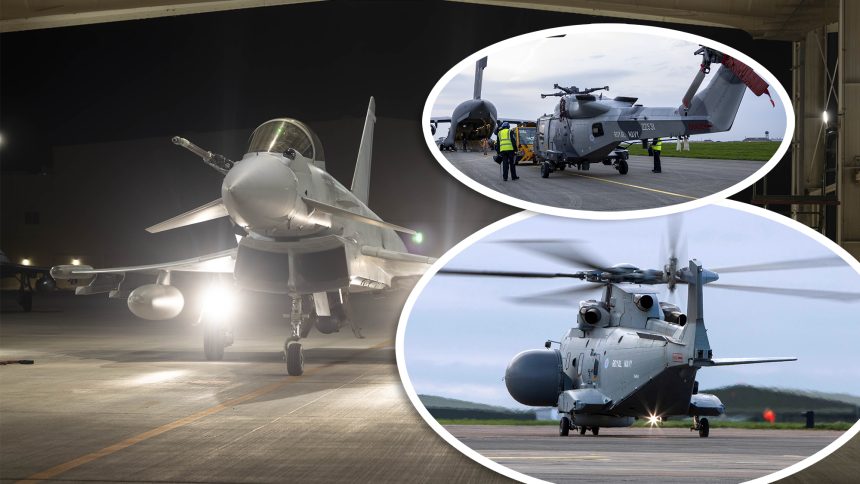
The UK has dispatched four more Typhoon FGR4s, two Wildcat HMA2s, and a Merlin HM2 ASaC towards the Middle East to strengthen defences as U.S. strategic bombers begin to use UK bases for operations against Iran.
As Type 45 destroyer HMS Dragon prepares to sail for the Eastern Mediterranean, four more Typhoon FGR4s have already arrived in Qatar, and the Wildcat HMA2s which will use Martlet missiles to defend RAF Akrotiri from incoming drones have arrived in theatre.
These additional deployments come as U.S. Air Force strategic bombers begin to use UK bases, including RAF Fairford, for Operation Epic Fury sorties. The UK, initially refusing to issue permission, has now granted consent for certain types of missions to be flown from these bases. A single B-1B Lancer arrived at RAF Fairford on Mar. 6, then joined by three additional aircraft which first flew a combat mission over Iran before heading to the UK. Another single ship B-1 then landed from the U.S. after 1700 UTC.
More deployments, including to Diego Garcia, are expected to come, and U.S. transport aircraft have now begun flying to RAF Fairford from Minot Air Force Base, which operates the B-52 Stratofortress.
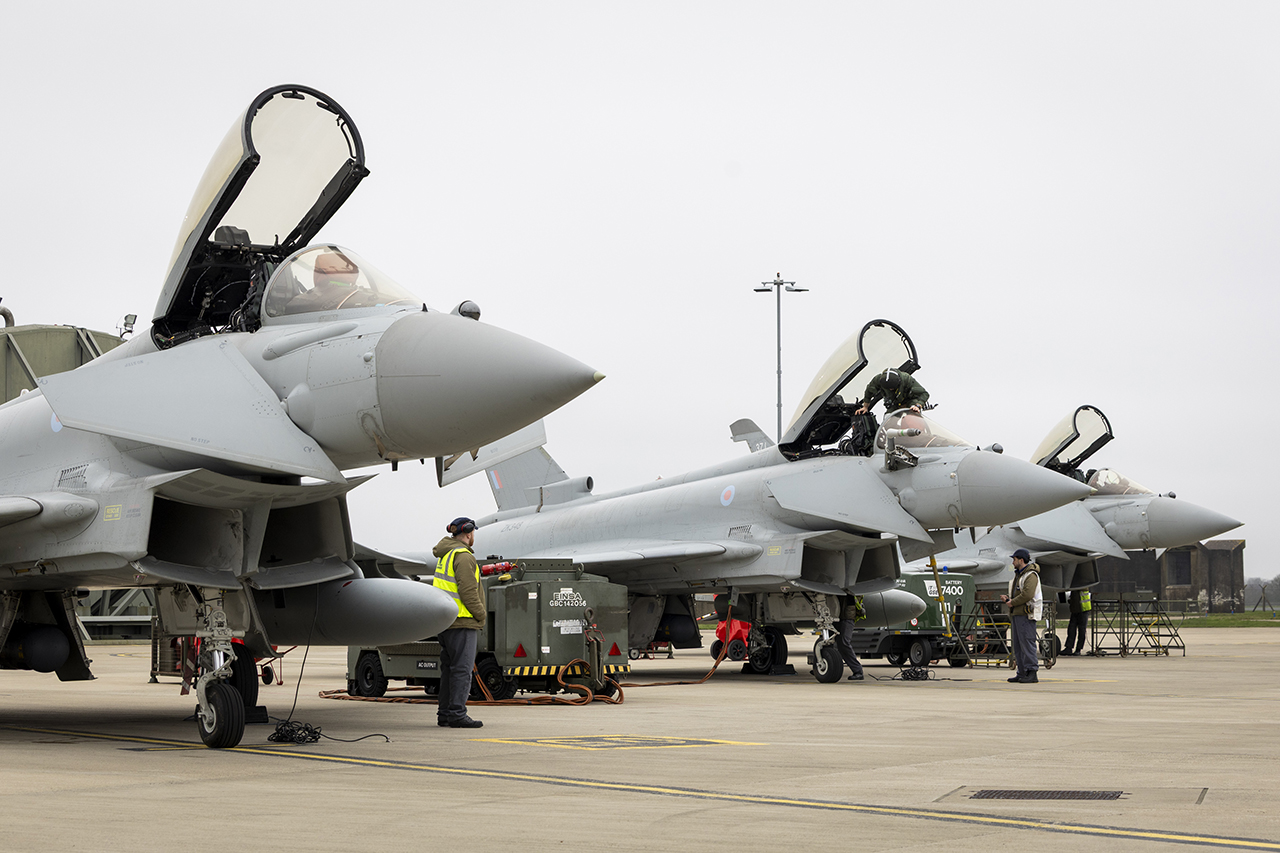
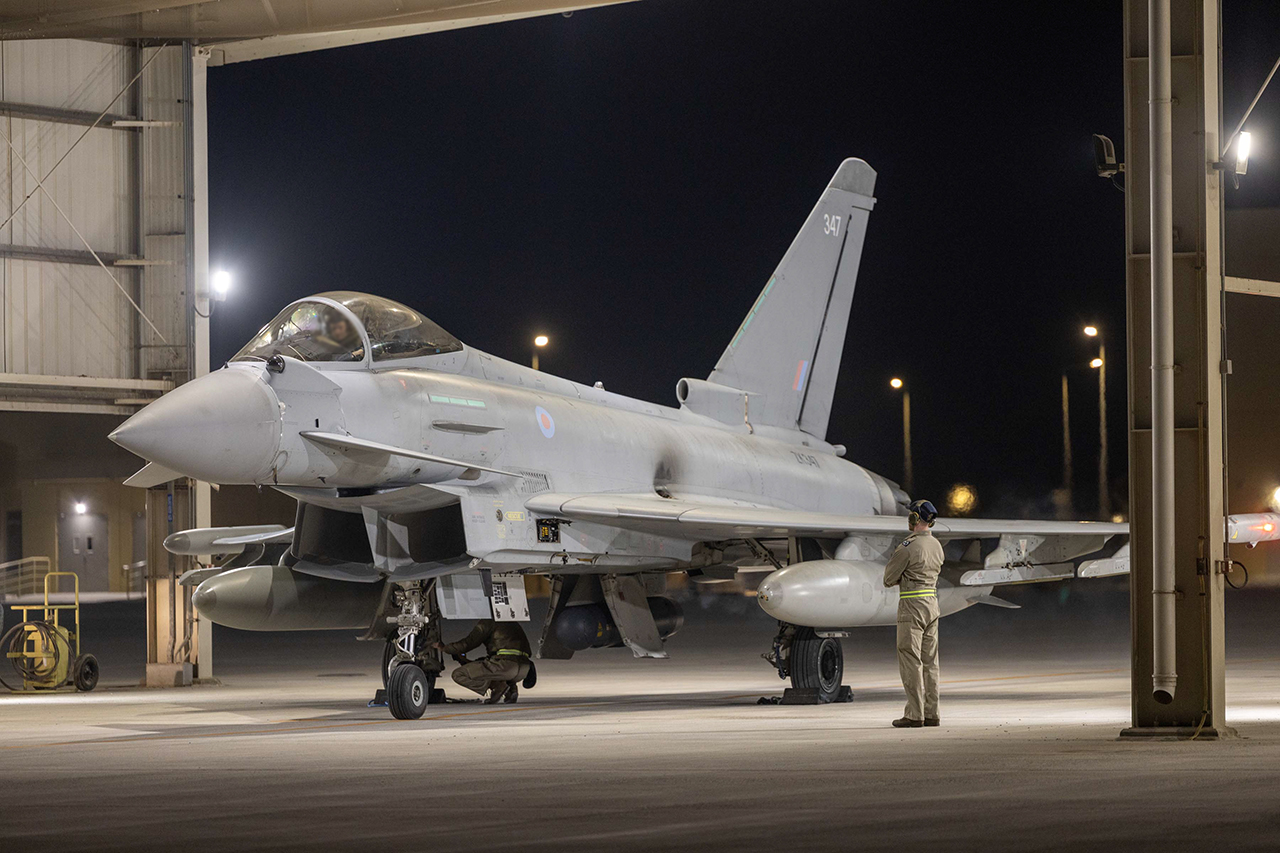
The newly deployed Typhoons, from 11 Squadron, left RAF Coningsby on Mar. 6, 2026, and arrived in Qatar later that day. They join Typhoons from 12 Squadron, a joint UK/Qatar unit, which were forward deployed there in February. Since the commencement of the U.S.-Israeli military action against Iran, these 12 Squadron Typhoons have flown combat air patrol sorties and destroyed at least one Iranian attack drone bound for Qatar.
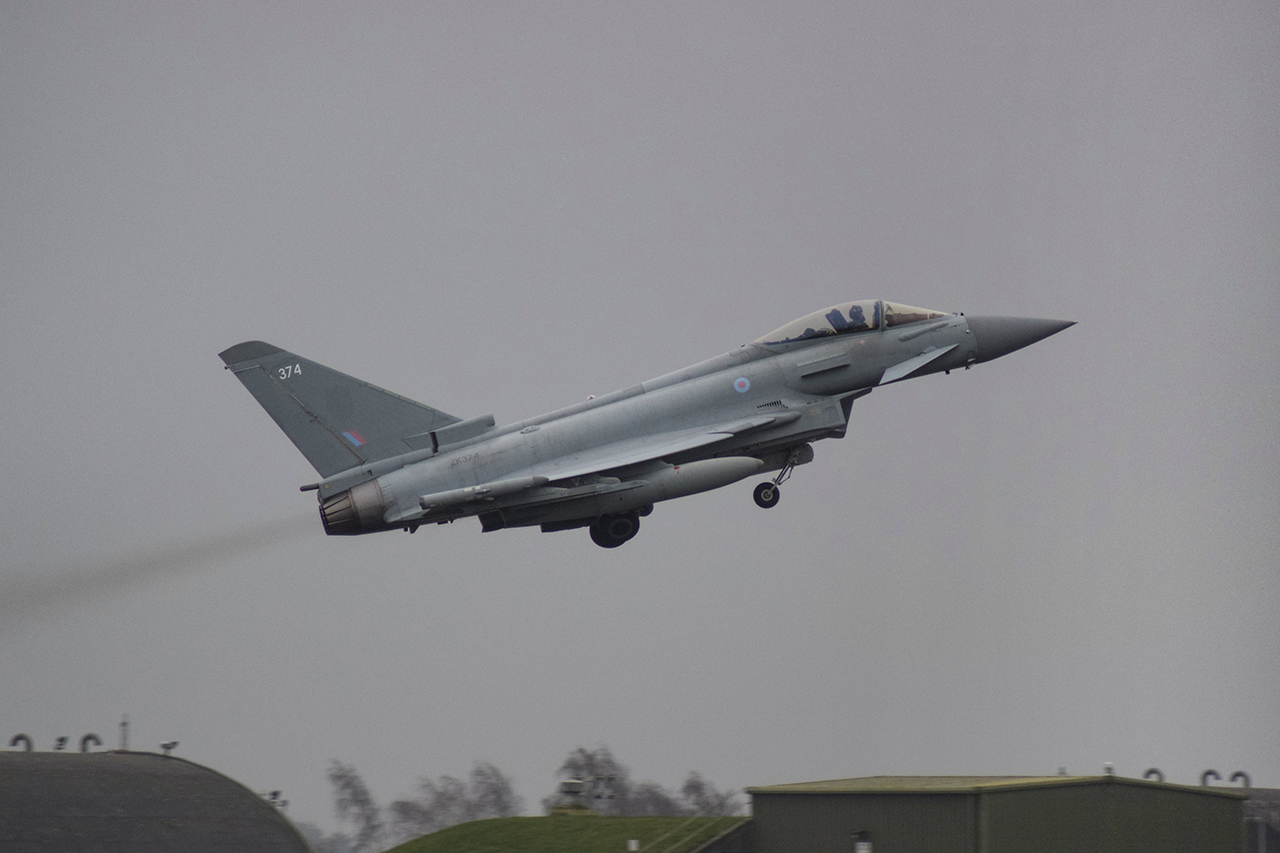
RAF Coningsby’s Commander Air Wing said: “Deploying additional Typhoon aircraft demonstrates the RAF’s ability to respond rapidly and reinforce our existing air presence in the Middle East. Working alongside our partners from 12 Squadron and the Middle East, this deployment strengthens our collective capability and underlines the UK’s enduring commitment to regional security and stability.”
The the Typhoons flew out to Qatar unarmed, but in theater will make use of deployed stocks of Advanced Short Range Air to Air (ASRAAM) and Meteor missiles. LITENING pods carried on the centreline pylon add a flexible intelligence, surveillance, target acquisition, and reconnaissance (ISTAR) function and they have become an almost permanent feature on combat-equipped Typhoons, even when flying in an air defence role.
On Mar. 7, the Royal Navy also began the deployment of a Merlin HM2 equipped with the Crowsnest Airborne Surveillance and Control (ASaC) radar system – seen in pictures in the folded position, to avoid it striking the ground – to an unspecified Middle East location. ZH864 departed RNAS Culdrose as NAVY 012 and traveled south to France for the first leg of its journey.
It was not stated precisely where the Merlin would be stationed, though alongside other assets at RAF Akrotiri would be logical. Together with the Wildcat helicopters, the Merlin – using altitude and mobility in its favor – can provide a more flexible and longer range 360-degree early warning capability compared to the permanent UK operated Type 101 radar head on Mount Olympus or the Giraffe radar systems reportedly deployed at Akrotiri itself.
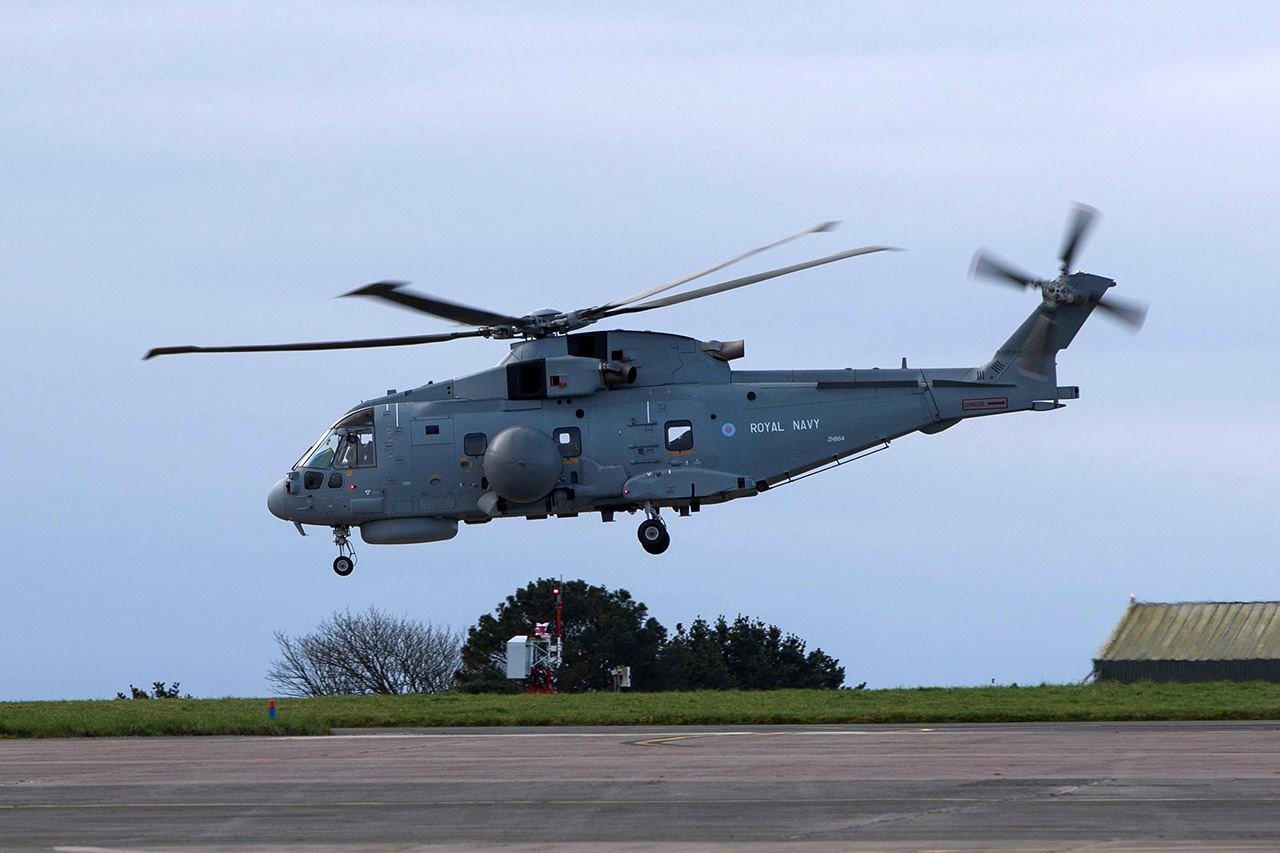
The Crowsnest system is usually tasked with providing airborne early warning for the Royal Navy’s aircraft carriers, but as with its Sea King ASaC7 predecessor it can be deployed to a variety of locations and use its radar for air, sea, and land surveillance. All Merlins fitted to carry Crowsnest are still capable of being re-roled as anti-submarine warfare (ASW) or general utility helicopters.
After a troubled and delayed development process, Crowsnest reached the full operating capability (FOC) milestone in 2025 but under the most recently announced plans is due to be withdrawn in 2029. Whether this 2029 sundown, in favor of uncrewed systems, does take place remains to be seen.
Wildcats Arrive
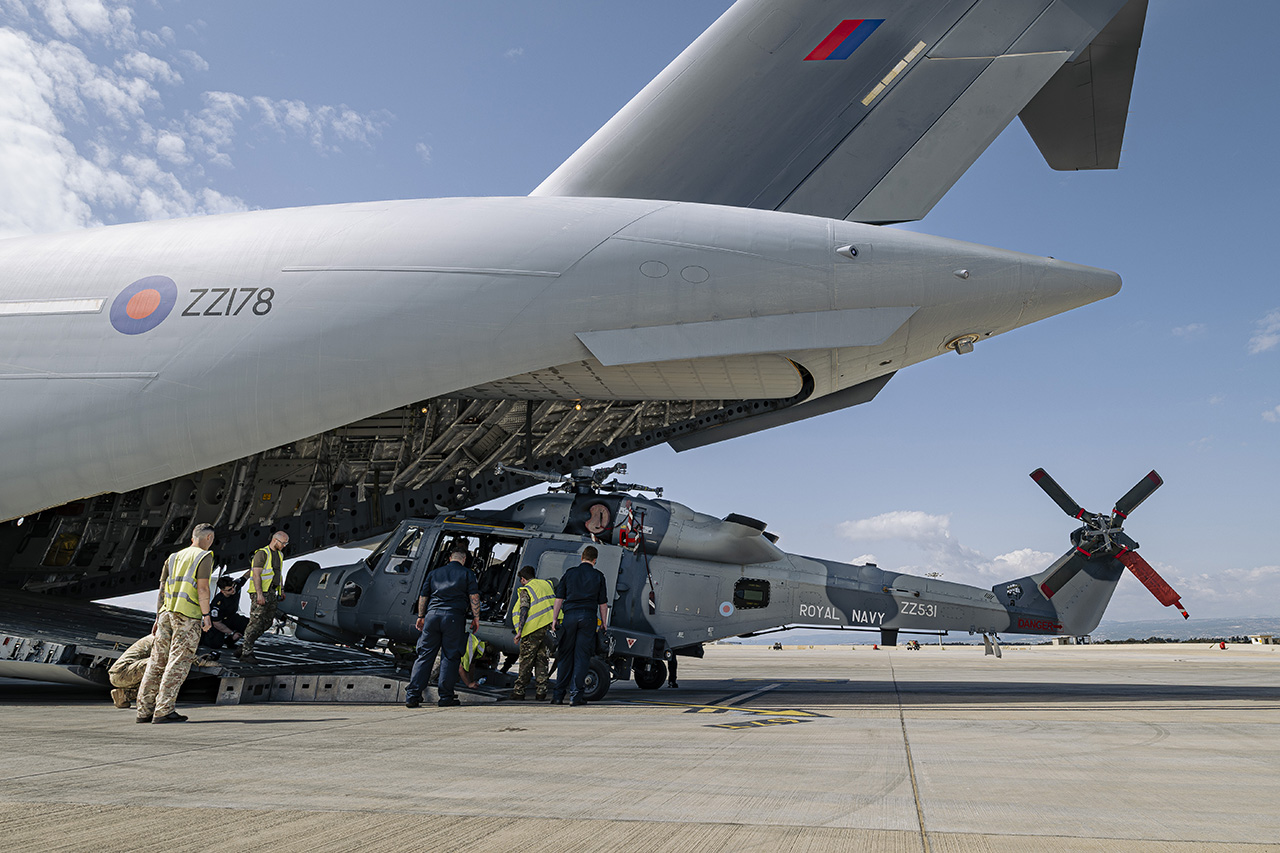
After we covered the announcement in a previous article, Wildcat HMA2 helicopters from 815 Naval Air Squadron at RNAS Yeovilton were prepared for air transport and soon loaded onto an RAF C-17 Globemaster III to be shipped to RAF Akrotiri.
The Wildcats can fly sorties from Akrotiri itself, and when HMS Dragon arrives in the region could also use the ship as a forward base or refueling point on longer sorties. Each aircraft can carry up to 20 Martlet missiles, originally designed for light anti-surface strikes but now finding a new role targeting small drones.
Secretary of State for Defence John Healey paid a two day visit to RAF Akrotiri on Mar. 4 and Mar. 5, speaking to reporters about ongoing operations in the region and meeting personnel involved in defensive missions.
“I’m very proud of the support they give”🗣️
The Defence Secretary has thanked personnel defending the Middle East and Europe on a visit to Cyprus
John Healey was quizzed on how an Iranian drone was able to pierce the layers of defence at Britain’s most important overseas base pic.twitter.com/mQl3CIlkpS
— BFBS Forces News (@ForcesNews) March 5, 2026
While he was at the base, air raid sirens were activated on at least two occasions, and there was concern that a ballistic missile threat might have been inbound – an alert later stood down as the missile’s trajectory became clearer. As far as is public knowledge, no further attacks have successfully hit the base since the very first drone struck a hangar apparently utilised by U.S. U-2s.
Speaking to The Times, Healey said that as indications of imminent U.S. action against Iran had built up over the previous few months he had ordered additional air defence capabilities to Akrotiri. Some of these are thought to include the previously mentioned Giraffe radars, as well as counter-drone systems (C-UAS). The exact nature of what has and what has not been deployed is not clear. He said, though, no one had anticipated the scale of the conflict that would come – with the first night of raids led by a decapitation strike that killed Iranian Supreme Leader Ali Khamenei.
This week, our Armed Forces have shown extraordinary professionalism and dedication. They are protecting British lives and British interests in the Middle East.
And that work continues ⬇️ pic.twitter.com/0QZjja0joD
— John Healey (@JohnHealey_MP) March 7, 2026
In response, Iranian missiles and drones were launched at targets across the Middle East with little discrimination in targets between those who had and those who had not participated in the attack. This is what then spurred the Ministry of Defence to mobilise additional assets.
Carrier Movements
It is now reported that the UK’s HMS Prince of Wales aircraft carrier, previously held at 10 days readiness to sail, has been moved to 5 day readiness. This is not necessarily an indication that the ship will definitely deploy, but is part of the overall heightened response to allow the UK to be ready for any emerging situation.
Latest news article:
HMS Prince of Wales placed on five days’ notice to sail in response to Middle East crisis https://t.co/RFcPsAJPl9 pic.twitter.com/LDvNB3r1Le
— Navy Lookout (@NavyLookout) March 7, 2026
For this conflict itself, with the UK currently running defensive taskings only, the utility of an aircraft carrier is somewhat negated by the nearby presence of RAF Akrotiri and allied bases across the Middle East (owned by nations who have requested UK assistance in downing drones and missiles).
The U.S. Navy’s aircraft carrier USS Gerald R. Ford, previously operating in the Eastern Mediterranean, has now moved through the Suez Canal to the Red Sea. This move itself is interesting as defending the carrier during a Suez and Red Sea transit is more difficult than in open seas, so the U.S. assessment of the potential threat now must be low enough to permit this.
NEW: The USS Gerald R. Ford has transited the Suez Canal on Thursday and is now operating in the Red Sea per images posted to DVIDS. pic.twitter.com/fi1jUz94mr
— Konstantin Toropin (@KToropin) March 6, 2026
After an already extensive deployment, the carrier was retasked from the Caribbean to the Mediterranean before the launch of Operation Epic Fury, and the Ford’s deployment now looks set to become one of the longest and most arduous in recent U.S. Navy history.
Despite reports that an additional carrier is already en route, the USS George H. W. Bush has yet to depart Norfolk on its already scheduled deployment. However, the aircraft carrier has now completed the pre-deployment COMPTUEX training drill and returned to port to prepare for what is likely to be an eventful voyage.