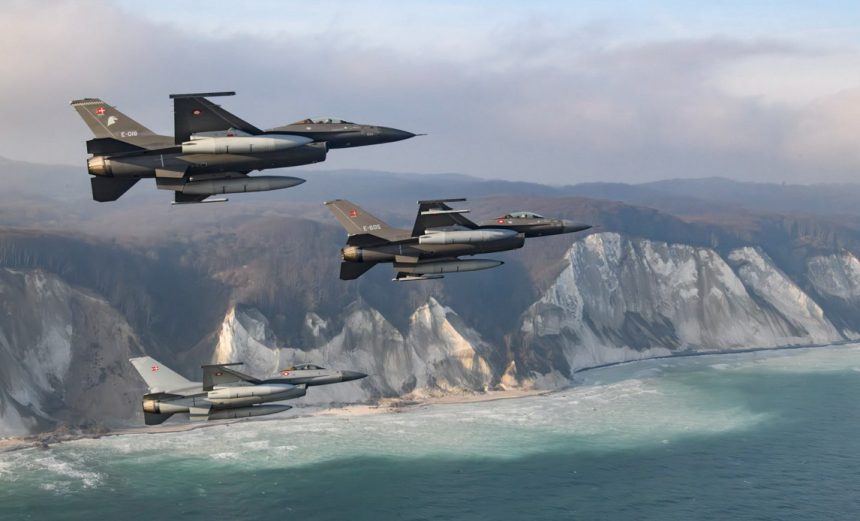
The F-16 Fighting Falcon has been an important part of the Royal Danish Air Force since 1980, and will now pass the torch to the F-35A Lightning II.
The Royal Danish Air Force’s (RDAF) F-16 Fighting Falcon flew for the last time on Jan. 18, 2026, at Skrydstrup Air Force Station, concluding a 46-year service. The Vipers will now pass the torch to the F-35A Lightning II, but their days in the skies are not over, as they will move on to fly in Ukraine and Argentina.
Official Farewell
The RDAF held an official farewell to celebrate the end of the F-16’s service with Squadron 727 at the Fighter Wing in Skrydstrup. Four Vipers took off for a final formation flight over the country, before landing for the final time at 2 p.m. local time.
A ceremony was then held in Hangar 3, where people were invited to come by and get up close to the jet, meet and talk to those who have worked with the F-16 over time, including pilots, security assistants, technicians and many others.
“It can be both easy and difficult to wave goodbye to the past and welcome the future. Because with 46 years under our belt, or four years from the “golden wedding”, it is an era to wave goodbye to in the Air Force. Since 1980, the F-16 has been a permanent fixture at Fighter Wing Skrydstrup. A true workhorse. But now it is time to pass the baton and let the F-35 step in as the newest new one. You can therefore see a mixture of joy and sadness when you look around at several of those present today.”
— Danish Defense Command
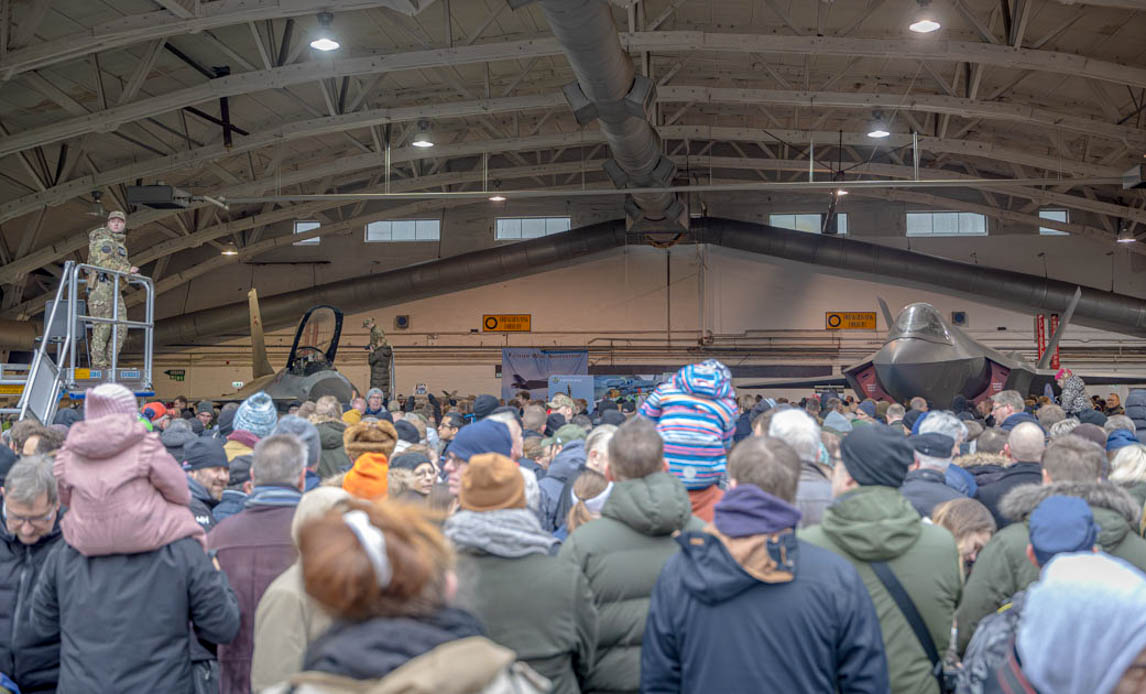
Among the speakers of the event was General and former Chief of Defense Christian Hvidt, callsign “VIT,” who landed the first Danish F-16 in Skrydstrup in 1980 and later commanded Squadron 727. The General thanked and paid tribute to the many people who worked on the F-16 for their efforts.
“We’re not talking about the age of the F-16, because it has been maintained by probably the world’s best aircraft technicians, and is flown by some of the world’s best pilots,” said Gen. Hvidt. “A big congratulations to the 727. What exciting and enormous challenges lie ahead.”
RDAF’s Future
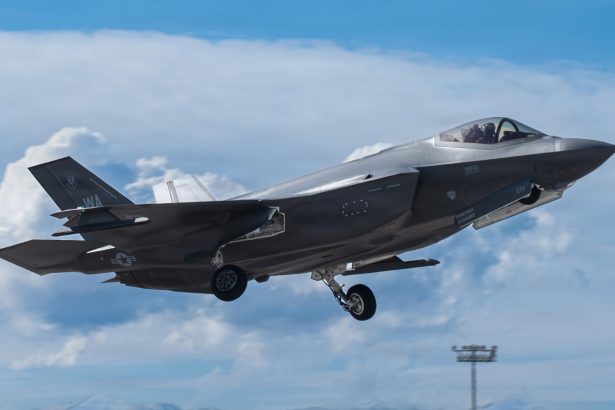
The duties of the F-16 are now being taken over by the F-35, which first arrived in country in September 2023. On Apr. 1, 2025, the Lightning II took over the Quick Reaction Alert mission in support of NATO, replacing the Viper in that role.
The service said on that occasion that the F-35 was planned to gradually take over all tasks from the F-16 aircraft over the coming years. With the F-16’s farewell, the service said “technological development is continuous, and it is going fast,” with completely different requirements placed on fighter aircraft, making the F-35’s acquisition necessary.
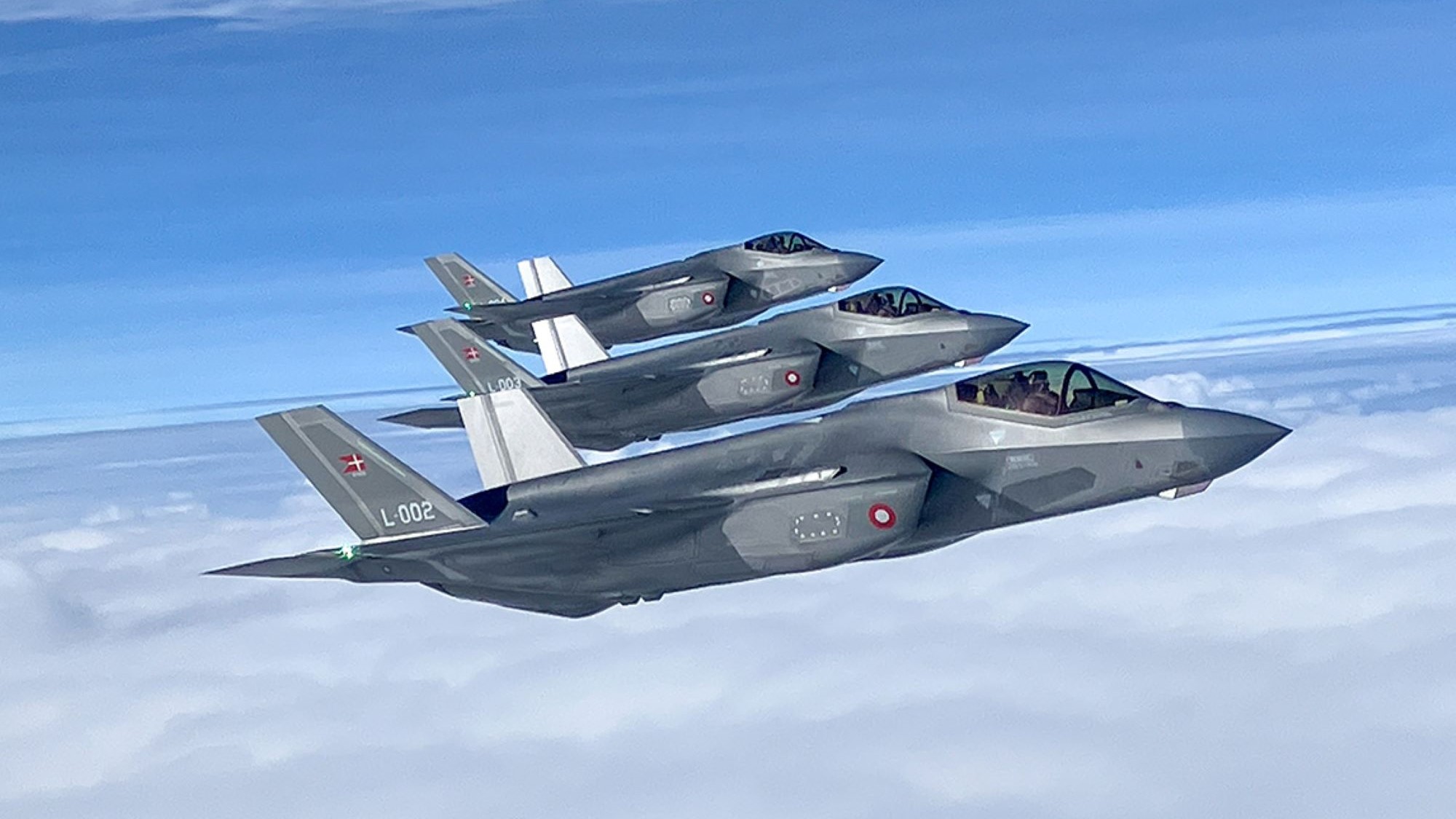
“In the future, we will see a completely different type of warfare,” said Steen Hartov, senior advisor in the Danish Air Force’s Fighter Wing. “We will see significantly less divided battles, and instead we will see wars where battles on the ground, in the air, at sea, in space and not least digitally will take place at the same time and affect each other directly.”
The F-35 will allow modern battlefields’ “missing puzzle pieces to be put together to form a complete picture of the battlefield.” The jet’s ability to scan large areas, gather information, and send it back will provide a sharp overview and insight into the battlefield.
The Danish Defense Ministry has purchased 43 F-35 fighter jets, which include 27 aircraft ordered in 2016 and 16 more ordered in 2025. The first jets were received in September 2023, and the MoD says all aircraft are expected to be fully operational by next year, possibly referring to the initial order.
F-16s Moving to Ukraine and Argentina
Denmark has arranged for the majority of its F-16s to continue serving with allied nations, notably Argentina and Ukraine. With the aircraft being upgraded throughout the years and still in good conditions, it was decided to transfer the F-16s rather than scrap them.
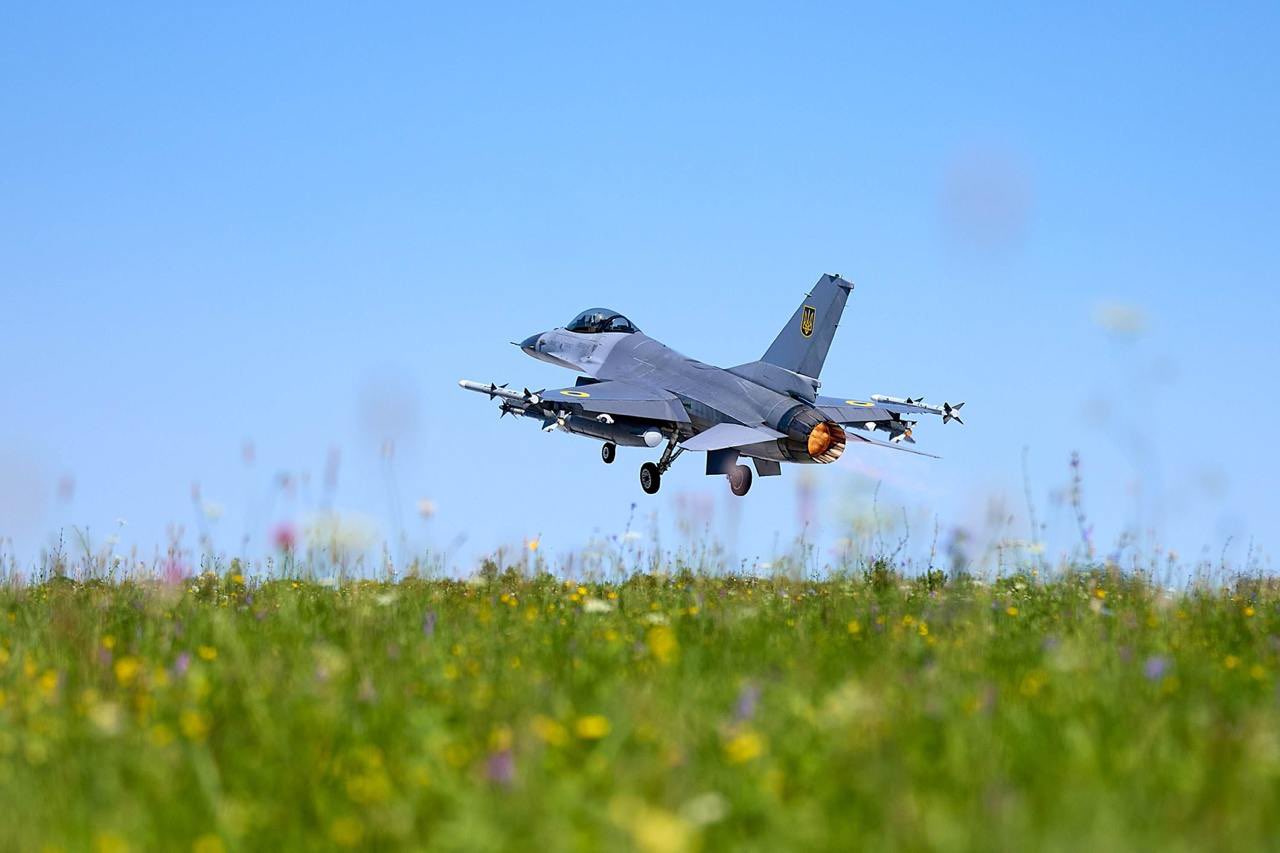
In August 2023, Denmark has committed to donating 19 F-16s to Ukraine. These aircraft are part of dozens of F-16s which several NATO allies have pledged to donate to help the country.
The partner nations also established a multinational coalition to support Ukraine in developing a complete F-16 capability, which includes not only aircraft but also pilot and ground crew training, logistics, infrastructure and ongoing maintenance support. Danish F-16s were among the first to be delivered in August 2024.
Denmark’s support extends beyond the aircraft themselves, with Copenhagen allocating significant funding to contribute to air defense operations and the sustained upkeep of the F-16 fleet in Ukrainian service. Ukrainian pilots, technicians and support personnel also underwent training in Denmark.
In April 2024, Denmark and Argentina formalized an agreement for the sale of 24 surplus F-16AM/BM Fighting Falcons. The contract was signed by Danish Defense Minister Troels Lund Poulsen and Argentine Defense Minister Luis Petri in Buenos Aires, with U.S. government approval essential given the American origin of the aircraft.
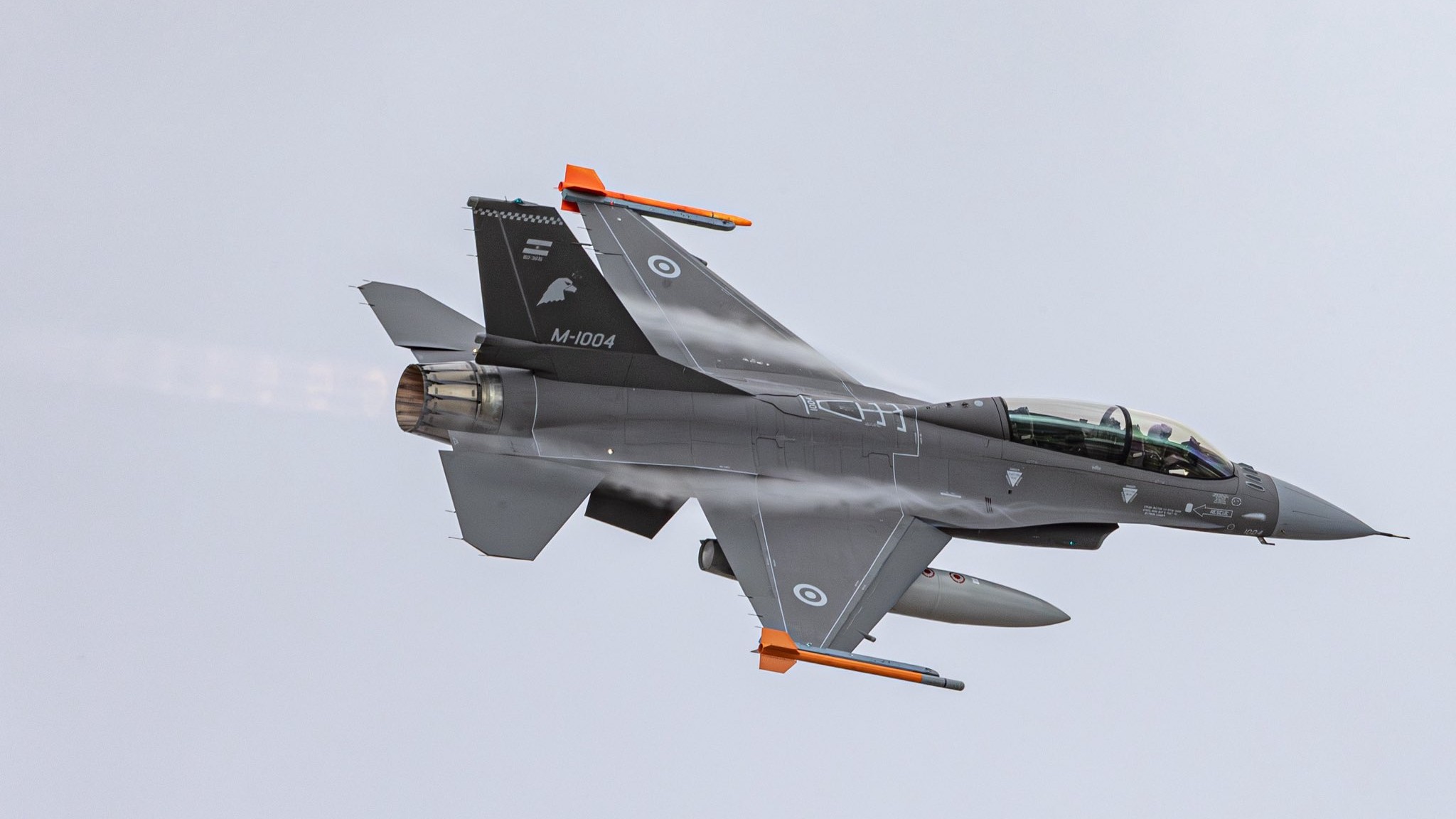
The deal was carried out in close cooperation with Washington, which cleared the transfer under U.S. export regulations and provided support. The purchase price was reported in the range of several hundred million dollars, covering not only the jets themselves but also spare parts, simulators and training packages to ensure Argentina can operate and maintain the type effectively.
For Argentina, the acquisition represents one of the most significant military aviation procurements in decades. In fact, the Argentine Air Force (Fuerza Aérea Argentina) has been without a supersonic fighter capability since the retirement of its Mirage III fleet in 2015.
The first six ex-Danish jets were ferried to Argentina in December 2025. The deliveries are scheduled in batches every year through until 2028, and will allow to restore air defense and multirole capabilities long absent from the region.
The F-16 in Denmark
Since their introduction in 1980, the F-16 Fighting Falcons have been at the core of the Royal Danish Air Force for 46 years, shaping Denmark’s air power from the latter stages of the Cold War through the shifting security landscape of the 21st century. The decision in the mid-1970s to acquire F-16s marked a major modernization effort for the service.
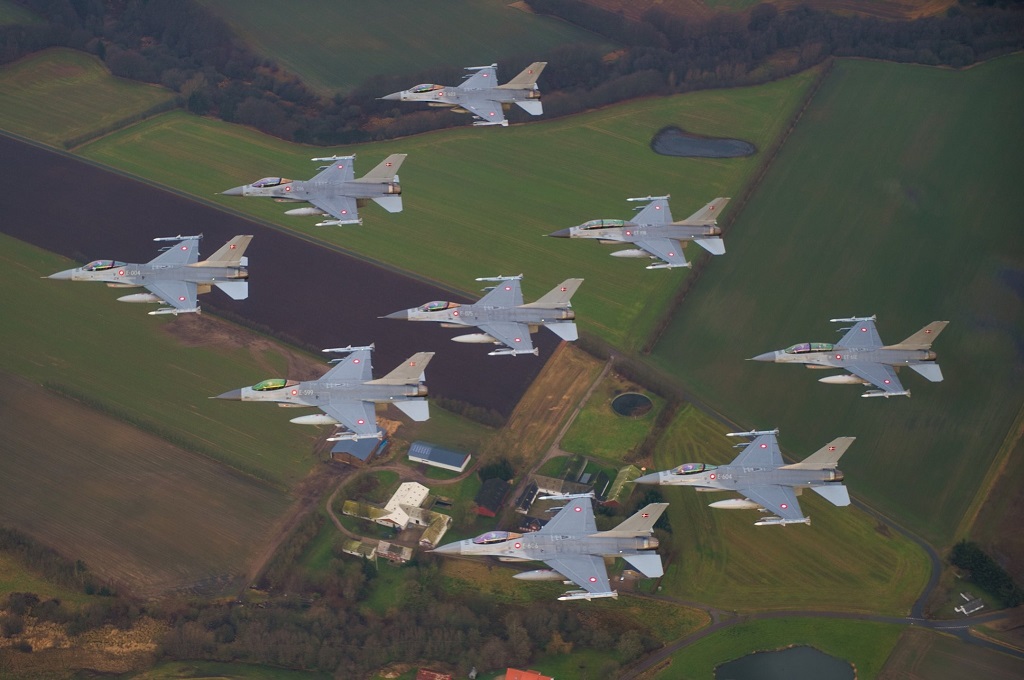
Denmark first ordered the type in 1975 together with the European Participating Air Forces, a cooperative procurement with the Netherlands, Belgium, Norway and later Portugal. The first Danish F-16s arrived at Skrydstrup Air Base in January 1980.
Over successive years, Denmark expanded its buy to 77 F-16A/B aircraft in multiple batches. Throughout its service life, the Danish F-16 fleet was continually upgraded to keep pace with evolving requirements.
Through participation in the Mid-Life Update (MLU) and related modernization programs, Danish jets were brought to F-16AM/BM standards with updated avionics, sensors and weapons systems, making them broadly comparable to later Block 50/52 models. Danish industry also contributed to unique enhancements, such as reconnaissance pods and specialized self-protection pylon systems such as IDS (Pylon Integrated Dispensing System) and ECIPS (Electronic Combat Integrated Pylon System).
Danish F-16s flew combat and support missions across multiple theatres, including the Balkans during the 1999 Operation Allied Force, Operation Enduring Freedom in Afghanistan, coalition campaigns over Iraq and Syria, and Unified Protector over Libya in 2011. The Vipers also carried out critical Baltic and Icelandic air policing duties, safeguarding NATO airspace during periods of heightened regional tension.