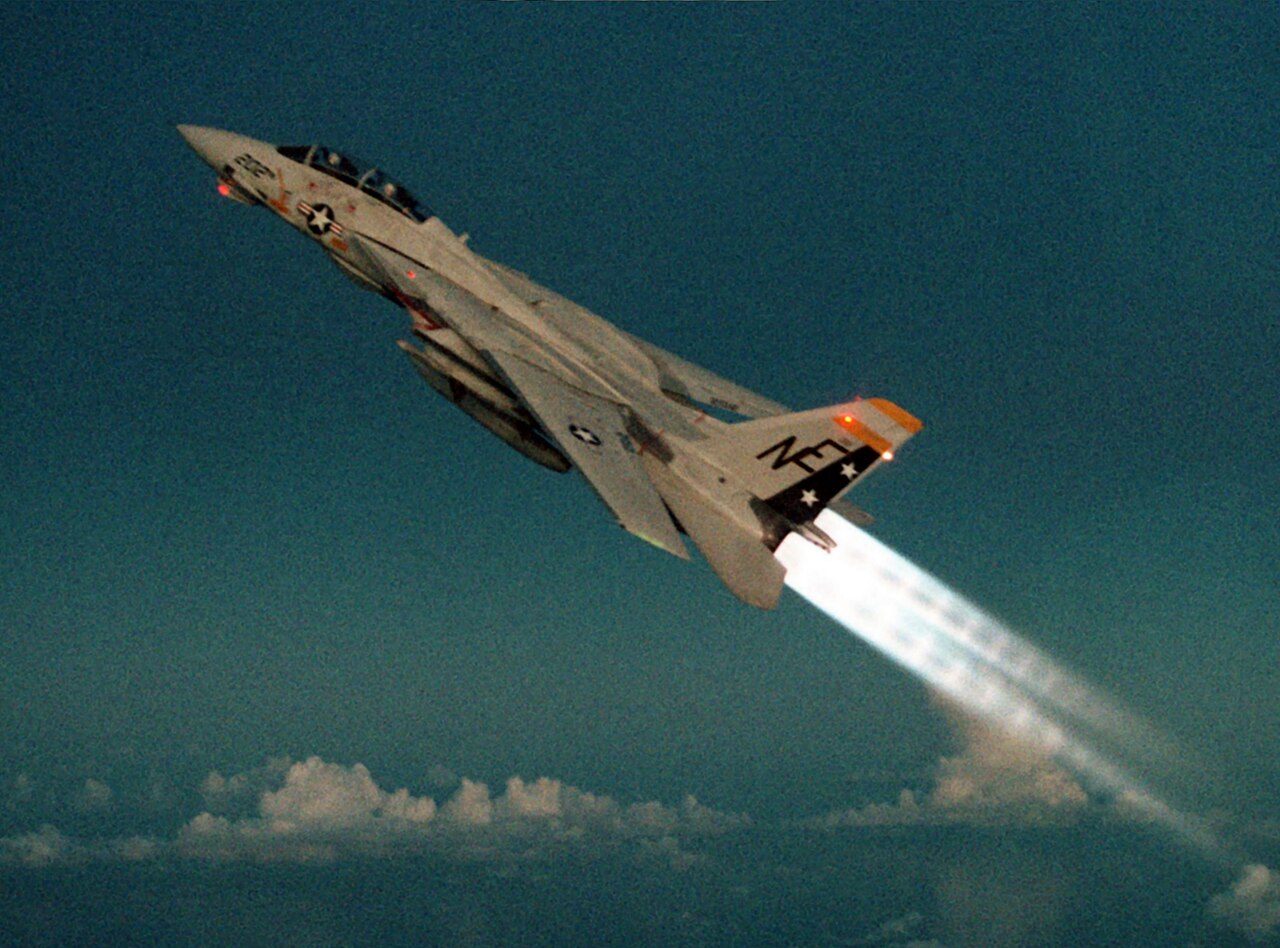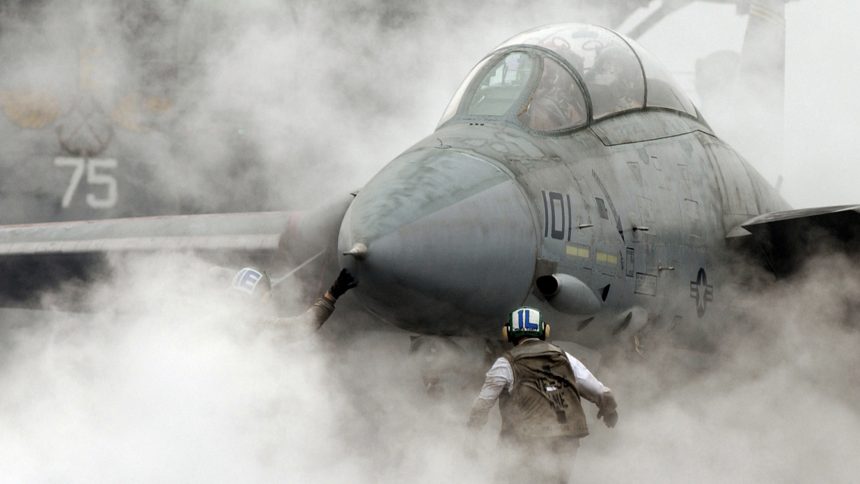
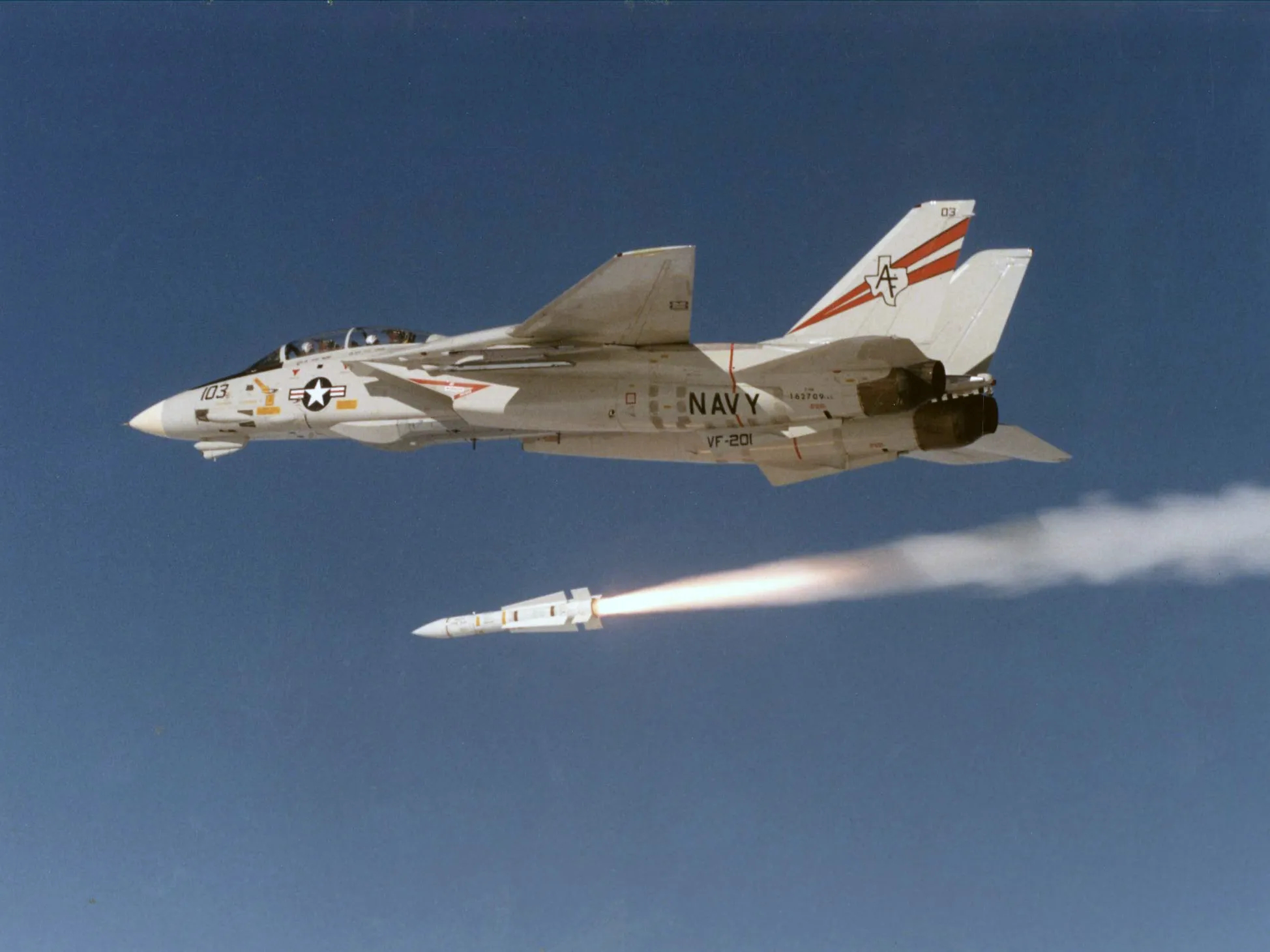
Developed by Hughes through the F-111 program, the AWG-9, mated with the AIM-54 Phoenix, made the Grumman F-14 Tomcat the most deadly fleet defense weapon of its time.
Produced by Hughes Aircraft Company and originally conceived through the F-111 program, the Air Weapons Group Nine (AWG-9) avionic system found a home in the Grumman F-14 Tomcat variable-geometry twin-engine all-weather interceptor/air-superiority fighter and when mated with the AIM-54 Phoenix Air-to-Air missile (AAM), the Tomcat was the most deadly fleet defense weapon of its time.
A Powerful Radar
With a Cold War era idea dating back to the ill-fated Douglas F6D Missileer proposal for a carrier-based fleet defense fighter in 1959, followed by the cancelled U.S. Air Force (USAF) interceptor project known as the XF-108 Rapier, and also continuing on to the U.S. Navy’s (USN) General Dynamics /Grumman F-111B which was also cancelled, the idea of a long-range interceptor to protect the fleet continued with Hughes Aircraft making the suggestion of improving the ASG-18 radar and AIM-47 missile to fill the need. This effort eventually produced the AWG-9 radar and AIM-54 Phoenix missile to be mated with the new VFX project that eventually produced the Grumman F-14 Tomcat.
The AWG-9 weapons control system could track up to 24 targets at once and allow 6 of them to be fired upon simultaneously. Weapons readiness was combined in a single control panel, and utilizing data from sensors and/or a two-way data link that allowed the Tomcat to transmit and receive information from surface ships and other aircraft as the system advised the two-man crew of the most effective weapons usage for the situation. A single Airborne Missile Control System (AMCS) performed all critical navigational functions.
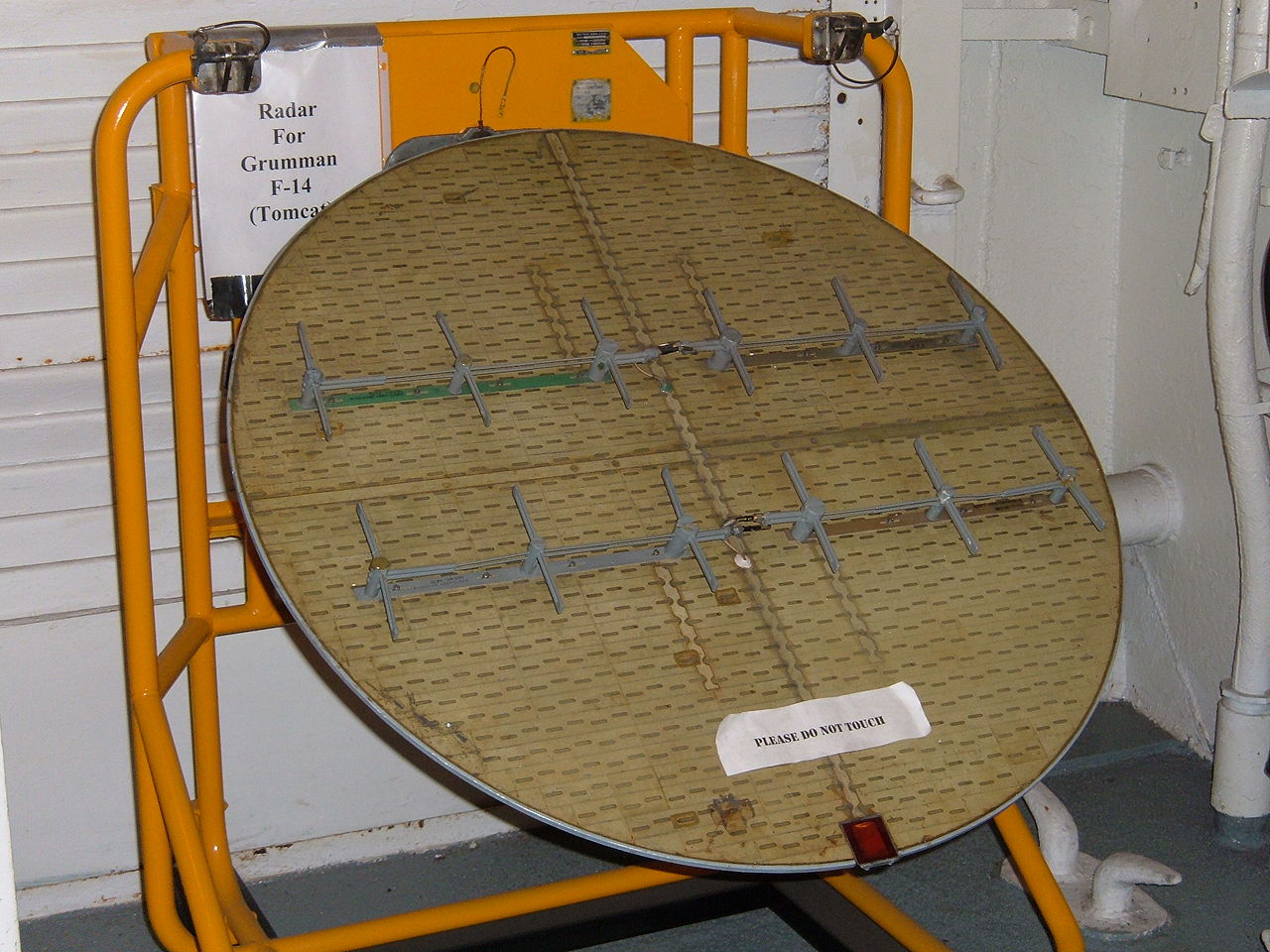
The large radar antenna was a slotted planar array type 36 inches in diameter. The design of the antenna made it less susceptible to certain types of jamming, and the side lobes (excess energy spilling over the side of the dish that can cause erroneous returns) were much smaller. The planar design also allowed for the location of the interferometer identification friend or foe (IFF) antennas.
Scanning hydraulically, with a maximum scanning pattern of 65 degrees to either side of the Tomcat’s centerline, the antenna focused radiated energy into a narrow beam with pulses being transmitted and echoes received back. Utilizing the received return, a bearing angle was obtained, and the time lapse between emission and return could be measured to calculate a distance.
The AWG-9 was designed with the intent of ultra-long range detection and weapons guidance for mainly the AIM-54 Phoenix AAM. The radar had to be very high power for this purpose, and to be high power, the radar had to incorporate a high pulse repetition frequency (PRF). PRF is the number of pulses per second a unit transmits.
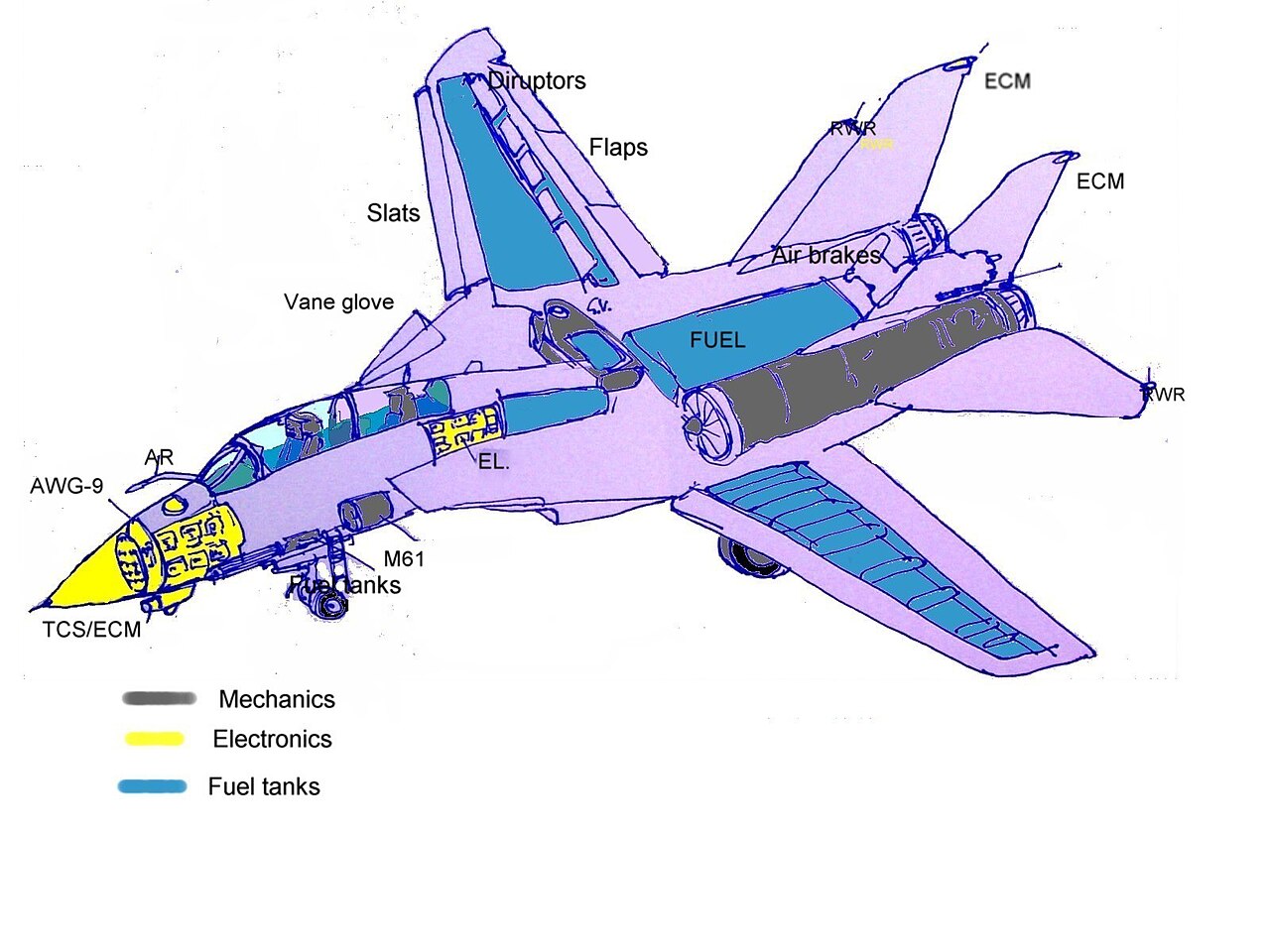
Being a versatile system, the AWG-9 had 19 channels available for pulse-Doppler search signals, with six channels dedicated to the AIM-54 guidance, and five used for semi-active guidance of AIM-7 Sparrow missiles. Having such a high number of channels minimizes the effects of enemy ECM (Electronic CounterMeasures).
The AWG-9 system originally did not have capabilities for the short-range AIM-9 Sidewinder and medium-range AIM-7 Sparrow missiles and this had to be added along with a tracking capability for the M61A1 Vulcan 20 mm cannon.
In the RIO’s (Radar Intercept Officer) rear cockpit, two CRT (Cathode Ray Tube) displays, known as the Detail Data Display (DDD) and the Tactical Information Display (TID), displayed information gathered by the AWG-9 system. The DDD displayed basic target information, while the TID presented processed information on a clutter-free screen bringing clarity to a tactical situation with alpha-numeric designations for contacts, as well as altitude, heading, friend or foe identity, and firing priorities for hostile contacts that had been processed and calculated by the computer. The RIO did have the ability to manually override the firing priority if need be.
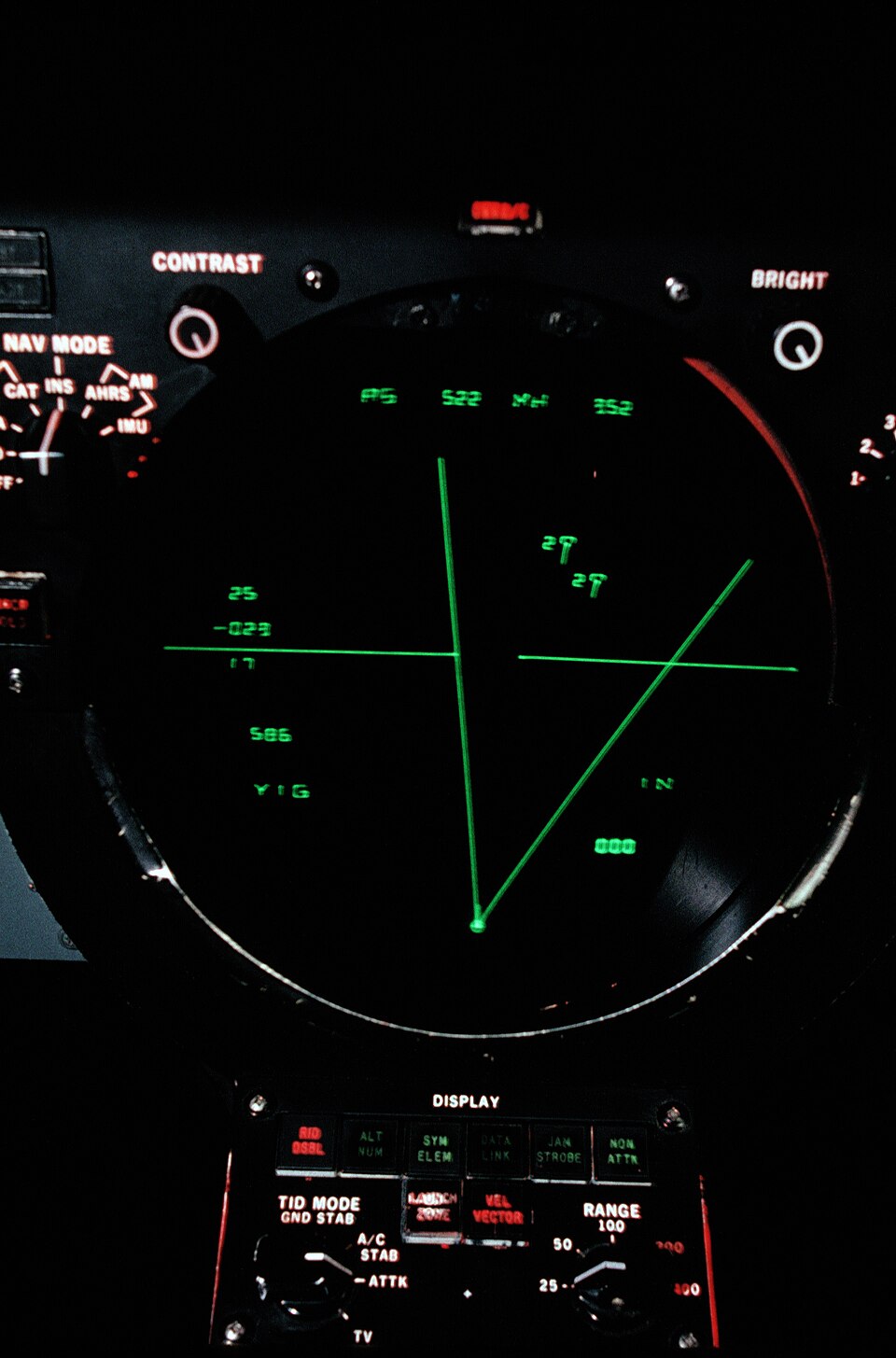
Two different modes of presenting the information was possible with the TID, one with the F-14 positioned at the bottom of the scope pointing upwards, depicting target motion in relation to the movement of both aircraft, or a gyrostabilized view with true north at the top of the display, with both the target aircraft and the Tomcat shown. The RIO had access to information on the target such as range, altitude, heading, and speed. Up to eight additional contacts could also be displayed from information provided by the two-way data link known as the ASW-27.
The range of the AWG-9 radar varied depending on many factors, with the contact size being one of them. Some sources say the radar could detect large bombers out to distances over 150 NM (Nautical Miles). The radar was also capable of tracking smaller targets such as fighters at an estimated range of 90 NM, and even cruise missiles flying low and skimming the waves of the ocean at 50 ft of altitude have been tracked and destroyed by the AWG-9 and the AIM-54 at a distance of 22 NM when fired from an F-14 at 10,000 ft.
Rising from the Ashes
The AIM-54 Phoenix is reportedly named such for rising from the ashes of its predecessors, one being the AIM-47A Falcon. Originally designated the AAM-N-11 and developed for the ill-fated F-111B, it was a scaled up version of the AIM-47 with a length of 13 ft, a 15 in diameter, and weighting in at 1,000 to 1,040 lb. Wing span was 3 ft.
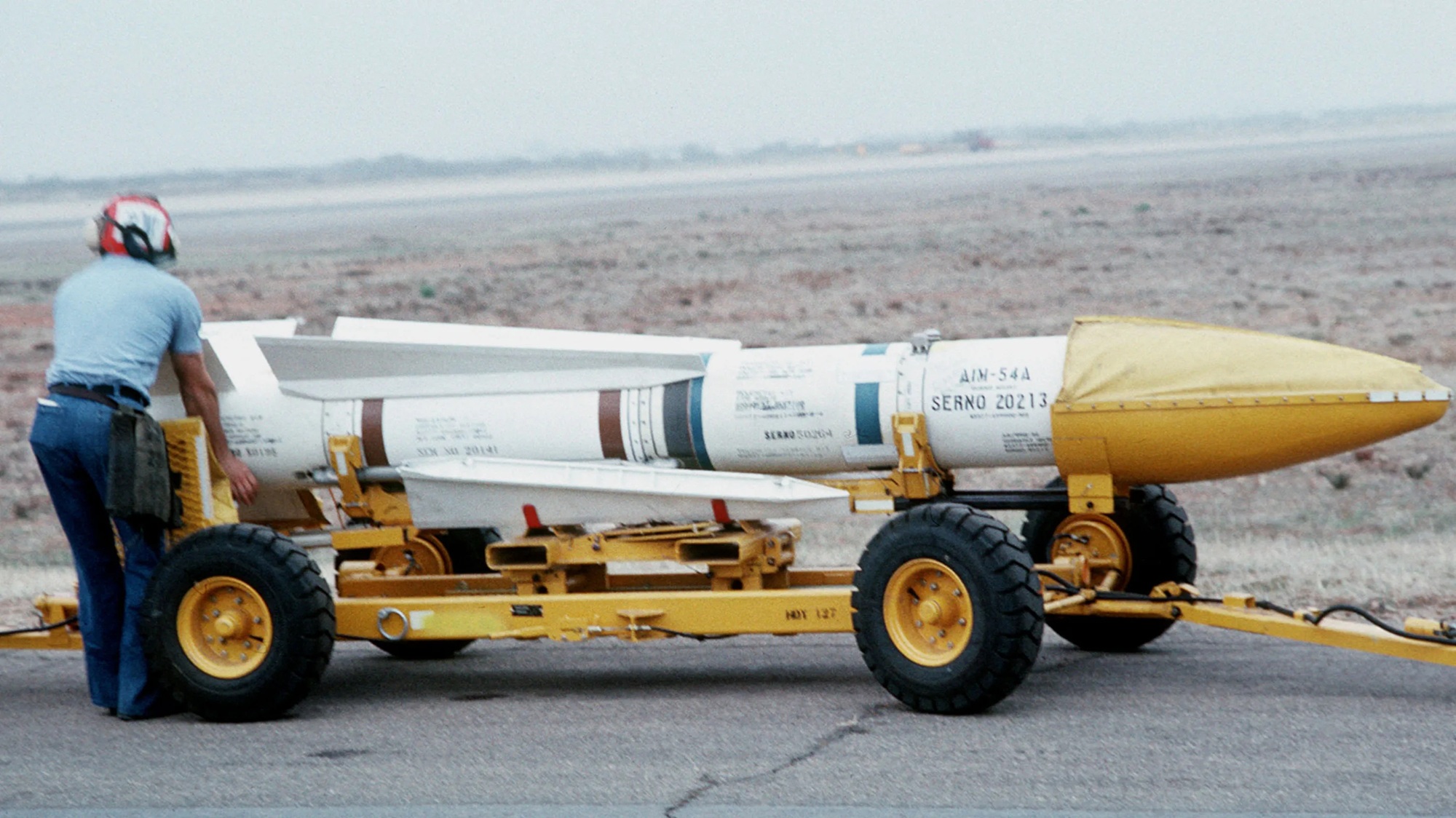
Range was over 100 NM with a speed of over 3,000 mph. The missile was armed with a proximity fused high explosive warheads weighing in at 135 lb.
A transmitter/receiver system provided semi-active guidance during mid-course flight from information provided by the AWG-9, and active radar homing systems guided the missile on its terminal homing utilizing a small planar array antenna and DSQ-26 electronics.
While the US Navy had limited engagements and successes with the AIM-54, it appears the only other country to use them, Iran, did enjoy some success during the Iran-Iraq war that lasted from September 1980 to August 1988. While difficult to determine exact numbers, the Iranian Tomcats are believed to have achieved a significant number of victories over Iraqi aircraft and even a pair of AM-39 Exocet missiles.
Improving the AWG-9
The APG-71 was an upgrade of the AWG-9 for the F-14D with significant improvements. Those included processing speed, clutter rejection, detection range, and mode flexibility. The system utilized technology and modules from the F-15E Strike Eagle and contained many features to make the radar less susceptible to jamming. The system had a range of 230 miles and a datalink that allowed radar data from two or more F-14Ds to operate the system at maximum range.
Again built by Hughes, all 55 F-14D models received the new radars before the F-14D program was eventually cancelled with the Tomcat being retired from the US Navy on Sept. 22, 2006.
New Kids on the Block
With the retirement of the AIM-54, nothing in the U.S. arsenal would come close to the range of the Phoenix until the AIM-120D AMRAAM (Advanced Medium-Range Air-to-Air Missile) joint USN and USAF project filled the gap. The AIM-174/SM-6 would eventually fill the roll of a dedicated long-range air-to-air missile, the first since the AIM-54.

The APG-77 radar installed in F-22 Raptors would take the place of the most powerful operational radar on a combat aircraft in 2005.
A Lasting Legacy
The F-14 Tomcat armed with the AGW-9 radar and the AIM-54 Phoenix protected U.S. Navy assets from threats at ranges previously unheard of. Hollywood has also implanted the weapon system into the hearts and minds of moviegoers since the introduction of Top Gun in 1986 and the more recent Top Gun: Maverick bringing back the aging variable-geometry fighter for one last hurrah (maybe?) against modern-day rivals.
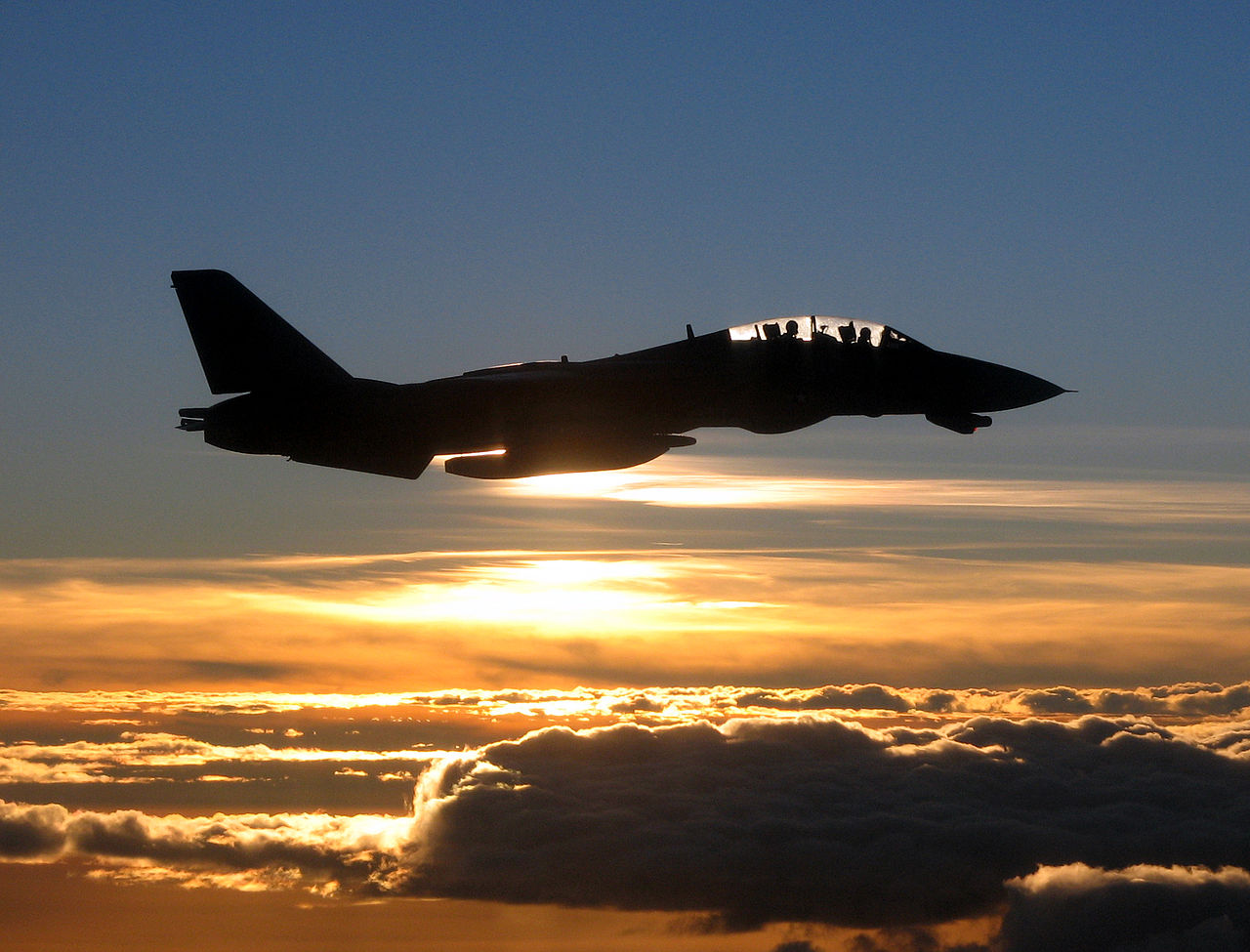
The F-14 is a symbol of American air power and naval might, with its distinctive look as it buzzes the tower with wings swept fully to the rear and at full afterburners. The combination of a great aircraft design, a powerful radar, and an impressive long-range missile made the Tomcat top dog during its time with the fleet.