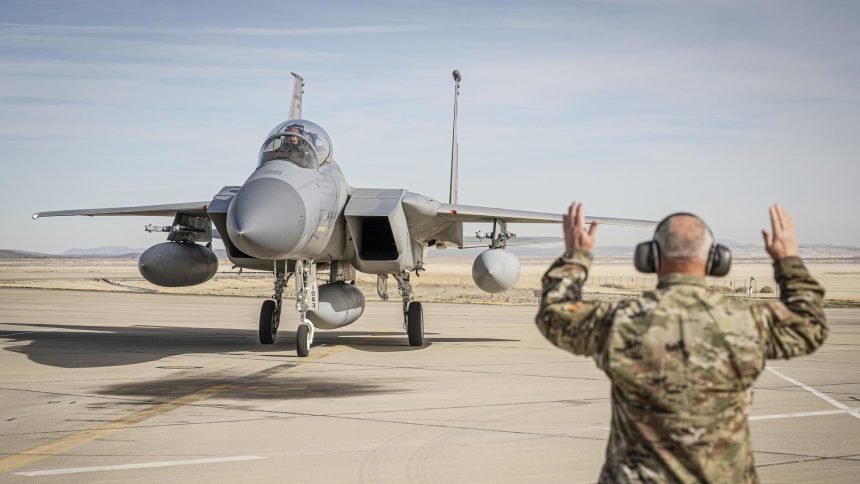
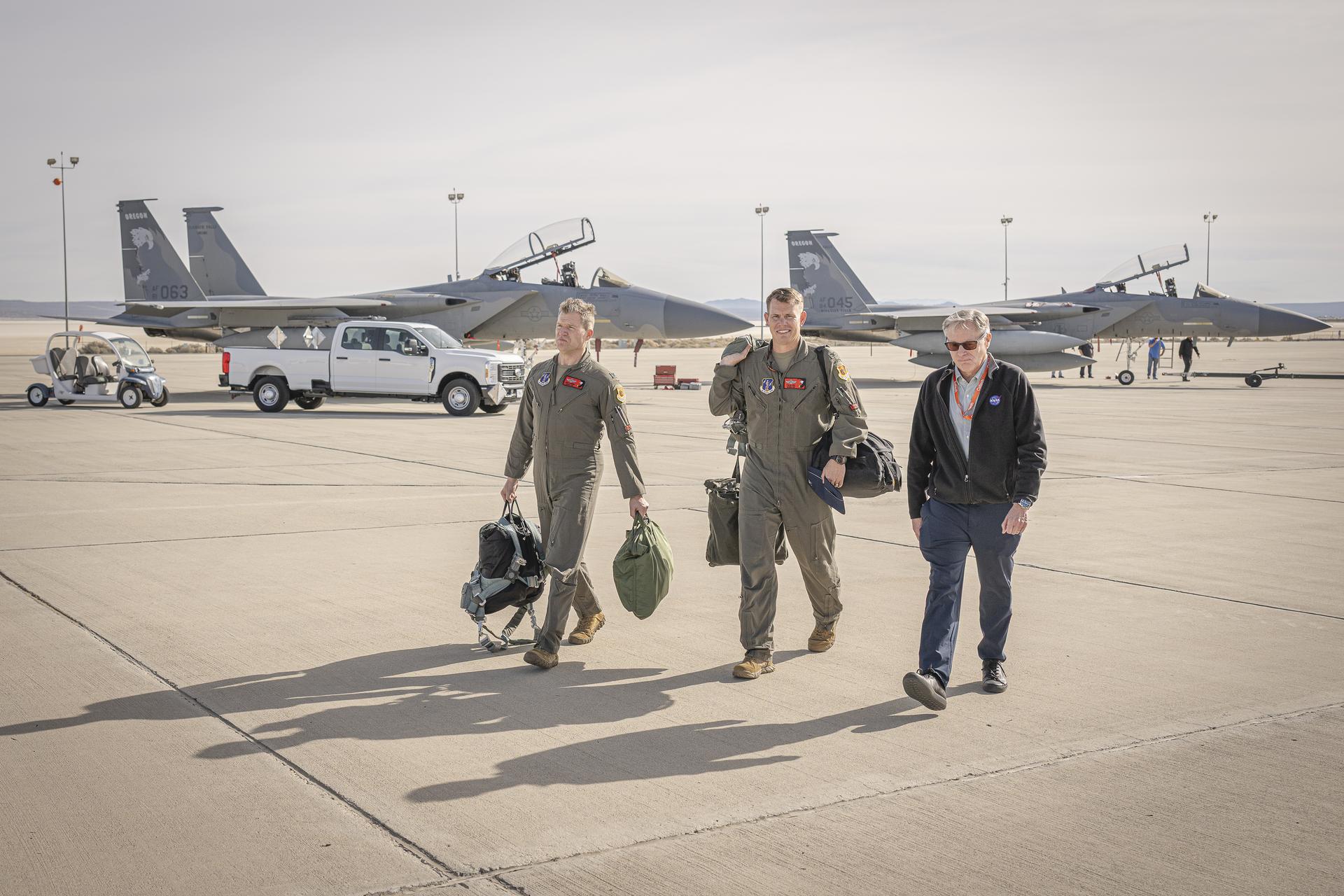
Two F-15Ds of the Oregon Air National Guard have been transferred to NASA’s Armstrong Flight Research Center, where they will join the ones already operated by the agency.
NASA has announced on Jan. 15, 2026, that two recently retired U.S. Air Force F-15D Eagle aircraft have found a new home to continue flying. In fact, on Dec. 22, 2025, two Eagles of the Oregon Air National Guard’s 173rd Fighter Wing at Kingsley Field were NASA’s Armstrong Flight Research Center in Edwards, California.
More F-15s for NASA
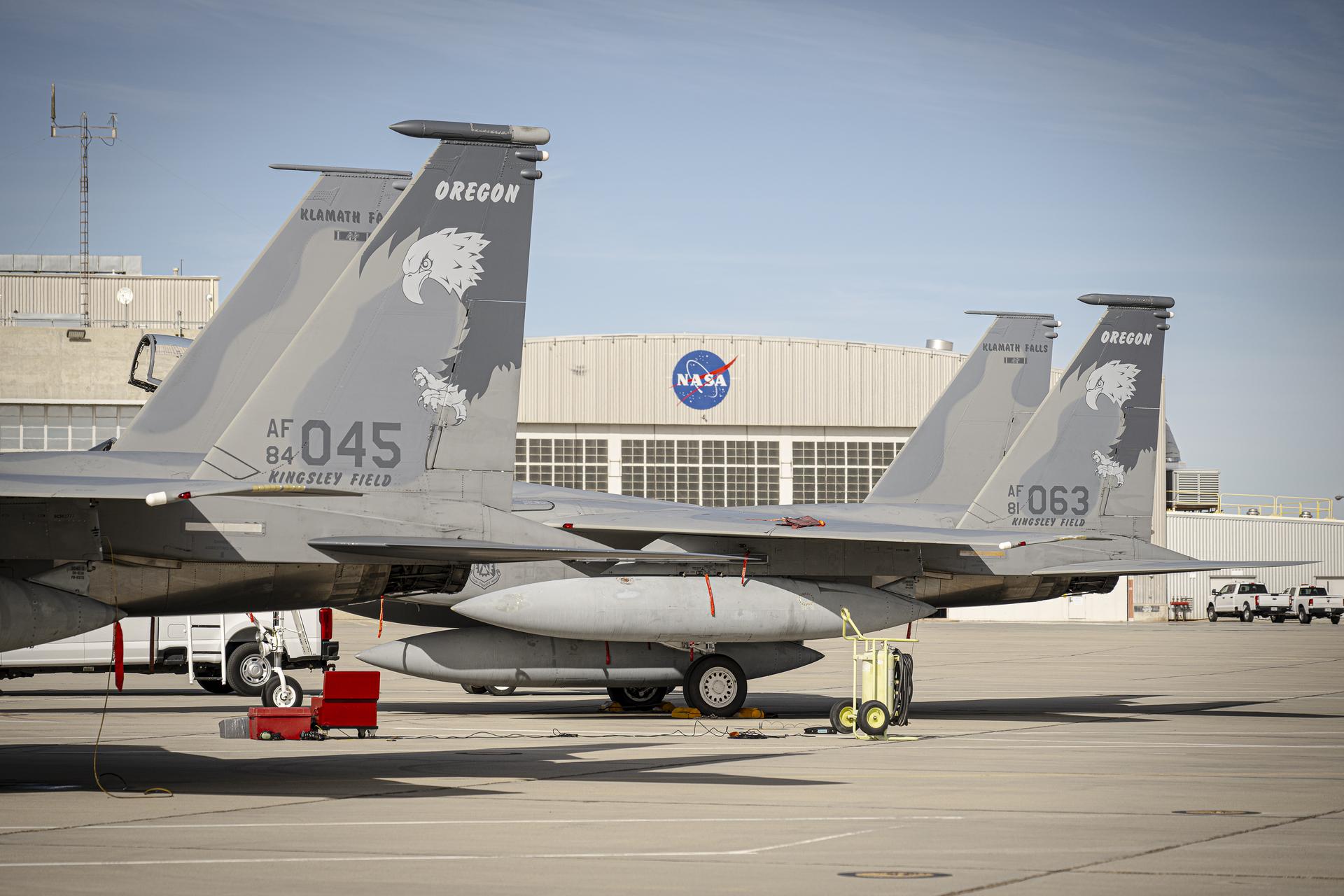
The photos released show the two aircraft are F-15Ds AF 81-0063 and AF 84-0045. The agency said in a press release that one of these will return to the air as an active NASA research aircraft, while the second will be used for parts to support long-term fleet sustainment.
The aircraft will support supersonic flight research for NASA’s Flight Demonstrations and Capabilities project, says the press release. Among the missions included in the project is the testing of the X-59 QueSST (Quiet SuperSonic Technology) research aircraft.
“These two aircraft will enable successful data collection and chase plane capabilities for the X-59 through the life of the Low Boom Flight Demonstrator project” said Troy Asher, director for flight operations at NASA Armstrong. “They will also enable us to resume operations with various external partners, including the Department of War and commercial aviation companies.”
The two F-15s delivered in December are not the first to be operated by NASA. In fact, the agency already operates three F-15s, of which two are F-15Ds and one is an older F-15B, while other experimental F-15s were operated in the past.
“NASA has been flying F-15s since some of the earliest models came out in the early 1970s,” Asher said. “Dozens of scientific experiments have been flown over the decades on NASA’s F-15s and have made a significant contribution to aeronautics and high-speed flight research.”
One of the F-15Ds and the F-15B have been modified to safely operate at up to 60,000 ft. The reason for this it to allow the aircraft to follow the X-59, whose flight envelope goes up to 60,000 ft, although test flights are planned to cruise at 55,000 ft.
The newly delivered F-15 that will fly for NASA will receive the same modification, says the agency. Engineers will modify their software, systems, and flight controls to suit mission needs.
“The priority is for them to successfully support the X-59 through completion of that mission,” Asher said. “And over the longer term, these aircraft will help position NASA to continue supporting advanced aeronautics research and partnerships.”
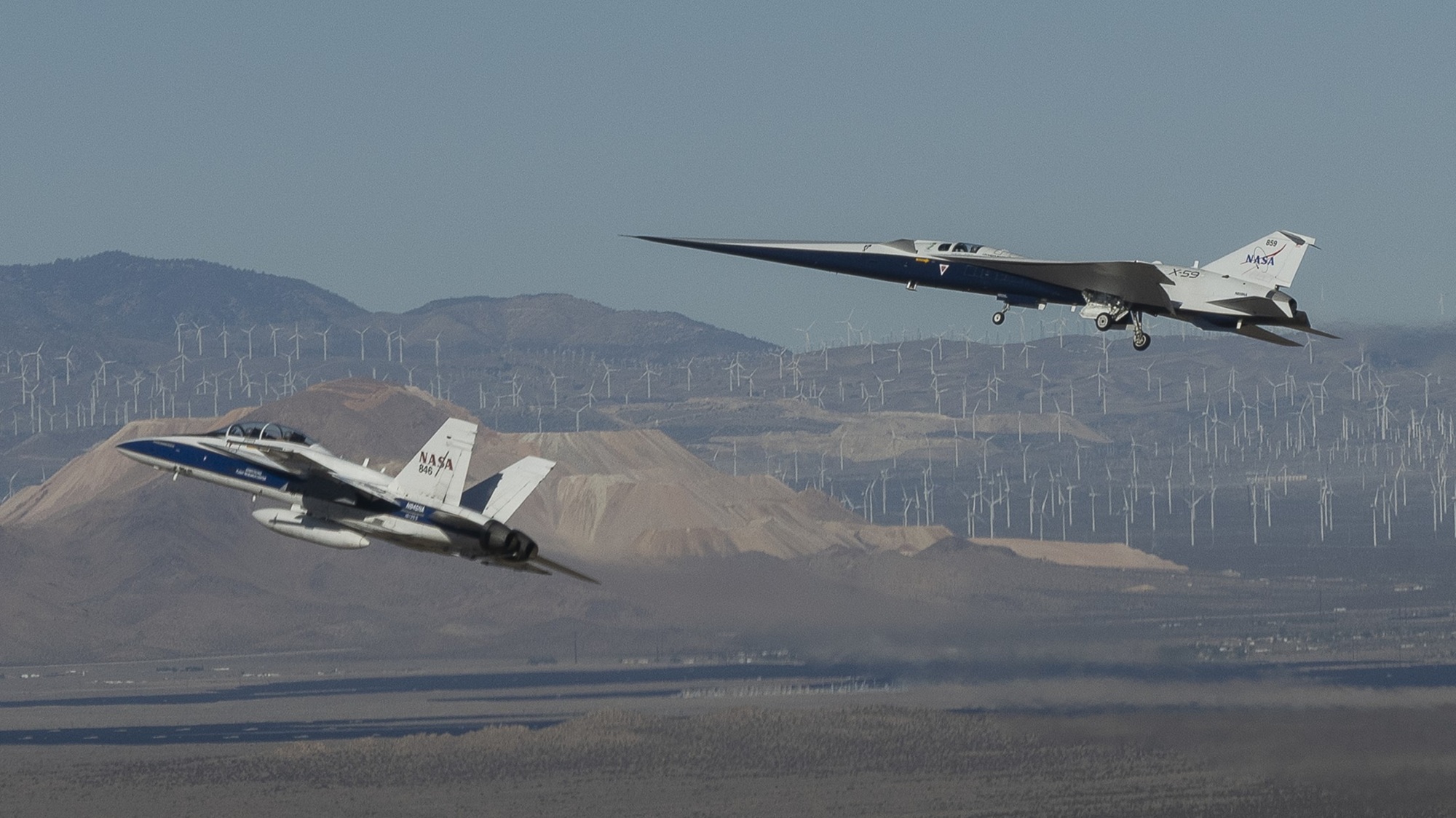
The press release noted that the combination of capability, capacity, and adaptability makes the F-15s uniquely suited for flight research at NASA Armstrong. Moreover, the F-15’s ground clearance allows researchers to install instruments and experiments that would not fit beneath many other aircraft.
NASA F-15s and the X-59
In 2025, two NASA F-15 were used to validate tools designed to measure and record the shock waves that will be produced by the X-59 quiet supersonic experimental aircraft. The jets matched the conditions the X-59 is expected to fly in order to gather data that can help lead to quiet commercial supersonic flight over land.
These tests saw Schlieren, Airborne Measurements, and Range Operations for Quesst (SCHAMROQ) project’s team at the Armstrong Flight Research Center developing tools that will measure and visualize the X-59’s unique shock waves when it flies at Mach 1.4 and altitudes above 50,000 feet. The F-15s helped to validate three key tools:
- A shock wave-measuring device called a near-field shock-sensing probe
- A guidance capability known as an Airborne Location Integrating Geospatial Navigation System (ALIGNS)
- An Airborne Schlieren Photography System that will allow the capture of images that render visible the density changes in air caused by the X-59
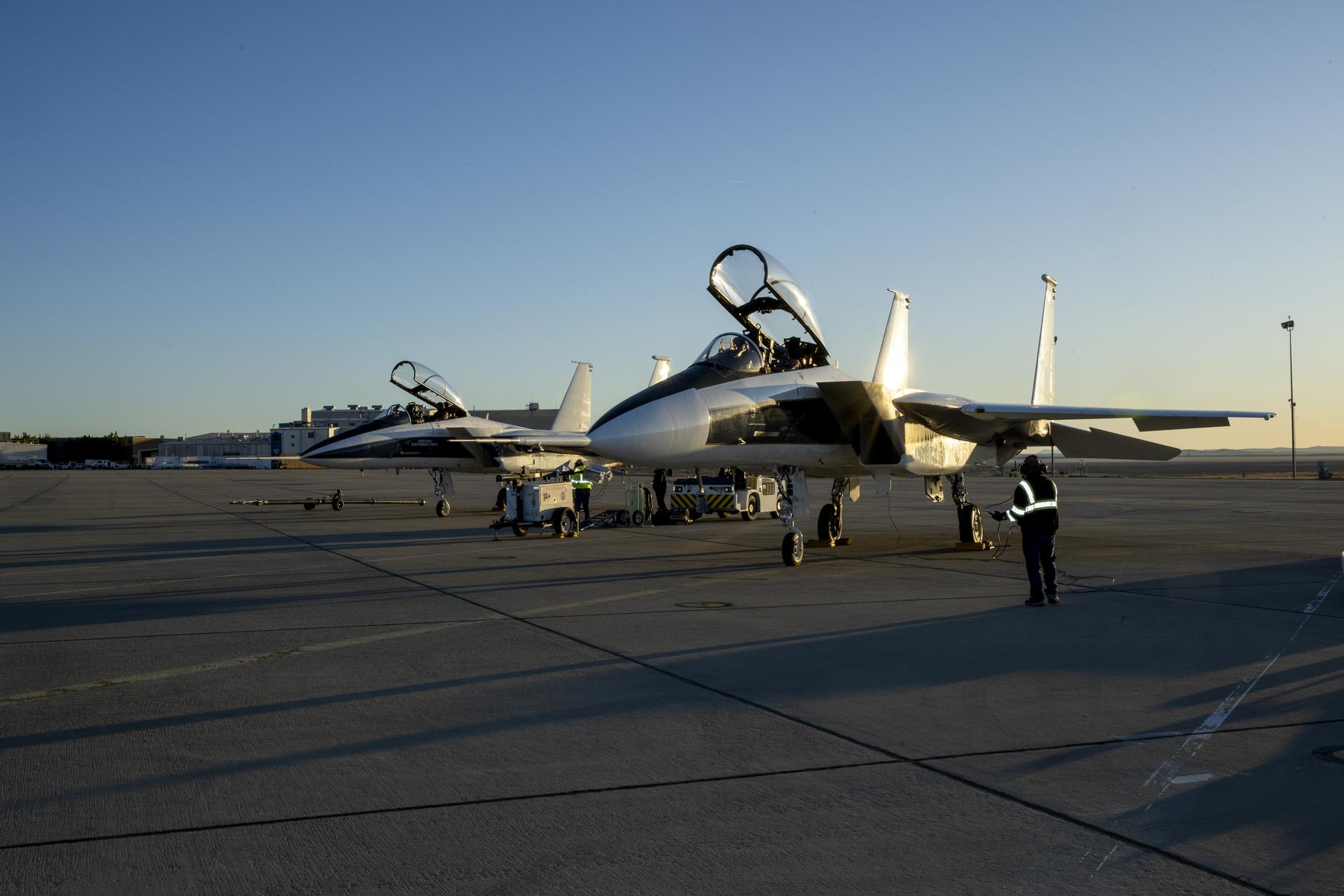
The use of two F-15s, flying together as a two-ship flight, allowed to collect data from one another to test the near-field shock-sensing probes and validate the tools under real-world conditions. For the QueSST mission, the F-15D will lead data-gathering efforts using the onboard probe, while the F-15B will serve as the backup.
The F-15 will fly behind the X-59, using its probe to measure small pressure changes caused by the shock waves and validate predictions made during the X-59’s design phase. The schlieren photography systems aboard the F-15s will also allow to collect imagery of the real-world airflow, to be compared with data from simulations and wind tunnel testing.
Schlieren Photography
The schlieren photography is not an easy task, as the two aircraft will need to be precisely positioned. Pilots will be helped by the ALIGNS tool, which will show them “where to position the aircraft to either probe a shock wave at a specific point or to get into the correct geometry for schlieren photography.”
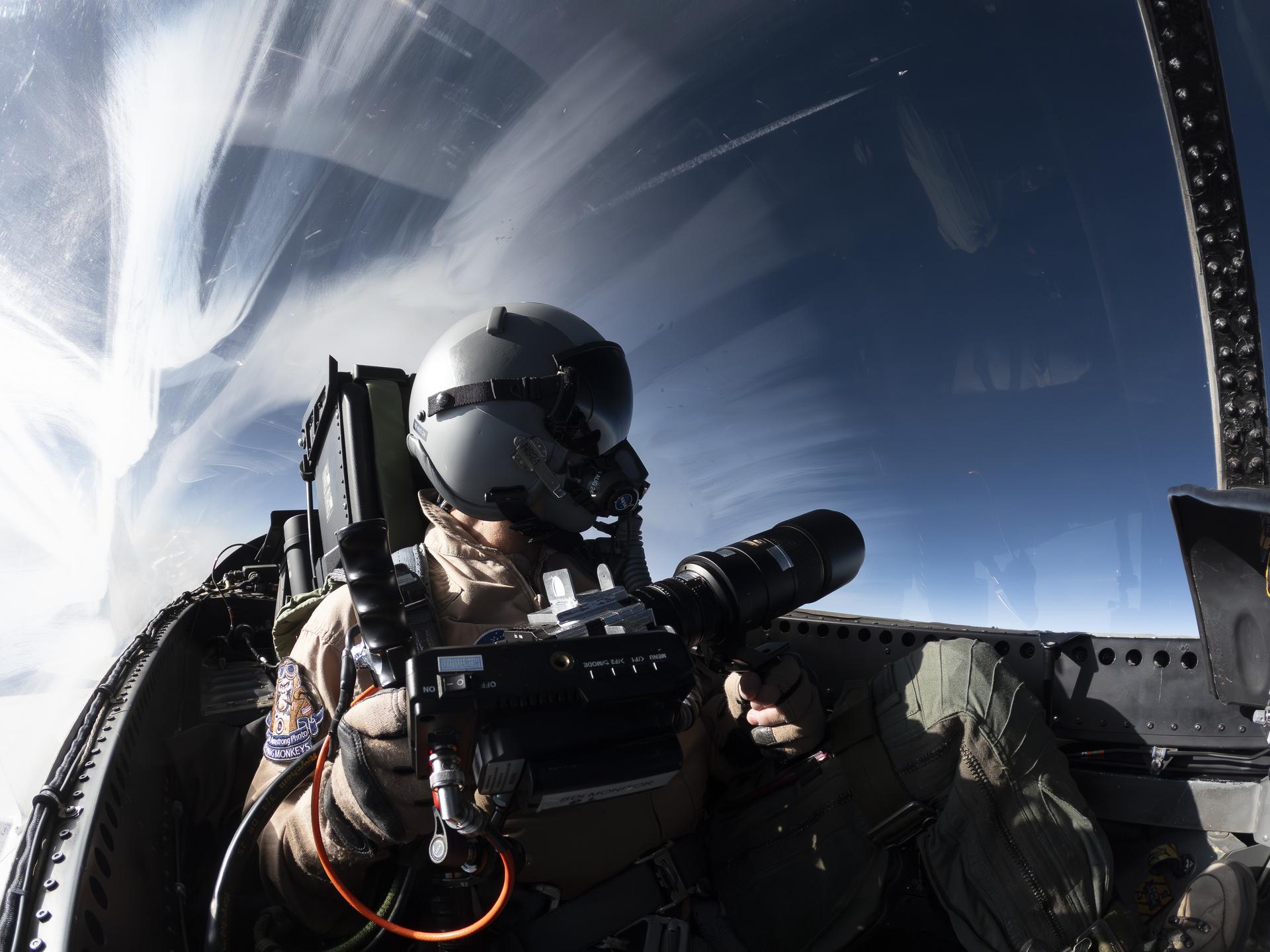
The schlieren system involves a handheld high-speed camera with a telescopic lens that captures hundreds of frames per second and visualizes changes in air density. However, there is a catch: the sun must be used as a backdrop.
“The photographer holds the camera to their chest, aiming out the side of the cockpit canopy at the sun, while the pilot maneuvers through a 100-foot-wide target zone,” said Edward Haering, a NASA aerospace engineer who leads research on schlieren. “If the sun leaves the frame, we lose that data, so we fly multiple passes to make sure we capture the shot.”
The photographer must capture the aircraft flying across the center of the sun, and even the slightest shift can affect the shot and reduce the quality of the data, explains NASA. Here is were ALIGNS comes to the rescue, allowing for a less challenging positioning.
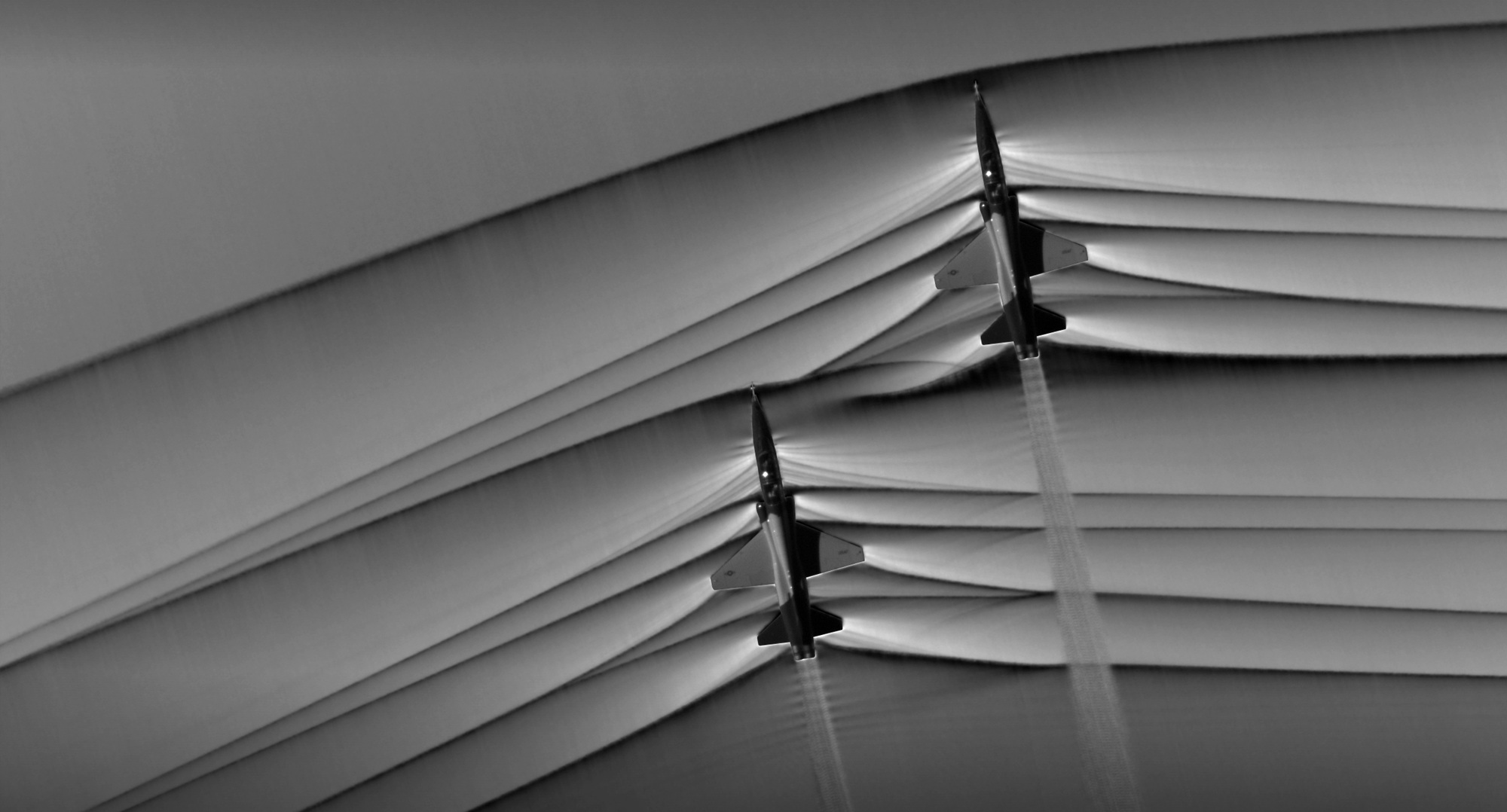
The software runs on ruggedized tablets and uses GPS data from both aircraft to calculate when the aircraft are in position for probing and to capture schlieren imagery, explains the agency. The tool provides real-time indications, making the positioning more accurate.