A new update to the Undergraduate Jet Training System’s RFI mentions the requirement for a 216-aircraft fleet, blaming the government shutdown for the RFP’s delay.
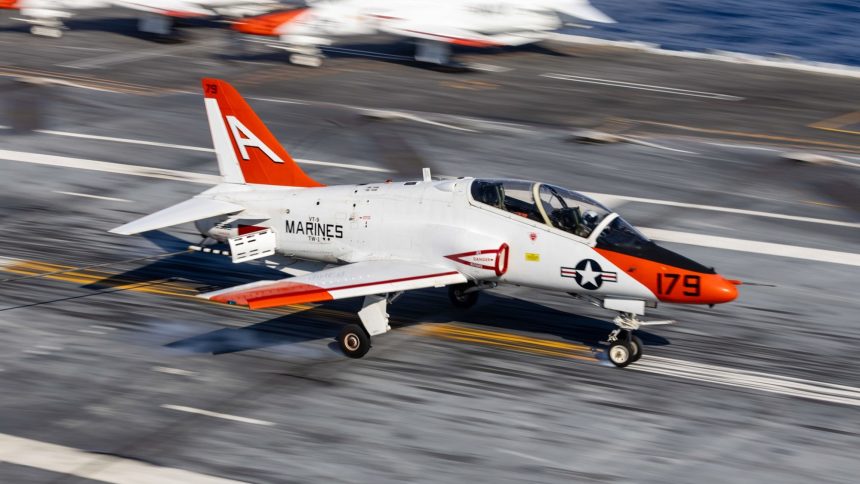
The U.S. Navy has set a requirement for 216 aircraft to replace the T-45 Goshawk fleet as part of the Undergraduate Jet Training System (UJTS). The requirement was mentioned in the latest update to the Request for Information released on Dec. 15, 2025.
Latest RFI
The RFI, the sixth since the launch of the effort, explains that the UJTS program has two overarching goals, which are the speed to Initial Operational Capability (IOC) and the quality of training. The first one, however, has been impacted by the recent government shutdown.
The updated RFI, in fact, mentions that the release of the Request for Proposals has further been delayed, and is now planned for late February 2026, instead of December 2025 as previously planned. The projected contract award date has also been delayed from January 2027 to the second quarter of Fiscal Year 2027.
Notably, a draft of the RFP might be released in late January 2026, says the service. Furthermore, the RFI explains the RFP will be for the Engineering, Manufacturing, and Development (EMD) of the UJTS solution as well as the Procurement of the first lot of Low-Rate Initial Production (LRIP) aircraft and limited quantities of ground-based training systems.
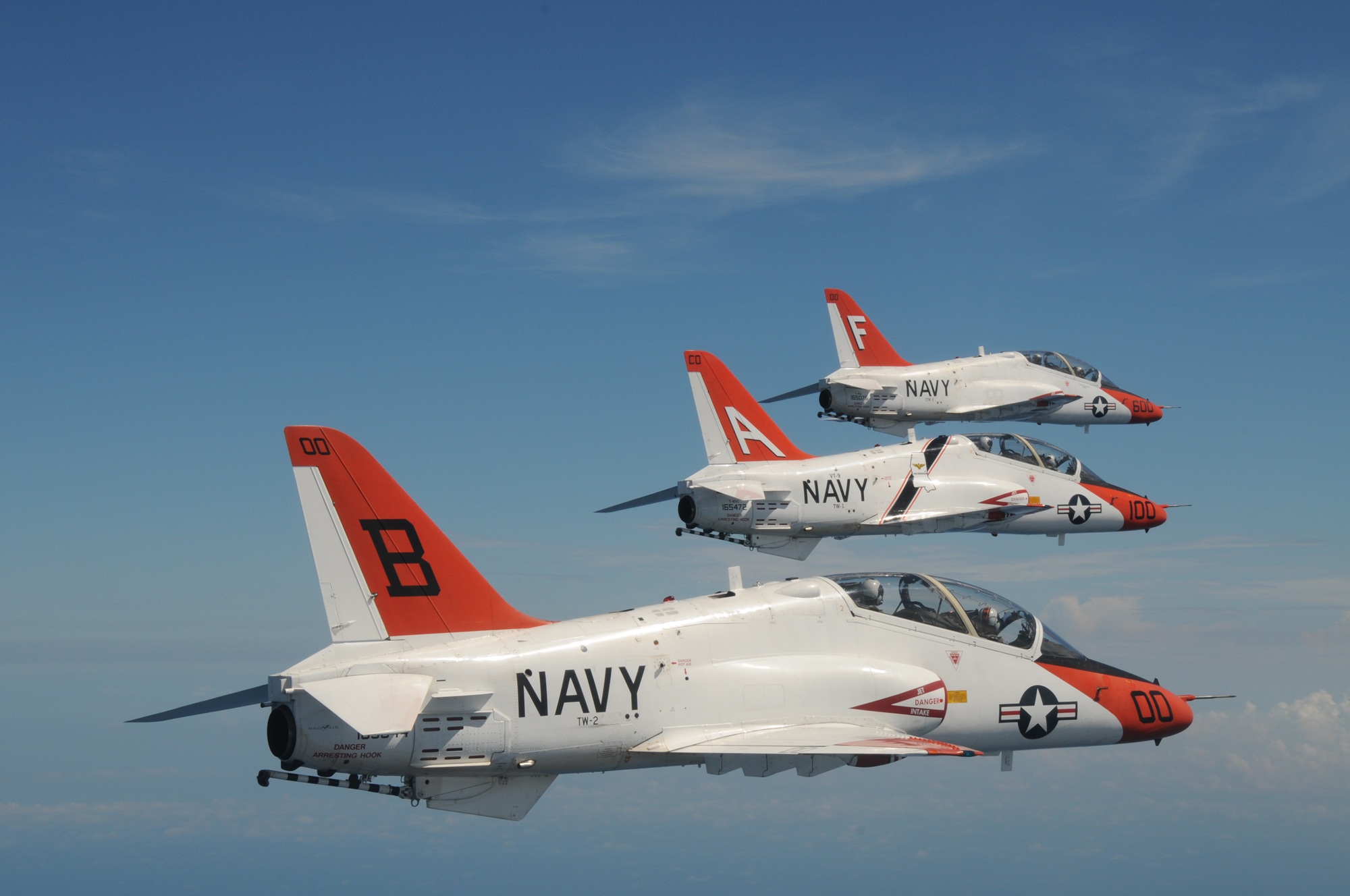
For the first time, the RFI provides explicitly a number for the new fleet to be procured. The Navy wants “approximatively 216” aircraft, with three LRIP lots of 1-7 aircraft, 2-12 aircraft and 20 aircraft, respectively, before a Full-Rate Production of 25 aircraft per year.
The RFI also includes a notable paragraph:
“The Contractor shall perform a flight Operations Program to facilitate the achievement of approximately 35 flight hours per month per aircraft for a Period of Performance for 12-months starting 60 days prior to the first LRIP aircraft delivery to NAS Meridian, with an option to extend for 6-months.”
This appears to indicate the Navy may want to hit the ground running and start operations with the new aircraft as soon as it is delivered to NAS Meridian. Additionally, this could mean the service is aiming to obtain an early operational capability within a short time, further signaling the urgency to replace the T-45.
Previous RFIs
The previous RFI was released on Mar. 31, 2025, and, while mentioning the UJTS program is on an accelerated procurement timeline,” already delayed some of the milestones. Most importantly, the RFI included one of the Navy’s most critical decisions, stating that “the UJTS air vehicle will only be required to conduct Field Carrier Landing Practice (FCLP) to wave off.”
As we previously reported, a good portion of the training command’s syllabus is centered around the FCLP, which allows new pilots to train on land bases for the entire approach and landing maneuver as performed on the aircraft carrier, just short of the arrested landing. With the new requirement, future student pilots will only perform the approach phase of the current FCLP, going around once reached the minimums, without touching down on the runway.
The Navy says that this decision, which sets a completely different route compared to the T-45 Goshawk and, previously, the T-2 Buckeye, is “due to advancements in operational platform landing modes and in ground-based simulation.” This means the new naval aviators will rely more on automation and perform complete FCLPs only in the flight simulator.
Also, this decision would allow for quicker development, as the new trainer aircraft will not require complex and lengthy structural modifications to be adapted to the new role. The service, in fact, needs quickly a replacement for the T-45 fleet, as it keeps facing problems.
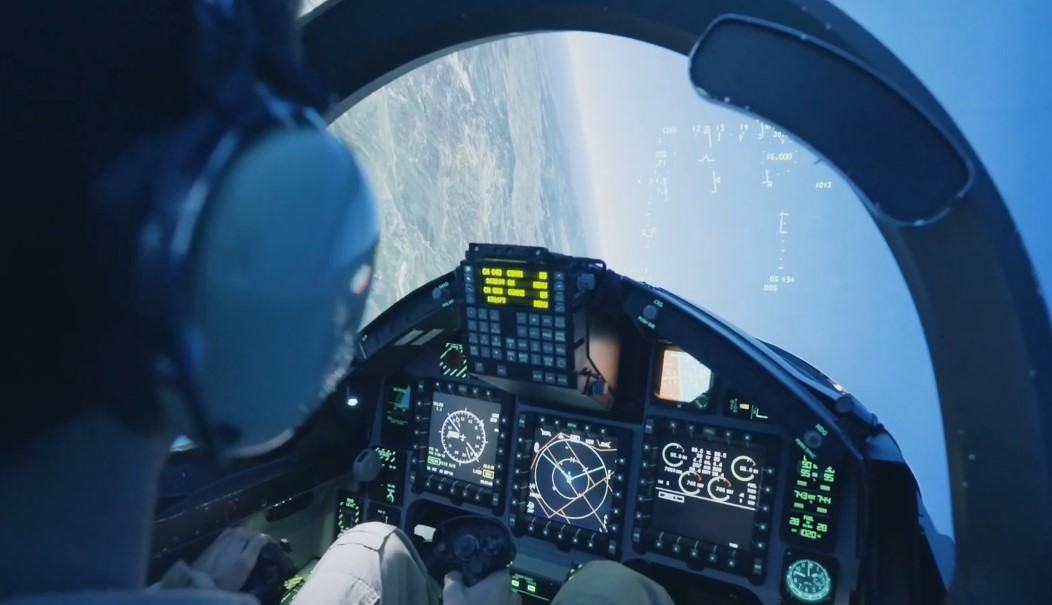
With the new RFI, the Navy is also requesting industry input to finalize the requirements for the Ground Based Training System (GBTS). The service is “contemplating a four-tiered GBTS product line, consisting of Operational Flight Trainers (OFT), Unit Training Devices (UTD), Cockpit Procedural Trainers (CPT), and Desktop Avionics Trainers (DAT),” complete with “Live/Virtual/Constructive (LVC) integrated training.”
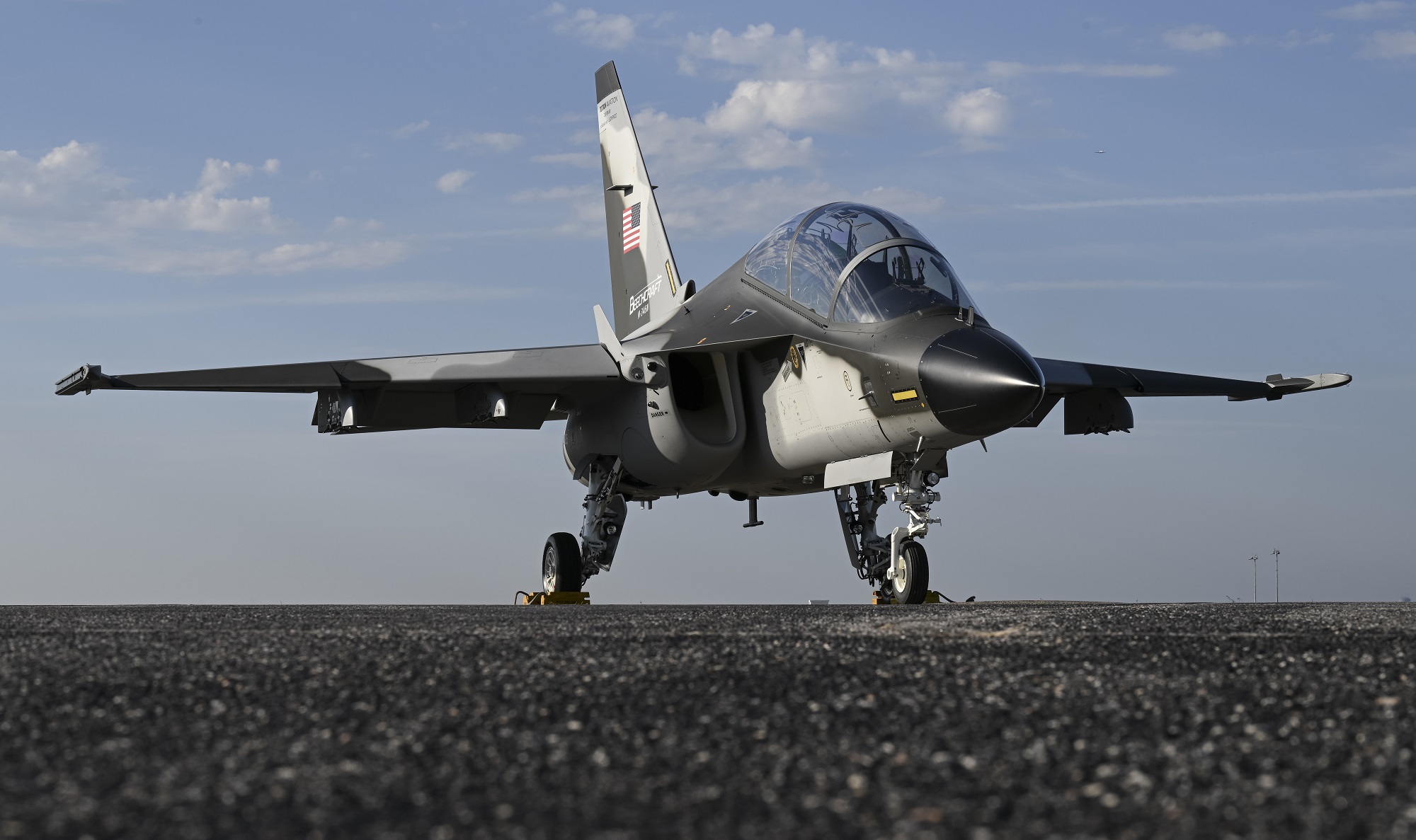
The previous RFI, released in 2024, focused on the aircraft itself. The attributes requested for the cockpit feature the safety and environmental characteristics common to all modern aircraft, with a cockpit configuration which mirrors the Navy’s newest fighters.
The RFI then moves to suitability and performance attributes, beginning from the capability to maintain fixed Angle of Attack (AoA) approach targeting 3.25 degree glideslope while maintaining field of view during unflared landings. This RFI said the aircraft was expected to perform 6-10 unflared landings per training event, or 1,400 landings per year assuming 400 flight hours per year, and a total of 10,000 hours of airframe fatigue life and 35,000 landings.
As for the performance, the Navy is looking for an aircraft capable of a speed of at least Mach 0.9/450-500 KIAS, sustained AoA over 20 deg, sustained load factor of at least 6 G, operating ceiling of at least 41,000 ft and turn rate of at least 12 deg/sec. The RFI also mentions wing and/or wingtip pylons for stores carriage, which in the attachment are better specified as external fuel tanks, luggage pod and PMBR (Practice Multiple Bomb Rack) with six MK-76 type practice bombs.
The new UJTS aircraft is also required to integrate the new Precision Landing Mode (PLM), which is now on F/A-18s and F-35s and will eventually be the standard method for approaching the aircraft carrier for all naval aircraft. PLM not only drastically reduces the number of corrections required during the final approach to the aircraft carrier, but could also lower the demand on the structure of the aircraft, reducing the need for structural modifications.