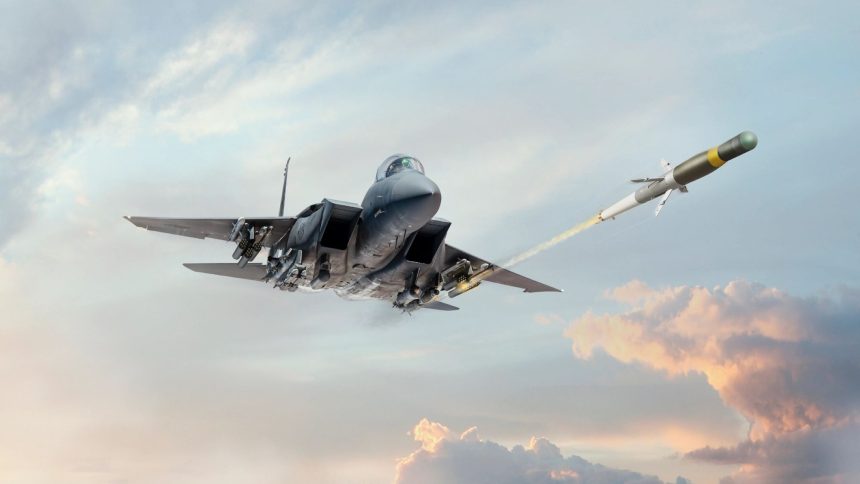
BAE Systems has received an initial order for 11,000 laser-guidance kits worth $322 million, with a maximum contract value of $1.7 billion, to equip the U.S. military and partners.
BAE Systems announced on Dec. 10, 2025, that it has been awarded an indefinite delivery, indefinite quantity U.S. Navy contract for “tens of thousands” Advanced Precision Kill Weapon System (APKWS) laser-guidance kits for all U.S. armed services as well as foreign customers. The contract has a maximum value of $1.7 billion, with a $322 million initial order, and will be executed over five years.
The award reflects the increased domestic and international demand for the low-cost munition, says the company. The press release explicitly mentioned “kits,” referring to the add-on laser-guidance section that converts the standard Hydra 70 unguided rocket into a low-cost precision guided munition, designated the AGR-20 by the U.S. military.
Contract
While it was only announced on Dec. 10, it appears the contract might have been awarded on Aug. 28. In fact, available documents show that NAVAIR (Naval Air Systems Command) awarded an APKWS contract with the same $1.7 billion value in August.
Specifically, the award was a Firm Fixed Price (FFP) Indefinite Delivery/Indefinite Quantity (IDIQ) contract for the procurement of Advanced Precision Kill Weapon System (APWKS) II Full Rate Production (FRP) Lots 13-17. This accounts for the components, containers and related supplies and services necessary for the manufacture, production, test, verification and delivery of the WGU-59A/B APKWS II Guidance and Control Semi-Active Laser (SAL) Precision 2.75-Inch Rocket components.
#NEWS: BAE Systems has received a contract for continued production of APKWS® laser-guidance kits, equipping U.S. armed forces and allies with tens of thousands of additional low-cost precision munitions.
Learn more: https://t.co/drpacXE0iE pic.twitter.com/6CCYFt7lya
— BAE Systems, Inc. (@BAESystemsInc) December 10, 2025
Similarly, this contract award notice mentions the U.S Army, Navy, Air Force and Foreign Military Sales (FMS) customers among the agencies supported by this contact. USASPENDING mentioned for the same contract the $322.5 million value of the initial order stated by BAE Systems, specifying a total of 11,000 WGU-59A/B units.
The data available on the website further identified the foreign customers as Bahrain, with 60 kits, followed by the Czech Republic with 600 kits, Poland with 7,058 kits, Singapore with 96 kits and the U.S. government’s Special Defense Acquisition Fund (SDAF) with 349 kits. The U.S. Army and U.S. Navy have been allocated 503 and 2,334 kits respectively.
Notably, the SDAF has previously been used for arms supplies to Ukraine. More details on this follow-on contract can be viewed here.
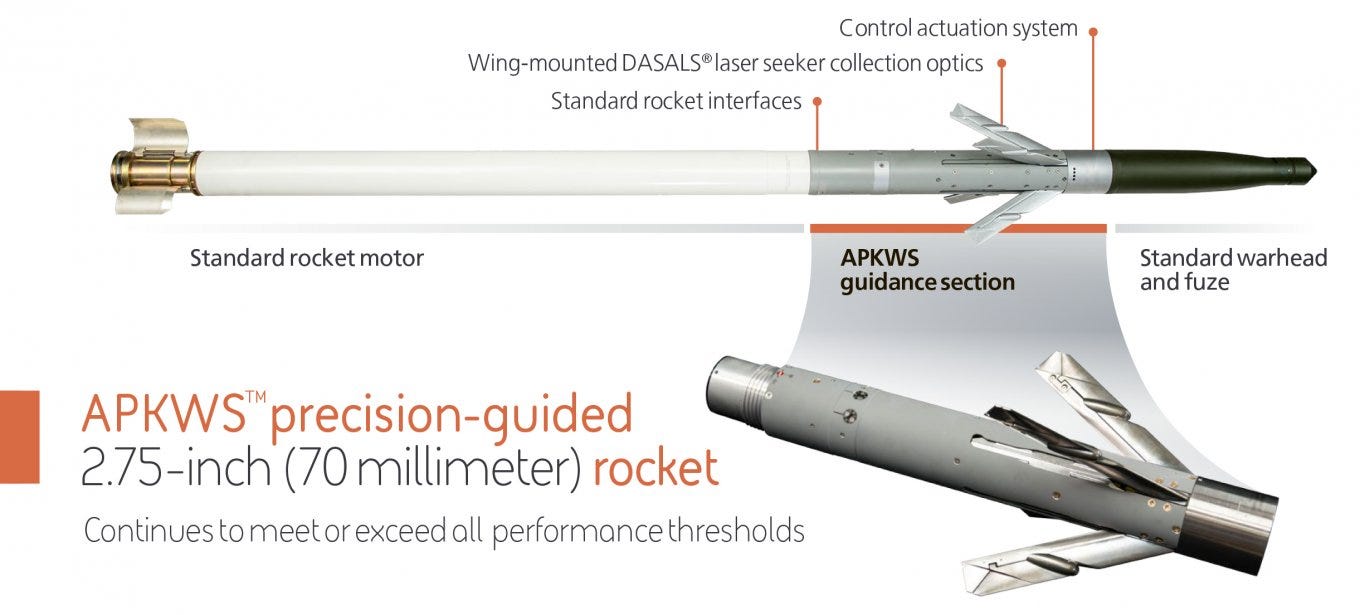
APKWS II
The laser-guided APKWS II was a solution to the cost disadvantage entailed by using the larger AIM-9 Sidewinder and AIM-120 AMRAAM, costing millions of dollars, against simple one-way attack drones, only worth $15,000-$20,000.
The APKWS II, designated as AGR-20 by the U.S. DoD, involves the addition of a laser guidance section between the 10-pound high-explosive warhead at the front and the Mk66 Mod 4 rocket motor of a Hydra 70 mm unguided rocket, turning it into a PGM (Precision Guided Munition).
Specifically, the guidance section includes wing-mounted laser seeker collection optics on the four foldable wings, offering a wide field of view, and enabling it to engage both moving and stationary targets. The U.S. Air Force’s 85th Test and Evaluation Squadron (TES) first tested the APKWS II in the air-to-air role on Dec. 19, 2019, shooting down a subscale drone, where an F-16 fired the rocket and guided it on target with the targeting pod.
A video of an AGR-20 FALCO intercept. pic.twitter.com/Oee0UDEpcm
— Shahryar Pasandideh (@shahpas) April 9, 2025
“The APKWS guidance kit completes the mission and controls the cost. APKWS kits are combat proven as an air-to-surface, surface-to-surface, surface-to-air, and air-to-air munition,” the BAE statement said. Director of precision guidance and sensing solutions at BAE Systems Neeta Jayaraman said the “award reinforces the value of proven and cost-efficient precision munitions, which have consistently demonstrated their effectiveness and versatility across multiple platforms and missions.”
“The APKWS guidance kit provides advanced capabilities to our armed forces and foreign allies, and high-volume production ensures rapid and efficient delivery to the warfighter,” further added Jayaraman.
View this post on Instagram
APKWS evolution
The weapon system underwent the Fixed Wing, Air Launched, Counter-Unmanned Aircraft Systems Ordnance (FALCO) software upgrade meant to improve the counter-UAS capabilities. The U.S. DoD (Department of Defense) designated the standard APKWS II the AGR-20, and the FALCO variant the AGR-20F.
BAE Systems unveiled at the Sea Air Space 2025 conference in April 2025 a new Advanced Precision Kit (APK), consisting of an IR (InfraRed) seeker in addition to the existing laser guidance, making the APKWS a dual-mode weapon. An IR seeker spares pilots the continuous lasing of aerial targets like the Houthis’ cheap kamikaze drones, allowing swiftly moving on to other threats.
The APK upgrade served as the next stage in the rocket system’s evolution. It is unclear if the service has already awarded a contract for the new APK and if testing is in progress.
Platforms using the APKWS II
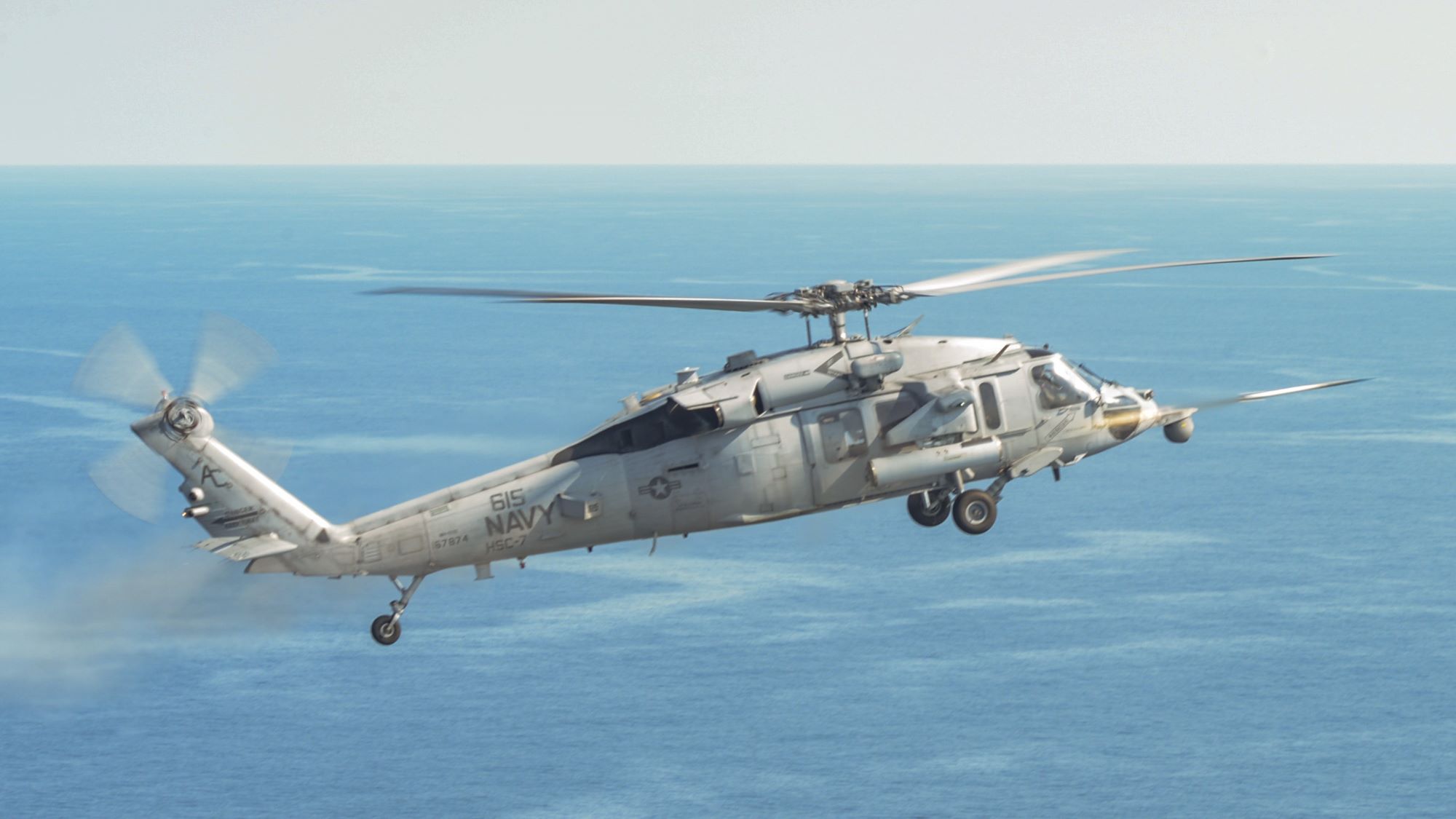
According to NAVAIR, naval and U.S. Marine Corps platforms like the AV-8B Harrier II jet, UH-1Y Venom, MH-60S and MH-60R Seahawk helicopters have been cleared to use the APKWS II. MH-60Rs, specifically in maritime warfare against Houthi drones, have employed the AGM-114 Hellfire.
U.S. Air Force F-16s in the CENTCOM’s (Central Command) AOR (Area of Responsibility) have been employing the APKWS II from LAU-131 A/A seven-round rocket pods. The Navy meanwhile uses the AGR-20 with the similar LAU-68 F/A.
An image released in June by the 20th Fighter Wing at Shaw AFB, South Carolina, showed an F-16 with six LAU-131 A/As. In this configuration, the F-16 can carry 42 APKWS II rockets, allowing it a deeper magazine against Iranian and Houthi drone swarms.
Prior to that, in May, an F-15E Strike Eagle from the 96th Test Wing’s 40th Flight Test Squadron at Eglin AFB was seen carrying three LAU-131A/As on the left wing mounted on a Triple Ejector Rack (TER). Then, by the end of the month, F-15Es were shown in the CENTCOM AOR equipped with six pods, for a total of 42 rockets, in addition to eight air-to-air missiles.
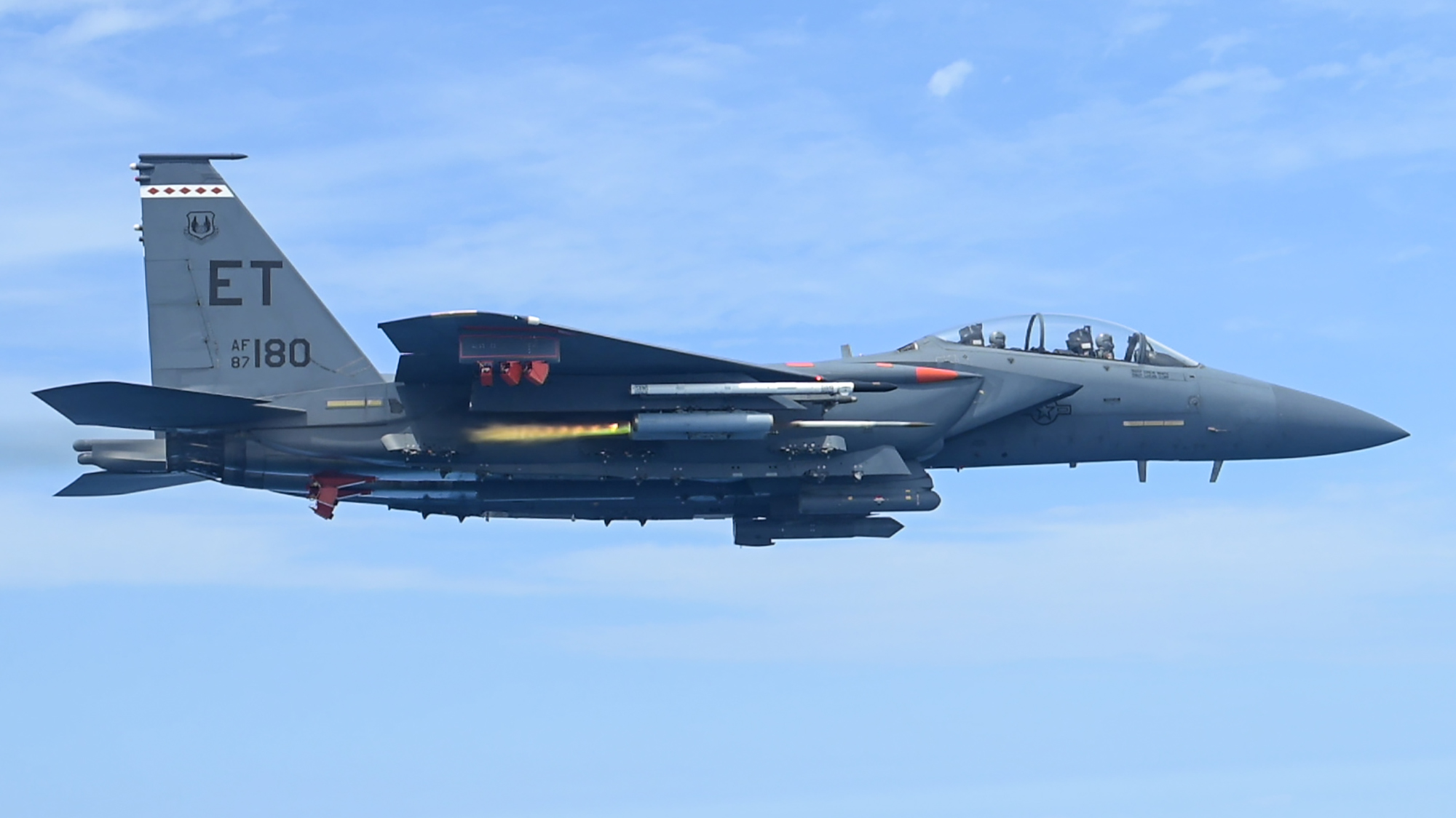
F-15E Strike Eagles from the 366th FW and A-10C Thunderbolt IIs have also been photographed returning from deployments with APKWS II kill markings. The AH-64 Apache too has been cleared to use the APKWS II, and the AH-64E V6 Apache Guardian also recently validated its counter-drone capability with the weapon.