The ALQ-257 Integrated Viper Electronic Warfare Suite is on track for rapid fielding on 72 U.S. Air Force F-16s, as well as the Army’s ME-11B HADES.
Northrop Grumman’s AN/ALQ-257 Integrated Viper Electronic Warfare Suite (IVEWS) is moving rapidly toward production and frontline fielding after completing a series of major developmental and operational milestones on U.S. Air Force F-16s. The system successfully completed Operational Assessment flight testing earlier this year and will soon equip the F-16 Block 50.
As the service looks to keep its large fourth-generation fleet viable against increasingly agile and unpredictable threats, IVEWS is emerging as one of the most consequential survivability upgrades ever introduced on the Viper, as the F-16 is called by its crews. The system has demonstrated robust performance in both controlled test environments and demanding real-world electromagnetic scenarios during larger test events.
- 1 The ALQ-257 Integrated Viper Electronic Warfare Suite is on track for rapid fielding on 72 U.S. Air Force F-16s, as well as the Army’s ME-11B HADES.
- 1.1 Integrated Viper Electronic Warfare Suite
- 1.2 A Modern EW Suite for an Evolving Threat Environment
- 1.3 Digital Interoperability With the SABR AESA Radar
- 1.4 System Validation and Threat-Environment Testing
- 1.5 A Path to Rapid Fielding
- 1.6 A Pod-Free Internal Solution With Growth Potential
- 1.7 A Crucial Upgrade for the Viper’s Future
Lt. Col. Christopher B. James, Deputy Division Chief for USAF F-16 Programs, highlighted the significance of the Operational Assessment’s completion, noting that IVEWS “worked during its first flight on two aircraft, which is unprecedented for a complex and fully integrated electronic warfare system.” He added that the integration and performance validated the system’s unofficial motto: “IVEWS, works first time, every time.”
We recently had a chance to interview Northrop Grumman’s team working on IVEWS to get a better understanding of the system.
Integrated Viper Electronic Warfare Suite
The AN/ALQ-257 Integrated Viper Electronic Warfare Suite (IVEWS) is designed to equip the F-16 with Electronic Warfare (EW) capabilities on par with the latest generation aircraft. This allows to significantly enhancing survivability for operations in contested and congested electromagnetic spectrum environments and keeping the Viper lethal and survivable.
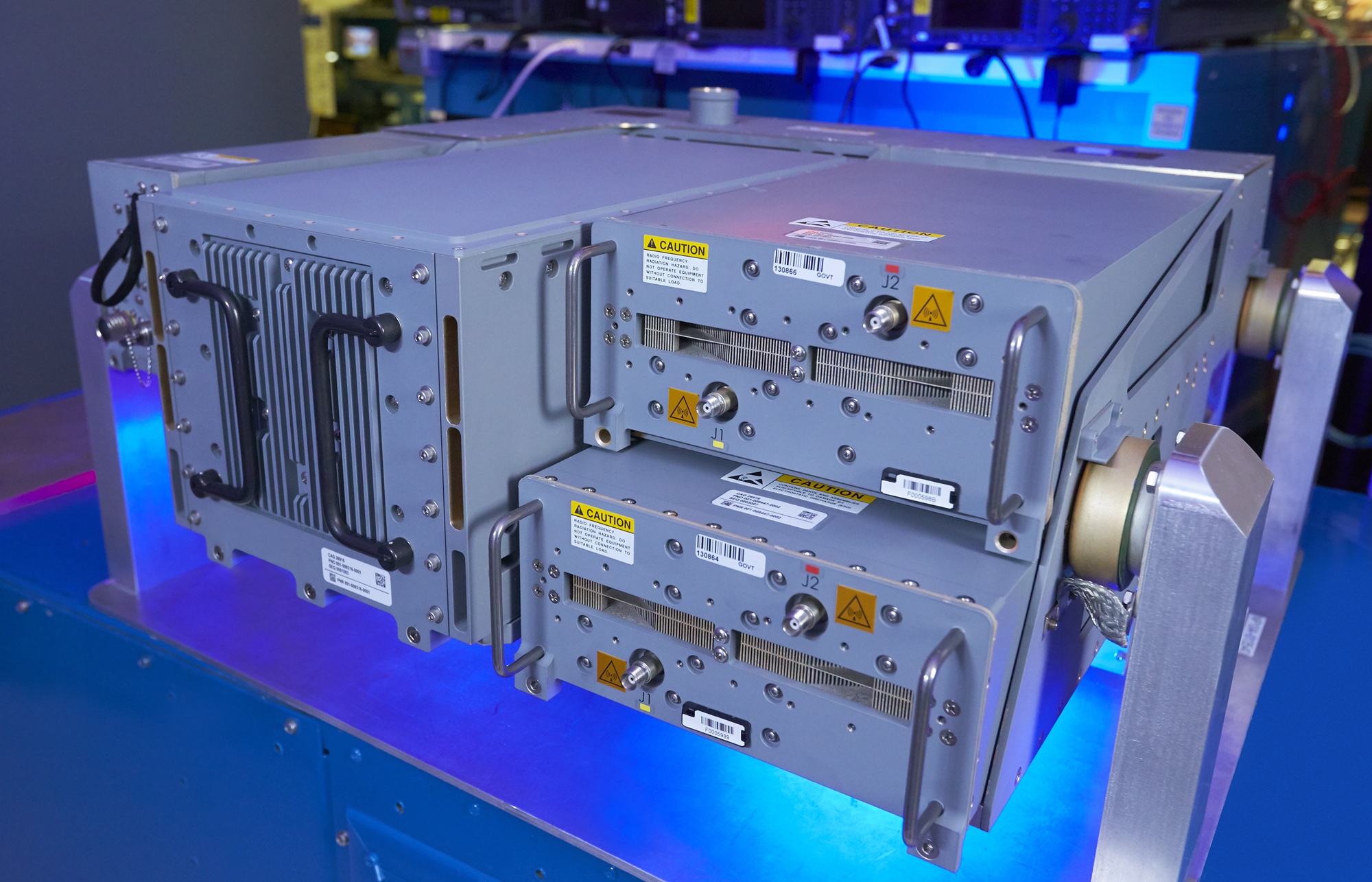
IVEWS can automatically detect, identify, track and jam radio frequency threats, as well as single-ship geolocate them without the need for triangulation in cooperation with other aircraft. This allows the system to replace a number of legacy systems for improved protection.
The system is designed as a fully digital, ultra-wideband internal electronic warfare suite, thus removing the need for external pods, usually carried on the centerline of the aircraft. Such pods usually present some limitations not only in their performance, but also in the performance of the jet.
To ensure IVEWS delivers F-16 protection now and into the future, the company said specific and deliberate hardware investments were necessary. While existing hardware locations were utilized to the maximum extent possible, IVEWS is an entirely new system replacing outdated 35+ year old systems on the aircraft.
Specifically, IVEWS utilizes the USG-procured EW controller and associated color threat display for primary control and display purposes, as well as for controlling all expendable countermeasures. The pilot may also interact with IVEWS and display information using the Center Pedestal Display (CPD) being installed with the PoBIT upgrade.
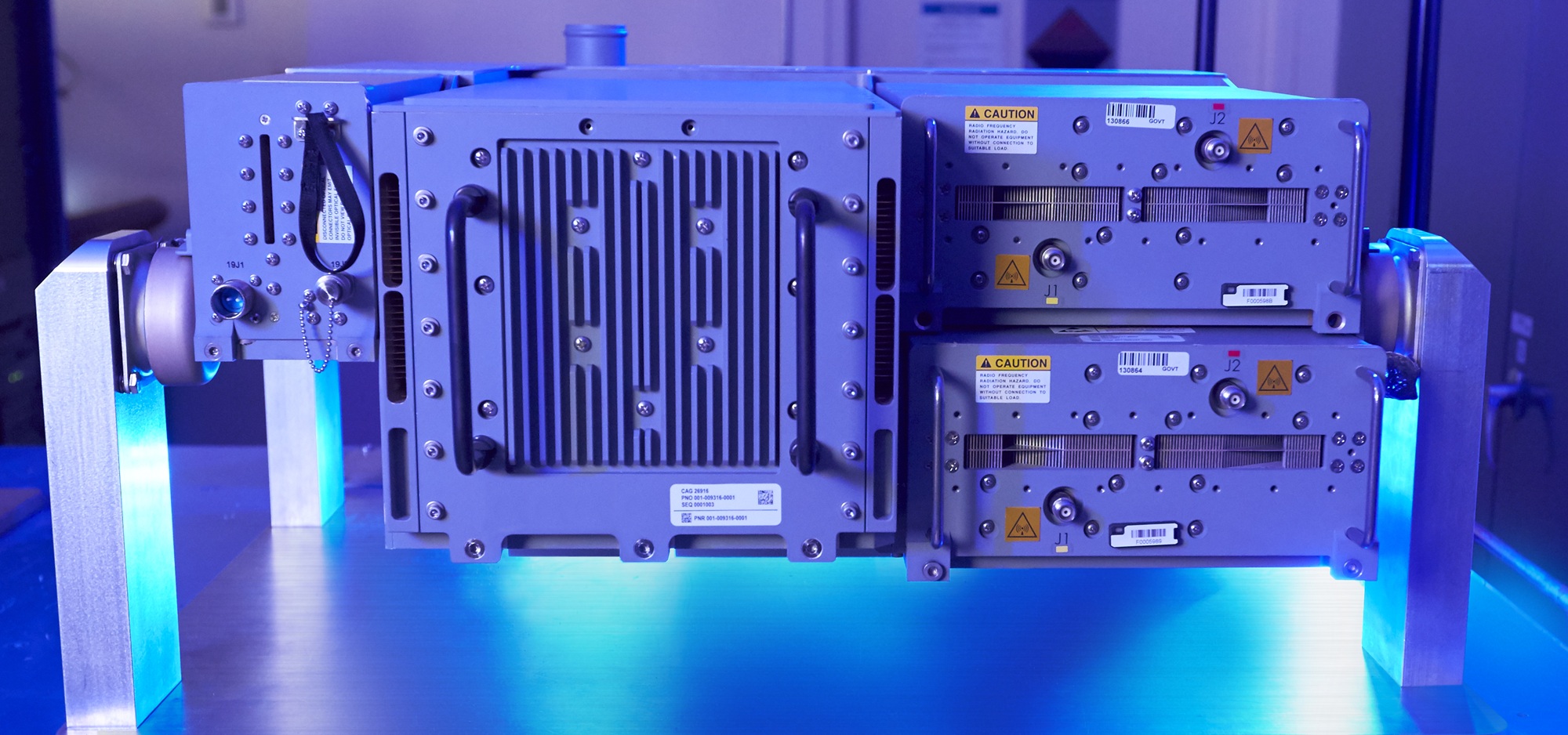
The system has a full complement of antennas distributed on the airframe which allows it to receive signals in a 360 degrees bubble around the aircraft. It also have transmitter antennas to cover the same bubble, as well as a central, main processor – the brains of the system – and RF amplifiers to put out the RF energy to suppress the threat radars.

IVEWS was first selected by the U.S. Air Force as part of a competition in 2019, nine months earlier than planned, and is now a Program of Record for F-16 EW. The advanced internal EW system is designed to work seamlessly with the aircraft’s new APG-83 Active Electronically Scanned Array (AESA) radar, which is now being installed across the fleet.
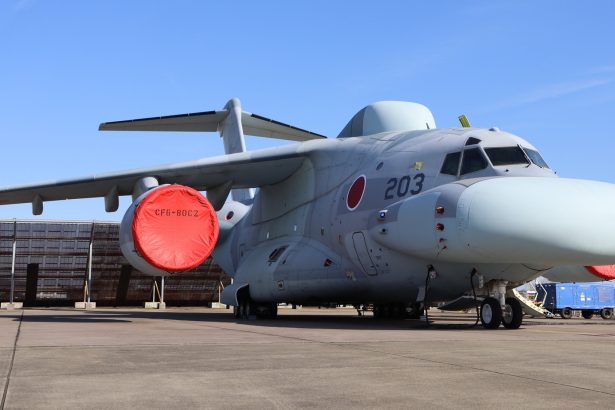
Notably, while it was specifically developed to equip the F-16, IVEWS has also been selected to equip the U.S. Army’s ME-11B High Accuracy Detection and Exploitation System (HADES) platform, the service’s modified Bombardier Global 6500 business jets for intelligence gathering.
A Modern EW Suite for an Evolving Threat Environment
The radio frequency battlespace has become increasingly dense, dynamic and unpredictable. Where threats were once fixed and mapped in advance, modern adversaries now rely on mobile, rapidly shifting, software-driven radars and jammers that activate only when an aircraft is already inside engagement range.
“The RF environment has got more and more congested,” told us James Conroy, Vice President of Electronic Warfare and Targeting at Northrop Grumman. “There are so many signals out there and trying to find the RF threat’s radar signal is like trying to find a needle in a haystack. If you don’t have advanced hardware, advanced processing and algorithms, you really can’t find those advanced threats and be in position for the future.”
Conroy stressed how this shift in today’s RF environment has increased the urgency for integrating modern, adaptable EW capabilities. Lessons learned over the years led not only to a change in air tactics, but also a change in tactics of ground-based air defenses.
“Decades ago, the RF environment was such that people could pre-plan and use tactics to know where the threats were,” explained Conroy. “Threats now are moving around the battlespace, and they’re not just moving around, but they are not always on.”
With threats becoming increasingly unpredictable, automation is the key to a quick reaction and improved protection. During the most intense phases of a mission, when the pilot might be focused on more urgent tasks at hand, an automated capability might be the difference between life and death.
“You have people flying into the weapons engagement zone, and they don’t even know it until the RF threat turns on, and it could be targeting them and launching threats at them,” said Conroy. “Having a system that automatically does that and automatically protects the aircraft takes a lot of the workload off the pilots so they can focus on their mission.”
To do that, IVEWS uses an ultra-wideband digital receiver architecture to sift through the increasingly cluttered RF environment, which is populated not only by radars but also by civilian emitters like cellular towers, satellite radios and commercial communication systems. The system identifies and geolocates the true threat signals – the “needle in the haystack,” as Conroy described it – while simultaneously applying active jamming and countermeasures.
Notably, IVEWS performs geolocation automatically and transparently to the pilot, and the function can operate concurrently with detection and jamming – something earlier F-16 EW systems could not do simultaneously.
“Classically, when you want to geolocate a threat on an F-16 or another platform, you have to turn on your jamming to allow you to do geolocation,” explained Conroy. “IVEWS does all geolocation in the background, it does all of that autonomously so the pilot can focus on the mission at hand. Ultimately, what we are enabling is the pilots go out, fly their mission and return home safely.”
IVEWS can generate single-ship geolocated threat information. Once threats have been geolocated, F-16s can easily share these threats’ locations.

Digital Interoperability With the SABR AESA Radar
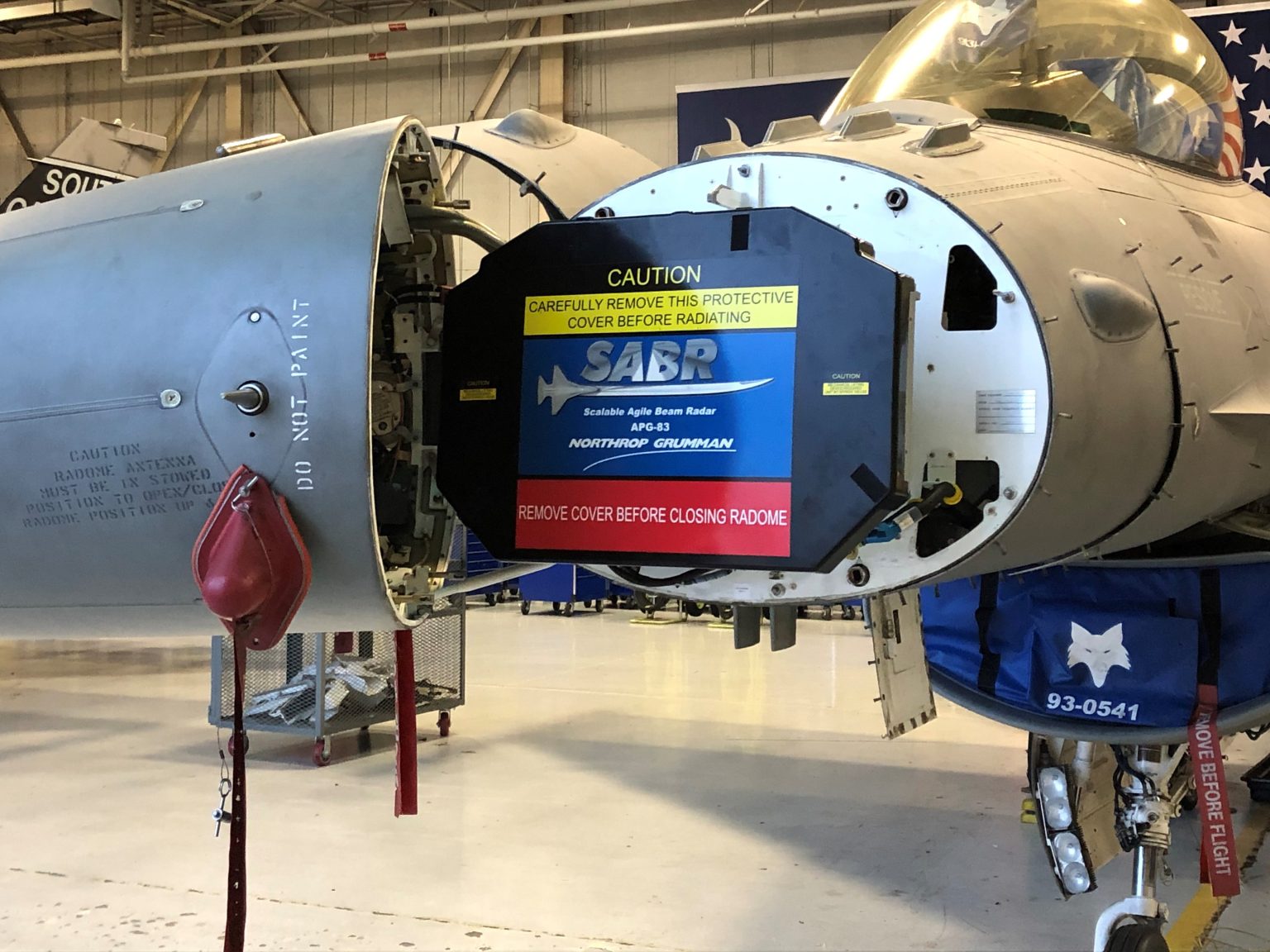
A defining feature of IVEWS is its deep integration with Northrop Grumman’s APG-83 Scalable Agile Beam Radar (SABR), the new AESA radar which has been installed on hundreds of F-16s worldwide.
“We recognized since day one that we needed the interoperability between SABR and IVEWS in order to make the F-16 as operationally relevant as possible,” said Conroy. “We knew that interoperability had to be a fully digital interoperability.”
The two systems communicate digitally on a pulse-to-pulse basis, with IVEWS able to see all SABR’s radar pulses and filter them out digitally. This allows SABR to operate at full performance without filtering or blanking while IVEWS simultaneously detects and counters hostile emitters.
“There was a Large Force Exercise where the F-16 with the IVEWS system had advanced air threats and advanced ground threats in the environment,” told us Conroy. “[IVEWS] was suppressing both of those and preventing them from getting tracks on the F-16, while the SABR radar was going in and doing some of its advanced modes.”
Northrop has delivered more than 900 SABR radars globally, with the U.S. Air Force procuring the radar for the F-16’s Radar Modernization Program. Because of this, the company sees the combined SABR + IVEWS architecture as central to keeping the Viper relevant well into the 2030s.
System Validation and Threat-Environment Testing
IVEWS has gone through the full complement of industry lab testing and government lab testing, and has been in flight testing for over a year. Conroy told us that, within that year, the system has flown over 300 sorties and over 500 flight hours.
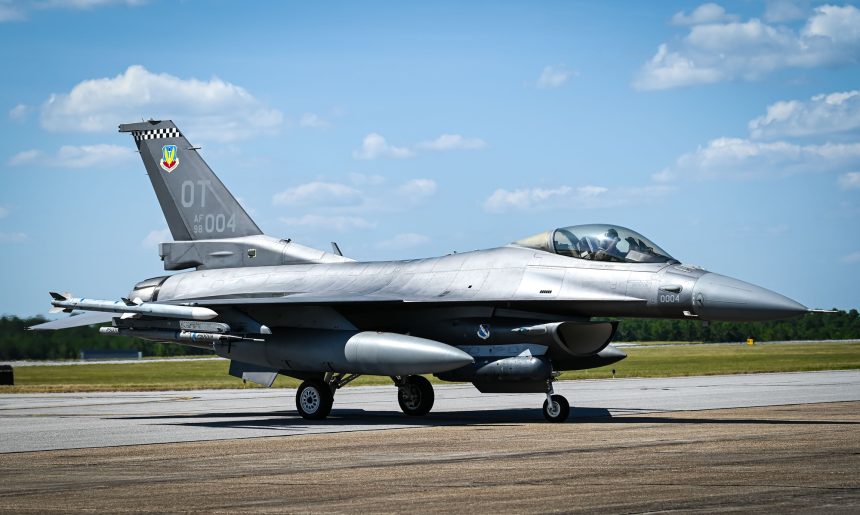
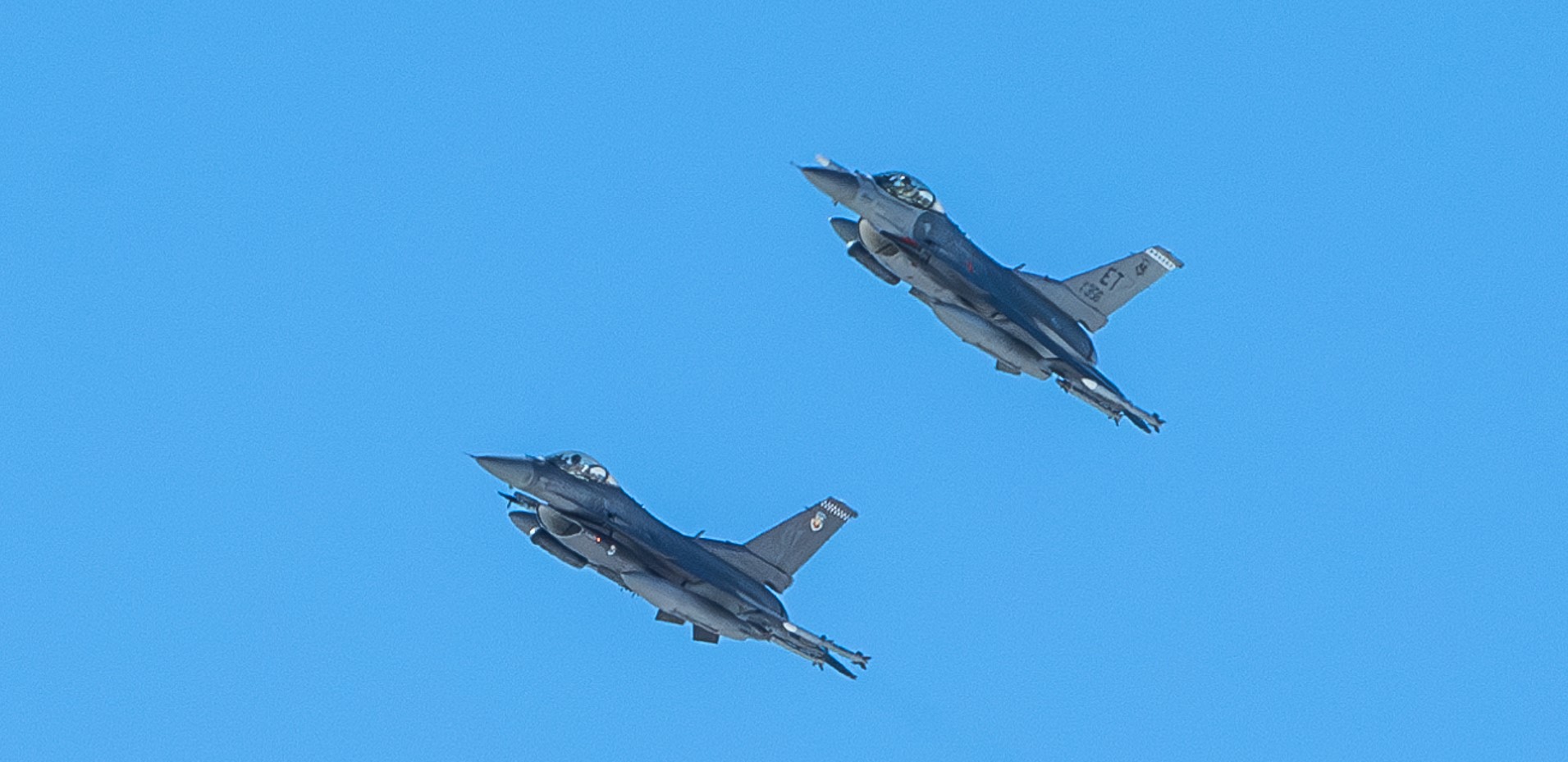
Two F-16 Block 50 aircraft are being used for testing of the new EW system. Conroy explained that the jets are being tested against the most advanced air threats, ground threats and the most advanced surface threats and a combination of those at the same time.
Notably, according to the serials in the released photos, the two F-16s that are being used to test IVEWS are among the ones that were also used to test SABR ahead of its introduction in the Air Force.
These aircraft took part in multiple testing events. As mentioned earlier, during a LFE, the F-16s were able to suppress both air and ground threats simultaneously while still being able to employ the SABR radar.
There were also reports about IVEWS being described as a “mini Growler.” We talked about this with Conroy, and he told us “There was a comment from a pilot and basically what they were talking about was the fact that we have so much RF transmit power that we can not only provide self-protection for the platform that the IVEWS system is installed on, but we can sort of extend that performance and survivability bubble around other ships that are within the formation.
A Path to Rapid Fielding
Following the Operational Assessment, production is expected to begin soon, with this summer’s reconciliation package providing $187 million in funding to complete the certification. Another $250 million is included in the FY26 appropriations bill for the first full-rate production lot.
IVEWS is #1 on CENTCOM’s Unfunded Priority List, and AFCENT has submitted an Urgent Operational Need for 72 F-16s equipped with IVEWS. Conroy previously told us in an emailed statement that the company expects the first IVEWS-equipped combat-coded jets in late CY2027.
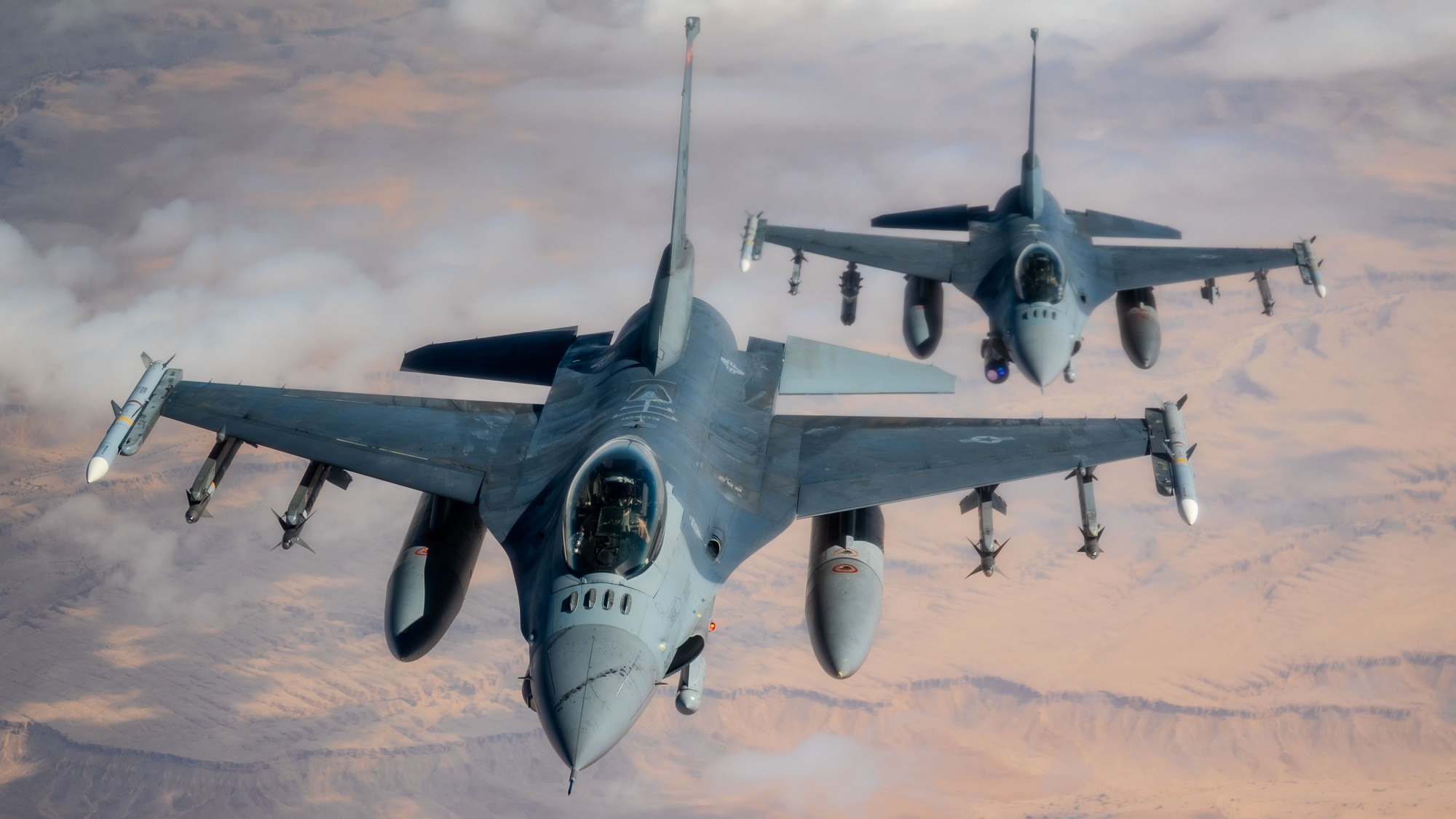
CENTCOM-based Vipers have been heavily engaged in recent years, shooting down Iranian drones launched toward Israel, operating near Russian air defenses in Syria, countering threats from Iran and its proxies, and responding to Houthi attacks from Yemen. Notably, the Air Force recently awarded Lt. Col. William “Skate” Parks, former commander of the 480th Expeditionary Fighter Squadron, the Silver Star Medal for his actions during a mission in March 2025 in which he came under heavy fire while flying an F-16 Block 50.
Lt. Gen. Derek France, commander of Air Forces Central, described IVEWS as “one of many efforts to keep our fourth-gen platforms competitive as the adversary advances.”
The company says IVEWS can be installed by a Contractor Field Team (CFT), either as a standalone effort or in coordination with other ongoing upgrades. It is unclear if there will be synergies with the PoBIT upgrade effort.
Breaking Defense reported that the renewed urgency followed earlier funding stagnation, as Air Force resource priorities had shifted toward future platforms. With threats intensifying, however, the service is now pushing to field the system as quickly as possible.
A Pod-Free Internal Solution With Growth Potential
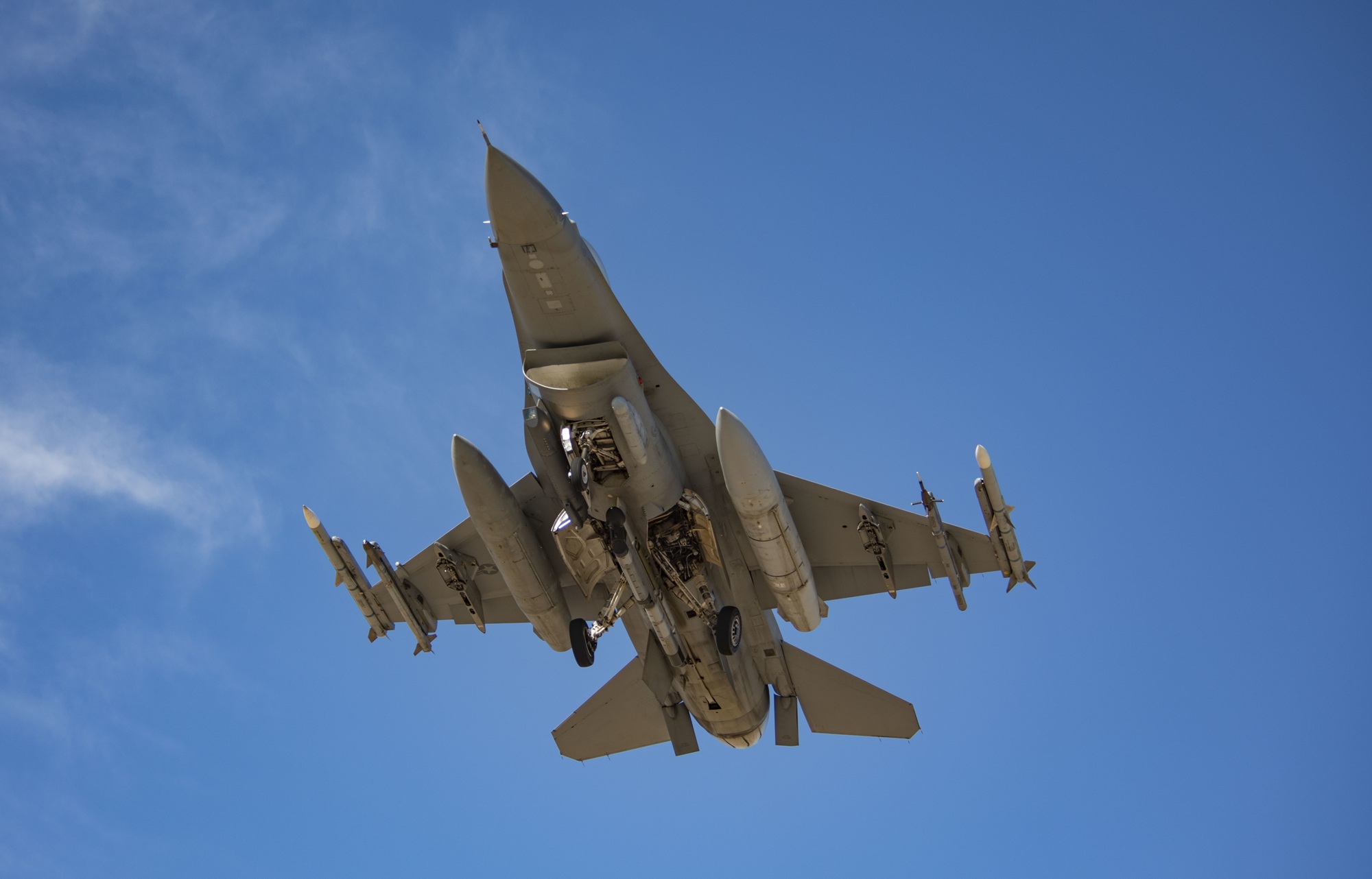
Unlike legacy podded systems such as the ALQ-131 or ALQ-184, the ALQ-257 is an internal line-replaceable unit, freeing up the aircraft’s centerline station for additional fuel or weapons. Moreover, legacy ECM pods weigh approximately 600-800 pounds, while IVEWS is lighter by around 50%.
This aspect is not to be underestimated as, with the U.S. gearing up to fight over the Pacific, the F-16 will be able to carry a third external fuel tank on the centerline, further extending its range. The crews will not need anymore to choose between more range or improved EW protection.
Initial fielding of IVEWS will occur on Block 50/52 aircraft. “The system is designed to work with the Block 50 and the Post Block aircraft, that’s what we’re primarily focused on, but we expect it to be extensible to many other versions of the fighter aircraft,” said Conroy.
In an emailed statement, he further explained: “Very minor required Group A changes were funded in the Reconciliation Law, allowing Block 40/42 aircraft to easily accept IVEWS, as well. We would also be able to integrate IVEWS on Block 25/30 aircraft at a customer’s request, as the aircraft internal volumes and locations are the same.”
International interest is also growing. Türkiye has already committed to integrating IVEWS on its F-16s when available, with a Letter of Request for the integration on its future F-16s Block 70. “We are also in conversation with a number of other countries that are interested in putting it potentially on their new Block 70s as well as people that already have Block 50s,” added Conroy.
Although optimized for the F-16, the company has noted that the modular architecture could support other aircraft. In fact, as mentioned earlier, due to the demonstrated performance and modularity of IVEWS, the U.S. Army selected it as the survivability suite for the new HADES platform, which is based on a business jet.
A Crucial Upgrade for the Viper’s Future
As peer and near-peer threats continue to evolve, the U.S. Air Force is increasingly relying on advanced EW solutions to ensure its fourth-generation platforms remain viable in contested environments. With the F-16 still comprising a substantial portion of the U.S. and allied tactical aviation inventory, the introduction of IVEWS represents a significant leap in survivability.
“IVEWS has consistently demonstrated class-leading performance as a modern survivability suite for the F-16,” said Conroy in an emailed statement. “The advanced technologies designed into IVEWS, combined with direct digital connectivity with SABR, ensures that modernized F-16s will continue to be relied upon as a trusted and effective fighter asset alongside 5th and 6th gen platforms for years to come.”
With production funding secured and an operational need driving rapid fielding, the IVEWS is on track to become one of the most important upgrades in the Viper’s long service life.