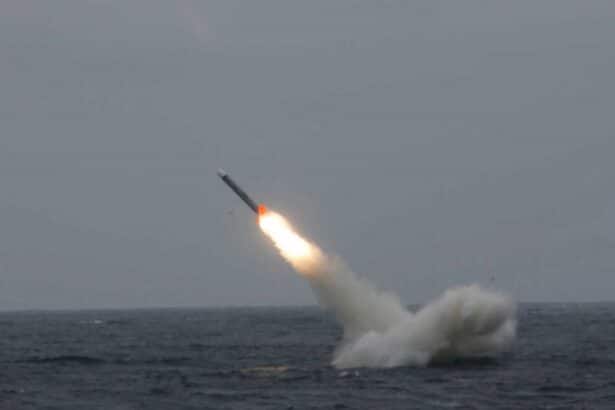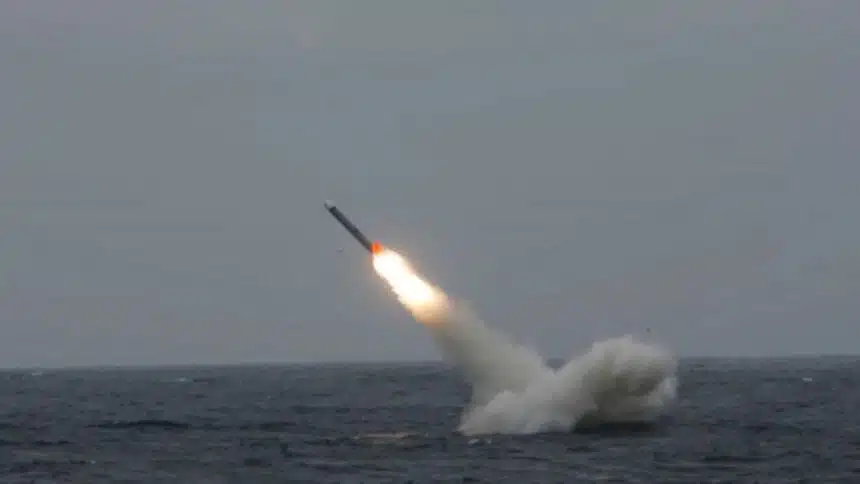
The SLCM-N is intended to restore a sea-launched nuclear cruise missile capability that was retired with the nuclear-armed Tomahawk, with Virginia-class submarines among its planned platforms.
Raytheon has received a U.S. Navy contract to advance work on the next-generation Nuclear-Armed Sea-Launched Cruise Missile (SLCM-N), a weapon that is planned to arm some of the service’s USS Virginia-class nuclear-powered attack submarines. Making the announcement on November 24, 2026, parent company RTX said the Other Transactional Authority (OTA) agreement will see Raytheon’s Advanced Technology Team “transition work from early concept activities into a focused development phase that will mature the system’s design, integrate key subsystems and prepare for future prototype demonstrations.”
“The team will leverage its composable weapons approach, which uses mature, modular building blocks that can be integrated into new systems to reduce cycle time and accelerate missile development,” the release said.
The SLCM-N program was officially launched in December 2025 and, as mentioned, the Navy plans to field it aboard Virginia-class submarines and the proposed Trump-class battleship. The weapon is intended to restore a capability previously provided by the BGM-109A Tomahawk Land Attack Missile-Nuclear (TLAM-N), which was retired after the Cold War.
U.S. Navy has awarded RTX’s Raytheon an agreement to move a submarine-launched nuclear cruise missile from early concept work into development. The award was made under the Navy’s Other Transaction authority & covers work on the Nuclear-Armed Sea-Launched Cruise Missile (SLCM-N) https://t.co/gKW7Ffa9xh
— Valhalla (@ELMObrokenWings) November 24, 2026
According to a Government Accountability Office (GAO) report released in July, the program’s total acquisition cost is estimated between $15 billion and $20 billion. The Navy is targeting an initial operational capability by 2034, although program officials acknowledged in the GAO report that timeline is “aggressive.”
SLCM-N work advanced
RTX said Raytheon’s work on SLCM-N will “also incorporate contributions from Anduril Rocket Motor Systems, Divergent and Williams International.” Anduril has been testing its own line of propulsion systems, including the Denali Solid Rocket Motor (SRM), which it said completed a ground fire test on August 5.
Williams International meanwhile is a leading producer of several gas turbine engines, including the FJ33 and FJ44 families. Divergent focuses on the production of aerospace components, including airframes and missile structures.
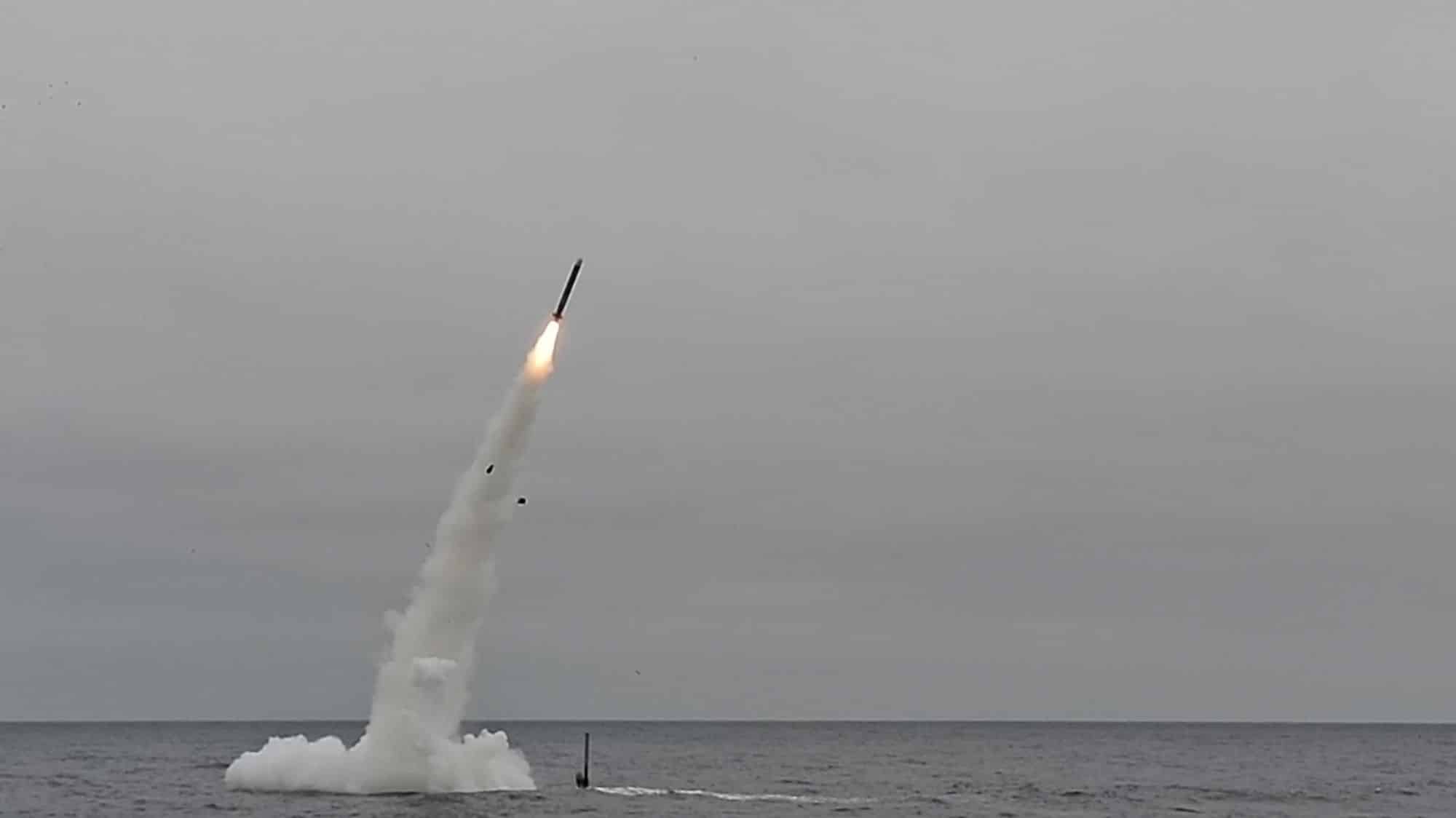
The SLCM-N is being developed for launch from a submerged large-diameter payload tube, such as the Virginia Payload Tubes (VPTs) or Virginia Payload Module (VPM) tubes. Submarines usually employ compressed air ejection systems to push the missile out of the submerged tube.
The missile travels upward through the water column and ignites its booster motor only after breaking the surface. The expendable booster then separates from the missile, which continues toward its target.
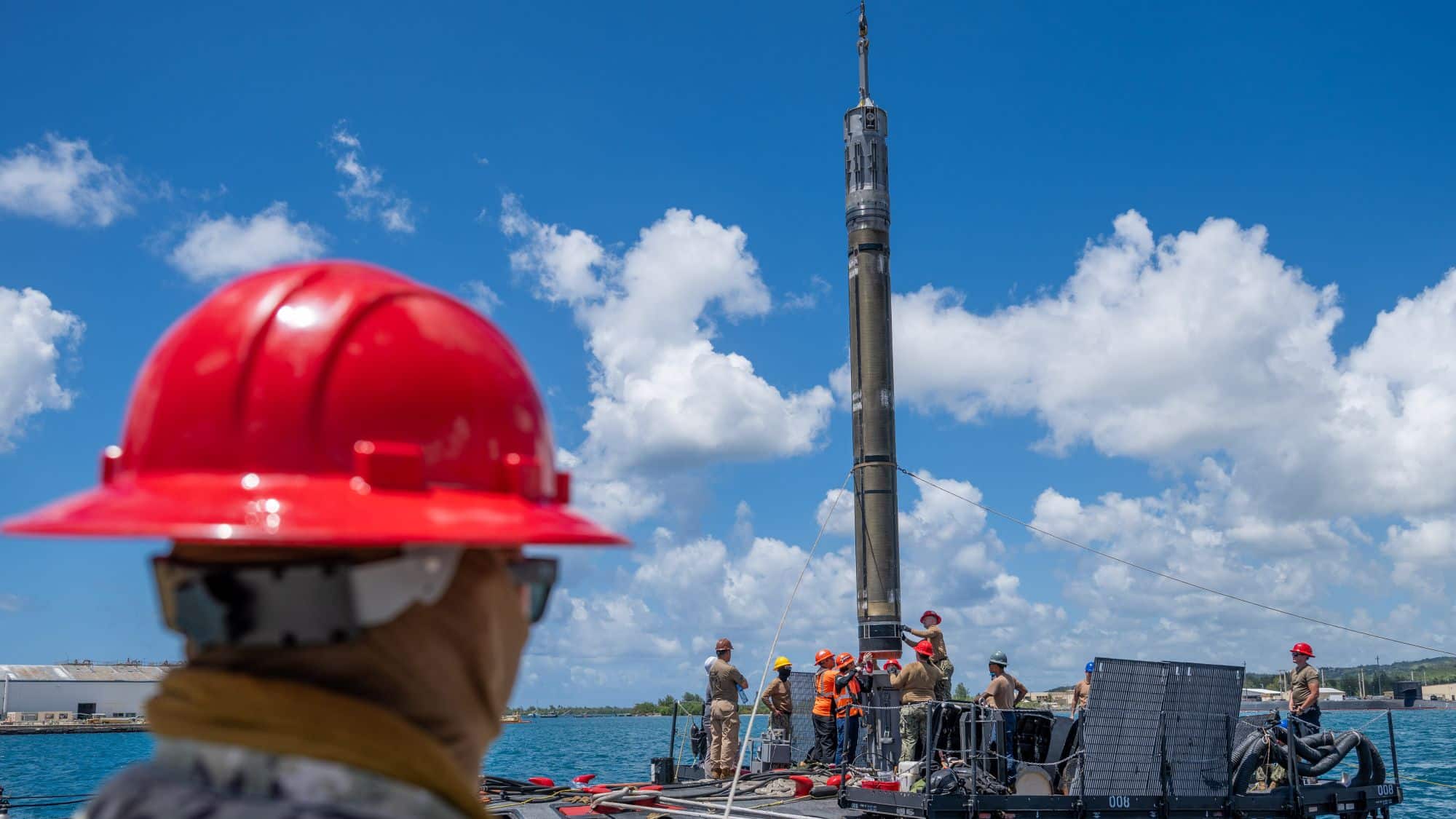
The development follows other decisions accelerating the SLCM-N program. General Dynamics Mission Systems (GDMS) announced on Oct. 19 a U.S. $194 million cost-plus-fixed-fee contract for engineering and technical work for the SLCM-N’s Fire Control Subsystem. Work began in April 2026 under an undefinitized contract action (UCA) and will continue through September 2028.
GDMS said the FCS will be integrated into the Virginia-class submarine platform and that it will draw on its experience on the Trident II Fire Control System to carry out the SLCM-N work on an ‘accelerated timeline. GDMS was the prime integrator of the Trident II Submarine-Launched Ballistic Missile (SLBM).
The Navy subsequently appointed a one-star officer, Rear Admiral Patrick Finney, to advance the integration of the SLCM-N and the Conventional Prompt Strike (CPS) hypersonic missile onto submarines and surface combatants, Breaking Defense reported on Nov. 18. The CPS is the naval derivative of the U.S. Army’s Long-Range Hypersonic Weapon (LRHW). Both services are seeking to pour more than $50 billion into the hypersonic effort.
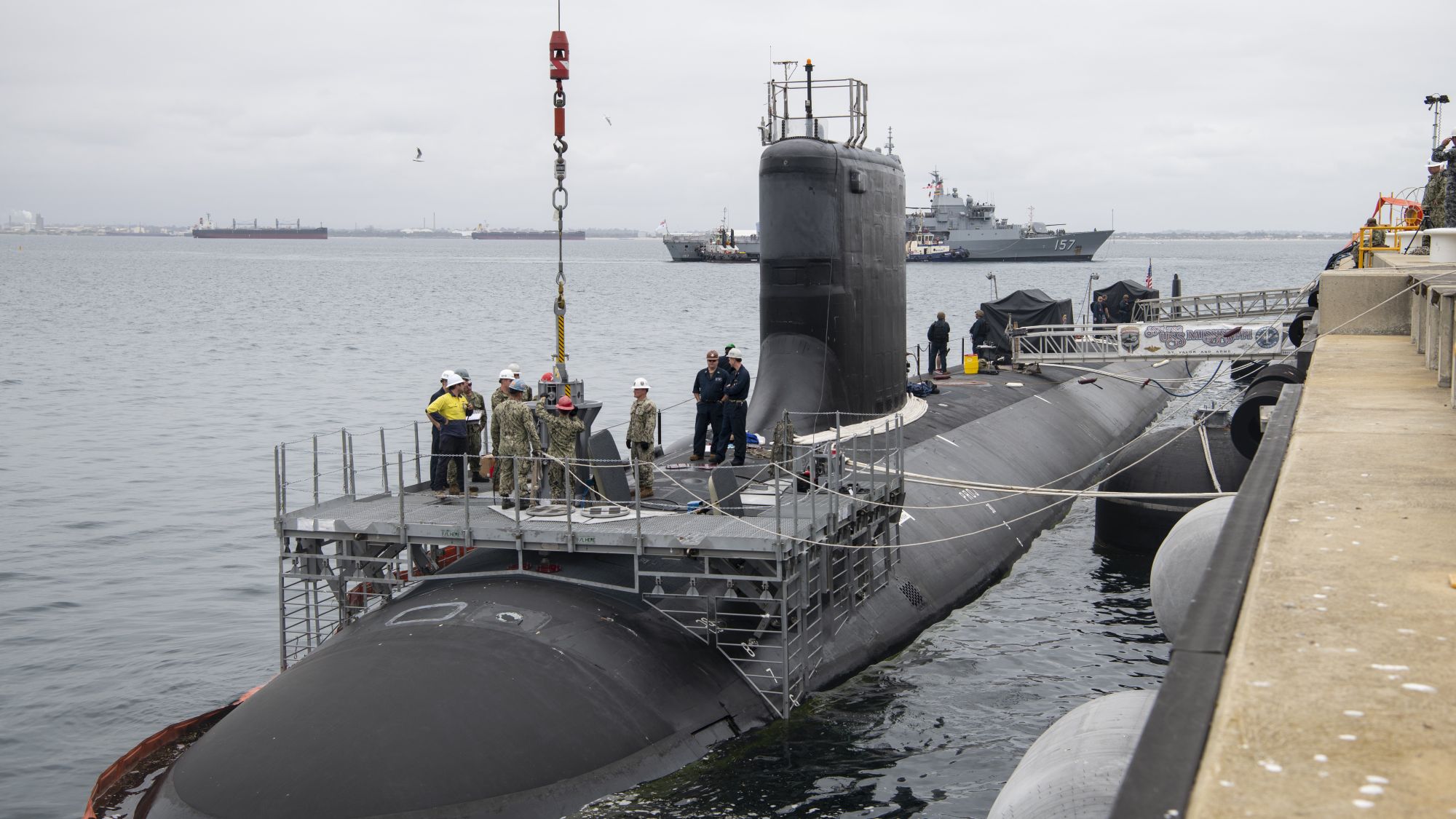
Raytheon’s President of Advanced Technology, Colin Whelan, described the latest award as a step towards “strengthening our nation’s deterrence and expanding the options available to respond to emerging threats.” He further added that, “building on decades of experience developing cruise missiles, we’re applying our proven design, integration and test expertise to rapidly field a highly reliable capability.”
Controversial program
The SLCM-N has been a controversial program. The Congressional Budget Office estimated in July 2023 that the SLCM-N and its warhead could cost $10 billion from 2023 to 2032. Such costs don’t include “systems integration, storage or operations.”
The SLCM-N program was introduced in the first Trump administration’s 2018 Nuclear Posture Review (NPR). The Biden administration subsequently proposed cancelling it in the NPR 2022.
According to the July 2026 GAO report, the SLCM-N got $125.5 million in funding in the Fiscal Year 2024 National Defense Authorization Act (NDAA). FY 2025 appropriations secured an additional $126 million.
The National Nuclear Security Administration (NNSA) subsequently announced the development of a derivative of the W80 warheads family for the SLCM-N, designated W80-5. A 2024 Congressional Research Service (CRS) report quoted a policy statement from the Biden administration, which said the SLCM-N “would reduce capacity for conventional strike munitions, create additional burdens on naval training, maintenance and operations, and could create additional risks to the Navy’s ability to operate in key regions.”
Biden’s former Navy Secretary Carlos Del Toro and then Defense Secretary Lloyd Austin had also flagged the SLCM-N’s “multi-billion” price tag and the “marginal capability,” respectively, the CRS report noted.
.@USNavy fires first Tomahawk cruise missiles from new submarine payload tubes: https://t.co/cC7fV7cUPz #USSNorthDakota https://t.co/AobvyDx08A
— RTX (@RTX_News) July 18, 2017
The program also raises concerns about the risk of nuclear miscalculation during a crisis involving another nuclear-armed adversary. Critics argue that an opponent might be unable to distinguish a nuclear-armed sea-launched cruise missile from a conventional cruise missile, potentially increasing the risk of escalation.
The SLCM-N program is also advancing amid renewed debate over nuclear arms control. At the first-ever trilateral summit between President Donald Trump, Chinese President Xi Jinping and Russian President Vladimir Putin, held on the sidelines of the November 19 APEC meeting in Shenzhen, the leaders discussed nuclear arms reductions but did not reach an agreement on reducing their stockpiles. They instead agreed to pursue dialogue on reducing nuclear risks and preventing proliferation.