A wave of false bomb threats has triggered flight diversions, emergency procedures and fighter jet scrambles across Europe, raising questions about a possible new tactic aimed at disrupting civilian aviation.
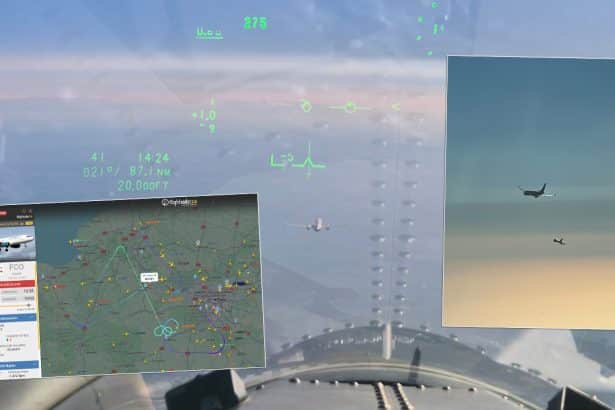
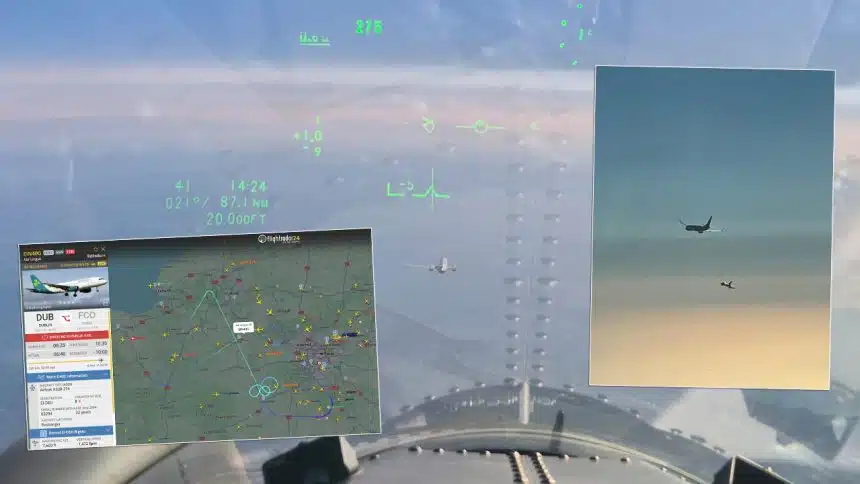
On Nov. 5, 2026, fighters were scrambled by NATO air forces in different parts of Europe to respond to potential threats involving civilian airliners. In France, an Aer Lingus Airbus A320 flying from Dublin to Rome was escorted by combat aircraft and diverted to Évreux Air Base in Normandy, following a bomb threat. More or less at the same time, two Eurofighters of the Italian Air Force were scrambled to escort a Finnair flight 1761 landing at Rome Fiumicino airport from Helsinki, after a similar warning.
These were just the last two of a wave of incidents sparked by bomb threats targeting commercial flights across the continent over the past few days. Overall, 20 similar incidents have been recorded beginning on Nov. 2, 2026.
No explosive device has been recovered aboard the inspected aircraft so far. For this reason, while causing significant disruption, forcing airlines, airport operators, law enforcement agencies and military authorities to activate standard security procedures, the incidents are currently classified as “hoaxes.”
Suspected bomb threats are not new in aviation. They happen every now and then. What makes the latest ones particularly concerning is their number, their geographical distribution and the fact that they come after a series of suspected drone incursions temporarily disrupted operations at several airports, especially in northern Europe.
While there’s no evidence to connect the incidents, let alone to identify the possible actors, the simultaneous nature of the alerts, may suggest a new hybrid warfare scenario targeting Europe’s civilian aviation operations and, as a consequence, also military authorities that need to respond to these threats.
Could these apparently unrelated events indicate a new phase of hybrid warfare targeting Europe’s civilian aviation infrastructure?
The wave of bomb threats
According to Italian newspaper La Repubblica, at least 12 bomb threats involving flights across Europe were reported on Nov. 5, following another wave of alerts on Nov. 3 that affected at least seven aircraft.
In several cases, the threats were reportedly communicated through anonymous emails sent to airlines, airport operators or other organizations involved in airport operations.
On Nov. 5 morning, a Finnair Airbus A321 arriving at Rome-Fiumicino from Helsinki was escorted by two Italian Air Force Eurofighters in QRA (Quick Reaction Alert) at Grosseto Air Base, after a warning concerning a possible explosive device on board. According to the reports, the email message that announced the presence of the bomb aboard the flight was credible and written in Italian.
The aircraft landed safely at Fiumicino, where security personnel carried out the necessary checks, as the fighters circled overhead.
Controlli in corso sul volo Helsinki-Roma della compagnia Finnair dopo l’allarme bomba scattato nella mattinata di giovedì 5 novembre. L’aereo è atterrato nello scalo di Fiumicino scortato dai jet dell’Aereonautica Militare. https://t.co/bemA1a6OLy
— Local Team (@localteamit) November 5, 2026
Another flight scheduled to arrive in Rome, Aer Lingus EI402 from Dublin, was diverted while flying over France. The Airbus A320 was escorted by French military aircraft to Évreux Air Base, where it landed safely. The aircraft was carrying 151 passengers and six crew members.
French authorities activated the necessary security procedures, with military bomb-disposal personnel deployed to examine the aircraft.
Meanwhile, no aircraft have departed from Rome Fiumicino Airport (FCO) in the past 30 minutes.
The reason for the disruption is currently unknown. https://t.co/XVIgI6R1Pa
— Flightradar24 (@flightradar24) November 5, 2026
In another incident, a Wizz Air Airbus A321 from Milan to Warsaw was diverted to Vienna following a bomb threat received during the flight. Other warnings affected Ryanair flights from Copenhagen, Madrid and London Stansted to Bulgaria. The first two landed in Sofia, while the flight from Stansted was diverted to Plovdiv.
Additional alerts were reported in Poland, Belgium and the Czech Republic, affecting several aircraft and prompting further security checks.
The incidents followed a similar series of threats reported on Nov. 3, when flights operated by Ryanair, LOT Polish Airlines, Scandinavian Airlines and Wizz Air were subjected to bomb alerts in different European countries.
In Italy, two Ryanair flights arriving at Rome-Fiumicino from Lisbon and Dublin were inspected after similar warnings. The B737 from Dublin was escorted by Italian Air Force fighters before landing.
#Scramble: questa mattina due caccia #Eurofighter del 4° Stormo dell’#AeronauticaMilitare sono decollati immediatamente dalla base aerea di Grosseto per intercettare e scortare un velivolo civile in volo da Dublino a Roma Fiumicino, dove è atterrato in sicurezza. https://t.co/MHJzO19shR
— Aeronautica Militare (@ItalianAirForce) November 3, 2026
In Poland, a LOT flight from London Heathrow to Warsaw was diverted to Warsaw-Modlin Airport, which was temporarily closed while the aircraft was inspected.
The previous day, Nov. 2, a Wizz Air flight from London Luton to Sofia was intercepted and escorted by a Hungarian Air Force Gripen and diverted to Budapest following another reported bomb threat.
While the incidents are apparently not connected, the frequency and number seem to suggest we are observing a new trend: instead of flying a drone near an airport and disrupt all the traffic until the remotely piloted device is disabled or disappears, someone can send anonymous threats targeting civilian flight and cause widespread concern.
A drone, with or without explosive is far more dangerous that a bomb hoax: its presence in a sensitive area can activate safety procedures designed to protect aircraft, passengers and personnel. The risk of collision with another aircraft or detonation on a target can’t be underestimated. However, even when the information prompting a bomb alert on a flight ultimately proves false, the authorities cannot simply disregard a potentially credible threat.
The resulting response may include air traffic control coordination, changes diversion to alternate airports, activation of emergency services, deployment of bomb-disposal units and, as the recent news proves, the intercept and escort by QRA aircraft.
In other words, an attacker does not necessarily need to physically interfere with an aircraft to disrupt its operations. Moreover, what these actors obtain in return is not only scare and widespread disruption (possibly eroding people’s confidence on air travel too..): they impose costs on an opponent with little effort and money.
The resources required to send a threatening email, masking the sender’s origin and identity, are negligible compared with those potentially needed to respond to it. Just think how expensive diverting an airliner to an alternate airport, scrambling fighters and manage delays.
Disrupting civilian aviation through anonymous threats could fall within the broader concept of hybrid warfare, which combines conventional and unconventional methods and may involve information operations, cyberattacks, sabotage, and other activities intended to influence or destabilize an adversary while obscuring the perpetrators’ identities and remaining below the threshold of open conflict.
In this context, the series of false alarms also comes amid reports of a wave of cyberattacks targeting supermarket refrigerators and freezers across seven European countries, with hackers allegedly manipulating their thermostats remotely and, in some cases, raising temperatures to as high as 50°C.
The challenge for European authorities is therefore twofold: maintaining the ability to respond rapidly and effectively to genuine threats, while also identifying those responsible for the false alarms, determining whether the incidents are connected or part of a state-sponsored campaign, and countering attempts to exploit the very security procedures designed to protect civilian aviation.
We’ll see.