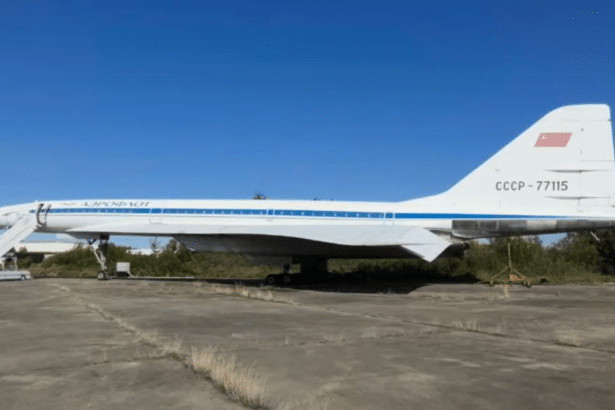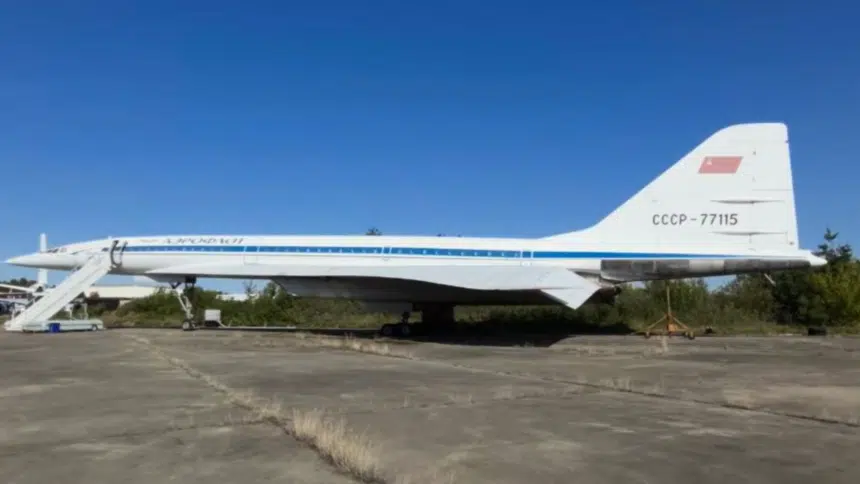
Videos posted by a Russian volunteer show the ongoing repair work on one of the two Tu-144s at Zhukovsky airport in Moscow, and which was often used as a static display during the MAKS airshow.
A retired Tupolev Tu-144D, the Soviet answer to the Anglo-French Concorde supersonic jet airliner, has been put through fervent exterior and interior restoration work over the last few years. The aircraft, CCCP-77115, is one of two currently parked in and around Zhukovsky airport in Moscow Oblast.
This Tu-144D has recently received a TA-6A Auxiliary Power Unit (APU), along with numerous other electrical and mechanical repairs. The work suggests that volunteers might be preparing the aircraft to be exhibited once again in static displays, as it has participated in the International Aviation and Space Salon (MAKS) airshow for at least two decades now.
That airshow, however, was last held in 2021 and its return has been postponed each year since then due to the ongoing war in Ukraine. The work on the Tu-144D therefore aligns with expectations of MAKS being revived in 2027, although it is not yet confirmed.
The restoration videos
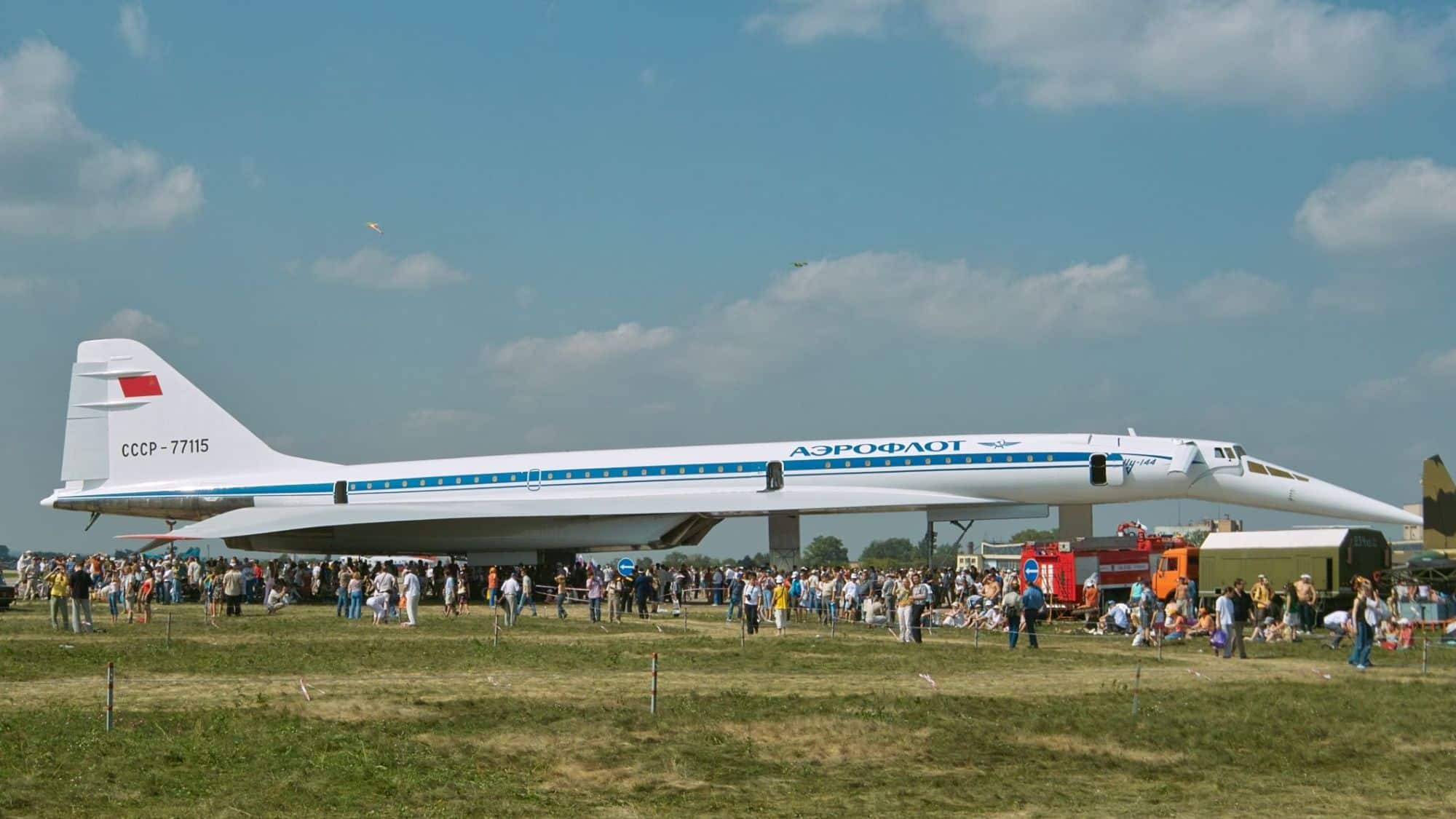
Both CCCP-77114 and CCCP-77115 are parked on the shared grounds of the Gromov Flight Research Institute (GFRI) and the Zhukovsky airport, the venue used for MAKS.
Tail 77114 was moved out in August 2019 and installed as a stilt-mounted static display on a road intersection outside Zhukovsky airport. On the other hand, 77115 has been long-used as a static display until the 2021 iteration of MAKS.
Russian Aviation said the Legends of Aviation charitable fund and an engineering services company named “NIK” were involved in the repair of both aircraft and in the relocation of 77114.
Since 2023, a volunteer named Pavel Efter uploaded videos on his YouTube channel, ‘Restorer144’, showing the work on both aircraft. More recently, since Aug. 15, 2026, he posted videos also on his Instagram profile.
View this post on Instagram
The videos show volunteers activating the electrical power supply and batteries; testing cockpit instrumentation, including the fuel gauge, fuel pump, fuel pressure indicator; checking landing gear lights and inflating the tires; testing the cabin lighting; restoring the analog navigation system; studying the electrical schematics; washing the aircraft’s exterior; checking the SSP-2A fire detection system and smoke sensors; raising and lowering the nose; testing the retractable ‘moustache’ canards; testing the APU’s bay doors below the aircraft; and the actual installation of the TA-6A APU.
View this post on Instagram
Another aircraft, tail CCCP-77106, is located at the Central Air Force Museum in Monino, which too had been attended to by Pavel and his team of volunteers. A fourth, 77110, is based at the Ulyanovsk Civil Aviation Museum.
View this post on Instagram
What are these works for?
Efter clarified to The Aviationist and other enthusiasts in Instagram’s comments that the Tu-144D is not being returned to flight, and that it is only being restored for static display. An operational APU, such as the TA-6A shown in the videos, could supply electrical power for the aircraft’s cabin systems and lighting during static display.
Efter did not mention whether the aircraft might be moved or conduct taxi demonstrations during the MAKS airshow.
View this post on Instagram
The following is a machine translation of Efter’s written response to The Aviationist about the nature of the work:
“There is no official decision regarding the restoration of the aircraft; everything we do is an initiative of a group of caring people who want to preserve our history. Our group is a volunteer movement.
Previously, we were maintaining Tu-144 aircraft with tail number 77106 at the Monino Aviation Museum. Now we have moved on to other aircraft: 77114, which stands on a pedestal in Zhukovsky, and 77115, which is located at the airfield.
On 77114, we perform seasonal maintenance to maintain the aircraft, including releasing the canards and raising and lowering the nose cone. All this is done for display during the summer and is removed for the winter.
A large amount of work has been carried out on 77115. The nose cone raising and lowering system was restored, the canards were serviced, the cabin lighting system was restored, and the ground power generator was repaired, which allows us to put the aircraft on display.”
View this post on Instagram
Returning the aircraft to flight would present substantial challenges. The Tu-144D was powered by four Kolesov RD-36-51 turbojet engines, replacing the Kuznetsov NK-144 turbofans on the earlier Tu-144 and Tu-144S variants.
Because these engines and many other components are no longer in production, sourcing suitable spares would be nearly impossible. Any return to flight would also require addressing airworthiness and regulatory requirements imposed by Russia’s Federal Air Transport Agency, Rosaviatsia.
This would make also unlikely the possibility of the Tu-144D conducting taxi demonstrations during the airshow.
View this post on Instagram
Tail numbers and variants
Last week, Efter also shared a video showing the nose being lowered and lifted on the Tu-144LL (Letayushchaya Laboratoriya – Flying Laboratory) test bed variant. This aircraft was converted from a Tu-144D, specifically CCCP-77114.
Re-engined with the Kuznetsov NK-321 turbofan, the U.S. National Aeronautics and Space Administration (NASA) used this aircraft between June 1996 and April 1999 as a part of its High-Speed Research (HSR) program. The Tu-144LL was also used by Russian organizations until it was retired.
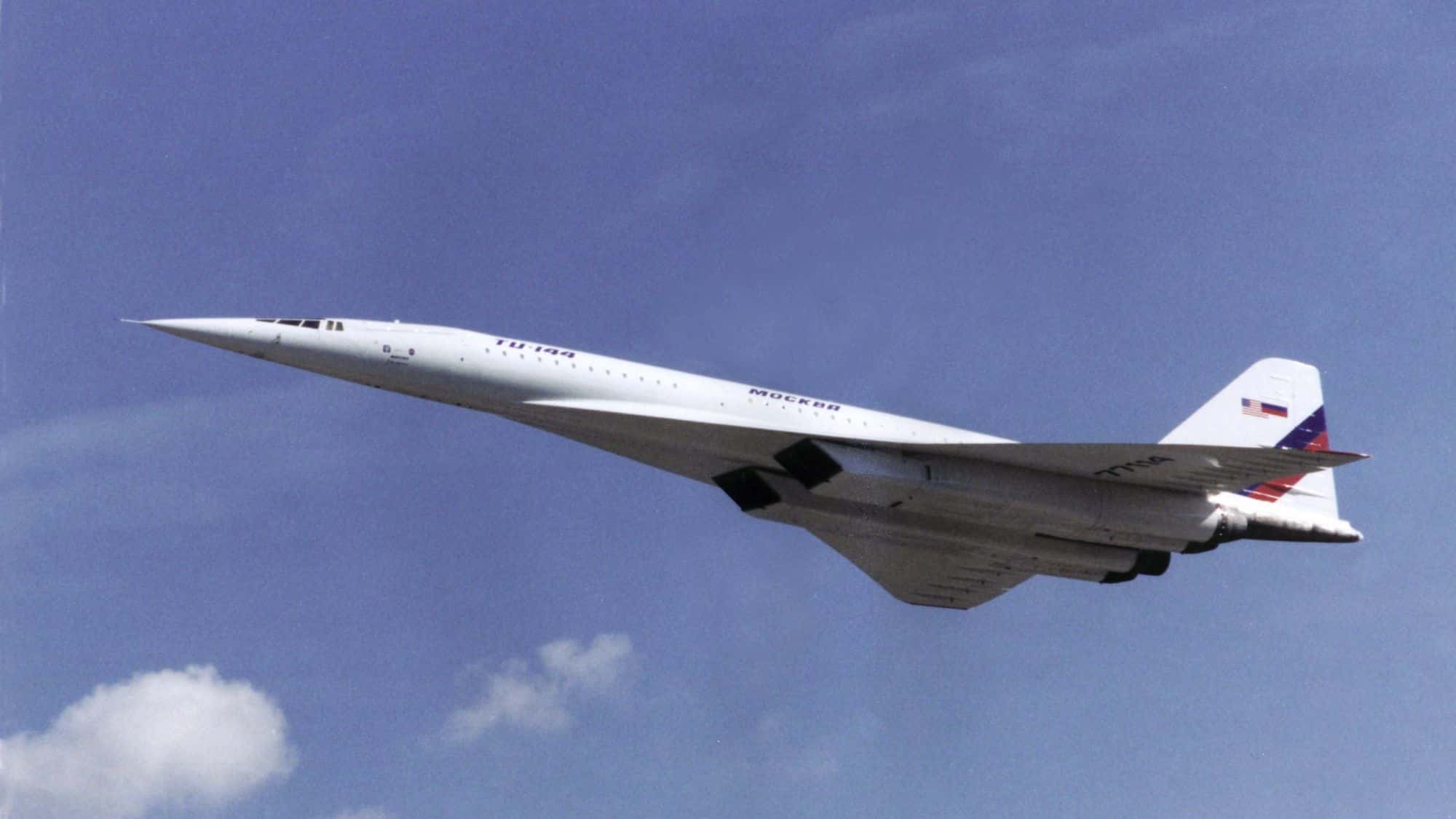
For the new post-Soviet role, the aircraft also changed its tail registration from CCCP-77114 to RA-77114, and received a new tail marking, which it bore until August 2015 when it was on a static display role at Zhukovsky. After being converted into a monument display in 2019, 77114 was repainted in an Aeroflot livery.
NASA said the collaborative American and Russian aerospace effort developed “technologies for a proposed future second-generation supersonic airliner.”
The USSR built a total of 16-17 Tu-144s, depending on the sources. These include a prototype, one or two production test versions and 14 production aircraft. Of these, nine were Tu-144S aircraft, and five were Tu-144Ds – fitted with the Koliesov turbojet engines.
In those far off days in the warm glow left after the Cold War ‘ended’, some odd alliances were quite commonplace.
The Russian’s supersonic airliner, the Tupolev Tu 144, was chartered by NASA and some other leading US Aerospace companies, as a flying laboratory from 1996-1999. https://t.co/ALVHk4WceI
— Trev Clark’s Obscure Aviation History 🚁 (@clark_aviation) October 12, 2026
Tu-144 issues
While the Tu-144 did beat its Anglo-French rival to its first flight by about two months, taking off on December 31, 1968, it had a far more troubled history. Experts now attribute it to a hurried development to uphold as Cold War prestige, leading to engineering and design oversights.
A crash on June 3, 1973, during the Paris Air Show saw a production representative Tu-144S stall at 2,000 feet during a steep climb after a high-speed pass above the runway. The aircraft plunged to the ground, killing all six people aboard and eight people on the ground.
High maintenance costs, fuel consumption and cabin noise were among the issues that affected the Tu-144. After several minor and major in-flight and ground incidents, production ended in January 1982.
The aircraft flew only one limited route between Moscow and Alma-Ata (now Almaty) in Kazakhstan, for a total of just over 100 flights between 1977 and 1978.
Today in 1968, the Soviet Tupolev Tu-144 flew for the first time. It was the first commercial supersonic transport to fly — it exceeded the speed of sound in June 1969 and was first publicly shown in Moscow in May 1970. https://t.co/Ct1crwj9BU
— National Air and Space Museum (@airandspace) January 1, 2022
New supersonic airliner
Separately, Russia recently revealed the development of a new supersonic passenger aircraft. In a June 3, 2026 interview to TASS, United Aircraft Corporation (UAC) chief Vadim Badekha confirmed the existence of such a project and said a prototype is being built at the Zhukovsky National Research Center.
Tu-144 Water Arch in Zhukovsky… This ritual was held to honor its final flight; so, it’s like a retirement party for the airplane. I should probably show off more of USSR aviation lineup to remember model range. Many of them have been unfairly displaced for “global cooperation” https://t.co/RApUHCkvn1
— Neznakomaya❤🇷🇺 (@TomatkaP) September 18, 2025
What the new supersonic airliner looks like is not yet known. Russia will surely be mindful of its Cold War mistakes and will not rush aviation programs for national prestige.
Whether Russia can overcome the technical, economic and industrial challenges that hindered the Tu-144 remains also to be seen. Nevertheless, the restoration work on the Tu-144 CCCP-77115 offers an opportunity to preserve a significant aircraft from the Soviet supersonic-transport program.
Tu-144 in Prague, Czech Republic, in 1971. This is the first picture I see of the jet operating outside of Russia (discounting the appearance at the Paris Airshow). Pictures by José Maria Pato Lopez.
(As a note, the Soviets considered operating it between Moscow and Havana, with stops in the Azores. It never went past “interest”)
“Before the 29th Paris International Air Show at Le Bourget, the first Tu-144 prototype, SSSR-68001, was on display in Prague from May 23-25, 1971, where it also made its first international flight.
The flight to the show was from Moscow to Prague to Paris (Le Bourget). Below are photos from the aircraft’s demonstration at Prague Airport”
— Francisco Cunha – ✈️ Aviation et al (@OnDisasters) March 12, 2026