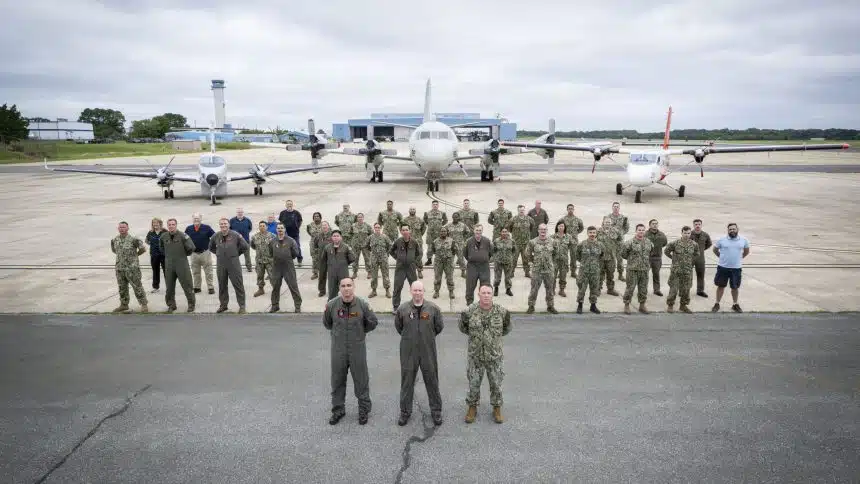
The VXS-1 “Warlocks” sent its NP-3C Orion, a dedicated research variant of the P-3C, to the ‘boneyard’ after three decades of service, retiring the last active-duty P-3 on the U.S. East Coast.
The U.S. Naval Research Laboratory’s (NRL) Scientific Development Squadron ONE (VXS-1) “Warlocks” retired on Sept. 22, 2026, its last NP-3C Orion, sending the aircraft for long-term preservation to the 309th Aerospace Maintenance and Regeneration Group (AMARG) at Davis-Monthan AFB, Arizona. The aircraft was a dedicated research variant of the P-3C maritime patrol aircraft.
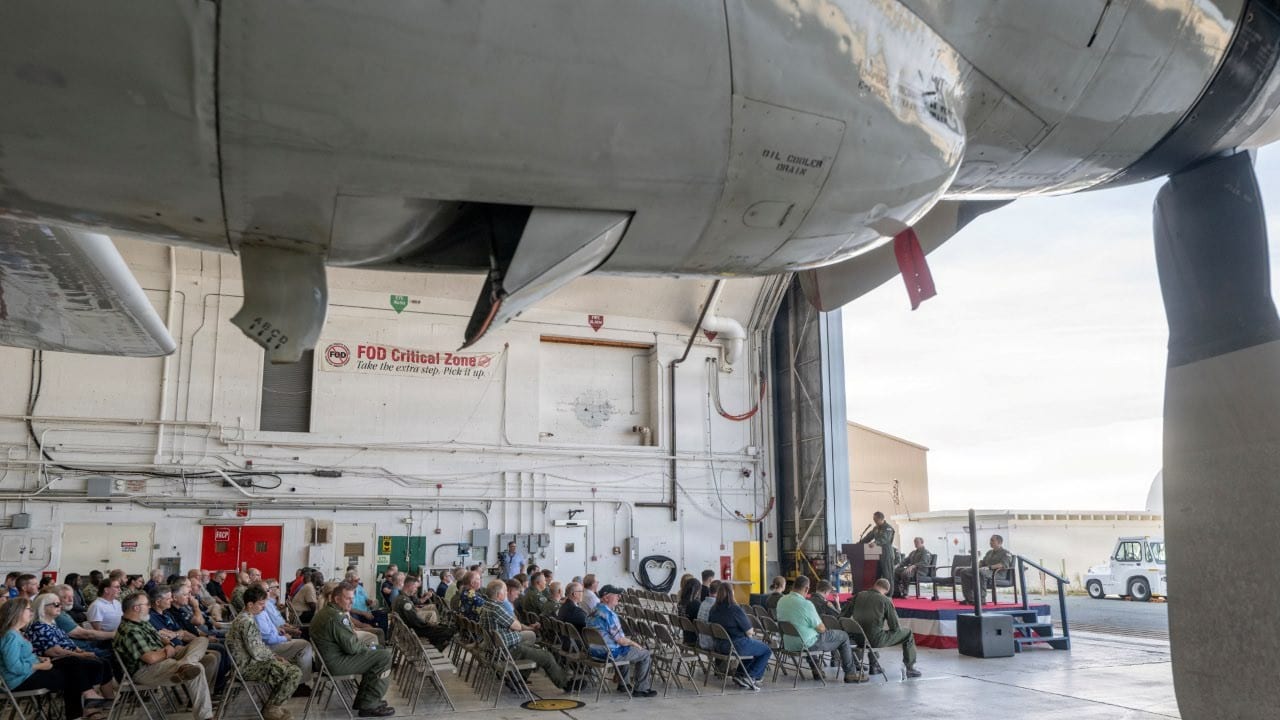
In a Sept. 29, 2026 release, the NRL said a ceremony was held at Naval Air Station (NAS) Patuxent River (Pax River), Maryland, on Sept. 17, commemorating the 63-year service of the P-3 Orion. The event also marked the introduction of the NP-3C’s successor, the MC-12S Super King Air.
A few days later on Sept. 22, the Warlocks bid farewell to their NP-3C as it departed for the “boneyard” (as the 309th AMARG is popularly known). The release added that the NRL’s NP-3C was also the U.S. Navy’s last active-duty Orion on the East Coast.
The VXS-1 “Warlocks”, the NRL’s airborne research arm, operated the NP-3C Orion “for more than three decades,” the statement said.
A new chapter in naval aviation research. NRL’s VXS-1 retires the East Coast’s last active-duty P-3 Orion and welcomes the MC-12S Super King Air to test next-generation sensors and advance Fleet capabilities.
Read more: https://t.co/VoUFDRfcVd pic.twitter.com/5bigmoYvUI
— U.S. Naval Research Laboratory (NRL) (@USNRL) September 30, 2026
Previous releases by the NRL and VXS-1 have also mentioned regular P-3Cs in the squadron’s service. Data from the 309th AMARG shows two NP-3Cs (Bu No 154589 and 158204) arrived at the boneyard on Jan. 26, 2015 and November 16, 2016, respectively. As for P-3Cs, the 309th AMARG received one from VXS-1 on March 25, 2019.
The description of “long-term preservation” at AMARG is usually linked to Type 1000 storage. This category includes aircraft which are preserved intact, without removing parts, ready for a possible future use.
VXS-1 and its research P-3s
The release quoted NRL’s commanding officer Capt. Randy Cruz, who described the P-3 Orion as the “cornerstone” of the Navy’s “heavy-lift, long endurance airborne naval science, bridging the gap between laboratory concepts and frontline Fleet capabilities.”
“While we celebrate the aircraft’s extraordinary service from combat route clearance to hurricane reconnaissance, the arrival of the MC-12S Super King Air ensures our team continues to deliver agile, high-altitude test capabilities to the warfighter,” Cruz added.
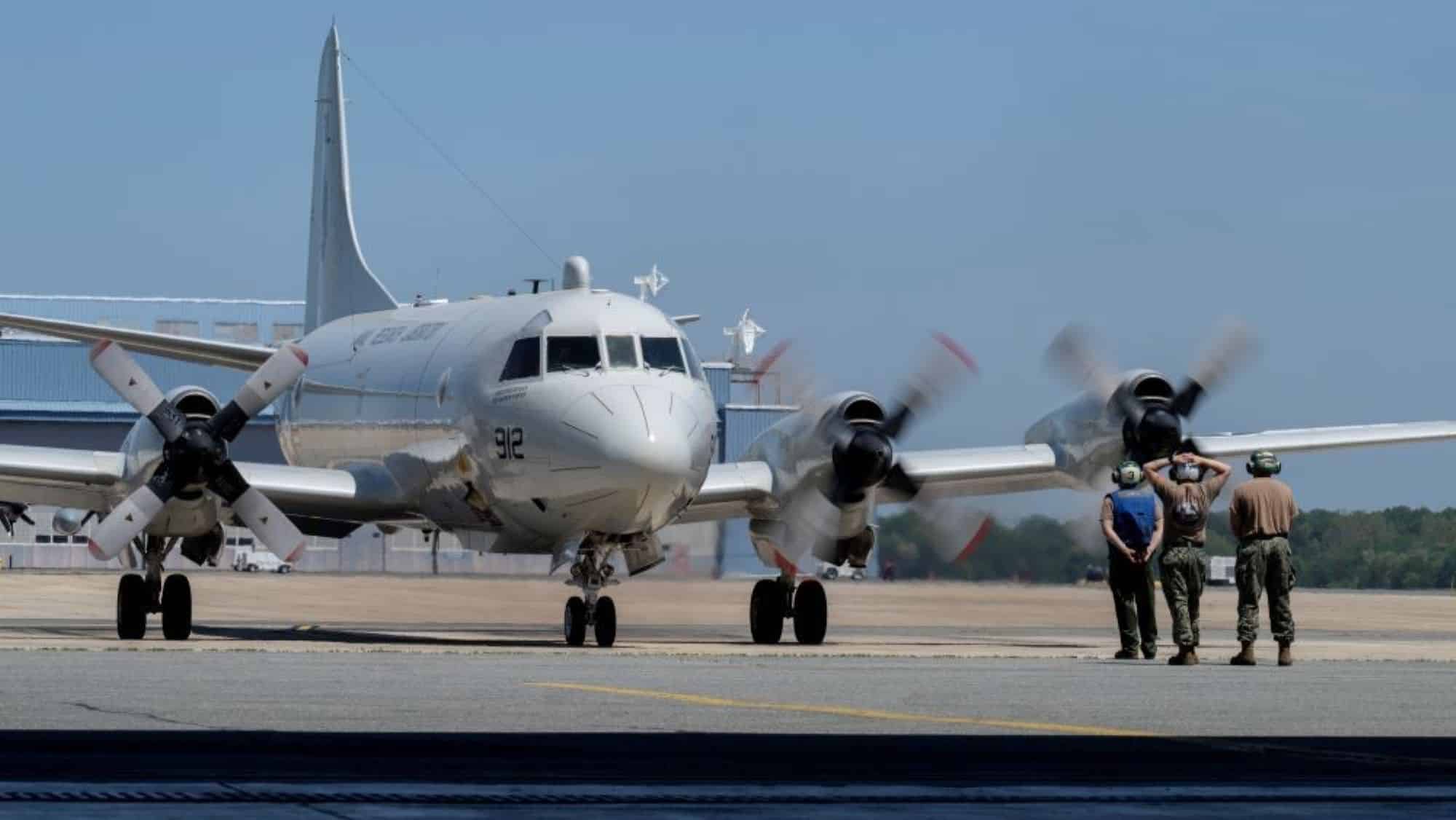
NAS Pax River’s commanding officer, Capt. Mark Zematis, reflected on the unsung history of the P-3, often overshadowed by strike fighters and bombers taking off carriers, when talking about American sea power. “[For] over six decades, the true sentinels of the global commons were not catapulted from flight decks. It was that aircraft there [NP-3C Orion], launched from coastal runways, climbing into fog and squall on the muscle of four Allison T56 turboprops, carrying 11 crew members into the ocean,” said Zematis.
The modified Orion, according to the NRL, served as its “premier heavy-lift airborne lab, accelerating new technologies directly into Fleet operations.” The aircraft supported missions ranging from critical combat support, geophysical intelligence, environmental monitoring, and Fleet readiness operations worldwide.
The VXS-1 also flew “counter-IED (improvised explosive device) support in Afghanistan and the Aerogeophysical Survey in Afghanistan,” giving the Department of War (DoW) the ability to conduct “high-altitude, wide-area reconnaissance in complex terrain.” According to Zematis, the P-3 Orion crews “used their camera and communication suites to identify roadside IED emplacements, trace vehicle convoys, and pipe real-time video directly into tactical operations centers.”
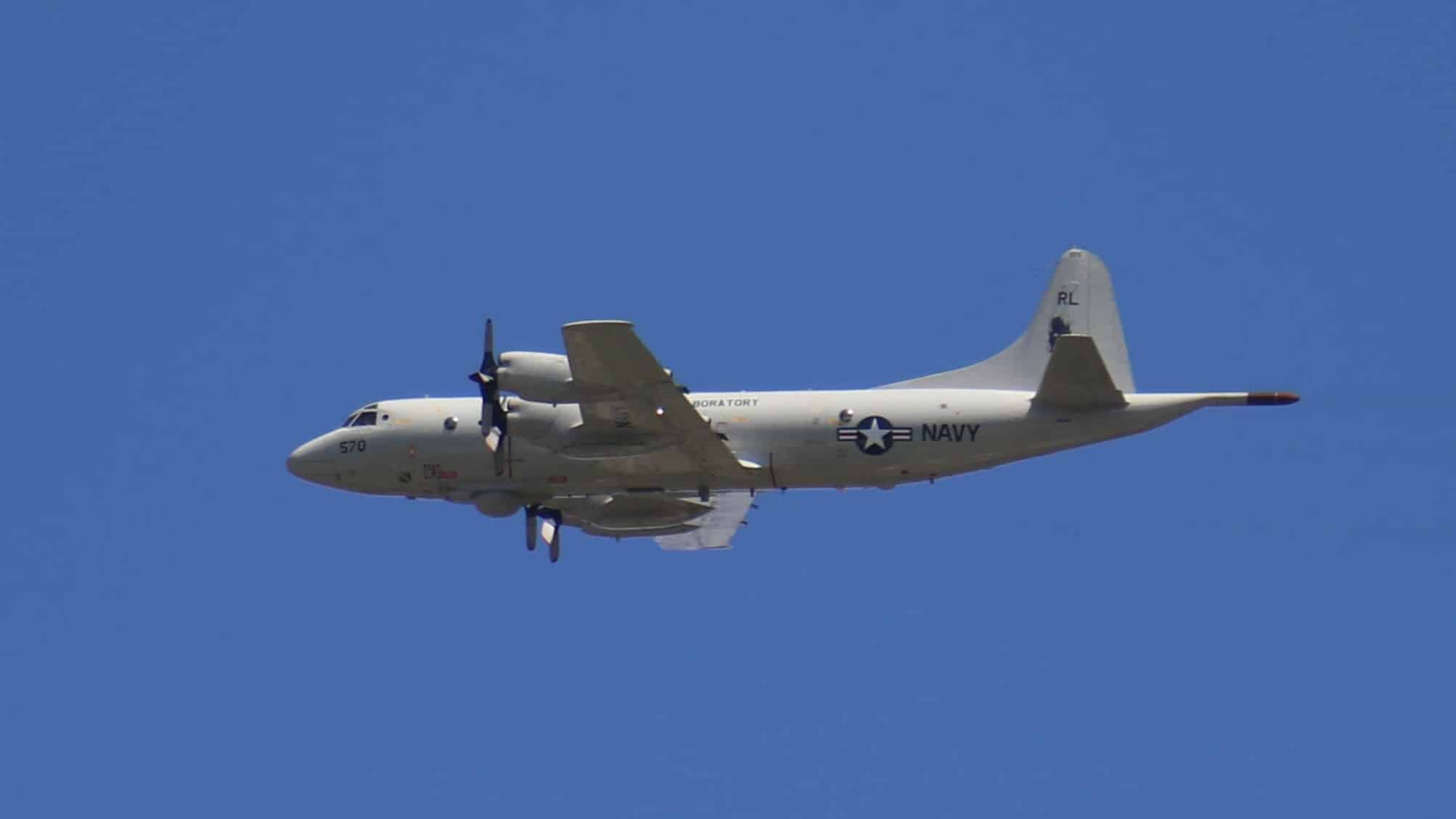
During Hurricanes Idalia and Francine, the NP-3C Orion “flew directly into the storms, deploying atmospheric sensors and dropping sonobuoys.” The data was directly transmitted to the U.S. Navy and civilian services, enabling tracking storms, assisting naval fleet movements, and supporting coastal installations.
Images taken on Sept. and posted on DVIDS on Sept. 30 also showed the UV-18 Twin-Otter, an aircraft the NRL’s VXS-1 added to its fleet on May 11, 2019. The release at the time said the VXS-1 operated three NP-3C and P-3C Orions, an RC-12 King Air, and 12 TigerShark Unmanned Aircraft Systems.
VXS-1 has also supported other scientific research projects like “magnetic variation mapping, hydro-acoustic research, bathymetry, electronic countermeasures, gravity mapping, electro-optical and radar research, and remote measuring of water contained in snow for NASA,” that release added.
MC-12S
The MC-12S Super King Air is based on the Beechcraft King Air 350. The MC-12S designation has also been used for the U.S. Army’s now-retired Enhanced Medium Altitude Reconnaissance and Surveillance System-Multiple Intelligence (EMARSS-M). The service last year divested its aerial ISR turboprop fleet.
VXS-1 commanding officer Commander Andrew R. Vawter said on the sidelines of the NP-3C retirement that the MC-12S Super King Air “offers the precise modularity and high-altitude reach our teams require to test next-generation sensors in demanding real-world environments.”
While the legacy NP-3C reached an altitude of 30,000 feet and flew up to 12 hours, the MC-12S reaches altitudes up to 35,000 feet, flies at speeds between 125 and 263 knots indicated airspeed, and provides a five to seven-hour mission endurance.
The new aircraft features an easy-on, easy-off modular cabin design, reconfigurable equipment racks and workstations and modular external mounting points. It supplies more than 11 kilowatts of dedicated project power across 120-volt alternating-current and 28-volt direct-current systems.
To support diverse sensor payloads, the MC-12S incorporates a large configurable belly radome with fuselage pass-through plates, an extended nose that houses an MX-15 retractable turret, and external antenna mounting provisions for GPS, Iridium, and Starshield systems.